March to Disney: Disney at the BAM Awards

This past year I didn’t get around to affixing a nomination table to my BAM Awards, when I’m tidying up before 2013 festivities I likely shall. Another thing that always interested me around Oscar time, that I never did for myself, was to total the nominations per distributor.

Seeing as how this is the first ever theme I’ve run that’s been exclusively focused on one studio, I figured it was time to at least glance back at the Disney films that have made a dent in my Awards over the years.

There were a few ways I could go about doing this. In the end, I decided year-by-year would be best, and if I noted themes in categories I’d try to mention it in closing.

Enjoy!

1996

Disney gets punked by Nickelodeon. Nickelodeon Studios’ first film Harriet the Spy tied for the most nominations with 9. I can’t guarantee I saw any Disney titles in that calendar year. I only recently saw The Hunchback of Notre Dame, but I do know that Disney didn’t get any noms.

1997

Nil again. There will be some believe me.

1998

No nominations.

1999

No nominations. Mind you former subsidiaries have been nominated through these years such as Miramax and Hollywood Pictures whose film The Sixth Sense had the winningest year to date.

2000

No nominations.

2001

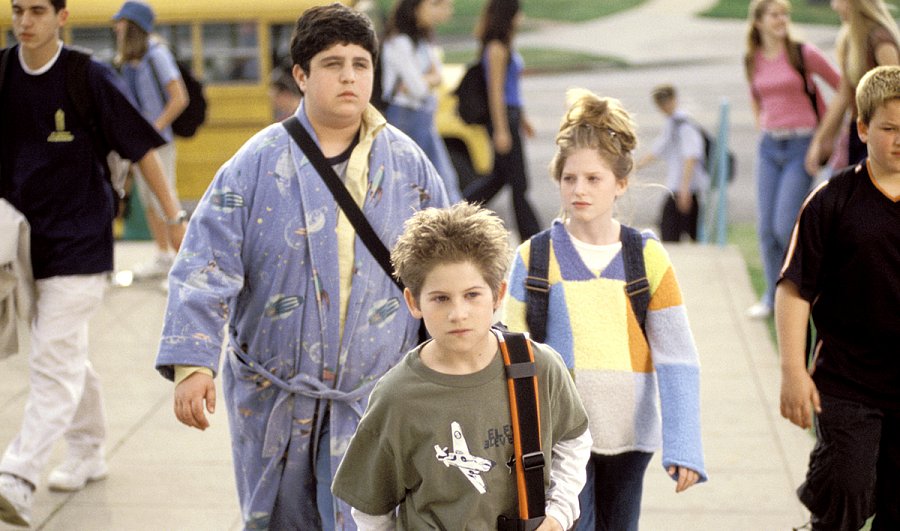
Max Keeble's Big Move (2001, Disney)

Though A.I. would go on to trounce the field in most categories, here can be found Disney’s first BAM Award nominations.

Max Keeble’s Big Move was one of the surprises of the year for me and it garnered 6 nominations, including Best Picture, Most Underrated and Best Performance by a Child Actor for Alex Linz. It didn’t happen to win any of said awards, but it’s quite a debut.

Ironically, Disney, via DCOMs (Disney Channel Original Movies), “dominated” the now-defunct Worst Picture category (including one that stars Linz) but didn’t “win” that award either.

Nominations: 9
Wins: 0
2002

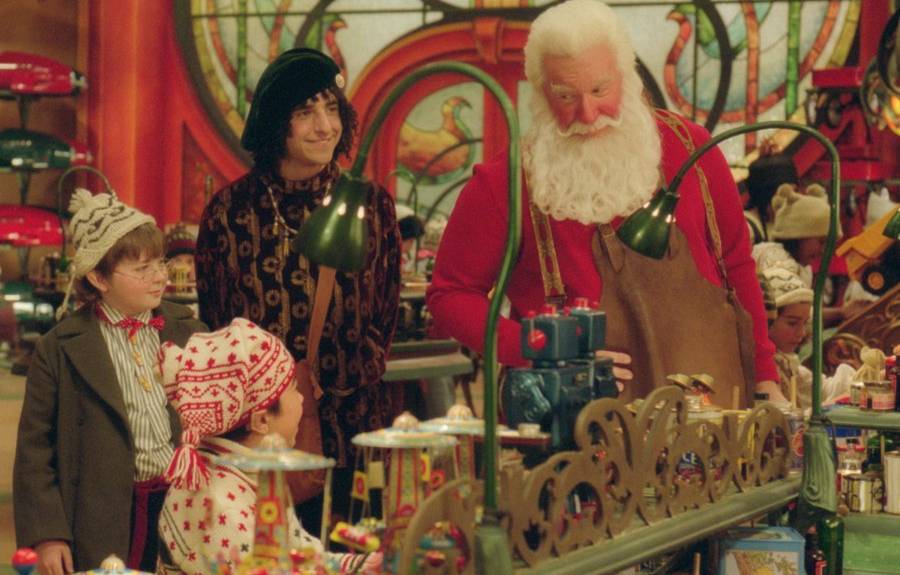
The Santa Clause 2 (2002, Disney)

Disney returns to the Awards with two films nominated in the worst category The Santa Claus 2 and Get a Clue, a theatrical and DCOM respectively. The latter had a catchy theme song; both have very sparse moments that spare them the dubious distinction.

Nominations: 2
Wins: 0

2003

Is a year I lost my records for. All I can recall are the winners, but everything came up Universal that year with Peter Pan winning 10 and Love Actually taking two.
2004

Pixel Perfect (2004, Disney Channel)

Disney’s first “win” is for another DCOM nominated in the now-discontinued Worst Picture category. There have been good ones, by the way. Some very good ones even, including Mom’s Got a Date with a Vampire, High School Musical, Girl vs. Monster, The Suite Life Movie, etc.

Nominations: 1
Wins: 1
2005

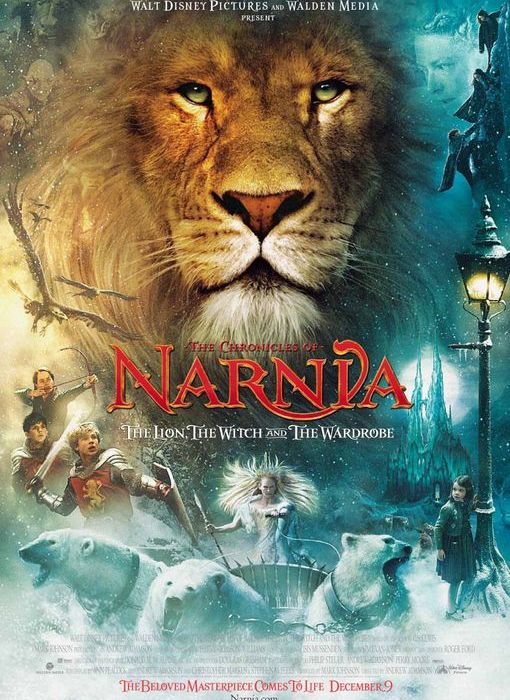
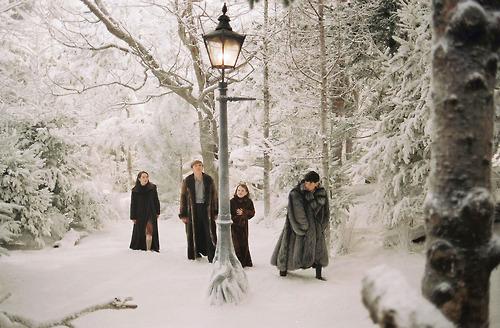
The Chronicles of Narnia: The Lion, The Witch and the Wardrobe (2005, Disney)

Hindsight’s always 20/20 but in retrospect Disney dumping the Narnia franchise is a mixed bag. After Caspian wasn’t as good as it could’ve been, a change was due it just seems that maybe the shift to Fox puts more pressure and onus on Walden Media, and though they may be fan-pleasers and great to me, future installments may be slow to come.

The current plan to be brief is The Magician’s Nephew next as opposed to The Silver Chair, which would make more sense in terms of cast continuity. Either project seems a ways off right now.

This aside is a lead-in is because Disney, when they had Narnia, had their biggest BAM triumph to date with Narnia not only garnering a staggering number nominations, but winning Best Picture.

In fact, Narnia alone earned more nominations than all Disney films from 1996-2004 at the BAMs combined (with 13 and four wins).

Nominations: 13
Wins: 4
2006

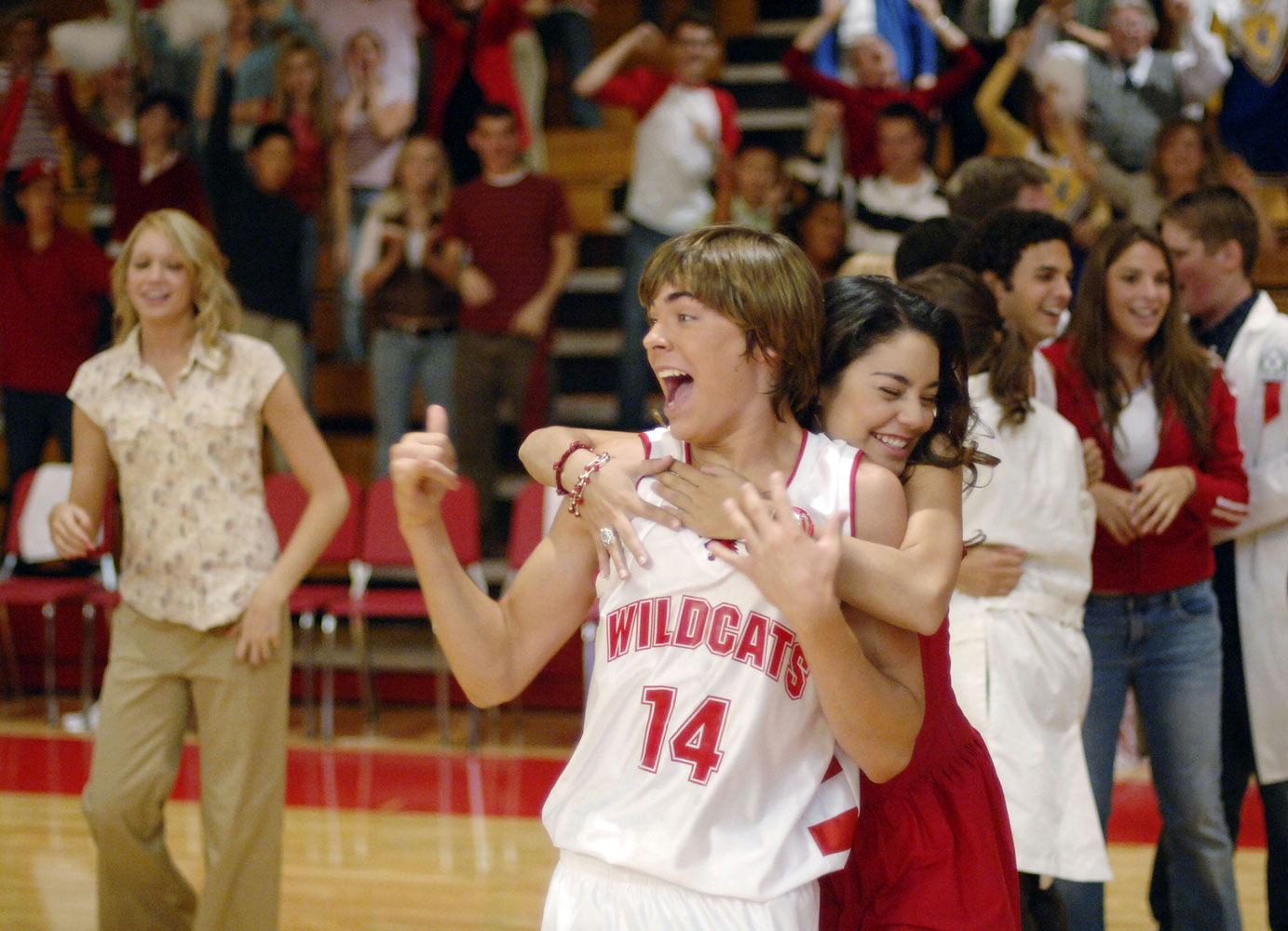
High School Musical (2006, Disney Channel)

This was a good year for Disney wherein they had two films earn multiple nominations AND multiple wins.

Pirates of the Caribbean: Dead Man’s Chest (3 Nominations, 1 Win)
High School Musical (6 Nominations, 1 Win)

Nominations: 9
Wins: 2
2007

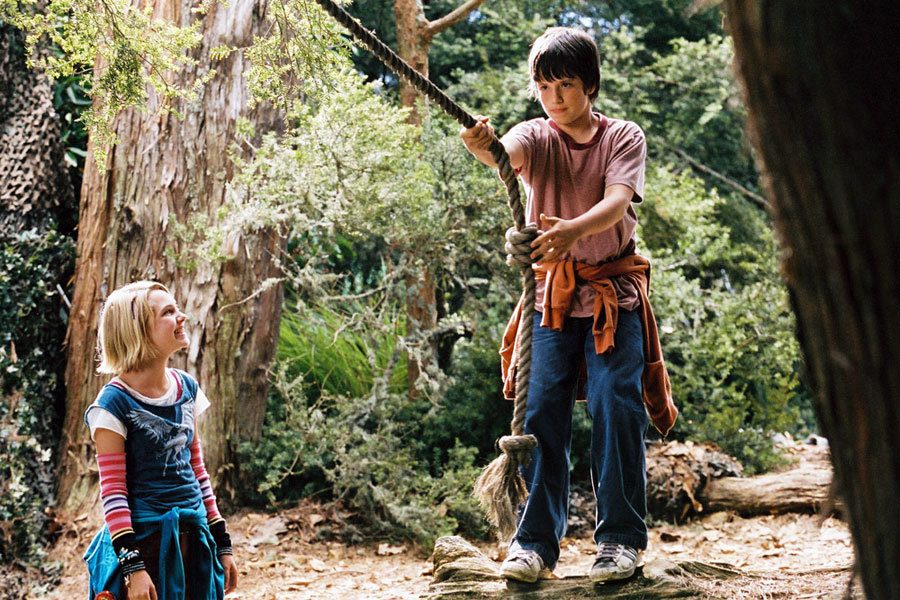
Bridge to Terabithia (2007, Disney)

This year was a first for Disney in a few ways. It was the first time Disney had three films nominated.

It also marked the first time two actors in Disney films made their presence known in multiple categories. Josh Hutcherson and AnnaSophia Robb earned not only Child Actor nominations, but lead Actor and Actress nominations respectively for Bridge to Terabithia.

On a dubious note, the Pirates of the Caribbean that made me fall asleep was released.

Bridge to Terabithia – 5 Nominations (1 Win)
High School Musical 2 – 1 Nomination
Pirates of the Caribbean: At Wold’s End 1 Nomination (1 Win)

Nominations: 7
Wins: 2
2008

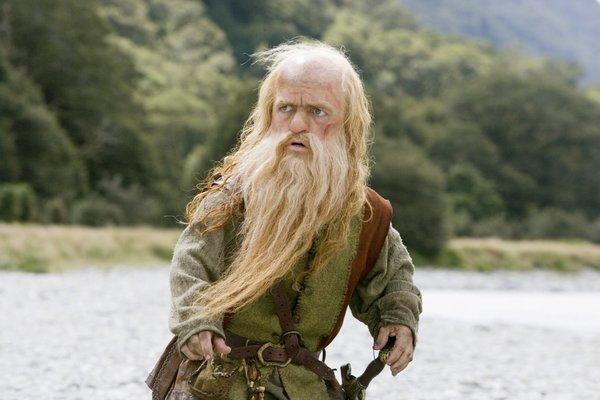
The Chronicles of Narnia: Prince Caspian (2008)

Prince Caspian, as mentioned before, was not up to par but did capture two wins (Makeup and FX) and High School Musical 3 was up for 3 nominations, all in positive categories.

Nominations: 8
Wins: 2
2009

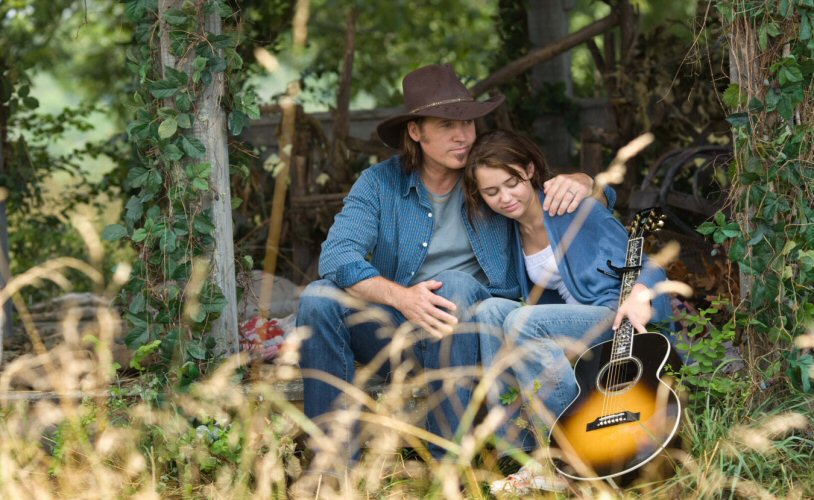
Hannah Montana: The Movie (2009, Disney)

Not a banner year, but it kept the nomination streak alive with Old Dogs grabbing an Underrated nod and Miley Cyrus’s “The Climb” earning a Song nomination.

Nominations: 2
Wins: 0
2010

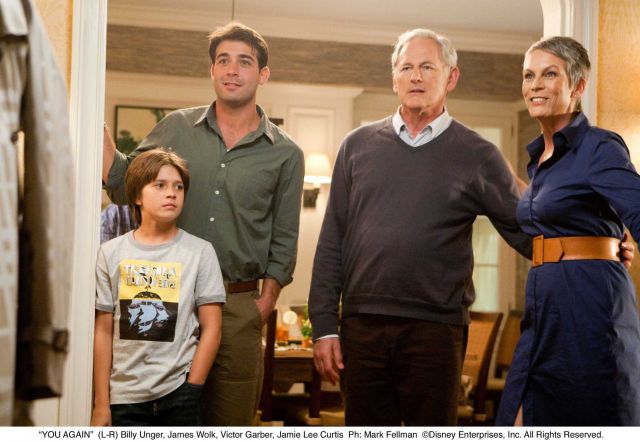
You Again (2010, Disney)

In total nominations, 2010 was a worse year for Disney. If being literal there were no nominations. However, Touchstone is a Disney brand whose name appears on You Again. Billy Unger’s performance in said film, along with the deep cast of The White Ribbon, were the catalysts for the first bifurcation of the youth acting categories.

So since I’m being anal retentive about whether or not its branded solely Disney, having omitted some Dinsey/Pixar titles, let’s call this one a shutout with an important footnote.

Also, The Voyage of the Dawn Treader cleaned up a lot of nods here, but was the first Fox film of the series.

Nominations: 0
Wins: 0

2011

Similar note as above Touchstone appeared with The Help.

Nominations: 0
Wins: 0

2012

No nominations, though as mentioned Timothy Green was widely overlooked and if not for the shifting focus of my “underrated” selections it would’ve been there.

Nominations: 0
Wins: 0

Total Nominations: 51
Wins: 11

Despite the droughts that averages to 3 nomination a year and about a win every other year, which is pretty darn good I’m assuming – I think other distributors may have bigger pops at more infrequent intervals. I guess I’ll find out if I should do another studio-centric theme.
March to Disney: Terabithia, Timothy Green, and Other Inauspicious Ends

Warning: Spoiler alert! There is story analysis that reveals key plot points below, proceed with caution.

If there’s one misconception about Disney films that bothers me it’s the tonality myth of the happy ending. Firstly, A lot of people act as if this applies only to Disney films and wasn’t part of the Hollywood formula since time immemorial. More so that that, however, what Disney films have exemplified, especially under the stewardship of Walt himself, was that they were not fearful of putting kids through the emotional wringer because that ending was waiting – in many ways it becomes not about the the ending, but the journey. Now, I will acknowledge there is a lot of Disney fare that is light escapism, the iconic example of Pollyanna being one I’ve not yet seen. However, as I will demonstrate here, films by the company have frequently not been afraid to bring real life emotions and traumas into their stories and aren’t just fun and games.

Now, the cornerstones of my argument are two more recent live actions films, but the pattern was established long ago. Here are some quick examples:

In Snow White not only is the witch frightening but we believe Snow White will be unconscious until her eventual demise.

The Pleasure Island sequence in Pinocchio is fairly shocking to a young child.

The treatment of Dumbo’s mother and her imprisonment, when she’s labeled as mad is rather brutal, and wrenches much emotion from the story.

If you want the stakes raised:

Sleeping Beauty is the first Disney title that comes to mind with any bloodshed, as minimal as it is.

Bambi’s mother is quickly, shockingly and almost unceremoniously, killed.

A more visually realized death is that of Mustafa in the Lion King.

Old Yeller has to be put down.

And if you’re saying, OK, what about endings? I’d propose Pocahontas without going into too much detail and spoiling it. It may not be a tragic finish, but it’s certainly not a “they lived happily ever after” one either.

And in terms of shorts you can look upon The Little Matchgirl as bittersweet at best. Not only is that a beautifully rendered tale, but it does treat an Andersen tale with a pathos closer to the original than The Little Mermaid did.

Bridge to Terabithia (2007, Disney)

With these more recent titles, however, I feel there is a sort of return to that notion that Disney always implied, if he didn’t say outright. Bridge to Terabithia in some ways I feel suffered critically, and perhaps financially too, due to the known plot point of Leslie’s death. It reminds me of the debate that surrounded My Girl. Thomas J’s death was seen as a detriment to the film by some, but in essence that’s part of what makes the film what it is. You can argue the merits of killing a child character but its functionality within the plot is really what determines how well the film works. Similarly, with last year’s Brave, you can dislike what the major reveal was, but the story was built to go there, its how it operated and functioned from that point on that matters.

With Terabithia the chronicle really is about Jess (Josh Hutcherson), and the fact that both he and Leslie carry a film that does wander into more serious territory was rewarded with several BAM nominations. The story is told through Jess’s eyes. It’s his coming-of-age that is being told. He has a skill (drawing) that some look upon and scoff at; he’s the one who has to come to terms with his own personality, to follow his dreams even though he’s called a dreamer; to embrace his imagination as a gift rather than a burden. Leslie is the catalyst to him doing those things. She creates an elaborate fantasy world that they share. Jess losing her is the ultimate test of if he can accept himself as he is. Can he forgive himself or will he blame himself? Can he draw again? Will he “return to Terabithia” anew now that he lost his traveling companion? The end of the film is a redemptive one, but it’s not one I would call happy because of all that came before it.

As for Timothy Green, this was an oft-overlooked, far too misunderstood film last year. As Roger Ebert stated very well in his review, the fact that Timothy’s fairytale like appearance is left a mystery and never logically explained is a boon to the story not a burden. As magically as he appears, you can tell that his time will be limited, there is a foreboding even at the most wondrous times he shares with his temporary parents that is apparent in the film, even if you didn’t infer it from the title. His departure is heart-wrenching and perfectly portrayed by CJ Adams, Jennifer Garner and Joel Edgerton, and the way it’s portrayed visually is even better.

Yes, the young couple in the end does get what they want. They still have the wonderful memories they shared with Timothy, but they also still bear the hurt of having known him for such a short time and having lost him. And if you think about it there are two deaths in that film.

No, you won’t always get the deepest, most intellectual treatment of every subject in a Disney film, but don’t go just based on a handful of titles and take in the totality of the entire film and not just the ending. Yes, even Disney films can feature real hurt, pain and emotions, and those that do are usually among the best.

Short Film Saturday: Runaway Brain (1995)

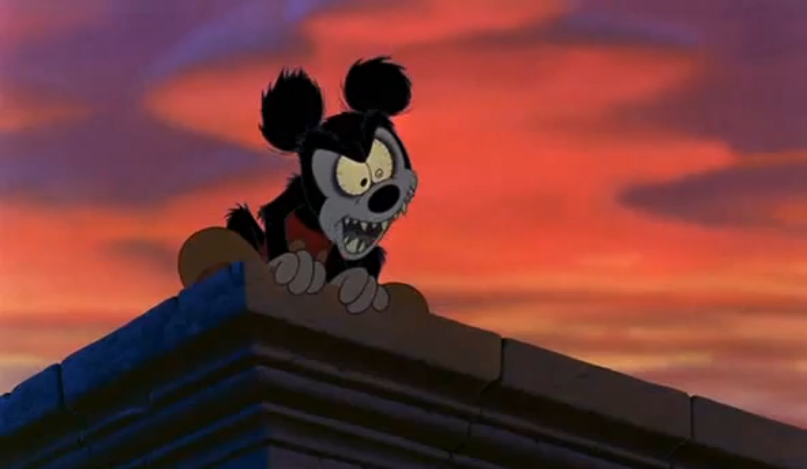
Since the YouTube clip I’m linking to features the introduction by Leonard Maltin, there’s not much else I really need to say except this is a great departure form the usual from Mickey, especially in a fairly modern piece. Please note: the clip does feature Spanish subtitles, do your best to ignore them should you not need them.

Once Upon a Time in the 80s: The Neverending Story (Part 12 of 17)

Note: This piece contains in depth story analysis. It is not recommended reading if you’ve not seen the film.

Five Films

We’ve taken a very broad look at the 80s. Now I want to take a closer look at five films that in their own unique way captured a different part of the 80s flavor. In my opinion, they are at least great pieces of entertainment, and on some level great films. One film The Neverending Story I rediscovered as an adult; one, Parenthood, I saw as a child, the other three I saw for a first time as a mature viewer. Each of them capture the character and magic of the 80s in their visuals, plot and themes and in such a different way I’ve included them all here:

The Neverending Story


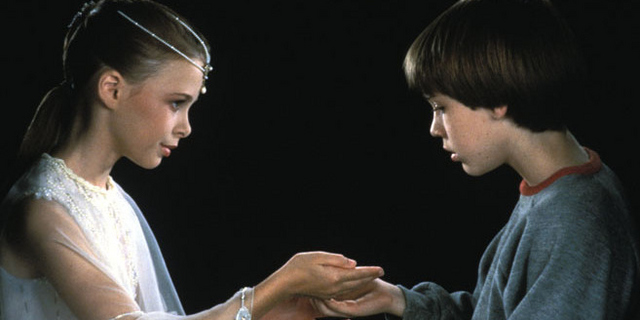
The Neverending Story (1984, Warner Bros.)

This is a film adapted from a book, which was a phenomenon written by German children’s author Michael Ende. It was produced entirely in Germany with an English-speaking cast thus the official title of the film is Die Unendliche Geschichte. The film was directed by Wolfgang Petersen. This was, in fact, his follow up to Das Boot. This is a film I watched anew after many years of not having seen it anywhere. I first saw this when I was in the fourth grade. In fact, it was screened to us before we went on a field trip to see the sequel. The next time I saw this film again was a year or two ago on cable (as of this writing). I was absolutely amazed by the sheer fantasy and wonder of this film. The affect this film has is timeless and perhaps it’s even more profound now.

The tale is about a boy named Bastian (Barret Oliver), this name does carry symbolism as it is similar to bastion, and our protagonist lives in a dream-world. Ironically, he will visit a world of fantasy and there will be created another great symbiosis of the 80s. The difference between adults and children is also drawn out right away in this film. His father (Gerald McCraney) yells at him because he was drawing horses in class. Bastian corrects him and says they were Unicorns and his father doesn’t understand what he said. This is fundamental dichotomy: Adults lose their imagination and prefer pragmatism. 


We see the plight that makes Bastian escape to his fantasy world when three bullies accost him. As fate would have it, he stumbles into a book store run by Mr. Koreander (Thomas Hill). Barret Oliver was a young actor of some note in the 1980s, he was no Henry Thomas but he had some good performances, this one was not especially convincing. It is especially weak when he challenges Koreander saying he does read. This meeting introduces one of the many towering concepts these ideas are amazing on their own but we find them all here in one gem of a film. These concepts are: 1) A story that has no end, 2) Fantasia is the world of human fantasy and has no borders, 3) Fantasia is starting to die because people have begun to lose hope, 4) The Nothing, 5) The reader is actually part of the story. 


The Neverending Story (1984, Warner Bros.)

Great concepts are essential to a good fantasy and here we have it five great ones. I will expound on them now. Obviously the narrative within cinematic context must end but the idea of this book Bastian finds doesn’t is that everyone who reads it forms the story. All the imaginations of the world form their universe; it’s great. The first example of the great production design is the book that contains The Neverending Story. It has on its cover two snakes that are eating each other which give us an alternate symbol for eternity. 


The story he experiences (isn’t that what we do with the very best stories, experience them, we also don’t want them to end) takes place in Fantasia which is the world that is created by the dreams of human beings. What’s great is that there is an inference that we will identify with this story because everyone who reads this book will shape the tale and they are ultimately the ones who will save Fantasia. 


All this talk of saving Fantasia leads me to the next great idea. The Nothing is literally nothing, the film explains this right away “A hole would be something no it was, nothing,” the Rock Biter says. The Nothing has come about because people have started to lose hope and have stopped dreaming. “And people who had lost hope are easy to control.” The reader, Bastian, must complete the story such that Fantasia can be saved. Thus, we can also infer a grander vision that every time someone some one stops dreaming part of Fantasia dies. Its fate is always in the balance.


The Neverending Story (1984, Warner Bros.)

The reader’s active participation in the story is also a great touch. Everyone at one point or another wanted to shape the story they were reading. This is a great piece of fantasy and in this manner the film has two heroes: Atreyu (Noah Hathaway), who goes on a classic fantastical quest to try and save the Childlike Empress, whose death would end Fantasia; and Bastian, who manages to recreate Fantasia even when there was only a speck of sand left just by the power of his imagination! This also creates another bookish film a lá The Many Adventures of Winnie the Pooh which is less a cinematic adaptation but embracing of two separate art forms. 


The flow of this story is unbelievably smooth and quick. While it’s a little over 90 minutes long a bad or poorly paced 90 minute film can feel like it’s two hours long or more. We are introduced to the idea of the nothing by an assorted cast of fantastic creatures: a night-hob, a racing snail and a Rock Biter, a rock-formed creature that eats rocks. They travel to the Ivory Tower, this is one of the magnificently designed sets of the film, even though this first shot is probably just a matte painting it is just fantastic. Then there are The Swamps of Sadness, Engyebook’s Hut and the Ivory Tower itself are as other examples of fantastic sets made for this film. At the Tower news of the Empress’s illness and its connection to the Nothing are given and a brave warrior is called to go on a quest to find the one who can defeat the nothing, one who lives beyond the boundaries of Fantasia.

Atreyu proves he’s the one who’s meant to go on this quest; Noah Hathaway had a great fantastical accent which seems as if it was an amalgam of British and Australian speech patterns. Bastian immediately identifies with Atreyu and we identify with both of them in turn. It seems the amount of symbiotic connections this film makes is endless. The two snakes turn out to be the AURYN, a magical amulet that protects the wearer. Yet another classic fantasy element; it’s such mishmash and yet the story itself is so much more unique than most 80s fantasy like Legend, which was purposefully a combination many fantasy epics.


The Neverending Story (1984, Warner Bros.)

Atreyu journeys through the Swamps of Sadness where if you let the sadness that emanates from the place get to you, you will sink into the mud and die. He is brave and makes it but his horse Artax dies. This is a huge event not only in the film’s dramatic context but production-wise this is a bold move in a kid’s movie where only someone like Disney usually had the guts to do something like that. He then encounters Morla the Ancient One. The dialogue in this scene is great. Morla keeps referring to itself as “we” and Atreyu asks “Are there more than one of you.” The response “We haven’t talked to anyone in so long. So we started to talking to ourselves.” Morla later starts sneezing because it’s literally allergic to youth.

He’s told he must go to see the Southern Oracle, which is more than 10,000 miles away. As Atreyu walks dejected through the swamp, we see class at Bastian’s school is no longer in session but he stays to continue reading because he can’t put the book down. Atreyu is taken most of the way by Falkor a full animatronic luck-dragon that was 43-feet in length. There Atreyu meets Engyebook and Urgl an old couple who fight incessantly. Engyebook is a scientist and does everything experimentally and never takes a chance in his life. There are two gates you must pass before reach the Oracle are giant twin sphinxes, these are another pair of great symbolic moments. The premise of the first gate is that anyone who doesn’t feel their own worth is destroyed by the gate. Beams shoot out of the sphinxes eyes and kill the unworthy. We see a man in armor get burned. This film stayed PG oddly enough despite the fact that we see his face burnt to a crisp and the statues have large exposed breasts. Atreyu makes it through after some trepidation and the second gate is the magic mirror gate where he must come face to face with his true self and who does he see in the mirror but Bastian. This is the second time Bastian is given a hint that the people in the story know of him. The third time the Empress pleads outright with him telling him every place Bastian had followed Atreyu and pleads for a name.

This film has developed quite a cult following although it had quite a good run at the box-office. There are many websites online dedicated both to the film and the novel. The seemingly great mystery of the film is what Bastian’s mother’s name is because this is the Empresses new name. He yells it out the window during a storm and it seems purposely drowned out. On the DVD there is no subtitle to tell us what he says even when you have the feature on. This is one of Petersen’s greatest touches. It could be any kid’s mother’s name, even though if you listen carefully you can decipher it (hint: it’s the same thing he says in the book.). His best work was in adapting the novel to film. He didn’t try to adapt the whole thing, but saw a definite point where the novel stops telling one story and starts telling another. At page 180 of the novel Bastian has saved Fantasia, in the book he goes there and it wanders off into battles with Xiathis, which are used and terribly adapted in the sequel. Petersen had great foresight and knew, this is the best part of the book, and this is my film, Ende can keep the rest.


The Neverending Story (19484, Warner Bros.)

The Neverending Story is a great departure for Wolfgang Petersen. It is also a monumental fantasy, and perfect for the 1980s where it seemed people were starting to lose hope, and they had some good reasons to, but the cinema was trying to give them something to hold onto. The novel was on the bestseller list in Germany for four years and the film became a phenomenon in and of itself. It’s a little gem that could only have been a product of the 80s. 


End Notes

Miraculously the film does succeed as Oliver is a supporting player. The film does have kinks in its armor like why an attic key is so easy for him to find in a school but it still works and you’ll see why.

In Ende’s novel the land is called Fantastica but it was changed to Fantasia in the film so that people would have a name they could identify with and also to make allusion to the Disney film.


Morla is a giant tortoise who literally is the Shell Mountain. It’s gender is never established one way or another, however, if forced to guess I believe Morla is a woman.

Film Thought: The Foundation of Everything is Drama

I’ve always believed that drama is the foundation of all other genres, which could be interpreted to mean that everything is essentially a cross-genre piece, but essentially what lead me to this premise was thinking about how to to approach myriad genres as a writer, I think this can also apply to acting. There are few things that fall outside this cross-section.

Comedy is driven by obsession and as silly, or outlandish as scenarios may get the performers and the world created for them has to be one where there are stakes, consequences, needs and desires that ground these things. Even in parody comedies this should apply. Many cite The Naked Gun series as one of the best examples of this subgenre, and much credit in that case is due to Leslie Nielsen. For as preposterous as what he was saying or doing was he was committed to it, there was a dramatic intent bordering on deadpan that tethered the silliness of the situation to reality.

When applying this precept to horror it carries an additional even more significant burden. A comedy that does not make one laugh cannot really be said to be effective, but a horror film that one doesn’t find scary can be. A horror film is designed to terrify, to frighten, to scare to disquiet. Stephen King in discussing horror literature breaks down his own hierarchy wherein the gross-out is his last recourse.

The issue with the effectiveness of horror films effect on an individual in some cases can be heavily influenced by the individual. As a child I was rather sheltered, and kept to mostly age appropriate fare for quite some time. I didn’t like scary films. Gremlins scared me until, I later watched it in whole and found its dual intent. The first horror film that I really openly embraced, where I enjoyed being scared was The Shining. From there I was hooked and I sought out more.

Yet, seeking out more becomes the issue. You want to learn the genre but there are then fewer and fewer of those films with that seismic impact on you, even if it is that good. You get desensitized, to an extent to the more visceral elements of the film, which are its primary objective.

Thus, if a viewer is desensitized, or a horror film just isn’t as scary as it could be, what recourse is there for it? There is that foundation of drama. If the dramatic beats are set and strong; and I’ve said it’s not necessary before, and that’s true, but if the acting is strong, if the conflict is palpable; if the characters have some definition; if their goals, obstacles and needs are, at some point defined; then you’ve established drama in a horror film. You have there your foundation and the subjective matter of “Is this scary?” while it still matters, isn’t as as pivotal as it might’ve been.

As I said, this is a notion I’ve had for a while and it recently crystallized when I viewed a ghost story entitled The Awakening. It has its creepy moments, and this is easier to do in a ghost story perhaps than in other subgenres, but I wouldn’t necessarily call it terribly frightening, but the character’s conflicts and arcs, their interaction, the human emotion and struggle of the film; in short, the drama is really what drew me to it which is what brought this thought back foremost in my mind.

This may be why some films, and I won’t name names, that insist that their knowing cheesiness and lack of production value is their strongest asset don’t work for me. Great things have been done by filmmakers with limited resources who staunchly believed in what they were trying to commit to celluloid and did their damnedest. Usually, those are the films where you can smile and love it even through the glaring faults.

To conclude, I just want to clarify, if it wasn’t clear already, that I do not mean that everything needs to be treated sternly and severely, which is part of why I made references to comedies and Gremlins. The sensibility has to work for the film in question, however, even in a light tone there’s a dramatic foundation to it, a commitment, a dedication, which does not make itself apparent in the aforementioned unnamed films. To me that is what still strikes me as one of the fascinating things about the horror genre is that there is a when-all-else-fails contingency plan. That’s not to say that all films deal with material in a way that can transcend so well, or treat their foundation with the respect it requires, but it is there and those who use it well are really worth noting.

The foundation of everything is drama. The fenestration you add to it creates genre. It’s a building block to all film narratives, but with the horror film I feel it’s a most crucial one, because the prime objective is so very hard to achieve on a mass level that there needs to be something to fall back on.

March to Disney: Secretariat and the Sports Films of Disney

This is a series of posts this month wherein I will focus on Disney films. For more on my background with Disney films and about the timing of this focus please read the introductory post here.

It’s almost as unoriginal to say all sports films are essentially the same as sports films are, at least on the surface. What tends to separate the better ones is that they are usually on a very specific incident or figure, and more commonly, what else the film has going for it.

For example, one of the more acclaimed documentaries in recent years is Undefeated. It’s about a high school football team. What made it critically acclaimed and an Oscar winner was not the football aspect, but rather, and high school sports can do this better than most, the off-the-field life lessons involved. So there, even in documentary form, it’s about “What else do you have going for you?”

Disney, in both shorts and feature films, has a long history of dealing with sports as the focus of a film. The earliest, most notable forays, were the Goofy shorts wherein he’d engage in a number of sports with his usual haphazard results. The shorts, aside from being funny, are fairly good caricatures of the sports in question. Meaning it’s more about impression than accuracy of rendition and also about placing a character in a context so whether skiing, basketball, boxing, football (American), ice hockey, aquatic sports, or any other they served as short hilarious sketches and/or introductions to the sport.

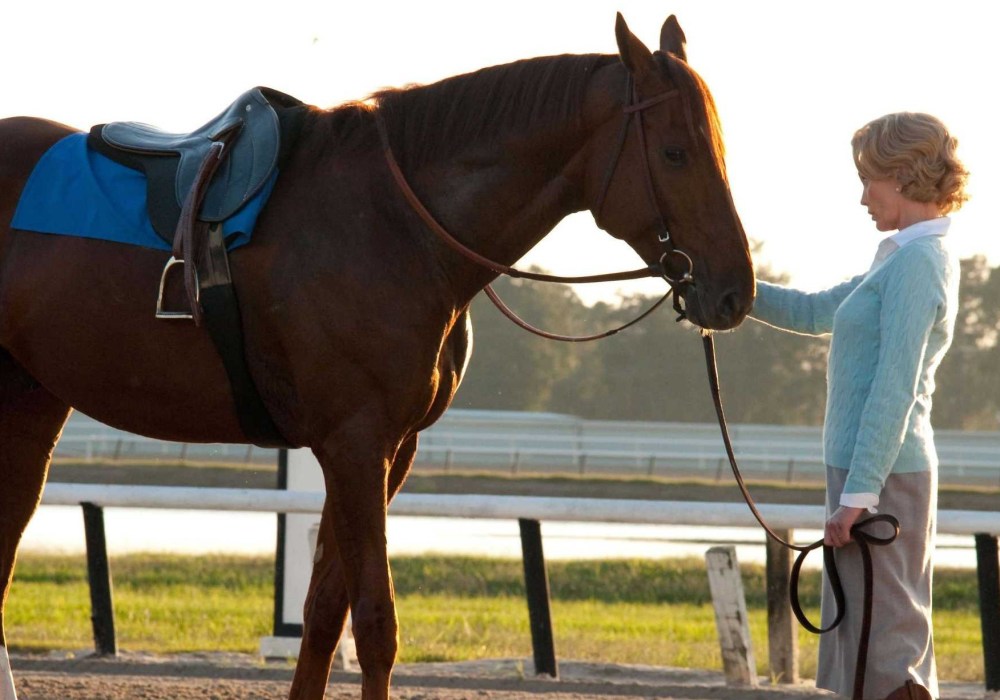
The short form animated sports film has its own template of exaggeration, while the feature film usually deals in underdog stories. Which is what usually brings me back to Secretariat. Now, what the real world themes that are being brought to the fore are rather obvious. Due to the the setting and plot the film is a feminist comment. Ms. Tweedy, played marvelously by Diane Lane, is smart, tough, a risk-taker and ultimately successful. She’s the underdog of the tale, whereas the horse, who even if you only know a slight bit about horse racing, you know is the overdog. He, like many a thoroughbred, shot out of the blue into national consciousness, but is unquestionably the most dominant horse the sport has ever known.

Secretariat (2010, Disney)

Aside from the feminism, which the film plays through both mother and activist daughter, there is also the gently folded in family element. You see her sacrifice and work on two fronts due to what she feels is her responsibility to her father, the farm and the horse, and as much as she can she travels back across country to be with her husband and four kids.

That’d be more than enough, but Secretariat, being a film about horse racing, also plants the seeds of doubt about health of the horse, and addresses the concern of those ambivalent to negative on the nature of the sport. Needless to say there’s likely poetic license taken all over the place, it’s a film after all, but the impressive thing is that the film works on many fronts and levels, which is why it was one of my top films of 2010, and didn’t diminish upon re-view.

Now, as much as I do like other Disney sports films of a more traditional nature, like The Mighty Ducks, which I saw at a sneak preview with a friend and it got us so pumped that we laced up our rollerblades and had a near midnight practice session, or Cool Runnings. They do fall into the more typical mold. Secretariat stretches it on a few fronts. Now there is a recent rash of other Disney sports films that I am behind on, however, based on what I know of them Secretariat still upped the ante a great deal. Usually, there’s a theme or two tackled and few possible end games.

In a purely sporting sense, Secretariat paints a portrait that even a blowout can be a thing of beauty due to the prowess of the athlete and the dramatic stakes placed upon the race. Whereas in other films there’s one “brass ring,” here our protagonist has staked her livelihood on the fact that the horse will win the Triple Crown, something that hadn’t happened in 25 years at the time, and has only happened once since.

Now, all this is not to say Disney’s record is flawless in the genre, there’s far too many Most Valuable Primate and Air Bud films for that to be the case, but in the past decade or so, even with as many as I’m missing, on the dramatic end of the spectrum; they have found stories in the subgenre that can push the envelope ever so slightly in this kind of film.

DVD Review – Straight A’s

Introduction

I don’t frequently write DVD reviews, but upon seeing this film I was compelled to watch the special bonus features on it as well. Typically, I would stick to a review of the program on the disc, but have included thoughts on the features below.

Film

Straight A's (2013, Courtesy of Millennium Entertainment)

The film has a very basic synopsis and I will not elaborate much at all on that here. It’s likely better that you go in knowing that much or less about this film. Straight A’s really caught me by surprise as a refreshing, character-driven family dramedy, that doesn’t get bogged down in the histrionics that are potential pitfalls of a film with a synopsis such as this one.

I will readily admit that I just may have a soft spot for family dramedies. However, the recent film in the subgenre that comes to mind for me is Fireflies in the Garden, and that film pushes its melodramatic limits, whereas there is a fairly realistic grounding to be found here. Characters’ motivations and reactions make sense, things are played up as much as they need to be and are still fairly effective. While the overtures of external conflict are apparent, there is also a lot inner-turmoil that the film is wise enough to hold the reins on, and allow some disputes to be settled sub-textually rather than textually.

There are two things this film does very well early on that set it up for success: The first is that it establishes an overt structure for the titles that confirm the passage of time and that a new day has begun. I’m not one who is slavish towards a ticking clock mentality, but far too often films employing this sub-division approach lag because we as an audience have no clue what the endgame is, and they’d be better off letting time flow organically. This structure becomes intrinsic to this film and aids the flow of it.

That narrative structure established is confirmed by the voice over of the film’s narrator Charles (Thomas Riley Stewart) and that sets up one of the many wonderful symmetries of this film. Quite a few pieces of dialogue, motifs and themes come back around unexpectedly and close many a tidy, well-wrought circle. This is assisted by the strong, certain manner in which the narrative asserts itself.

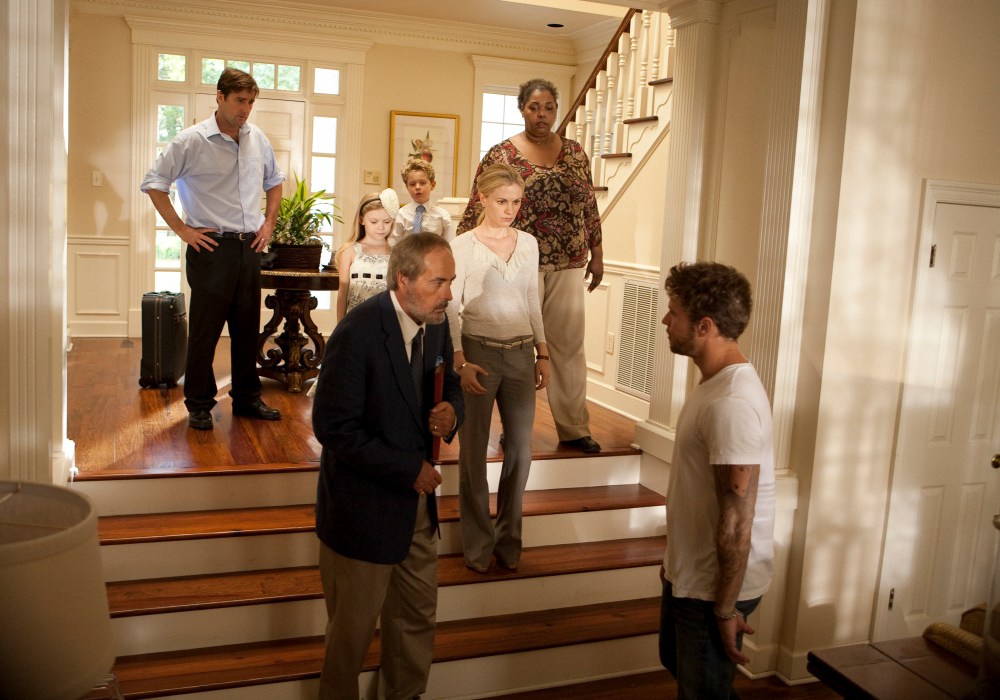
In building these characters the film does well to split the job. It always shows something about them when they’re alone, usually visually, and is constantly rounding in interaction, but perhaps the best work the film does is through dialogue. The black sheep returning to the fold is Scott (Ryan Phillippe) who is always direct. There is also the fact that Charles is very intelligent that could lead to a number of pitfalls, but his dialogue isn’t instantly and persistently showy, and neither of the kids are condescended to. It’s just one tool that that the film uses to constantly add new definition to its main characters, but one of the best used.

One good example both of dialogue and of how the film avoids overplaying its hand is one of the lead-up-to events – an oral presentation Charles has before his whole school. In this sequence, I was reminded of how the speech in Crazy, Stupid, Love devolved from its diegetic script to being a very literal thinking out loud. There’s a clear message, but never one that’s bluntly said. It’s also another good case of follow-through in the subjective editing choices that are made.

There is also good use of montages and cross-cutting sequences that are more nested and less overt than you see many times. For as strong as the film is with its use of dialogue, it doesn’t ignore the visual end of things either and has quite a few visual signatures throughout.

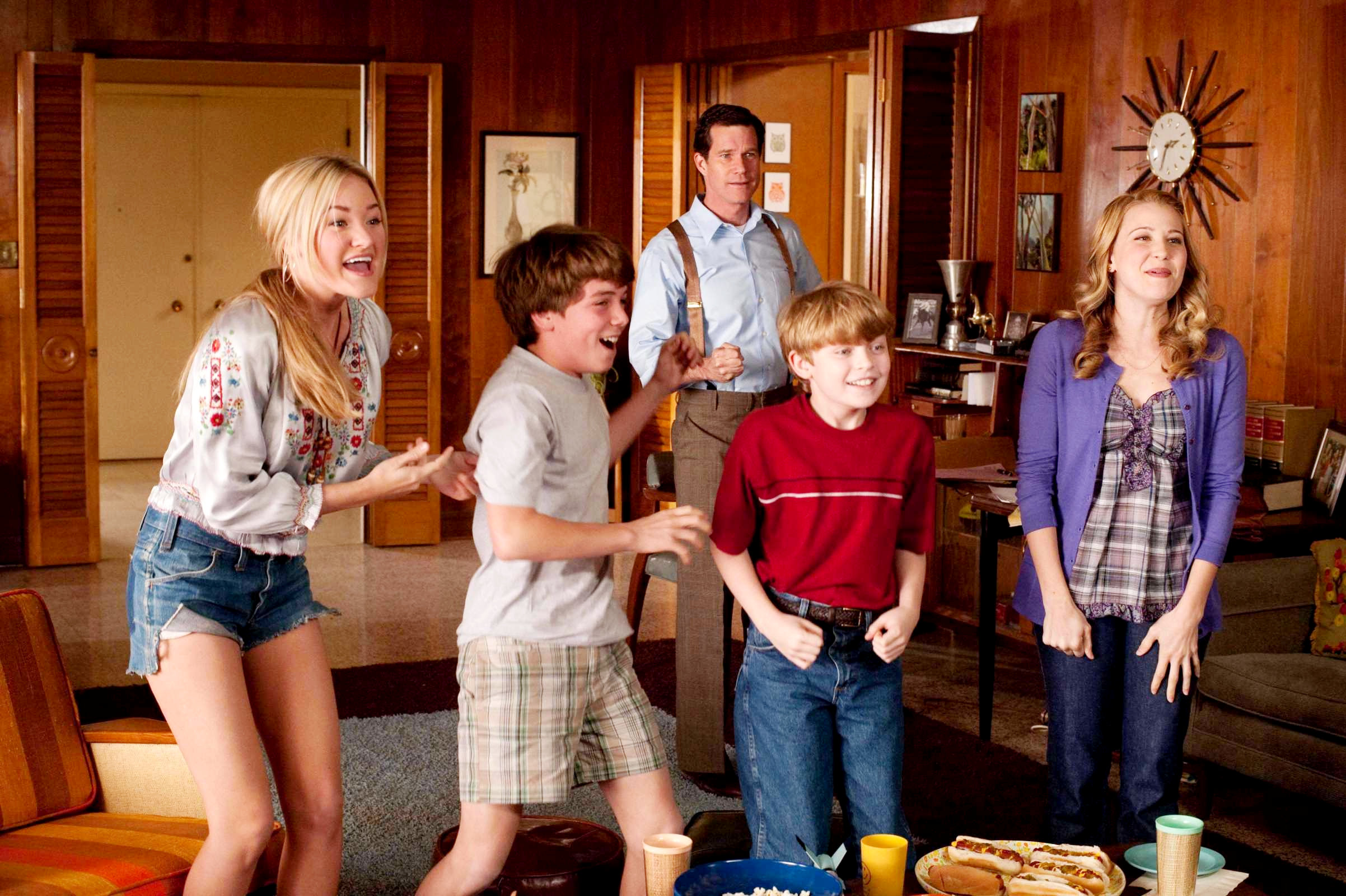
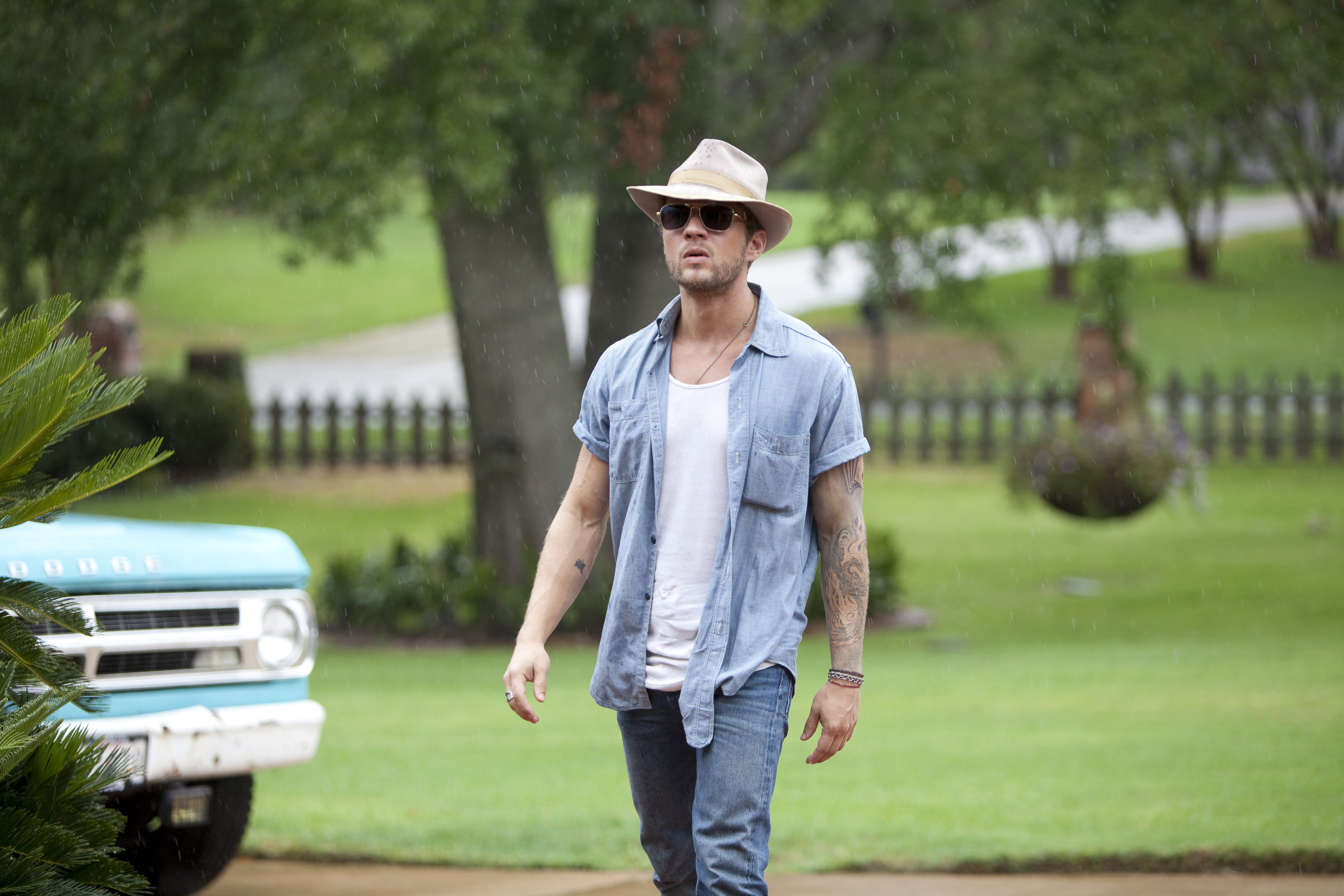
Of course, any film described as character-driven needs its actors to deliver in order to work and this film has that as well. Ryan Phillippe seems to be quite connected throughout and fills in those blanks the script can’t; portraying troubled, irresponsible with good intentions that could just read like a jerk. Luke Wilson, like in Meeting Evil, finds a part that really seems to suit his type, his poker-faced, button-lipped character’s moment of decision reads better due the whole of his performance. Paquin’s facade of control is always erected, even as she loses it, and it makes her a presence that can be reasonable seem to be one that would be acquiesced to, even by Scott. There’s also Powers Boothe with a significant secondary role, that’s sensitive and understated. Boothe is an actor who you literally can’t see enough of. Last, but not least, there’s Riley Thomas Stewart who has the unenviable task of playing intelligent, precocious yet still childlike and endearing, and he succeeds with flying colors. Even when the dialogue is clearly designed to show his vast intellect it just sounds like Charles talking as opposed to an actor doing a line reading, which is a hard task with verbose lines.

Straight A‘s is the kind of film that might slip under one’s radar. I know I’m glad I found it, as it’s yet another dark horse for this year that I really connected with.

9/10

Special Features

Straight A's (2013, Millennium Entertainment)

While they are a little stripped-down with quick cuts to black and spotty audio, the three special features on the disc make up for in content what they lack in flash.

There’s a featurette, which is about trailer-length that’s a quick splicing together of interview and final film footage.

There are interviews with director, producers and several stars of the film, which run about 17 minutes and explore the themes of the work rather well without getting overly-bogged down in minutiae, but also lends a personal perspective from each participant with interesting tidbits.

Most interesting to me was the behind the scenes footage. They were usually rather quick shots taken during production of the set-up of shots, gear being put in place or moved, takes being done, or re-done and the like. This runs around six minutes. It’s bereft of commentary so it would likely be more intriguing for a filmmaker, but it is an interesting touch to be added to the package.

Straight A‘s is out on DVD and Blu-Ray today.

Mini-Review Round-Up March 2013

Here’s my standard intro to this post:

I had quite a review drought to end 2011 so I think the remedy for this kind of post would be to have the post be cumulative monthly. Therefore, after each qualifying film a short write-up will be added to the monthly post. The mini-reviews will be used to discuss Netflix and other home video screenings. Theatrical releases, regardless of how they are seen whether in an auditorium or on VOD, will get full reviews [That is when deemed necessary. As I wrote here I do want to focus more on non-review writing wherever possible].

For a guide to what scores mean go here.

Bestiaire

Bestiaire (2012, Kimstim Films)

This is a film that qualifies for this year because, though I heard of it last year, I had no legitimate chance to see it. I learned of it through a coming soon postcard while I was in New York, the soon it was referring to was not while I would be there.

What’s interesting is that I was anticipating seeing another documentary free of significant dialogue prior to this one, but when I saw this pop up on Netflix instant I had to jump at it.

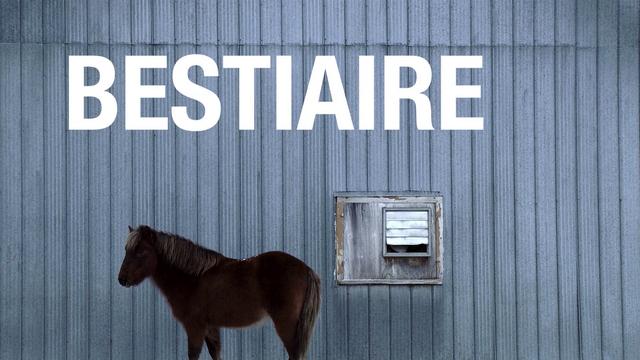
Bestiare plays out like a non-fiction version of Le Quattro Volte inasmuch as the structuring of the very slight, and completely open to interpretation, narrative is nearly invisible. The description of this film on Netflix is appropriately stripped down there are extended sequences of static shot either of animals observing humans, vice versa or sometimes they seem to be staring right at us.

Some of the shots are framed beautifully to convey either claustrophobia or just how nestled some animal enclosures in the modern world are be they farms, ranches, zoos or what have you. As I mentioned, it doesn’t insist upon deciding for you what the interpretation of the film should be, believing instead that the audience is the ultimate arbiter of meaning.

I found the film very effective in places with some great cuts and angles that underscored a harsh indifference. The incessant rhythmic banging of a zebra against a wall, or the frantic pacing of an ostrich, and the, to me, disquietingly laid back work of a proficient taxidermist were scenes that really shocked me out of the lull that this hypnotic film can get you into.

It’s not a long film but it is deliberate. I would qualify it as experimental, and I think more times than not the scenes work, so I believe a 6/10 is fair for now.

The Awakening

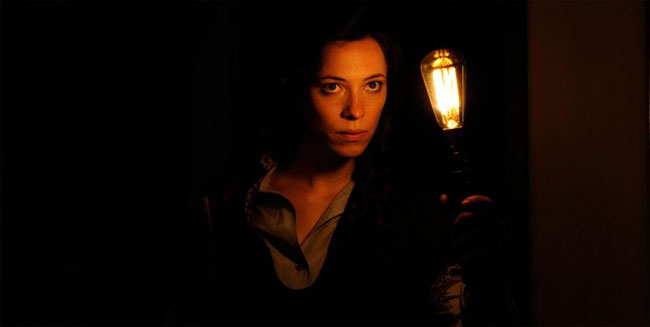
The Awakening (Universal Home Video, 2011)

I will elaborate on this point in a separate piece, but this film is a testament to my theory that drama is the foundation of all other genres. To be brief, even if this film fails to affect you with its creepy atmosphere, it is an effective character piece that delves into psychology as well as the supernatural.

When telling with a ghost tale, especially one that deals with characters who have been so greatly impacted by the sightings, or even suppositions thereof, the acting needs to be up to snuff. This film brings much more than that to the table, there are four top notch performances, one of each “award type” both lead and supporting.

Rebecca Hall, in the lead, is someone I personally I have seen far too little of since Vicky Cristina Barcelona, and she carries this film brilliantly with a fine double-edged performance as a now skeptical ghost hunter. Dominic West plays a character who also has a facade, as seemingly everyone in this film does, his stoicalness is matched by his private pain in this work. Imelda Staunton, is nothing short of riveting. Then there’s Isaac Hempstead Wright (Bran on Game of Thrones, where he’s shown flashes of his capability) whom steals scenes and redoubles the impact this film has.

This is a film that eases into its narrative, it never gives its answers away too easily and stays nebulous about some things. Its timing of reveals is perfect and just when you think you’ve lost it, or it’ll flatline, there’s always one more turn than you expected.

10/10

Sleep Tight

Sleep Tight (2012, Dark Sky Films)

Upon conferring on his IMDb page I am missing one feature from Jaume Balaguero’s filmography after having seen Sleep Tight. His films that worked for me thus far have worked exceedingly well, namely The Nameless, [REC] and [REC] 2. I barely recall it, but judging by my score of Darkness that was more of complete miss than either of his apartment tales (To Let and Sleep Tight).

Balaguero is still a director I’d put at the vanguard of the current Spanish horror scene due to his voice, and it’s why I want to complete his current filmography and why his name being attached to something still garners my interest.

With regards to these apartment tales, a lot of To Let‘s struggles I attribute to a restricted timeframe for an intimate, nebulous portrait to be painted, which is why half the Films to Keep You Awake titles are amazing, and why the other three are forgettable to poor. Here it’s not that there is anything inherently wrong, it’s more a question of insufficient build, unmoving voyeurism and predictable plot points with minimal impact. The actions and motivations are always fairly clear, which in a way makes this film less engaging than his other ventures. There’s a stark blandness and removal of encumbrance that’s supposed to compound the impact but instead dulls it.

In the end, Sleep Tight presents a portrait of a psychopath with out an excess of depth, engagement or shock; it’s sadly flat.

4/10

Leviathan

Leviathan (2012, Cinema Guild)

If you scroll to the top of this post you’ll note that in my review of Bestiaire I stated that it was not the first doc of its kind I was anticipating seeing. The one I thought I’d see first was this film, Leviathan.

Why that came first boils down to chance, but I am glad I saw it first. Both these films have similar constructs in that they’re documentary features with no narration, and practically no dialogue of any significance. Both deal, in part, with the interaction of modern man with animal kingdom, but Leviathan offers a more focused, kinetic, at times dreamlike, other times haunting, look at the subject.

If one were to enter the film completely cold, and watched all the credits through to the end, virtually the only tidbit of information left out of the synopsis was that fisherman were given cameras and told to shoot with them.

The location comes though the end credits, and as nebulous and surreal as some of the early images of the film are, you soon start to see what’s happening.

The most impressive things about Leviathan are: first, the sound design, which more so than the images most of the time, drive home the uneasy balance between monotony and danger of the job. Second, how the Bible passage at the beginning sinks in after it’s done, as does information disseminated in the end credits.

Without knowing what to expect precisely, I found myself retracing certain visual passages and started coming to grips with what I had just seen through the lens.

Leviathan, much like the aforementioned film Bestiaire, is not for everyone, but it is certainly a unique experience and it’s a more immersive, less observational take of this particular documentary niche.

7/10

A Dark Truth

A Dark Truth (2012, Magnolia/Sony Home Entertainment)

More and more in modern cinema, in part because audiences sense it and in part because it’s been seen/done, stories with a moral, considered important, or that have some sort of social or political statement, are harder and harder to make. As enthusiasts of film or sociopolitically aware individuals, there are things you’d like to see on screen. The wants of the latter group can be said to be more altruistic and deserving of representation, regardless, a good film is required to support the aesthetic or activist statement it seeks to make.

To be clearer, here are some hypothetical examples: a film fan can say I’d love to see a serious take on rabies as a horror motif, it’s been too long. Now, outside the world of film that has no real weight. Whereas, if you were to say it’d be great if a film could show the negative aspects of privatizing water, there could be real life impact and eventual change.

Now for either rabies to become a popular horror motif or for privatization of resources and utilities to garner serious attention, the film espousing these things has to be good. Which brings me to A Dark Truth, which deals with the latter subject matter. The film has some very good touches, and the finest intentions in the world regarding the aforementioned issue. However, the anti-corporate, water-should-be-free-and-here-are-the-consequences-if-it’s-not messages, which are very valid viewpoints, are squandered in a film that’s poorly executed on some technical levels, is overlong, has some unfortunate and questionable dialogue and a few questionable casting choices and some good actors in uncomfortable surroundings. The extra-long lead-in to this piece is essentially due to the fact that I like the concept and the goals, but the end product failed to live up to the promise, which is sad.

4/10

Straight A’s

Straight A's (2013, Courtesy of Millennium Entertainment)

A review of this film can be found here.

Storage 24

Storage 24 (2012, Magnet Releasing)

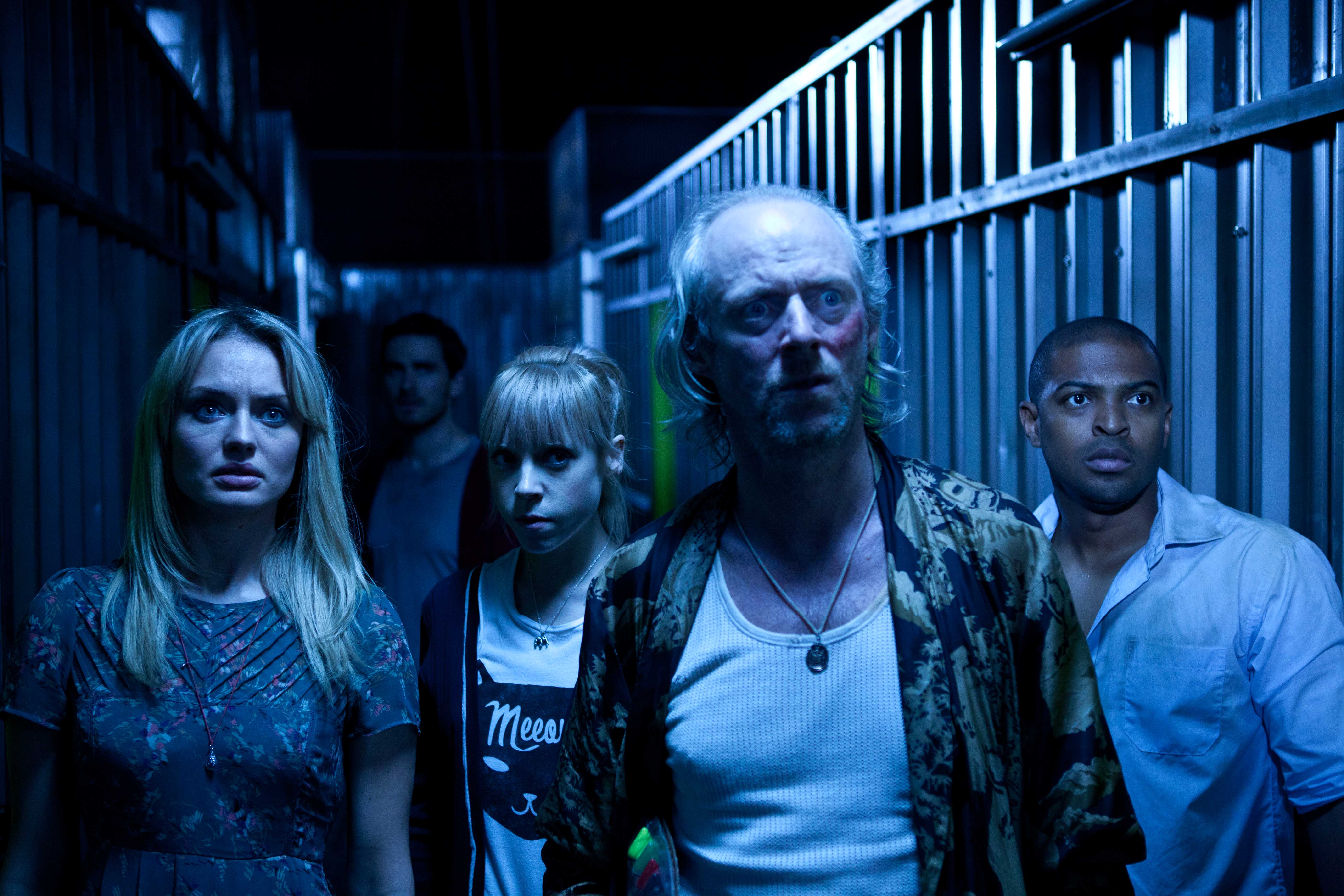
One certainly cannot complain that Storage 24 doesn’t try to develop its characters. However, it does so to such an extent that it very nearly turns the plot detailed in the synopsis into a MacGuffin. The tale is essentially a couple that recently broke up and their friends meet by chance in a storage facility. They make it there despite a suspected plane crash that shut down most of central London. The cargo was an alien creature that’s not trapped in there with them during a power outage. It’s a good set-up.

The sound design, however, isn’t always great and makes the characters seem more oblivious than they are to what is going on. The effects work is pretty good, as is the design of the creature. The alien does end up being a dominant story force you expect it to, but in a film that runs under 90 minutes about half the time is spent mostly in repetitive discussions that are cited as such, and don’t move things along quickly enough. When things do happen it gets better.

Another failing is that the film tries to have character-based connections to the creature à la Super 8, and to be not about the creature, but is more blunt about it, and far less successful for as much time is spent in development, there aren’t many facets to the characters created. They’re fairly basic.

The scenario doesn’t end up being a MacGuffin, but the narrative pendulum swings very wildly and ineffectively in the film. Lastly, the pace, which isn’t bad overall, takes a hit from one too many tracking establishing shots down the corridor, which are void of significance save to try and build suspense, but it doesn’t. Storage 24 tries its hand at a few things, but is too uneven and unsuccessful with regards to most in order to work.

4/10

Short Film Saturday: The Little Matchgirl (1996)

For a little more than 30 years, from the late 1920s to the early 1960s, you’d be hard pressed to find a year wherein the Academy didn’t nominate either Disney or Warner Brothers for Best Animated Short Film. Keeping that in mind, I decided instead to search out more latter-day Disney shorts that I may not yet have seen.

In this day and age the short film has to find new avenues to find audiences. Gone are the days of double-features and programs that were expected to include either and animated short or serial chapter and a newsreel. This short was included as a bonus feature on The Little Mermaid platinum edition DVD release, and is appropriately another Hans Christian Andersen tale.

Once Upon a Time in the 80s: Television (Part 11 of 17)

This is a recapitulation of a paper I did in college. This is part eleven in the series to read other parts go here.

As time has moved on the line between television and the movies has become blurred. In the 90s and continuing through until today no TV show is safe from becoming a feature film at some point and with Nick at Nite and TV Land there’s no longer a as much of a generation gap because these shows can be seen by all now. 


The landscape of television changed forever in the 1980s when the Fox Network, headed by Rupert Murdoch, was launched. For a few years they were the butt of jokes but they soon went on to challenge the major networks with shocking, biting, satirical programming such as Married…with Children, The Simpsons, Martin and In Living Color and later even had their own cult phenomenon, The X-Files. Fox busted the monopoly ABC, CBS and NBC had. In the mid-90s The WB, a network by Warner Brothers, and UPN, Paramount, were born, and the WB is currently a tenth of a point out of third in the Nielsen ratings (As of this writing. The WB and UPN have since merged to form the CW). 


Cable television along with MTV, previously discussed, became a reality and by the end of the decade was commonplace in American households. HBO (Home Box Office) along with Ted Turner’s stations TNT (Turner Network Television), TBS (Turner Broadcasting System) and CNN (Cable News Network) gave cable a great appeal, particularly with Turner’s purchase of the MGM film library. HBO’s selection in the beginning was small and obscure, but they slowly began to gain an audience.


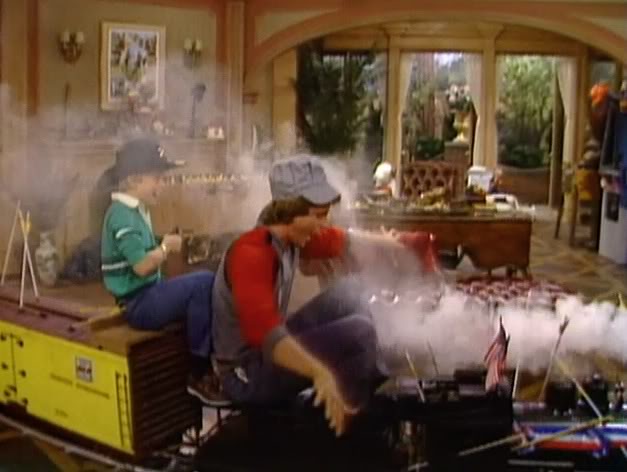
Silver Spoons (CBS)

Network television at the beginning of the decade was very interested in affluence, not nocessarily middle class America. There was Dallas, Dynasty, Silver Spoons – then there was a slight change where the rich could help the poor in Diff’rent Strokes which actually did have a social agenda that was immediately copied in Webster. 


Family programming was very important, and was at the top of the ratings for much of the decade with The Cosby Show, ALF, The Facts of Life, a family of sorts, and Family Ties. While Dallas was rolling along in 1982 along came a cross-section of America called Cheers this program was nominated for 117 Emmys during its 11 year run. 


In the later 80s we had two strong-minded and independent women burst on to the small screen in a big way. The first was Candice Bergen playing Murphy Brown; this is one of my favorite shows because of what it could do by having the protagonist be a reporter; the show was always current and always very political. In the early 90s Candice/Murphy got into a public war of words with Dan Quayle who objected to Murphy Brown having a baby out of wedlock. It was a truly intelligent show and every episode worked beautifully and the cast knew how to work as an ensemble. There was also Roseanne, starring a former stand up who described herself as a “domestic goddess,” coupled with The Simpsons she lead the attack of the dysfunctional families. On Roseanne no matter how weird things got we saw they’re just a family like any other. They have different problems and manias but they do love each other.


Rainbow Brite and the Star Stealer (1985, DiC)

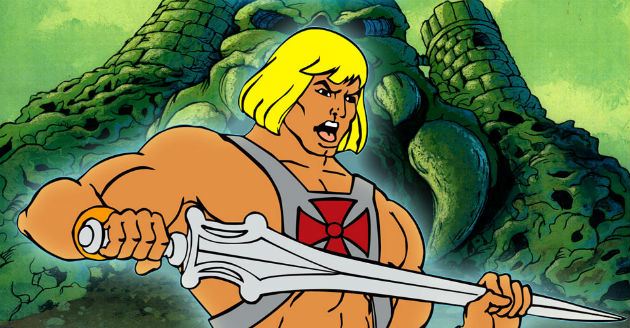
In the 1980s animation was practically all TV the Looney Toons and Woody Woodpecker were all relegated to re-runs and the half-hour animated program was king and there were some good ones. The always hard to categorize Jim Henson had Fraggle Rock and Muppet Babies. Thames Productions brought us some of the most unique programming in this genre with Danger Mouse, a mouse who was a spy and Count Duckula, a vegetarian vampiric duck. There were, of course, mythic heroes like Thundercats, Transformers, He-Man and the Masters of the Universe and his sister She-Ra. Most popular cartoon series of the 80s never made it to the big screen in the decade, He-Man did and that was miserable, there was also a Rainbow Brite film, but no Smurfs (yet) or Snorks, and most shockingly, no Thundercats, which was shot like a film with weird angles and was a precursor to the anime craze that was to follow in the 90s.


While television in the 80s catered much more to what mature audiences wanted to see, it also knew what kids wanted to see because many of these shows still air today. Television is always going to be television, you’ll get entertained here and there but you can’t watch too much without realizing it will almost always the same thing in a different package. Every few years something new will come along and really blow you away but that’s it, and sometimes it doesn’t last. TV in the 80s was better than in the 90s because there was something to reflect. There was a social point to make, and on occasion there were serious political happenings that deserved attention. The 90s were just something we made it through and the 80s were a decade people lived through. Needless, to say the best show of the 90s was Seinfeld a self-professed show about nothing a show that dabbled in the minutiae of everyday events, not that it’s not a brilliant show, but it’s also a tremendously apropos reflection of the decade.