Review- Big Miracle

Drew Barrymore in Big Miracle (Universal)

Big Miracle is based in part on a true story. One of the things that was interesting while watching it is that as it progressed I realized I was vaguely aware of the story as a kid. This was around the point I saw the set design was pretty accurate as there was in the film a globe I had as a child around that time. Another interesting tidbit is that if you stick around for the end credits you’ll see real footage that shows you how close to the story they stay.

The film really does tell a multi-faceted tale in as much as it deals with the political/military involvement in the rescue, the journalist’s perspective, the environmentalist’s viewpoint, the indigenous population, the oil company to an extent and also some well-meaning opportunists. This seems like a lot to handle, and it is, but the film does really well with it all. The balance stays about as good as it can be. In the end all the characters are examined, respected and working towards the same end.

Clearly with all those avenues there is quite an ensemble at work to make it happen. The two leads would have to be Drew Barrymore and John Krasinski. Both do very well but Krasinski’s the surprise offering more depth than I’m used to. They get great help from Ted Danson, Dermot Mulroney and Vinessa Shaw as the somewhat antagonistic triad. Also very noteworthy are John Pingayak and Ahmaogak Sweeney, as a tribal leader and his grandson respectively. Newcomer Sweeney is featured in perhaps the best rendered and written scene where he alone, after his grandfather failed, finds his connection to the whales.

It is not a film about the whales in and of themselves. It’s of course about the people involved but also in the grand scheme of things it’s about environmental responsibility and humanitarianism most ostensibly and the other general themes that always find their ways into stories.

As mentioned above the best moment of the film is one I’d characterize as a spiritual awakening. While there are a lot of themes and factions fighting for attention in this film the importance of the indigenous population is not overlooked and the culture is given a respectful treatment, which folds into the narrative rather than standing apart.

This film does manage to have its emotional and moving scenes both at a moment of apparent defeat and during the climax. It manages to make you invest in the characters and though it’s not Free Willy and the whales don’t become characters per se you, of course, feel for them also.

The key antagonists, roadblocks to freeing the trapped whales, are politics and money, which usually go hand in hand. I think this aspect is well handled for the most part. While there was a lot of backbiting both sides seemed accurately portrayed and the symbolism and political chess game seems well drawn.

Big Miracle might not be the simplistic movie you anticipate it to be but for all the avenues it explores it never gets unfocused. Much like the news story it’s based on it’s a unifying force that brings its characters together. It’s a fun, enjoyable and occasionally emotional movie.

8/10

Review- The Woman in Black

Daniel Radcliffe in The Woman in Black (Hammer Films)

Perhaps what’s most noticeable about The Woman in Black is that it is Gothic Horror. It un-apologetically so and it is a fine and darn near pitch perfect example of it too. One often hears the word atmosphere associated with movies, if you’ve ever wondered what people mean by that watch this movie.

I have frequently written about the teaser scene in a horror film, the quick scare at the very beginning to give the audience a jolt before building the story and characters. Not only does this one tie-in very closely, which is important but it’s very memorable, brilliantly shot and staged.

The drama of this tale despite its shocks is rather subsumed. It isolates its protagonist effectively and allows him the time to feel the place, find information and get intimations about what this place is really like. His story is also well and clearly defined early on and adds an element of necessity to the story which is key as the question of “Why don’t they just leave?” is one horror films frequently have to contend with.

The film uses practically every element at its disposal to add to the tension. It has the unwanted outsider aspect without overdoing it, the location plays a role as does the set design. The isolation of the character allows all the jump scares to more or less work because he’s usually spooked and there’s nothing done aimed solely at the viewer. Everything becomes a chore and an obstacle that makes the coming events have even more impact and the stakes rise consistently throughout.

The film is further supported by tremendous ensemble work. Horror films typically get the short shrift acting-wise. With such a tale as this the actors really need to sell it and work well with one another as interactions are at a premium. The cast is lead by Daniel Radcliffe whose growth as a performer has been something to watch. This may not be the character or project one would’ve expected to start the next phase of his career but that’s the genius of it. It’s a character and it’s a subdued work not a tentpole, regardless he sells it. Ciarán Hinds and Janet McTeer also shine in disparate but crucial supporting roles. Not to be overlooked are the ensemble of children in this film who almost always play in crucial scenes and are a big factor.

When I spoke of jump scares earlier there is an implied allusion to sound design there which I will address here. Now I typically take issue with scares based mostly on the sheer volume of the accompanying sound effect but this film seems to have a progressive plan. Not only are these jolts always accompanied by a creepy visual but they also go down decibel-wise as the film moves on, indicating a decided plan, which works. Once the movie has you it needn’t try as hard.

There are few things that can match a well-made Gothic horror film, an excellently crafted one is nearly untouchable. This film is the former, a truly special and brilliant horror film.

10/10

So You Wanna Win Best Picture?

E.T.: The Extra-Terrestrial (Amblin)

To be clear this article is not meant in any way, shape or form to disparage the Academy. This list is aimed at the film enthusiast who may, as I used to, get a bit too worked up about who won or lost. Granted you will link your opinion to a sense of justice, however, it bears keeping in mind that below are 25 films all were nominated for Best Picture, did not win but all have a legacy stronger than most winners of the award. Ultimately, time, the public and critical re-appraisal are what determine the films that last, awards, while nice, are in the moment comparatively speaking. The Oscars are a great show and if something or someone you like wins it’s even better but if not it’s not the end of the world. The list below is evidence of that.

Films That Didn’t Win Best Picture

1. Citizen Kane
2. E.T.: The Extra-Terrestrial
3. King Kong
4. The Wizard of Oz
5. The Color Purple
6. The Sixth Sense
7. The Maltese Falcon
8. Apocalypse Now
9. Raging Bull
10. Star Wars
11. JFK
12. A Few Good Men
13. Pulp Fiction
14. As Good As It Gets
15. Double Indemnity
16. It’s a Wonderful Life
17. High Noon
18. Miracle on 34th Street
19. The Ten Commandments
20. Dr. Strangelove
21. The Graduate
22. The Exorcist
23. Chinatown
24. Jaws
25. Taxi Driver

Oscar Nominated Animated Short Films

In recent years there have been nationwide screenings of the Oscar-nominated short films, which is a great thing for many reasons: clearly it promotes the filmmakers but also as a filmmaker and Oscar spectator you’d like to have an informed opinion based on more than just the title and/or the snippet shown, which I have operated under many times.

Sunday

Sunday (Dimanche) (The National Film Board of Canada)

A really charming and imaginative piece that sees the world accurately through a child’s eyes and more importantly through his imagination.

The Fantastic Flying Books of Mr. Morris Lessmore

I will start out by saying I do love the concept of this short. There are some funny, insightful and charming moments, however, this short also bothered me on more than one occasion. It’s the most original idea but yet feels the need on several occasions to incorporate tropes that make it more mundane, more ordinary and less intriguing. One of the tropes is absolutely unnecessary spoon-feeding that puts a damper on the ending. The concept the film has gives it an edge I just feel some of the choices it makes means it doesn’t live up to its fullest potential. All that said I fully anticipate this film will win even though there are several worthy shorts.

Wild Life

Wild Life (The National Film Board of Canada)

If my gut about Oscar voters is right this is a long shot but by no means should it be. The animation in this film is beautiful in a painterly style and the story has comedic and dramatic impact. It also features some frames, a title-card driven subplot and documentary style confessionals. For a short it’s got so much going on, great stuff.

La Luna

La Luna (Disney/Pixar)

An absolutely wonderful and whimsical tale that is pure magic. The short features no actual dialogue but says so much. It boasts a beautiful score by Michael Giacchino and great 3D animation. My favorite by far.

A Morning Stroll

A beautifully constructed and simple tale that uses several different animation styles to equal effect.

The animated program also usually features several highly commended shorts, as the nominees usually run short.

This year’s highly commended selections are: Skylight, Nullarbor, Amazonia and The Hybrid Union. All are very good and consistent across the board. In fact, some of the biggest reactions at my rather full screening was during this portion and I’d venture to say Skylight was the funniest one by far.

This year’s animation slate is quite strong with a few titles I’d be happy to see win.

Short Film Saturday: Aqua

This post serves two purposes in essence: one it serves to highlight a great young talent in animation (Gints Zilbalodis) and second to steer you towards a great Twitter account. I would not have seen this if I didn’t follow @ShortOfTheWeek, which is a great resource if you want to discover shorts on your own time. The film was uploaded to Vimeo, the more cinematic video site and is accompanied by this text written by its creator:

My name is Gints Zilbalodis, I’m 17 years old and this has been my passion project for the last year an a half. It started as vague ideas of a cat, ocean and overcoming fear. Then through numerous battles with the script it shaped up to something similar you can see now. After seven drafts I felt that it was ready to start storyboarding, but the film kept evolving all the way until the sound mix was done. I kept learning about filmmaking everyday, going through all of the different processes.

I chose the cat as the main character mainly to save time with exposition, because people know that generally cats are afraid of water. So I could just jump right into action. Plus cat is a fairly small creature and the ocean seems even bigger to him. And of course cats are much easier to draw than humans.

The film’s music is by my friend Bertrams Pauls Purvišķis who helped a great deal to tell the story the way it was intended. Music had a lot of to convey in very little time and it came out much better than I could’ve ever expected.

I’ve been delaying the release for quite some time, because as I learned by making it, a lot of mistakes made earlier when I didn’t have the experience had to be remade from scratch. I’m glad it’s finally done and I can show it to the world.

I will only further comment by saying its very visual but the music is brilliant, enjoy!

Favorite Older Movies First Seen in 2011

Now, I know what you’re thinking “Another list and in the middle of February no less?” Well unlike my Best of 2011 (#25-20, #20-16, #15-11, #10-1), my awards (Nominees, Acting Winners, Behind the Scenes Winners and Film Winners) and my horror list timeliness isn’t as much of a concern with this list because I am discussing my favorite older films that I viewed for the first time last year.

I have to tip my hat to @bobfreelander from whom I first heard of such a notion. Now I was hesitant to backtrack through 2011 but in seeing all those he posted I just had to and I’m glad I did. I could have split it up amongst some Honorable Mentions, Well-Known Films I Just Happened Never To Have Seen and Films I Never Heard Of Then Saw And Loved but I decided to throw them all into the same heap and unranked no less!

Discovering an older film you enjoy is a pleasure so I decided to not add the stress of splitting hairs, plus as Awards season winds down we’re all tiring of rankings anyway. So I picked 31 titles that I most enjoyed. I always seek diversity and balance when making these lists up and I think this may be the most mixed bunch of all. Enjoy!

Mrs. Miniver (1942)

Mrs. Miniver (MGM)

I already wrote at length about Mrs. Miniver in the link above. Suffice it to say like any “through the years film” of a certain length you must give it time. I watched it for Greer Garson any loved it all.

Witness for the Prosecution (1957)

Witness for the Prosecution (United Artists)

Courtroom dramas don’t come much better than this, Charles Laughton in top form and Marlene Dietrich steals every scene she’s in. It’s as compelling as it is entertaining.

Piranha (1978)

This is a movie night special. It was picked from Netflix as something to try. I had, and still have, avoided the remake but I really enjoyed this film, great horror/comedy as usual from Dante.

Basket Case (1982)

This is one of two Frank Henenlotter films on my list. This one, in spite of its effects, I interpreted as a less comedic, more horror approach than the second film based mostly on conception, execution and tone. I was told I’d enjoy it and I did because the concept really works.

Reservoir Dogs (1992)

There will be a few films on the list which will be somewhat emblematic. The first Tarantino I saw was Kill Bill. I never really backtracked until last year for many reasons. When I did this, and not Pulp Fiction, was my favorite.

The Howling (1981)

Here’s Joe Dante again. In some cases when I was trying to break ties I tried to have another director represented but in others I knew I had to have the film on the list and didn’t give it a second thought. Here’s the best film I saw when I was on my werewolf kick.

Son of Frankenstein (1939)

I really should and could get all the Universal box sets but the one I found cheap was Frankenstein. I found all of them enjoyable to a different degree but I concur with the sentiment that this is better than the original.

Trick ‘r Treat (2007)

Being a fan of the horror genre I don’t know how I managed to avoid this one for so long and didn’t have it ruined for me but nonetheless I loved it and went in after the hype had died down, which was a plus.

Videodrome (1983)

I really have to get better at completing filmographies. I saw Spider shortly after it came out and absolutely loved it but never made a concerted effort to seek more Cronenberg. I caught a few this past year. This was the best one I saw.

[REC] 2 (2009)

Though the found footage subgenre is running out of wiggle room I did ask for suggestions, and thankfully got good ones, and I love both these films but I really love the way this one flipped the series on its ear. Jaume Balagueró is a director I had to pick just one film for and whose name makes me press play.

Berlin Alexanderplatz (1980)

In my review of The Turin Horse I talked about how there’s only baptism by fire when it comes to learning Tarr’s canon and no film is really an ideal starting point in my estimation, no prior film. Well, Fassbinder does likely have a logical starting point of his own but I decided to start here. Yes, I watched it. All 894 minutes or so, by Netflix discs no less and I’d wait for them and watch them immediately upon arrival and I loved it. Some of my favorite movie watching moments last year were having my morning coffee and playing the next few chapters. Not only did I like the whole thing but then in the very last section it absolutely blew my mind by the direction it took and how brilliantly and boldly it went there. So now I need to figure out where to go from here but it was a wonderful place to start.

Careful (1992)

I had the chance to see more of Guy Maddin‘s features last year (as I am rather well-versed in his short films) and this one took the cake, what an incredible concept and handled as only he could.

La Jetée (1962)

I probably won’t say anything about this film that hasn’t been said before except to repeat that it’s stunning, original and inspirational.

Flash Gordon Conquers the Universe (1940)

I love serials. I have since I first learned of them. One of my first posts on this site was about feeling gypped by purchasing a “composite” (i.e. a feature film version which makes practically no sense). However, my affection for them has far exceeded the rate at which I’ve been able to see them, so if I have a chance to, like on Netflix for instance, I usually do. This is the first Flash Gordon I encountered and though I’ve seen a few earlier this one is still my favorite of them.

Berlin: Symphony of a Great City (1927)

One of the most accurate titles you’re likely to see. It is the day in the life of a major metropolitan area but the way it’s cut and shot really is symphonic.

Attack of the Killer Tomatoes (1978)

Last year was notable because I was able to finally see some B-Movies that wanted to be funny and actually were. This is one of them. This was a favorite of my best friend in junior high but I had no interest in seeing it at the time. I’m glad I finally did.

Strike (1925)

I am not one who subscribes to the theory that Eisenstein’s films are more important than they are enjoyable. I think his contribution to film touches every possible facet of it, it’s complete so, yes, his work important but not a chore and I enjoyed seeing Strike very much.

I Bury the Living (1958)

I remember after I saw this film I tried to remember where I first heard of it: it was in Stephen King’s non-fiction book about horror Danse Macabre. He listed it in an appendix as one of 100 excellent horror films released between 1950 and 1980 or so. I agreed with his assertion immediately. It’s a jarring film but brilliant at both ends so to speak.

Manhattan Melodrama (1934)

This is a film I caught during 31 Days of Oscar last year and it’s part of why I love the festival. You will turn up some surprises or films you never saw. I love the title too, the film knows what it is but does it so well and is very memorable for that reason.

The Nickel Children (2005)

This is a movie I found at my local library and more proof that you need to use all sources available to you to find worthwhile films. This movie is not an easy one to watch as it deals with kids who live on the street whether kicked out or have run away and the harsh realities they face and what needs doing to survive. The film could be more sensationalistic than it needs to when dealing with subject matter such as child prostitution, juvenile delinquency and so on, barring one scene the film handles it all very well.

Phantasm IV: Oblivion (1998)

I have to see the Phantasm series again. If there’s not a box set there should be. I’m not sure there’s a horror series with a better, more consistent through-line than this one, which continuously adds layers to the equation. I saw them all as they popped up on Netflix and it’s hard to say which of the last two I enjoyed more but they really do need revisiting, it’s fascinating stuff.

Charcoal People (2000)

This is a great documentary because all it does is shed light on an issue and give you food for thought, it gives you facts. Charcoal People is about Brazilians who cut down trees to make charcoal that is sold to international car manufacturers to make pig iron, which is, of course, the cheap construction solution. Much of it deals with these people’s lives eloquently and poetically but it also addresses deforestation and the conundrum they face, essentially they don’t want to contribute to the deforestation of the Amazon but they have no other means to make a living. It’s powerful stuff.

The Flyboys (aka Sky Kids) (2008)

This is a film I knew about for sometime. It did some festivals but sat in the can for a while. Then I heard there was a premiere but never saw any evidence of the film say like a DVD. I figured it was just going to be one of those films I never saw because I couldn’t. Well, the world is a funny place. Much the way certain musicians retain or have popularity in unexpected regions so are the curious ways of distribution deals because I saw this film on a premium movie channel in Brazil. It’s an interesting one which has its first plot point feeling very climactic but it doesn’t really slow down from there (As a matter of fact my aunt wondered what took me so long because passing through she thought the movie was nearly over) and I really enjoyed it. In some ways it’s like a lot of kid’s movies but it does have a unique combination of elements and always keeps things adventurous so while changes in the story are surprising they’re not mutations of tone or genre.

Demonic Toys (1992)

This movie is part of the reason that this list is called “Favorite” and not “Best.” I don’t usually distinguish between the two but this is the rare film in my estimation that garners that elusive title of “So Bad It’s Good.” It has an audacious script by David S. Goyer (pre-Nolan Batman films) and a great albeit dubbed evil kid performance by Daniel Cerny, good flashbacks and chemistry between leads. For all its faults, which are myriad, I still found it to be very enjoyable to watch. Beyond that it nearly defies description. I wanted to include it in my 61 Days of Halloween series but I stuck with mostly posting about the original class, this year I may include it.

Der Wilden Kerle 5: Hinter Dem Horizont (2008)

I first saw a film from this series on Netflix but sadly they only offered it with the godawful American dubbing furthermore the US distributor has labeled part two as part one for reasons unknown. So thanks to the magic of the internets I tracked down most of the films and not only is the the first one I saw another film when watching it subtitled the series absolutely refuses categorization and gets curioser and curioser as it goes and you never really know what genre you’ll stumble into making it even more fun.

Burnt Offerings (1976)

This is another Danse Macabre special and after I was finished watching I could not find enough superlatives to laud it with and it held up on second viewing too. Dan Curtis brings to this the same palpable tension that imbues Dark Shadows minus the markings of daytime TV. I was quite literally gobsmacked when I was done watching it.

Lake Mungo (2008)

This was a film that I also found thanks to my seeking out found footage films worth watching. What’s most compelling about this film is its construction. It’s an after-the-fact mockumentary that incorporates a lot of found footage and it also provides some amazing and chilling twists and turns.

Face to Face (1976)

Proof that I have diversity in this list is that I have things from B-grade horror/comedy to this long lost (to Americans anyway) film by Ingmar Bergman. I have been enamored with Bergman’s work since I first saw it and slowly but surely have seen all I could get my hands on, owning most of it. The funny thing about Face to Face is that I actually read it before I saw it. I happened upon a script one day, in an old pocket book edition, read it and I still have a photocopy in my files. The film is much more vibrant and crystal clear to me than the script was, I have read a few other Bergmans and didn’t encounter that particular quandary. Regardless, it’s quite the mind-play and one of Ullmann’s strongest works.

Burning Secret (1988)

This is a fascinating film which actually prompted me to buy the short novel its based on. I think the adaptation is really great not only because it manages to capture the right elements and change a few that it needs to but it strips the inner-monologue from all characters, which while illuminating leaves less of an air of mystery to the tale. It also allows the film to be quite visual and features great performances by all three featured players Klaus Maria Brandauer, Faye Dunaway and David Eberts, in his only role as an actor.

Frankenhooker (1990)

I was fortunate to win this in a Twitter giveaway (so enter them, you can win) and I must say I was laughing from start to finish, as I was supposed to. As I said under Basket Case I felt this one was much more skewed towards comedy and maybe the better for it. Hilarious.

Conclusion

So there’s my list. This year’s is taking shape and who knows how different it will be I’m much more tuned in to 31 Days of Oscar this year, anyway, I’m very glad I did this because if anything it’ll keep me (and maybe you too) on the lookout for older treasures.

A Reading and Review of The Turin Horse

Erika Bók in The Turin Horse (Cinema Guild)

NOTE: A film like this warrants discussion beyond a typical review. While some relevant plot details are discussed they are not what I’d deem spoilers.

Béla Tarr. Perhaps one of the most daunting things to contend with when writing about him or his films is trying to encapsulate him and/or his work for the uninitiated. For to write this review solely as the fan and devotee that I am would not do for all who may come across this article. The read of the film that rang true to me became apparent very quickly. However, the prior question nagged me. So how do I go about it? Carefully and with explication but not what I’d classify as a spoiler. Recently, upon viewing Fata Morgana I tweeted that I was glad it wasn’t my introduction to Herzog and that it likely should’ve been the last film of his I saw. With Tarr there really only is baptism by fire I feel and I’ll attempt, aside from reacting, to give a bit of a primer for his work. My baptism by fire occurred by acquiring and watching his seven-hour epic Satantango while in college and I’ve been hooked ever since.

This is as good a place as any to discuss the pace and a few other trademarks of Tarr’s work. Tarr has shot only black and white for the past 30 years. He moves the camera beautifully and intricately at times while using very long takes. I counted shots in this film and came up with a similar number to reports I read: 30. The running time is approximately 146 minutes meaning the average length of a take of about five minutes when Hollywood has us conditioned to expect cuts every five seconds, depending on genre. All the cuts are good, some are wonderful and the pace works for the tale but is worth noting for those who are unfamiliar with his work. Gird your attention span!

With regards to this film, as I started to watch it what struck me is that it seemed like his own version of Jeanne Dielman. This allusion to Chantal Akerman is not completely my own Scott Foundas in a Facets symposium on Tarr made the comparison that made me want to see Jeanne Dielman in the first place. However, while he’s talking stylistically in terms of camera movement, mise-en-scene and blocking; here the narrative in many ways resembles in that in Jeanne Dielman in as much as the film most reveals its characters and their story in the slow but steady deterioration of daily routines.

The setup is fascinating in two ways: First, the name of the film refers to the incident wherein Nietzsche supposedly lost his mind, he so felt for a horse being beaten by his owner that he broke down in tears, intervened and embraced the horse and was never the same. The story then is really about the owner of said horse and his daughter, however, I’d caution you not to forget about the horse and the title and watch him and his arc and the relationship the family has with him. Second, in a structural consideration the inciting incident occurs in a voice over wherein a detached, unidentified narrator tells us what happened and that propelled an unseen Nietzsche into madness and affected the horse and the family in the long run.

The film is above all indirect, even when seemingly being direct, which is part of its brilliance. The film is about the inevitability of death but it’s not spoken about in certain terms. The bare minimum these people need to do to survive starts to deteriorate as does their ability and willingness to live, mostly due to said uncommented upon inevitability.

Perhaps what works best is that it really creeps up on you. These routines play out repeatedly, shot and cut a little differently each time such that the slight changes at the start might not be picked up but then you start to see them.

With regards to moments that are direct there are a few ways to interpret them. Perhaps the pivotal scene where there can be some debate is one wherein their neighbor comes over because he’s run out of Palinka (Hungarian fruit brandy). It’s human nature to want to hang your hat on something when watching a story that’s not traditional, therefore when watching a father and daughter just doing what they do in a desolate countryside in the middle of an unnatural windstorm you listen to the neighbor’s wild theory. Ohlsdorfer, the father, dismisses it as bull and some reviews as a red herring, I feel the truth lies somewhere in the middle.

You don’t have to know Tarr’s cinema to start to sense that there’s a metaphysical nature being applied to a mundane setting, a sort of allegory free of dogmatic restraints. The neighbor’s theory on what’s wrong with the world and life in general may be only his mad formulation but his view, like anyone else, is all he has and everyone’s seeking an answer, we may change it, we may not have one but anyone’s guess is as valid as the next to questions like “What’s the point of all this? What’s going on? Why am I here?” The neighbor’s theory may be vague and labyrinthine but part of what tips it towards truth for me is that he made it a specific revelation to each individual and not an externalized event. I know I’ve have been aloof in the theory’s description because I think it’s open to individual interpretation. My inference that it’s closer to fact or fiction falls in line with my final interpretation, which deals directly with how the film ends, which I will not reveal.

Similarly oblique is the passage read from a book left as a gift by a band of Gypsies passing through for some water. However, in that it speaks of defiling of the Holy Land and damnation, in short inevitability, so it works. It connects to a theme rather than offering and epiphany, yet I did have one. Only as I was just walking out of the theatre after the very short closing credits did I realize the last domino that needed to fall for me and it did and it made the whole thing that much more amazing.

The film keeps its cast of characters small and the location virtually unchanging. It’s probably too claustrophobic to be called a chamber drama. That sense heightened by the sound editing and mixing which plays the persistent sound of the wind at just the right level to unnerve you and will then drop entirely to bring in Mihály Vig’s dichotomic score, half-mellifluous and half-discordant.

Another thing that bears mentioning that there’s next to no dialogue. Yes, there is the neighbor’s extended monologue which gets a few replies, curses thrown at the gypsies and occasional exchanges between father and daughter but no scene I would call a conversation scene and it’s all the better for it. The lack of the spoken word invites you to participate in the film more freely, draw your own conclusions.

The actors János Derzsi, Erika Bók and Mihály Kormos are all brilliant. The main tandem do so much physically and with their eyes they scarcely need dialogue to convey their emotions and turmoil.

The only other plot point that really bears any discussion is the attempt the Father and Daughter make to leave their house. You are not told or shown why they don’t make it to some safer locale. You are left to speculate on it. I drew my own conclusion, you may draw a different one. It’s just one of the other great touches this film has. Again it’s something that fits in my reading for the story, in a film about the inevitability of death what escape can there be, really?

It’s a bit sad to have to say that not all directors are what you can call visionaries but Tarr is definitely one. What you see on display in The Turin Horse is the mark of an artist. There is a style and language all his own, which he has cultivated through the years. I love Hungarian cinema from what I’ve been able to see but at the start of his career you wouldn’t know just by watching one of Tarr’s films it was his, now his style is unmistakable and inimitable, unique in all the world. If this is truly to be his last feature what a glorious way to go.

The Turin Horse is a flat-out masterpiece. That’s not a word I use lightly. There are films I consider masterpieces but I did not proclaim them as such upon first seeing them. However, when trying to encapsulate my reaction that’s the first word that came to mind. It truly is, it’s sheer brilliance and believe me when I say that my stating several facts in the course of this piece does not detract from the experience of the film, it’s just a guide. Watching and immersing yourself in it is a lot more valuable and harder to describe than a few instances in the story. If you have decided this is the kind of film you’d like to see (it’s certainly not for everyone) it’s worth seeking out on the big screen.

10/10

For the Return of the Juvenile Award

This can be considered a general call to attention for several entities. Firstly, to the Academy of Motion Picture Arts and Sciences, you will be asked in the course of this article to un-retire an award. Now several categories have been scratched from the list of Oscars handed out annually many of them with reason. For example, there used to be separate color and black & white cinematography awards. This was logical because there is an inherent and obvious difference in shooting black & white versus color. It was also logical because for many years there was a fair split between films shooting in either medium. Now the question “Color or black and white?” is hardly asked and the award no longer is qualified.

That is an example of an award that has been retired and should be. An award that should be un-retired and become a staple is the Juvenile Award. The Juvenile Award was presented 10 times between 1935 and 1960. It was a category where there were never nominees but on occasion the academy would feel a performer was worthy of honoring.

Now the nomenclature is a little dated and if the Academy were willing to update the name that’d be fine. The fact of the matter is that due to the outstanding and consistent achievement by young performers year after year there should be a category to recognize these achievements. We’ve reached a point where the occasional young nominee as an honoree and as a pseudo-stunt is old.

This will allow proper credit to be bestowed upon young talent and thus Keisha Castle-Hughes would have her statuette and so would Haley Joel Osment and he would’ve been nominated appropriately as a lead amongst the youths anyway.

There is precedent for honorary statuettes becoming standardized categories, for example, honorary awards were bestowed upon foreign releases before the creation of a fully-nominated category in 1957.

The second intended audience for this piece is the studios and distributors who are sitting on Oscar-winning performances which are pieces of history that are unknown to the public.

Typically, the Juvenile Award was cited for the actor’s body of work as the best of his age group in Hollywood during the given year. However, examining filmographies one can easily see the specific projects that garnered the honor.

Juvenile Awards were Awarded to:
     

Hayley Mills

Hayley Mills in Pollyanna (Disney)

“For Most outstanding juvenile performance during 1960.”

Pollyanna is a Disney classic title and readily available.

Vincent Winter and Jon Whiteley

Jon Whietely and Vincent Winter in The Little Kidnappers (United Artists)

For his outstanding performance in The Little Kidnappers.

This title seems to be out of print and it shouldn’t be it’s a shared award for one film, which is rare. I had also never heard of this film or these last two winners until I was updating this post so I’m glad I did.

Bobby Driscoll

Ruth Roman, Bobby Driscoll and Paul Stewart in The Window (RKO)

“For the outstanding juvenile actor of 1949.” 

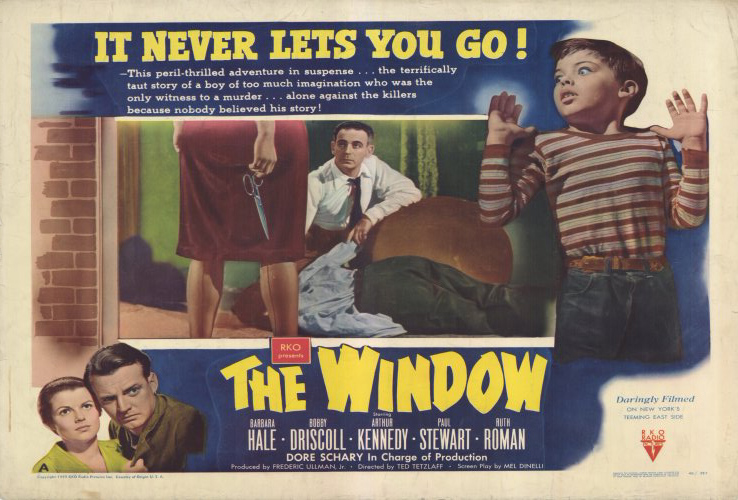
This was mostly for the The Window, a film noir where Driscoll plays a modern incarnation of “The Boy Who Cried Wolf.” So Dear to My Heart, a Disney film, went wide in January of that year but premiered in 1948. It is typically drama that’ll have influence on such an award and The Window is available from The Warner Archive Collection but streams on Amazon.

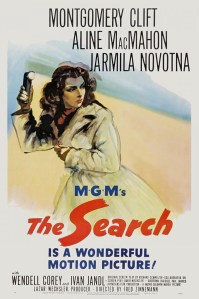
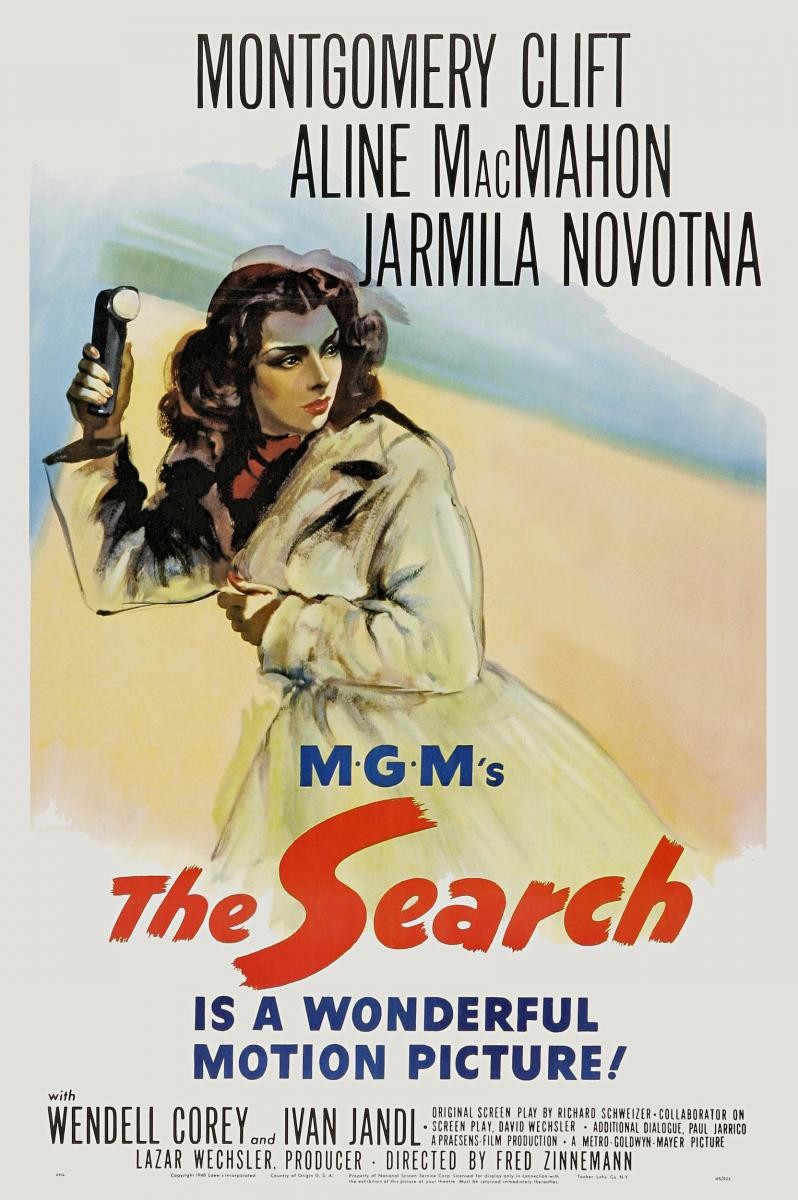
Ivan Jandl

Ivan Jandl

“For the outstanding juvenile performance of 1948 in The Search .”

This film is available from Warner Archive. It’s the tale of an American soldier helping a Czech boy find his mother.

Claude Jarman, Jr.

Claude Jarman, Jr. in The Yearling (MGM)

“For the outstanding child actor of 1946.”

This award is truly for The Yearling which was Jarman’s debut. It is still readily available on DVD and is well worth seeing. Be sure to have Kleenex on hand for this tear-jerker.

Peggy Ann Garner

Ted Donaldson, Joan Blondell and Peggy Ann Garner in A Tree Grows in Brooklyn (20th Century Fox)

“For the outstanding child actress of 1945.”

While her notable performances from 1944 (Jane Eyre and Keys to the Kingdom) are available and her most famous 1945 role (A Tree Grows in Brooklyn) the other two parts in 1945 that earned her a general citation for excellence (Nob Hill and Junior Miss) are out of print.

Margaret O’Brien

“For outstanding child actress of 1944.”

O’Brien earned her award for four performances. Only Meet Me in St. Louis is on DVD. The Canterville Ghost is on VHS, if you like that sort of thing.  
 
 
Judy Garland 
  

Judy Garland in The Wizard of Oz (MGM)


“For her outstanding performance as a screen juvenile during the past year [1939].”

Judy Garland’s performances in both Babes in Arms and The Wizard of Oz which won her the award in 1940 are both readily available. The first is part of a Rooney-Garland Box Set released by Warner Brothers Home Video.

 Mickey Rooney and Deanna Durbin

MGM

“For their (Durbin/Rooney) significant contribution in bringing to the screen the spirit and personification of youth, and as juvenile players setting a high standard of ability and achievement.”

Rooney’s Andy Hardy films are still readily available.

Shirley Temple

Shirley Temple

“In grateful recognition of her outstanding contribution to screen entertainment during the year 1934.”

Most of Shirley Temple’s filmography is still readily available.

Any gaps in the availability of a performance in the history of this unique and short-lived award should be rectified. Likewise, the award should return. The Academy can name the award after Ms. Temple if they like and honor young actors every year.

For even missing from this list are the likes of Freddie Bartholomew, Jackie Cooper, Roddy MacDowell, Dean Stockwell, Elizabeth Taylor, Patty McCormack, Anne Rutherford, Debbie Reynolds and more, so even in an era when the award existed not everyone worthy won the award. Not that trophies need to be handed out in hindsight or to those who have left us but the award should definitely make its presence known again both on video and in the ceremony.

Oscar Nominated Live Action Shorts

In recent years there have been nationwide screenings of the Oscar-nominated short films, which is a great thing for many reasons: clearly it promotes the filmmakers but also as a filmmaker and Oscar spectator you’d like to have an informed opinion based on more than just the title and/or the snippet shown, which I have operated under many times.

Clearly seeing only a few seconds of each film as opposed to each in their entirety can skew your perspective. It’s rather enjoyable to discover these films and artists and while I don’t feel this year’s field is as strong as last year’s there are some very good contenders all the same.

Pentecost

Pentecost (Irish Film Board)

Is a hilarious film from Ireland, which at my screening got the only round of applause upon its completion. It tells the tale of an altar server’s chance at redemption at a big service. It plays like a sports film at times and all its laughs are good natured ones.

Raju

Wotan Wilke Mohring and Julia Richter in Raju (Interfilm Berlin)

A tale of the complications a German couple encounters in trying to adopt a child in India. The intentions of the tale and message are fine but there are a few narrative stumbles and predictable moments that hold the film back from maximizing its potential.

The Shore

Ciarán Hinds in The Shore (Screen Northern Ireland)

This film from Northern Ireland features not only the only star turn (Ciáran Hinds) in this year’s nominees but perhaps the simplest through-line. A great film about forgiveness and friendship above all else.

Time Freak

Michael Nathanson in Time Freak

It seems the American entry is usually comedic (based on these two years I’ve seen- not much to go on but bear with me). There’s been a surreal or silly edge to both, however, God of Love (Last year’s winner) is a fully articulated thought and this while funny felt a bit more like an ambitious sketch. There’s talent and film craft at work but it wasn’t as narratively whole or as ambitious as other entrants.

Tuba Atlantic

Edvard Hægstad and Terje Ranes in Tuba Atlantic (Norwegian Film School)

In a short tonality matters greatly and is harder to establish for you have less time so your choices have to be that much more certain, your intentions that much clearer. Therefore when a short not only plays as comedic and dramatic it’s twice as impressive. The film also creates very well-defined and unique but not irrationally quirky characters. It touches on many of the themes that the other nominees do but handles each quickly and deftly and creates its world quickly and precisely. It’s full of surprises laughs and emotion and the most complete and fulfilling short I’ve seen since this time last year.

More information about these shorts can be found here. The Academy Awards are on Sunday, February 26th on ABC.

Spielberg Sunday- Indiana Jones and the Last Crusade (1989)

Harrison Ford and Sean Connery in Indiana Jones and the Last Crusade (Paramount)

Owing to the fact that I have decided to honor Steven Spielberg this year with my version of a Lifetime Achievement Award I figured it was an appropriate time to dust off some old reviews I wrote when I took a course on his work. The remarks still hold true, he is an amazing filmmaker.

Indiana Jones and the Last Crusade is better than the original for many reasons. It’s a film that doesn’t just hit you but involves you more in the story line. Part of why it is easier to go along for that ride is because you’ve been prepared by the previous film to expect certain things despite this there are also some new and creative elements in this movie which separates it.

In the beginning we get what is seemingly an unattached scene. In this one we flash back to when Indiana was a child, played by River Phoenix. His chase for a crucifix establishes a few things. First, it establishes that this will be yet another religious relic that they will be in search of. Second, and more importantly it defines who his arch enemy is. We also get glimpses into the character’s psyche whereas previously he was a very external being we get this just through seeing past events. Young Indiana picks up a whip for the first time when coming face to face with a lion. Then we see the interplay between him and his father and can see how the boy doesn’t understand how his father could’ve dedicated his whole life to these adventures especially in his mother’s absence.

When Indiana is pegged for a mission the discussion of it is much more confrontational than in the first. There is a lot more give and take. Indy shows part of his disbelief in the grail while we are told the history in much more detail than we were in the first film when Indy was in search of the Ark of the Covenant. He’s very reluctant to go but is urged on by the fact that his father has been kidnapped this after him mysteriously receiving his father’s Grail Diary.

This film is full of riddles and mind games which makes it that much more entertaining. He arrives in the library that was a converted church and with Elsa Schneider (Alison Doody) they have to solve a puzzle of where the catacombs are. They look for the Roman numerals but can’t find one. Indy on a hunch runs up the stairs and sees the X all across the floor. Down in the dark with all the rats Spielberg reaches a moment of terror with all the rats crawling along.

Another great touch this film had was in keeping with the traditions of the 40s and 50s in that we could never quite figure anyone out. I was genuinely surprised by Ilsa both when we were shown she was a Nazi and then later when she mislead her leader in the choosing which grail was the Holy Grail. That coupled with her femme fatale status of seducing men only to ruin them made her seem like something out of a film noir.

The tandem of Sean Connery and Harrison Ford worked very well together. Their timing is great especially when they were both tied up and were trying to talk to one another face to face and their heads kept swiveling side to side. Their relationship dominated significant portions of the film and they exchanged great moves and funny lines constantly. On the zeppelin the ball was in Junior’s court and stayed their as they escaped but in the plane Senior had to shoot the machine gun and shot the tail off and was hysterical in denying it. Then on the beach he got the seagulls flapping to knock down the second plane.

What I also found quite interesting in both this film and the first although it was more prominent in this film was the involvement and use of the Nazis. It was interesting for me because I had believed Spielberg had never addressed any aspect of the war in any sort of way until making ‘Schindler’s List.’ Having established the Nazi interest in the occult and in conquering religion I think that’s why there was more Nazi involvement here. It also allowed for a hilarious scene where Ford dressed as a Nazi who comes face to face with Adolf Hitler who instead of burning the grail diaries signs it for him and moves on from there.

For me the only stumbling blocks to make this a completely fulfilling experience cam towards the end. When Indiana must spell out the name of God, Jehovah was not the name that immediately came to mind it was, in fact, Yahweh which was the original Hebrew word which people did not speak and when it was written there were no vowels. However, it was later replaced by Jehovah. This is no fault on the filmmakers part its just a slight technicality that some may or may not pick up on.

This time, however, I was prepared for what would happen to the man who drank from the false grail because it was foreshadowed and also because it closely resembled the end of the first film. My one question lay in the fact that it seemed to me from the way the situation was explained that Indiana would now be immortalized and would have to guard the grail or his father would maybe perhaps they escape that by trying to remove the grail it did get a little hazy in that regard but nonetheless it was quite an enjoyable film that blended many diverse elements to make for a really entertaining ride.

10/10