Short Film Saturday: Guy Maddin

On occasion on these posts I think it would make sense to feature a filmmaker who excels in the short film form. Therefore, I figure who better to start with than Guy Maddin.

This is not to say Maddin’s feature work isn’t brilliant, it certainly is. I have not yet seen all of it but I started with Brand Upon the Brain and didn’t expect that to be exceeded and then it was by My Winnipeg. For my reaction to a few other features go here.

Yet I’d have to say I almost prefer his short works because they can be that much more explosive and consistently brilliant and for those unfamiliar with Maddin it is here that you can get a sense for his style and see if its to your liking before investing your time and potentially money in them.

So below you will find many of Maddin’s short films culled from many locations about the internets enjoy! Before proceeding please note that quite a few of these films are NSFW (Not Safe for Work) and Parental guidance is suggested. Also, since I found so many this post also constitutes a Make Your Own Film Festival entry which is a series I’ll add to quite a bit soon.

The Heart of the World

Sombra Dolorosa

Spanky: To The Pier and Back

Zookeeper Workbook

Fuseboy

Sissy Boy Slap Party

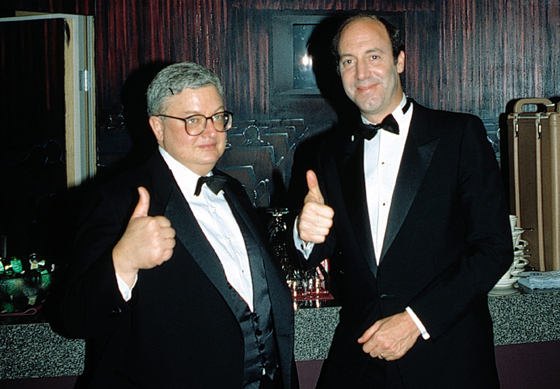
The previous films I first viewed thanks to a blog post by Roger Ebert. The film below is available on The National Film Board’s (Canada) site.

http://media1.nfb.ca/medias/flash/ONFflvplayer-gama.swf

Now here are some I found through YouTube searches:

It’s My Mother’s Birthday Today

Hospital Fragment

Fancy, Fancy Being Rich

Odilon Redon or The Eye Like a Strange Balloon Moves Towards Infinity

Send Me to the ‘Lectric Chair

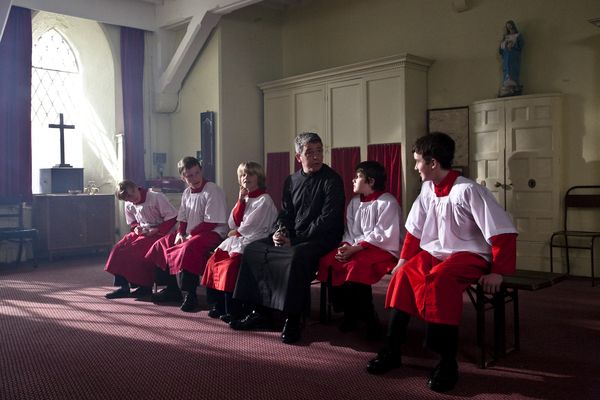
A Trip to the Orphanage

Odin’s Shield Maiden

Film Thought: Critical Buzzwords in Need of Banishment

A recent comment, which for the purposes of this piece will remain unnamed and unspecified, brought to my attention that when critiquing a movie whether positively or negatively there are certain buzzwords and catch phrases that are bandied about haphazardly and in essence they are meaningless. The reason the words are meaningless can be repetition or lack of serious thought about the connotations that such words carry.

I will list below some of the words and phrases I have come to loathe and will refrain from using from hereon in and I welcome suggestions of others as I’m sure I’ll forget some.

1. Manipulative

Why: When we go to see a movie we are going wanting to be moved, asking to feel. In our attendance at the auditorium or in our rental of the film is an implicit understanding that we are subjecting ourselves to a piece of fiction which will make us feel emotions we otherwise wouldn’t be feeling, therefore, any and all cinema is manipulative by nature and to call something manipulative is not only redundant but an ineffectual rebuff of the work.

2. Pretentious

Why: Very rarely is the word pretentious accompanied by a specific example of what it is that makes the work pretentious. Typically the word is assigned to a film that is intentionally cryptic. Whether or not the film in question is actually good is irrelevant because the dismissive, lazy and facile usage of a word so sloppily applied in and of itself does not condemn a film. If one one can illustrate how the film is bloated or more arcane than it needs to be or in some other way an affront is a much better critique than the flippant use of a trope statement.

3. Self-Indulgent

Why: This is really a film school/film student special for it was there that I really heard it for the first time and it was immediately rebuked by some. Any film, aside from the obvious product or franchise-extenders (though they are not all exempt), is self-indulgent by nature. A director and crew members and then actors are all in essence saying “This story is very important and I’m the one that needs telling it.” While that sounds like an over-simplification that’s some of the essence. That’s the artistic impetus that drives the creation of film. The financing of said films is driven, obviously, by other factors but everyone who wants to either direct a film or start their own production has the same core belief: “My story matters most.” While that’s sincere it is self-indulgent to an extent because what makes that true to an individual is clearly subjective, and yes, you want to entertain an audience but you also want to make your film. No escaping it logically.

4. Instant Classic/Classic

Why: The first is clearly oxy-moronic. We all know what it’s supposed to mean but it’s tired at this point. The case for classic is really one with a caveat. It should not apply to films younger than 25 years old (I’m guilty of using it as such) and, of course, does not replace actual commentary and analysis.

5. Must See

Why: Many of these do come from the realms of blurbs, however, when writing you can try your darndest to avoid writing something that’s blurbable (and occasionally fall ass-backwards into it anyway) or you can pander to it; this phrase is closer to the latter. Must see in my estimation, while a positive (I tried to find balance), is in and of itself meaningless especially depending on your level of film nerdiness.

Certain actors used to trigger a film as a must-see for me, now there are fewer of films that create a lot of chatter (good, bad or mixed) sometimes become “must-sees,” on rare occasions award and/or festival pedigree, however, regardless of what the reason is whose to say what’s a must see? Yes, no film should be dismissed out of hand, we’ve all been surprised but you can’t watch it all. Your criteria has to remain your own and this essentially boils down to the interpretation of critique as consumer advocate. True, that’s less the case than ever before (not that it ever really should’ve been for myriad reasons) but it stems from that and like any over-repeated phrase it’s started to mean nothing. Case in point is the recent The Devil Inside: it caused an internet firestorm because of the vitriolic reactions it got from crowds. I know I went full circle from liking the trailer and anticipating it, to hearing the negative reaction and doubting my interest, to hearing so many negative and angry reactions that I just had to see it for myself. The story illustrates that “must-see” was coined as a ringing endorsement of a film can apply to films that you hope you’ll like but know you likely won’t too, so it’s meaningless.

Those are the few I came up with rather quickly. What are some buzzwords and phrases you feel should be banned?

Super Bowl Movie Commercials

While with each year the hype and price surrounding Super Bowl commercials grows one other aspect that becomes increasingly significant is the advertising of films during the game. A Super Bowl ad for a film is the biggest opportunity of the year for simultaneous impressions that a movie has and which films go for it and what impact they make is interesting to consider. Below you will find links to the ads that played during the game this year. They run the gamut from Act of Valor which opens in just a few weeks to two of the movie events of the year The Hunger Games and The Avengers.

Did some of these ads do more harm than good? You are the judge for now. Time and the box office returns will tell the ultimate story but considering the Super Bowl is where I got the first glimpse of the tone and awesomeness of Super 8 the significance of these ads in marketing terms should not be underestimated.

21 Jump Street

http://www.springboardplatform.com/mediaplayer/springboard/video/ci035/39/434487/

Act of Valor

http://www.springboardplatform.com/mediaplayer/springboard/video/ci035/39/434619/

The Avengers

http://www.springboardplatform.com/mediaplayer/springboard/video/ci035/39/434555/

Battleship

http://www.fandango.com/fplayer/player.aspx?mid=130096&mpsguid=2192855347&dm=3&genre=Action/Adventure,&rt=&title=Battleship_-_Super_Bowl_:60_TV_Spot&w=620&h=349&emb=user

G.I. Joe: Retaliation

http://www.springboardplatform.com/mediaplayer/springboard/video/ci035/39/432393/

The Hunger Games

John Carter

http://www.springboardplatform.com/mediaplayer/springboard/video/ci035/39/431121/

Dr. Seuss’ The Lorax

http://www.springboardplatform.com/mediaplayer/springboard/video/ci035/39/434621/

Short Film Saturday: The 100th Job

The 100th Job (Micki Mihich)

NOTE: Sadly, this film is not available to view online at current. If and when it is I’ll update this post.

The 100th Job does something that is very hard to do for a short film – it tells not only a complete tale but a completely satisfying tale. While other shorts might be a thumbnail sketch this is a fully realized picture. 


It consistently and effectively uses voice over narration and the narration serves many purposes: it informs, pushes the tale along and greatly entertains. The narration is also well delivered by the film’s writer, director and star Micki Mihich. 


There are cutaways which are used very creatively in this film, for example, cutting to a definition on a dictionary page or to our narrator talking in another location, this technique was somewhat reminiscent of Tarantino. There is also a quick and effectively shot flashback, which is somewhat reminiscent of Argento. Even though the aforementioned techniques were reminiscent of renowned directors both in this film had their own flair and the combination of them in the same story makes them unique and an homage. 


The 100th Job is the tale of a hit man with an interesting past and an even more interesting present. The past made all the more interesting by the fact that this hitman used to be a very special brand of serial killer who is sure to make any film buff chuckle. 


The title refers to the kill that will make our protagonist a made man. As the tagline suggests “On the 100th Job, everything changes” and the film delivers a fantastic twist at the end which is perfectly timed.

What is also very unique for a short is that it has a very memorable and catchy score composed by Marcos Kleine.
 
This is a great short film that is worth seeking out.

10/10

Review- The Round Up (La Rafle)

The Round Up (La Rafle) (Gaumont)

Any film that deals with World War II, more specifically the holocaust, fights an uphill battle. The film has to contend with not only the knowledge that we as a viewing public share but also with the inevitable outcome its story-lines share. These factors make any newly told tale, especially ones that may have been shared before, more daunting to tell than they have been in the past, however, what The Round Up (Le Rafle) does so well is tell a multi-faceted tale that most films that illustrate historic events tend to avoid. This film not only tells the tale of a single neighborhood, more specifically the Weismann and Zygler families, but also takes a look at the political sides of the equation (the ivory tower and backroom bargaining where lives were bartered and certain agreements were reached under a false sense of humanitarianism) which many films tend to avoid. Not only does that angle of the story get played but also as those rounded up start their unjustly imposed sojourn you also have the plight of the medical staff, illustrated by a nurse (Mélanie Laurent) and a Jewish doctor (Jean Reno) who have to try an keep the imprisoned alive as they are eventually transported to Poland. It is adding these layers to the story which makes this film different than other of the like at least on the surface.

The differentiation does not lie solely on the surface, however, while this film does not ever take place in an unoccupied France until its denouement it does start in a time where knowledge of what’s truly happening is scarce and children remain children as they are wont to do regardless of circumstance. You are shown very good illustrations of the sense that permeates the community of “It Can’t Happen to Us” and it’s tackled head on later as the eldest of the Weismann daughters tries to warn everyone a few times and wants to flee but calm is urged by her parents. Later at the first stop it is poignantly touched upon again. It’s one of the many times wherein the senselessness and unimaginable insanity of what the holocaust was is very well illustrated. Many of the characters in the film are in the dark willfully or honestly and it allows scenes we’ve viewed and facts we know to wash over us with newfound impact.

Some of these points are made with very cleverly written dialogue as well that is uttered by the right characters in the right moments and in the right context. Things being too on the head are a matter of context as much as anything else and the correct personages say the correct things to make points anew in a different way or ones that are often overlooked. The children, the nurse in her naïveté, Hitler amongst his inner circle and French heads of state all say things that were they assigned to other characters may strike you as too much commentary. Part of why auteur theory is not a popular notion in cinema anymore is that voice in a script as opposed to things like composition and genre can border preachiness but this one deals in the political and personal of a difficult subject matter makes its points about the absurdity of the situation in terse pieces of dialogue, visuals wherever possible but never to the detriment of the narrative, which helps it excel.

Conversely, when it speaks more loudly for the film not to say a word, when an honest question is better left unanswered, where a glare from an officer says more than words possibly could the film does so. The film visually puts pieces in place to set up the ending without dialogue, so as precise and purposeful as it is at some points it understands the necessity of silence also. There is also no fear in illustrating complexity in character without going overboard and simplicity in others without creating characters. The complexity is shown mostly with the families we know who start with different levels of understanding of circumstance and gradually though they don’t know exactly what lies ahead the gravity of the situation becomes exceedingly obvious, yet you also see them grasp for humanity whenever possible. The second part of that statement being most important because there isn’t an excessive myopia in this film as exhibited in something like Life is Beautiful. It creates moments where the human spirit can overcome but also illustrates the length to which human beings will go to be cruel and to be free.

As you can see by now this film us most definitely an ensemble work a few actors come to the fore as vital but it relies on many to convey its story as well as it does. In the family the patriarch and matriarch played by Gad Elmaleh and Sylvie Testud; the medical personnel played by the world renowned Jean Reno and Mélanie Laurent who many will know and love from Inglourious Basterds and The Beginners; the kids spearheaded by Hugo Leverdez in a most impressive debut, The Di Concerto twins as Nono and Adèle Exarchopoulos and lastly the political contingencies highlighted by Udo Schenk as Adolf Hitler each of these nuclei brings the film vividly to life and fully realizes their characters.
In the early stages the intercutting between these disparate worlds is at its apex but it stays rather persistent through the course of the narrative. There are great cuts aesthetically and with story in mind we never see more of the political discussions than we need to in them we are shown the steps than lead to the decisions ultimately made and clearly how things came about.

Where this film really gets to me is at its conclusion but it is effective throughout and evokes different emotions and remains compelling in spite of the aforementioned stumbling blocks the story has. It is a brilliant work that illustrates through its many facets the precipitous escalation of events in Occupied France and the lives it affected.

10/10

Mini-Review Round-Up January 2012

I had quite a review drought to end 2011 so I think the remedy for this kind of post would be to have the post be cumulative monthly. Therefore, after each qualifying film a short write-up will be added to the monthly post. The mini-reviews will be used to discuss Netflix and other home video screenings. Theatrical releases, regardless of how they are seen whether in an auditorium or on VOD, will get full reviews.

For a guide to what scores mean go here.

Film Socialisme

Mathias Domahidy in Film Socialisme (Kino Lorber)

It would be far too facile for me to sit here and offer you some kind of borderline sophism for or against Godard’s Film Socialisme. What the film seems to be is a tangential expounding of some concepts set forth in In Praise of Love with fewer constraints imposed by anything resembling a traditional plot. Perhaps what is most bothersome about the film, that I can quantify definitively as bothersome, is that the purposeful introduction of technical gaffes such as distorted audio, pseudo-poetic fragmented subtitles, pixelated video, in essence clouds an already opaque concept. However, the opacity is not the frustration but rather the willful misdirection.

Godard clearly has something (many things) he wants to say with the film and because I know some French and I was aware I’d need to pick up pieces as I went I got some of it, however, the method of telling was always likely to be indirect, therefore, his not-so-subliminal commentary on modern filmmaking technology muddles much more important sociological, historical and political points he’s making. What the film struck me as was a free form essay wherein the printer didn’t get everything on the page. However, maybe it’s due to these very frustrations that one might go back to it. To be certain I wouldn’t have mulled the film over as much if it were not for these obstacles. Non-traditional structure and technique are certainly not that new, neither are the ideas put forth but the way they’re put forth are a bit unique. While imperfect maybe they were most apropos.

After viewing the film it was next to impossible to score it. Prior to writing this I was prepared to give it a failing grade, however, it is its very lack of convention combined with its lack of a traditional storyline that makes it more compelling and more worthy of revisiting than the aforementioned In Praise of Love.

6/10

11/11/11

Hayden Byerly and Azurelia Scheppers in 11/11/11 (The Asylum)

This is a film that was completely unknown to me until it landed on Netflix recently. While it wasn’t very well distributed either I did manage to seek out and find Darren Lynn Bousman’s synonymous film last year. This film does benefit from the fact that it’s less oblique and let’s face it cutesy about its prophecy. However, what it lacks in pretentions it makes up for with overly transparent redundancies. However, I do have to hand it to this film for choosing to keep the proper thing clandestine and having a successful climactic sequence and a satisfying albeit somewhat confounding final twist and a good one before that. The success of the third act isn’t enough to make it good or something I’d recommend to a general audience but it’s worth a watch for open-minded genre fans for sure.

4/10

Cold War on Ice: Summit Series ’72

Cold War on Ice: Summit Series 72 (NBC Sports Network)

To accompany the launch of its new 24-hour sports network, which coincided with the conclusion of the NHL’s Winter Classic, NBC Sports Network also decided to debut a documentary about the Summit Series from 1972. It was a series of 8 “exhibition” hockey games between the Soviet Union’s vaunted team (a team that had won 10 consecutive world titles and four out of the prior five Olympic Gold Medals) versus a selection of Canada’s best and brightest (with very few exceptions) from the NHL. The importance of the series in the annals of hockey history is known to fans but is quickly illustrated to even the most lay of fan furthermore the piece really becomes about the series, it is in essence a sports film but it does a great job going back and forth between on-the-ice action and discussion and the off-the-ice intrigue of the series. While there is much interview footage it does a great job of letting the subjects tell the story and standing aside. Perhaps the most difficult thing this film tries to do, it accomplishes and that is to convey the gravity and the magnitude that this series of games carried for the Canadian people 40 years ago. Recently, ESPN has set the bar for televised long-form sports documentaries in the US. Here most if not all those 30 for 30 specials are surpassed. If NBC Sports Network continues to find compelling subject matter like this and convey it as well as they did they’ll be a bonafide contender in the sports documentary game.

10/10

The Innkeepers

Sara Paxton and Pat Healy in The Innkeepers (Magnet Releasing)

The Innkeepers is Ti West’s sophomore effort, following on the heels of The House of the Devil and it tells the tale of a pair of hotel employees left to their own devices in a haunted, rundown hotel on its closing weekend. They do some further paranormal investigating and get far more than they gambled for. While I can categorically say I like this film more than I liked The House of the Devil, especially upon second viewing, it still battles some of the same issues that film does. There are great performances by Sara Paxton, Pat Healy and Kelly McGillis which take this film up a notch above the prior by itself but as well as the film builds atmosphere and tension the incremental ratcheting up of incidents develops a bit too methodically to be as effective as possible. It has its occasional jolt but the ending leaves you wanting some. Leaving some details unexplained is fine but there’s a bit too much restraint throughout to have such a subtle payoff work ideally. Again, I stress that I enjoyed the film, West is clearly talented and I enjoy watching his films and seeing what he’s doing but at the moment his films play almost like the opening acts of Carpenter’s work. If he escalates and concludes a movie like Carpenter can he has classics waiting to happen in him. With that in mind I conclude by saying that I do anticipate highly seeing what he is capable of in a horror anthology where his running time is limited as V/H/S is one of the hot properties coming out of this year’s Sundance Film Festival.

7/10

Short Film Saturday: Mixtape and Disco

Disco (UK Film Council/ Virgin Media Shorts/ 2 AM Productions)

Below you will find video links to two short films by Luke Snellin. The first, Mixtape, proves just how little time you need to tell a complete and affecting tale and that’s part of why it was nominated for a BAFTA award.

The second is a companion piece which came out the following year called Disco. They both feature a similar core group of actors and a thematic similarity of young love. Essentially, my reaction to having seen Disco was it was precisely what you’d want it to be after having seen Mixtape.

Disco expands the story from a first flirtatious romance to a triangle and being tongue-tied. Without over-explaining I also want to point out you may know some of the cast members here which help make the film what it is: Bill Miler (X-Men: First Class, Is Anybody There? and Son of Rambo), Charlie Rowe (Neverland and The Nutcracker in 3D) Lil Woods (Nanny McPhee Returns) and Izzy Meikle-Small will appear in Snow White and the Huntsman.

Snellin’s work in both these films is superb, so without much further ado enjoy…

Mixtape

Disco

Review- Extremely Loud and Incredibly Close

Thomas Horn in Extremely Loud and Incredibly Close (Warner Bros.)

It would seem based in part on some the reactions that this film has received that 9/11 is still a cinematic subject matter that is off limits in the minds of some. For my ruminations of the handling of the day and my thoughts on it go here, in this review I will try and stay on topic, which is the film at hand. As for the film itself it handles the day and its ramifications with about as much restraint and respect as possible with very few and minor exceptions.

The few minor missteps are taken in the realm of artistic license where our protagonist Oskar has fleeting visions of his father having jumped. Aside from that I just have a very minor quibble about the very closing shot, however, all told the marketing did not lie and much of the story does deal with the days after. When dealing with 9/11 itself it is usually over the phone or on voicemail. The buildings are not entered, the day is not painstakingly chronicled. There is one scene with a shot of the towers in the distance and one with the implosion on TV. This laundry list may seem a bit trite but when dealing with an actual tragedy in a fractured chronology you will, as in real life, repeat the tragedy many times so it’s key to see it as little as possible. I think it’s fair to say we all remember what it looked like.

Ultimately, breaking the timeline up starting with a burial then going back occasionally to just before it happened and then to the journey undertaken afterward is the most effective possible treatment. This rendition of the events of the date thus far this one has most closely replicated the range of emotions I felt on that fateful day. In its traversing time and displaying impacts then causes and moreover conveying the tangibility of the senselessness of the acts and the confusion and fear they incurred the film recreates the numbness, the gnawing in my stomach and the sudden floods of emotion triggered soon thereafter. In a manner of speaking it acts as a time capsule. As fantastical as the storyline is in certain ways it hits truths on many levels.

People have issues when raw nerves are hit. Hitting nerves is what art should do as long as it’s done tastefully and I think this film succeeds in that regard it just so happens that all the nerves on this event are still rather raw. This is likely a kind of story we won’t be comfortable with for a very long time but let’s face it the moratorium ended long ago. Whether one finds this experience cathartic or manipulative is quite subjective I’ll admit but I found it to be the former.

One thing that I cannot state clearly enough is that one ought not confuse Oskar’s character with Thomas Horn’s performance. Oskar, the character, is socially awkward and referred to as having undiagnosed Aspeberger’s, he’s an at times abrasive, smartass New Yorker who has ticks and next to no inner-monologue. He may make you laugh because he’s weird and unabashedly so or he may annoy you because it’s too much for you to handle. Yet his plight; his search for meaning, is universal and the quality of his performance is beyond reproach, particularly when he tells the story of his search to The Renter (Max von Sydow), granted that speech is aided by great edits where L-cuts have his dialogue chase itself but his delivery is such that he hit crescendos in the right spots as if he’s doing a topping exercise with himself. He’s positively brilliant.

The performances that support his lead are fantastic as well and in many ways really take this film up a level. Firstly, there is the slew of smaller appearances by those who Oskar visits in search of answers. Their interpretations make this concept plausible and their crew is spearheaded by Viola Davis. Similarly, Tom Hanks is absolutely perfectly cast in a role where his presence needs to far exceed his screentime and he excels enormously.

On occasion there are moments, whether they be lines or readings where actors will cut straight to the heart of me, some of the more memorable instantaneously induced reactions recently would have been precipitated by Marion Cotillard pleading that she has to sing in La Vie en Rose and Asa Butterfield’s pleas when he suspects he’s really been caught in Hugo. Sandra Bullock’s assurance to her son that “Some things just don’t make sense” is what got me here, in a heartbeat. Lastly, there’s Max von Sydow who stands out even amongst many recent mute performances and has a huge impact on this film and has perhaps even more gravitas for not speaking than he would otherwise.

In his past two projects Stephen Daldry has dealt with uncomfortable and controversial subject matter and while both are very different he’s handled each about as well as one could hope. He is, and will remain, one of the few directors whose name being on a project will be all I need to know.

9/10

Review- Underworld: Awakening

Kate Beckinsale in Underworld: Awakening (Screen Gems)

Going into this film in all sincerity I wanted the ceiling of its potential quality to be much higher than I expected it to be. To be fair I only saw the last installment prior to this so I came in dreading a similar experience and hoping for a better one. While I’ll concede it was a better film it wasn’t by very much at all.

The film starts immediately on the wrong foot with a tired recap that relies too heavily on voice-over and not enough on montage. Granted it is a storytelling crutch to introduce new viewers and/or refresh the memory of fans but even the Friday the 13th series, which practically invented the technique, was more visual and inspired than this attempt at backtracking.

The tonality of this film is, from the very first, off. When you combine the desaturated color palette with the icy, stiff performances and flat-lining storyline you’re in a situation that no stakes can raise. I do grant this film raises the stakes from the last chapter but everything is so rote and done with such little aplomb it has no impact whatsoever.

Essentially the problem that plagues this film is the same that plagued the last one: the conflict seems created to support the action sequences and the action does not seem to flow organically from the conflict. We are given the minimum information and development and expected to be fat and content from that as we watch yet another tiresome action sequence where we as an audience have little to no investment.

Upon looking at the cast list one can easily ask “What is Stephen Rea doing here?” Sadly, that question does not dissipate in my mind as the film progresses. It seems as if Rea wanted nothing to do with this film and that perception makes itself evident in every frame.

In technical terms the films fares slightly better than the narrative does. The 3D is serviceable but rarely exploited and hardly worthy of the upcharge incurred. The effects are decent in execution but in conceptual terms the same unfortunate choices are made and exacerbated like big, hairless, “werewolves” and so on.

The film like the prior installment overdoes gunplay and downplays chase and is always trying to be more action then horror and achieves neither. All it ends up being is an incredibly tedious exercise that minimally advances a muddled mythos.


4/10

Oscar Nominees, Comparisons and Predictions

Academy Awards (AMPAS)

Below you will find not only the list of Academy Award Nominees but also how frequently they matched my own nominations what I would like to win and what I expect will win. More commentary will follow as we approach the awards, likely in my live blog of the festivities.

Best Motion Picture of the Year
Nominees:

The Artist
The Descendants
Extremely Loud and Incredibly Close
The Help
Hugo
Midnight in Paris
Moneyball
The Tree of Life
War Horse

Nominees in Common with BAM Awards: 3
My Pick: Hugo
Likely Winner: The Artist

Best Performance by an Actor in a Leading Role
Nominees:

Demián Bichir for A Better Life
George Clooney for The Descendants
Jean Dujardin for The Artist
Gary Oldman for Tinker Tailor Soldier Spy
Brad Pitt for Moneyball

Nominees in Common with BAM Awards: 1 (2 if you count Brad Pitt for a different film)
My Pick: Jean Dujardin The Artist
Likely Winner: George Clooney The Descendants

Best Performance by an Actress in a Leading Role
Nominees:

Glenn Close for Albert Nobbs
Viola Davis for The Help
Rooney Mara for The Girl with the Dragon Tattoo
Meryl Streep for The Iron Lady
Michelle Williams for My Week with Marilyn

Nominees in Common with BAM Awards: 0
My Pick: Viola Davis The Help
Likely Winner: Viola Davis The Help

Best Performance by an Actor in a Supporting Role

Nominees:

Kenneth Branagh for My Week with Marilyn
Jonah Hill for Moneyball
Nick Nolte for Warrior
Christopher Plummer for Beginners
Max von Sydow for Extremely Loud and Incredibly Close

Nominees in Common with BAM Awards: 1
My Pick: Christopher Plummer The Beginners
Likely Winner: Christopher Plummer The Beginners

Best Performance by an Actress in a Supporting Role
Nominees:

Bérénice Bejo for The Artist
Jessica Chastain for The Help
Melissa McCarthy for Bridesmaids
Janet McTeer for Albert Nobbs
Octavia Spencer for The Help

Nominees in Common with BAM Awards: 1
My Pick: Octavia Spencer The Help
Likely Winner: Octavia Spencer The Help

Best Achievement in Directing
Nominees:

Woody Allen for Midnight in Paris
Michel Hazanavicius for The Artist
Terrence Malick for The Tree of Life
Alexander Payne for The Descendants
Martin Scorsese for Hugo

Nominees in Common with BAM Awards
: 1
My Pick: Martin Scorsese Hugo
Likely Winner: Michel Hazanavicius The Artist

Best Writing, Screenplay Written Directly for the Screen
Nominees:

The Artist: Michel Hazanavicius
Bridesmaids: Kristen Wiig, Annie Mumolo
Margin Call: J.C. Chandor
Midnight in Paris: Woody Allen
A Separation: Asghar Farhadi

Nominees in Common with with BAM Awards: 1
My Pick: Midnight in Paris: Woody Allen
Likely Winner: The Artist: Michel Hazanavicius

Best Writing, Screenplay Based on Material Previously Produced or Published
Nominees:

The Descendants: Alexander Payne, Nat Faxon, Jim Rash
Hugo: John Logan
The Ides of March: George Clooney, Grant Heslov, Beau Willimon
Moneyball: Steven Zaillian, Aaron Sorkin, Stan Chervin
Tinker Tailor Soldier Spy: Bridget O’Connor, Peter Straughan

Nominees in Common with BAM Awards: 1
My Pick: Hugo: John Logan
Likely Winner: The Descendants: Alexander Payne, Nat Faxon, Jim Rash

I do not have a Best Animated Feature category nor have I seen the Foreign Film entries so I will show you those nominees without any attempted soothsaying:

Best Animated Feature Film of the Year
Nominees:

A Cat in Paris
Chico & Rita
Kung Fu Panda 2
Puss in Boots
Rango

Best Foreign Language Film of the Year
Nominees:

Bullhead: Michael R. Roskam (Belgium)
Footnote: Joseph Cedar (Israel)
In Darkness: Agnieszka Holland (Poland)
Monsieur Lazhar: Philippe Falardeau (Canada)
A Separation: Asghar Farhadi (Iran)

Best Achievement in Cinematography
Nominees:

The Artist: Guillaume Schiffman
The Girl with the Dragon Tattoo: Jeff Cronenweth
Hugo: Robert Richardson
The Tree of Life: Emmanuel Lubezki
War Horse: Janusz Kaminski

Nominees in Common with BAM Awards: 2
My Pick: Robert Richardson Hugo
Likely Winner: Emmanuel Lubezki The Tree of Life

Best Achievement in Editing
Nominees:

The Artist: Anne-Sophie Bion, Michel Hazanavicius
The Descendants: Kevin Tent
The Girl with the Dragon Tattoo: Angus Wall, Kirk Baxter
Moneyball: Christopher Tellefsen
Hugo: Thelma Schoonmaker

Nominees in Common with BAM Awards: 1
My Pick: Hugo: Thelma Schoonmaker
Likely Winner: The Girl with the Dragon Tattoo: Angus Wall, Kirk Baxter

Best Achievement in Art Direction
Nominees:

The Artist: Laurence Bennett, Gregory S. Hooper
Harry Potter and the Deathly Hallows: Part 2: Stuart Craig, Stephenie McMillan
Hugo: Dante Ferretti, Francesca Lo Schiavo
Midnight in Paris: Anne Seibel, Hélène Dubreuil
War Horse: Rick Carter, Lee Sandales

Nominees in Common with BAM Awards
: 1
My Pick: Hugo: Dante Ferretti, Francesca Lo Schiavo
Likely Winner: Hugo: Dante Ferretti, Francesca Lo Schiavo

Best Achievement in Costume Design
Nominees:

Anonymous: Lisy Christl
The Artist: Mark Bridges
Hugo: Sandy Powell
Jane Eyre: Michael O’Connor
W.E.: Arianne Phillips

Nominees in Common with BAM Awards: 1
My Pick: Hugo: Sandy Powell
Likely Winner: Hugo: Sandy Powell

Best Achievement in Makeup
Nominees:

Albert Nobbs
Harry Potter and the Deathly Hallows: Part 2
The Iron Lady

Nominees in Common with BAM Awards: 1
My Pick: Harry Potter and the Deathly Hallows: Part 2
Likely Winner: Albert Nobbs

Best Achievement in Music Written for Motion Pictures, Original Score
Nominees:

The Adventures of Tintin: John Williams
The Artist: Ludovic Bource
Hugo: Howard Shore
Tinker Tailor Soldier Spy: Alberto Iglesias
War Horse: John Williams

Nominees in Common with BAM Awards: 1
My Pick: Hugo: Howard Shore
Likely Winner: The Artist: Ludovic Bource

Best Achievement in Music Written for Motion Pictures, Original Song
Nominees:

The Muppets: Bret McKenzie (“Man or Muppet”)
Rio: Sergio Mendes, Carlinhos Brown, Siedah Garrett (“Real in Rio”)

Nominees in Common with BAM Awards: 0
My Pick: Rio: Sergio Mendes, Carlinhos Brown, Siedah Garrett (“Real in Rio”)
Likely Winner: The Muppets: Bret McKenzie (“Man or Muppet”)

In the BAM Awards I combined the sound categories therefore I will list the nominees below and my predictions will follow them:

Best Achievement in Sound Mixing
Nominees:

The Girl with the Dragon Tattoo
Hugo
Moneyball
Transformers: Dark of the Moon
War Horse

Best Achievement in Sound Editing
Nominees:

Drive
The Girl with the Dragon Tattoo
Hugo
Transformers: Dark of the Moon
War Horse


Nominees in Common with BAM Awards
: 1
My Pick: Hugo
Likely Winner: Transformers: Dark of the Moon

Best Achievement in Visual Effects
Nominees:

Harry Potter and the Deathly Hallows: Part 2
Hugo
Real Steel
Rise of the Planet of the Apes
Transformers: Dark of the Moon

Nominees in Common with BAM Awards: 3
My Pick: Real Steel
Likely Winner: Rise of the Planet of the Apes

I thought I would’ve seen a nominated doc but I did not so I will not prognosticate there or in shorts but I will see those before the show.

Best Documentary, Features
Nominees:

Hell and Back Again
If a Tree Falls: A Story of the Earth Liberation Front
Paradise Lost 3: Purgatory
Pina
Undefeated

Nominees in Common with BAM Awards: 0

Best Documentary, Short Subjects
Nominees:

The Barber of Birmingham: Foot Soldier of the Civil Rights Movement
God Is the Bigger Elvis
Incident in New Baghdad
Saving Face
The Tsunami and the Cherry Blossom

Best Short Film, Animated
Nominees:

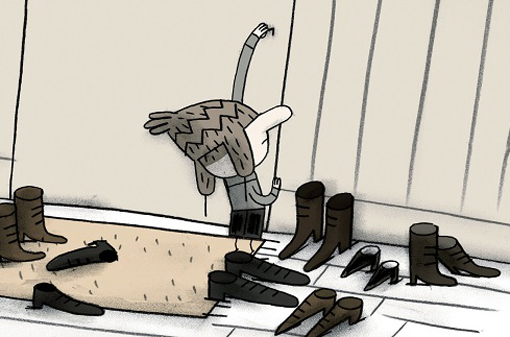
Dimanche : Patrick Doyon
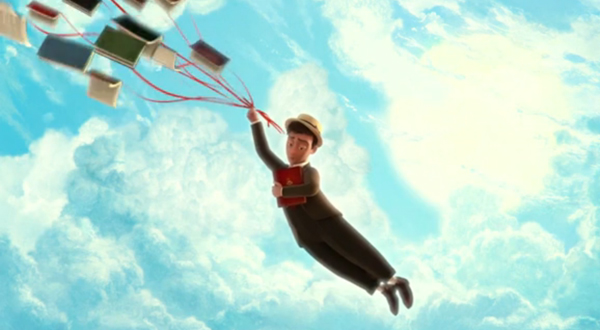
The Fantastic Flying Books of Mr. Morris Lessmore: William Joyce, Brandon Oldenburg
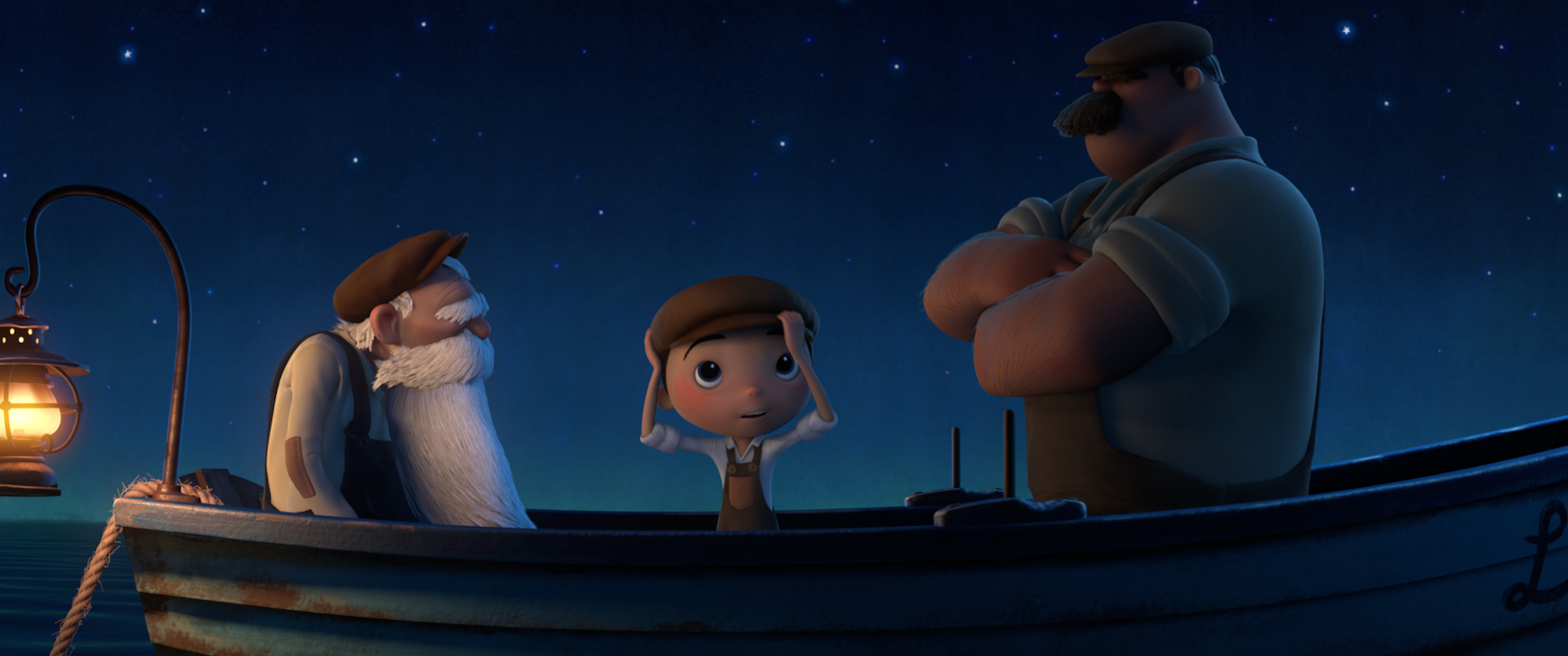
La Luna: Enrico Casarosa
A Morning Stroll: Grant Orchard, Sue Goffe
Wild Life: Amanda Forbis, Wendy Tilby

Best Short Film, Live Action
Nominees:

Pentecost: Peter McDonald
Raju: Max Zähle, Stefan Gieren
The Shore: Terry George
Time Freak: Andrew Bowler, Gigi Causey
Tuba Atlantic: Hallvar Witzø