Celia: A Cautionary Tale of Video Titles

I enjoy attending MonsterMania Con because it allows me a periodical dousing in horror. Recently I’ve taken to finally viewing some of the selections that I acquired while there this last go-round.

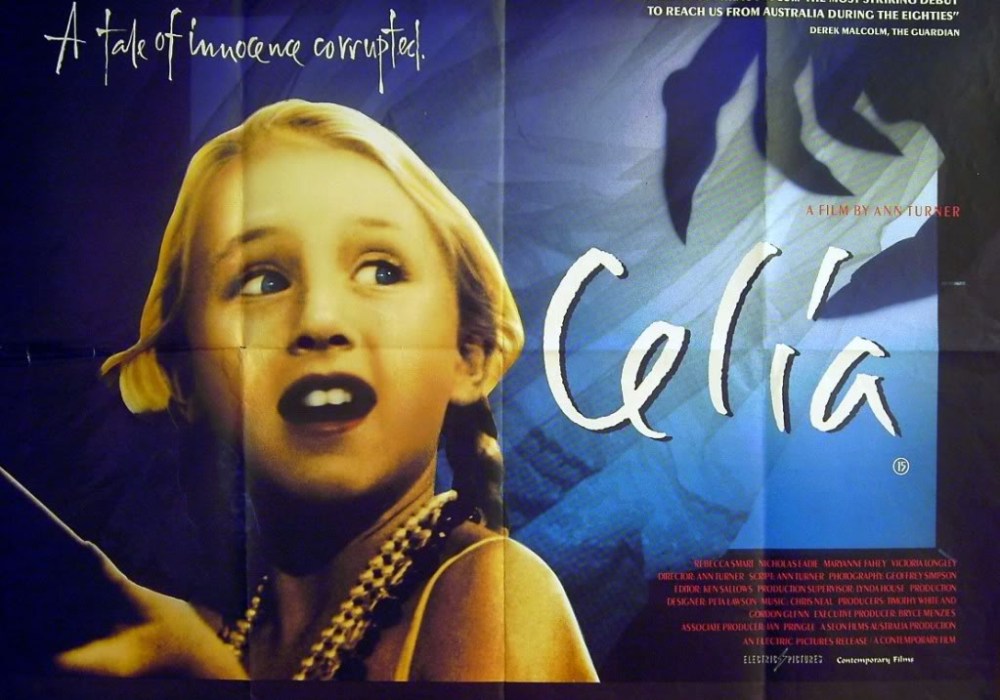
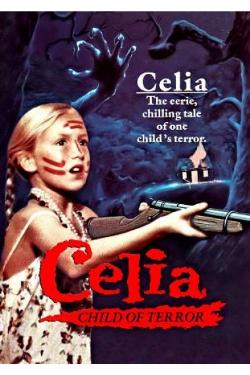
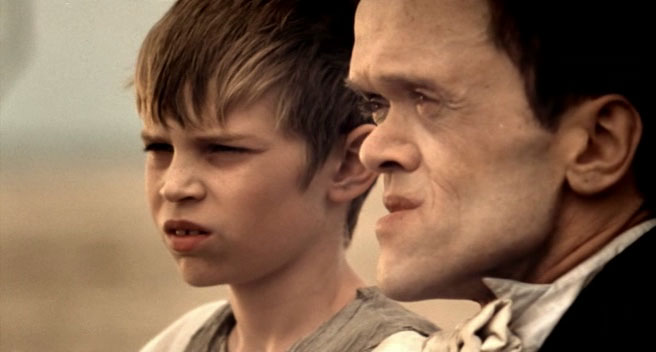
My most recent selection brought to mind, yet again, an issue that seems to be popping up more and more. One film I picked up was bombastically proclaiming itself as Celia: Child of Terror, and the cover image featured a girl (Rebecca Smart) with shotgun in tow.

Now the image of her holding the shotgun does occur in the film, and there is build in the film throughout. However, the title Child of Terror evokes something entirely different than what the pull quotes suggest. Child of Terror evokes something exploitative and potentially hokey, meanwhile, the pull quotes wherein Janet Maslin of the New York Times makes an allusion to Blue Velvet and where Tom Hutchison of The Mail compares it favorably to The 400 Blows and The Fallen Idol portend something more serious-minded. So these things do not necessarily mesh. However, it was the quotes and the synopsis that sold me on the film.

Celia: Child of Terror (1989, Scorpion Releasing)

As the film started, I was reminded of some of the factoids I absorbed about it months ago when deciding whether or not I should buy it. I saw the title Celia come up, without subtitle and something I kind of knew, but didn’t fully acknowledge until that moment, crystallized: Child of Terror was an add-on by the video distributor, a video box title as it were. Sure enough, the IMDb confirms that.

I was ready and open for anything and found that the subplots, the rise up to a boil at certain sections of the film, like the rabbit muster in Australia in the late 1950s and the ostracism of Communists and Communist sympathizers, make the film a more artful and dramatic piece than the box advertised. I rather enjoyed the film and I can separate something that’s in the control of the marketing department and/or distributor and the filmmakers. I can guarantee you that this subtitle has coerced others to buy or rent it and had them come away disappointed because they felt duped.

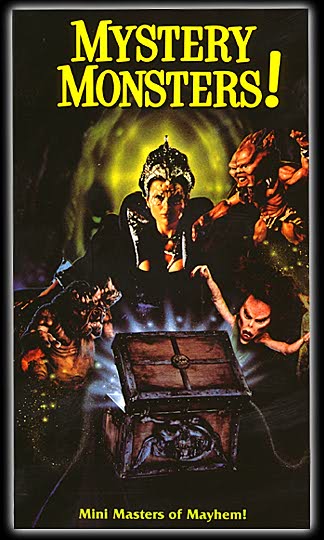
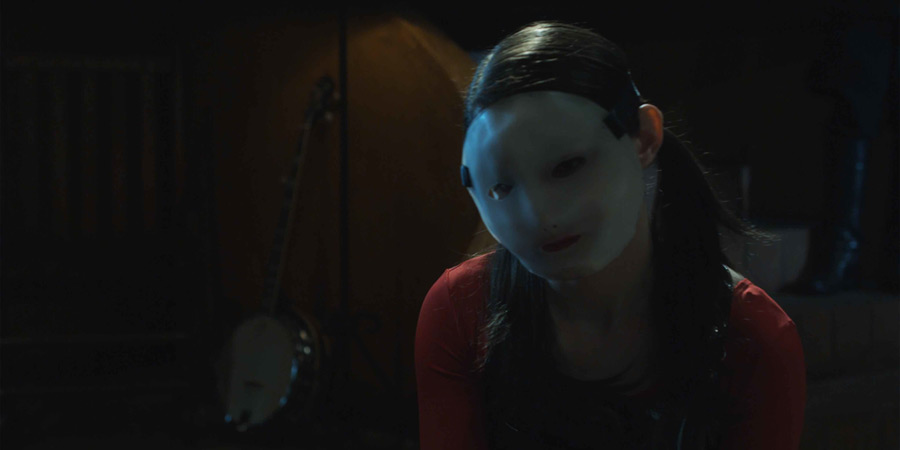
The other place I noticed something similar recently is that Full Moon Pictures has had a tendency lately to rename films of theirs that are about a decade old and re-release them through Redbox. On Redbox’s site the film shows a new release date so you assume it’s a new film rather than a re-issue. The only reason I caught on the first time around was through researching the cast. Eventually through an actor’s filmography I was able to discover what the film was called the first time it was released.

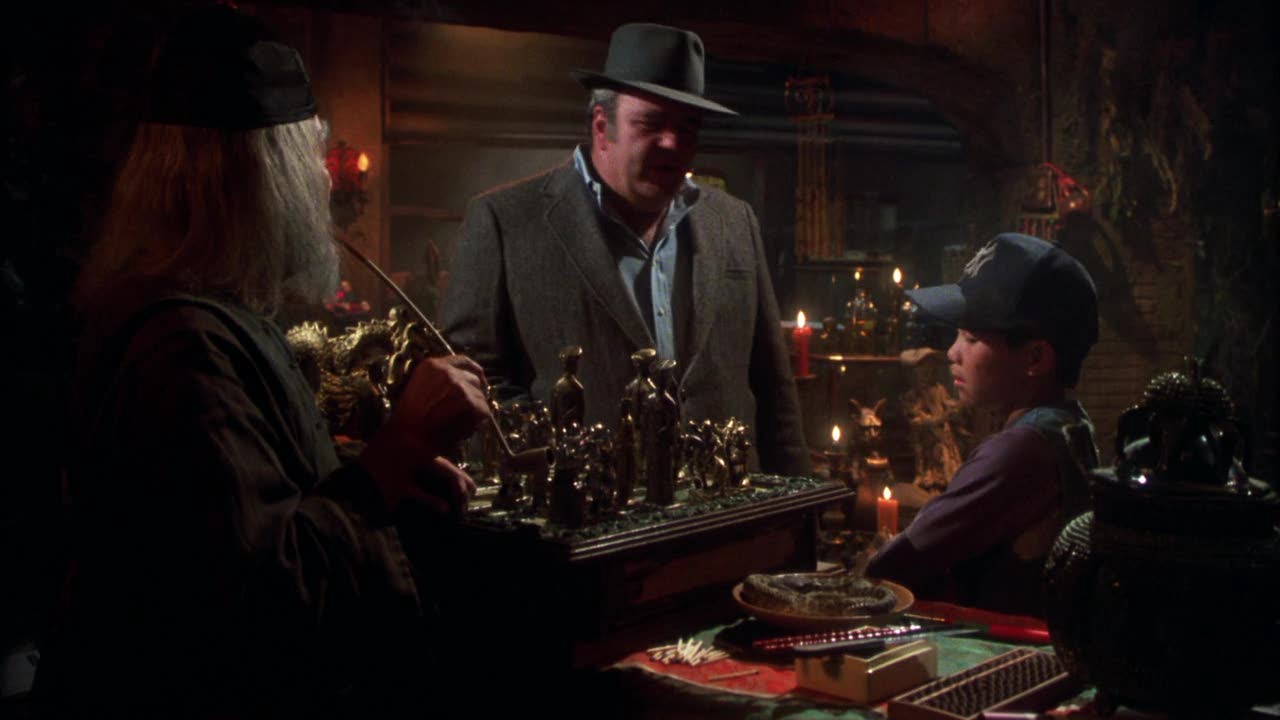
Mystery Monsters (1997, Full Moon)

The Full Moon film was called Goobers on re-issue and I liked it enough to include it here. I’m not quite sure yet if Celia will end up on the 2013 version of that list, but I do know that while Full Moon and Scorpion Releasing may be boosting their sales and rentals through this slightly misleading branding, but they’re playing with fire with this strategy.

Consumer advocacy shouldn’t really play into criticism. The film is the film and a review of said film is one’s explanation of what they think of the film and why. However, I am, at the end of the day, also a consumer so I think it appropriate to make this statement of caveat emptor separate from a review. This is just another case wherein one should be very careful. I knew full well that Goobers would likely be quite silly, I just didn’t know it was an old film. I learned and pass that knowledge on so that others may avoid that. I also knew that Celia would likely be artsier than the title implied and that too turned out to be the case. I was fine with both films, but not with the marketing strategies employed, and thought that others should be aware of said practices so you can make more informed viewing decisions.

Once Upon a Time in the 80s: Genremeld (Part 10 of 17)

This is a recapitulation of a paper I did in college. This is part eight in the series to read other parts go here.

Gremlins, Ghostbusters, Who Framed Roger Rabbit, Creepshow, Weird Science, Time Bandits, Splash, Big, Back to the Future, The Witches of Eastwick and My Stepmother is an Alien all of these films crossed genres to try and make something new and unique, and this was a staple of 80s filmmaking.


It has been said that nothing really original has been said after 1800. In film much the same conundrum exists in that there really are no new stories, but that doesn’t mean we still don’t crave films. More so than any other decade prior the 80s were expert at recombining genres and on occasion creating something new or at least different enough that everyone flocked towards it.

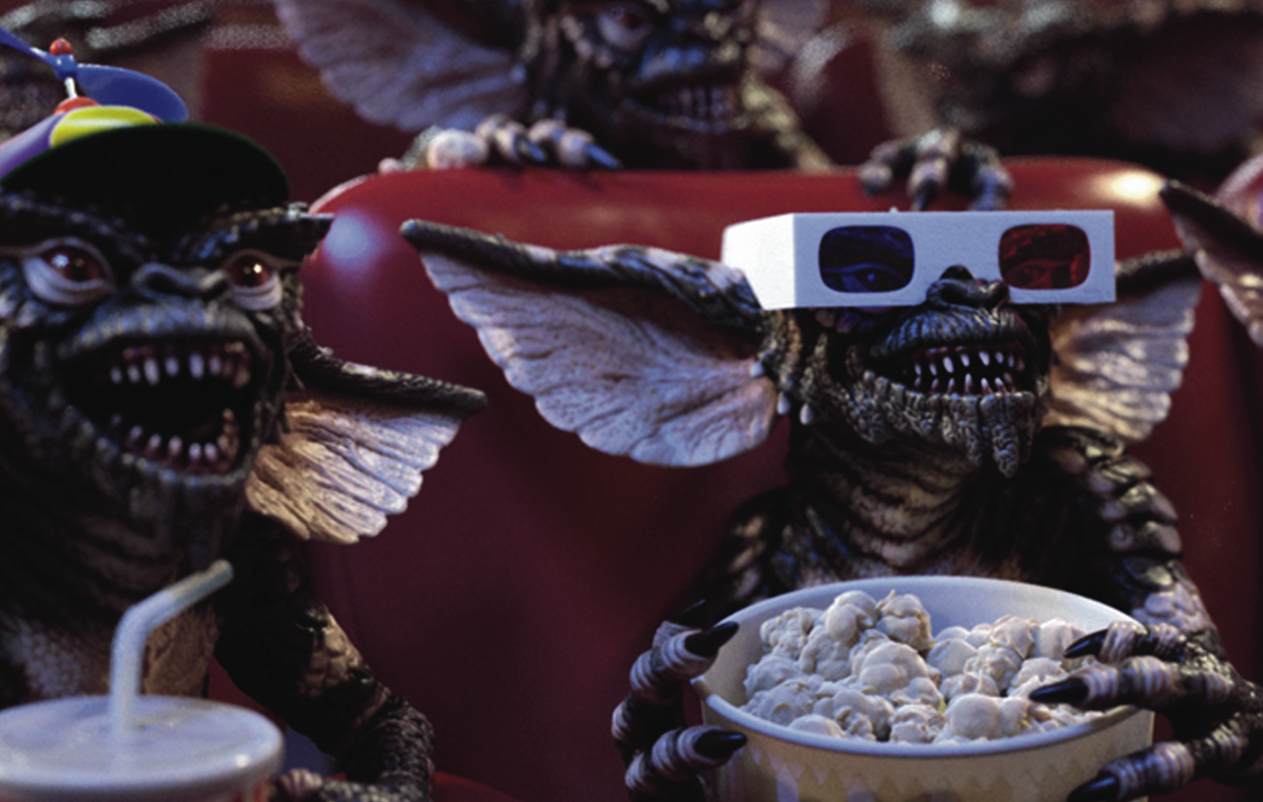
One of the great hits of the genremeld was Gremlins. Never before or since has there been such a perfect balance of the horrific and comedic. There’s no tongue-in-cheek here it wants you to laugh and gasp in the same breath.


Gremlins (1984, Warner Bros.)

In the film Gremlins we have two important things occurring: first, this is one of the first films of the Spielberg School. It was written by Chris Columbus while he was attending NYU he later went on to work with Spielberg on The Goonies. It was directed by Joe Dante a former Corman protégé who later in the decade directed Innerspace and Matinee. Plot-wise this film is very important in that it’s a great example of the ’80s habit of fusing genres. Many ’80s many horror films were unintentionally funny this one is attempting to be purposely funny and succeeding. It was also quite frightening mostly to young kids because the cute, little furry things mutate into nasty, putrid beasts.


Structurally, this film is very tight. In the opening scene where the father (Hoyt Axton) buys a mogwai we are given rules, a trait common to many fantasy films, they are ‘don’t get them wet, don’t feed them after midnight and they hate bright light.’ The breaking of these rules end up being our act breaks and/or plot points. The first act ends in one of the most clear-cut fashions I’ve ever seen. Gizmo, the mogwai, gets water spilled on him in the 25th minute of the film and we see his progeny pop right out of him.


What a lot of people fail to notice is that there was actually a new creature invented for this film under the guise of an old myth. Gremlins were supposedly little monsters placed in machinery during World War II by the Germans. This creature comes from China according to this tale. It also allows for slight social commentary when Mr. Futterman complains about foreign cars and also while drunk he professes to believe in Gremlins in the classic sense. In the 1980s foreign cars truly bothered people enough such that the phrase ‘Buy American,’ was coined. 


Gremlins (1984, Warner Bros.)

The Spielberg School was always very big on ‘in-jokes,’ which can be readily apparent to the audience but are often missed (i.e. Rockin’ Ricky Rialto has the same billboard lettering as, and similar artwork to, Raiders of the Lost Ark and Gizmo hiding behind an E.T. doll). There is also a cameo by animation director Chuck Jones. 


The characters in this film are quickly established. We see Rand Peltzer, the father, haplessly trying to pedal his invention, Billy (Zach Galligan) signing a petition, Kate (Phoebe Cates) works at a bar for free and Mrs. Deagle (Polly Holliday) refuses to give a family more time to pay their loan. This film is funny and fun-filled and allusions to classic cinema are also play an important part in this story there is a clip from It’s a Wonderful Life and the Gremlins watch Snow White and in a hysterical turn they love it. There’s also mimicry of a popular film at the time Flashdance, and it’s great. The whole second half of this film is a wonderful mix of the hysterical and the creepy and sometimes both. Mrs. Deagle is thrown from her Stairmaster out the window to die in the snow. This shouldn’t be funny but it is. Then on the gross-out side we see a Gremlin melting in the sunlight. We also have the music of Jerry Goldsmith in this film who is wonderful composer who will turn out tunes just as hummable as Williams’s, but he specializes more in these fun types of films.

Gremlins was a big hit grossing $148 million on an $11 million dollar budget, and it’s easy to see why. It turns from a horror/comedy and there’s a lot of action thrown in. We laugh at what we shouldn’t. This is also one of the more tastefully done ‘horrors-on-Christmas’ films with a Gremlin getting chopped to bits while Burl Ives’s ‘Do You Hear What I Hear?’ is playing. I used to be deathly afraid of this film and it took me many years to gather up the courage to see it again. I’m very glad I did see it again though because, as strange as it sounds, this film is even whimsical in the way it handles its subject matter. As an adult, I don’t know who would be truly afraid of it but it does offer its fair share of the horror currency known as the “gross-out.” It’s so well handled in that regard I think we may be in suspense for a bit waiting for something else like it.

The Best Horror Films of 2012

I was better at tracking my views, and it was a better cinematic year overall in my estimation, so this list has expanded to 15 selections this year.

15. Absentia

Absentia (2011, Constellation, Phase 4)

This is a case of faith rewarded. The beginning is a little rocky but I saw something in it that made me stick with it and I was rewarded several fold. The film really picks up in all aspects of production as the details of the narrative start to fall into place. It’s most certainly worth a look.

14. The Hidden Face

The Hidden Face (2011, Fox International Productions)

Fans of cinematic frames should rejoice at this film, which I will grant will likely grow from a revisit. It’s a very well orchestrated and constructed, twisted tale.

13. Cold Sweat

Cold Sweat (2010, Dark Sky Films)

Bring out the skeletons from your collective sociopolitical closets and great horror can be found. Cold Sweat really takes that premise and expound on it moreso than many other Argentine horror films I saw in a row this year. It’s expounding takes some suspension of disbelief but is quite effective.

12. Silent Night

Silent Night (2012, Anchor Bay)

This film has tremendous fun with its premise. Evil Santas of all shapes, sizes and styles should be on the comeback trail because there really is a tremendous amount of latitude there if you’re willing to trek it. Steven C. Miller makes his first of two appearances on this list and having seen two of his films I’ll be on the lookout for more. This film features some great supporting turns. It was also filmed in Manitoba, who seems to be positioning itself as a new hotbed of production in the Great White North, and I can see why based on the locales used here.

11. Excision

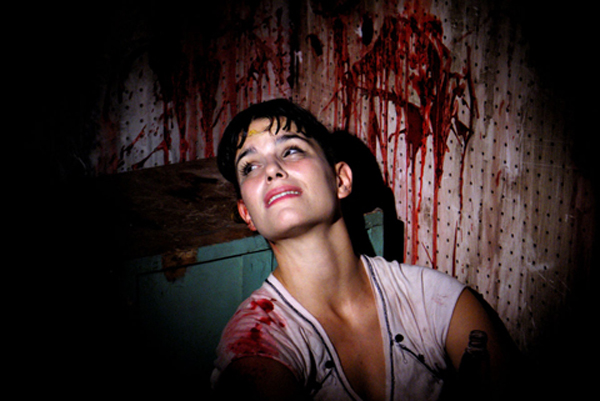
Excision (2012,  Anchor Bay Films)

Excision, moreso than any other film on this list, has a possibility to have its reputation blossom over the years to come. This film very much inhabits the mind of its protagonist. This film does not fear exposing the the delusions of its main character opaquely, slowly revealing a plan of action that unfolds with precise and exacting horror. The film also features a number of great performances and very well-cast players including AnnaLynne McCord, Traci Lords and Jeremy Sumpter. It is definitely the one film on the list that warrants warning the faint of heart or stomach not to apply.

10. Whisperer in the Darkness

The Whisperer in Darkness (2011, HPLHS)

While I can’t say this is as successful as The Call of the Cthulhu in transcending it period-mimicking trappings; it does again choose the right time period and cinematic style for its Lovecraft adaptation. If the H.P. Lovecraft Historical Society continues blending old-style cinematic ethos with mythos they’ll have hits for years to come.

9. The Monitor

The Monitor (2012, Grindstone Entertainment Group)

Here’s one you could pigeonhole as psychological horror. It features two very strong lead performances by Noomi Rapace and Kristoffer Joner. It hints at a rather big twist early and delivers on more to follow to keep things intriguing. Mind-play, particularly in the horror genre, is under-utilized and can be highly effective and is used quite well here.

8. The Aggression Scale

The Aggression Scale (2012, Achor Bay)

You can call it a crime thriller if you like, and I’ll spend minimal time on this point, but I will address why I consider it horror. I don’t feel it’s a stretch. Any film that deals with home invasion can be considered horror if it plays towards that realm. Home Alone, which I compare this film to, never allows itself to be taken too seriously, this film ups the stakes, maims and kills people and is serious in tone, so: horror. Just because the villains are unmasked, in organized crime and have clear motives doesn’t make it less horrific.

The Aggression Scale also functions in large part due to the fact that it builds its character, in fact, quite a bit more than its situation at first. When things start coming to a head the two converge and the escalation of narrative intensity is quite great.

7. The Possession

The Possession (2012, Lionsgate)

I had better tracking of films and more horror watched this year, so the likelihood of another possession tale ending up on the list was actually lessened unless it was little better handled than last year’s pick. The Possession most certainly is. The Possession concerns itself less with differentiating details though Judaism, Dybbuk boxes and the like are new, as it does with character development, and that’s what makes it effective.

6. ParaNorman

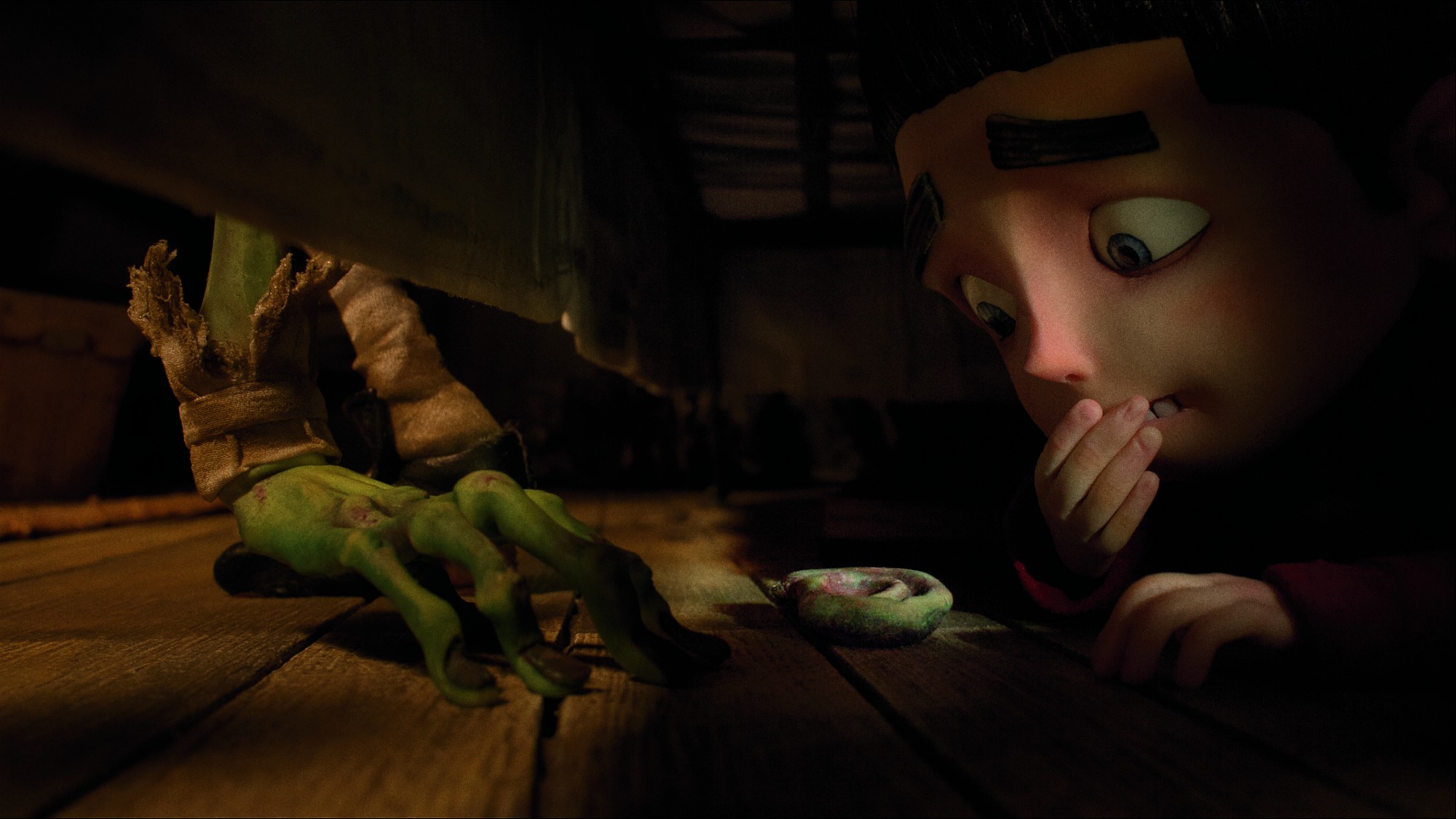
ParaNorman (2012, Focus Features)

In some ways, I can’t help but feel that this film’s balance keeps it lower here than it should be. ParaNorman splits time between doing a lot of things, and it does so in a horror milieu but isn’t always a traditional horror film. However, since it’s excellent at whatever it does it belongs. ParaNorman not only tackles feeling like an outsider, a child coming to grips with death himself, and in essence that tired phrase coming-of-age, but in horror terms it also more effectively draws a distinct parallel between protagonist and antagonist by having him experience the anguish and isolation of the victimizer when they were victimized. However, especially since it’s ostensibly designed for kids, ParaNorman never sugarcoats the wrongdoing of its antagonist; it explains, it even empathizes but never forgives it – it states the obvious: you’re not getting out of it what you think you are. The zombies feeling persecuted and being persecutors is also a great touch such that reversals are near-constant.

I had yet to write about it so I could further discuss what ParaNorman does in other regards, but that’s about as succinctly as I can cover the horror angle.

5. [REC] 3

[REC] 3 (2012, Magnet Releasing)

Yes, [REC] 3 went somewhere I wasn’t expecting it to either, but I rather enjoy it nonetheless. In this film there are thematic expansions and new veins of thought explored if not literally picking up pre-exisiting narrative threads, which is all fine by me. It all comes down to how it’s done.

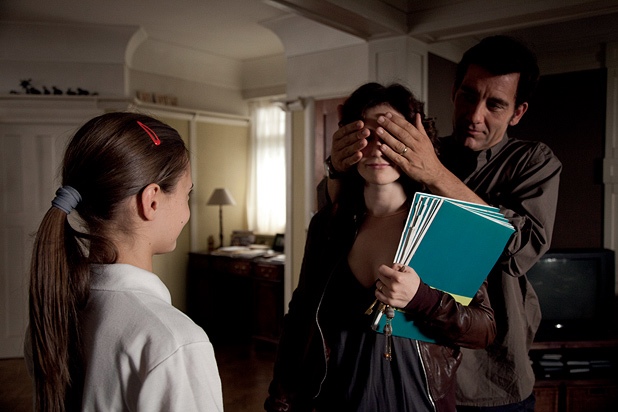
4. Intruders

Parallel narratives can be a double-edged sword. I’ve seen this film twice and it really works in both viewings in one I was naively accepting and offering no guesswork, in the second I knew it all and enjoyed it nearly as much as the first time. It’s a bilingual tale with a sensibility many horror fans will be familiar, one that’s uniquely Spanish even in the English portions of the film. It’s a different kind of approach to apparitions that I enjoyed.

3. Sinister

Sinister (2012, Blumhouse Productions)

You’ll note that this is the only title on this list in which any footage is even found, not that I’d consider this film a found footage approach per se. What Sinister does is take the concept of malevolent celluloid a step further than most and build a story around the film and not strap it diegesis or camerawork to a narrator-cum-camera. Sinister also interestingly works again with a male protagonist, oft times alone who is very expressive and his fear allows us to fear. Silence or gasping is scarier than incessant screaming. That’s just one thing Sinister understands so much better than many other films.

2. The Woman in Black

The Woman in Black (2012, Hammer Films))

There’s just something about Gothic horror tale done well that will affect me like few others do. There’s a primal hearkening to the sensitivities ingrained in us. The pitfall of the subgenre is that its been done to death and knowing tropes and protocols makes it hard for a style so old hat to work. However, there are some tweaks, techniques and approaches that dress up this old favorite and make it more effective than most.

1. The Cabin in the Woods

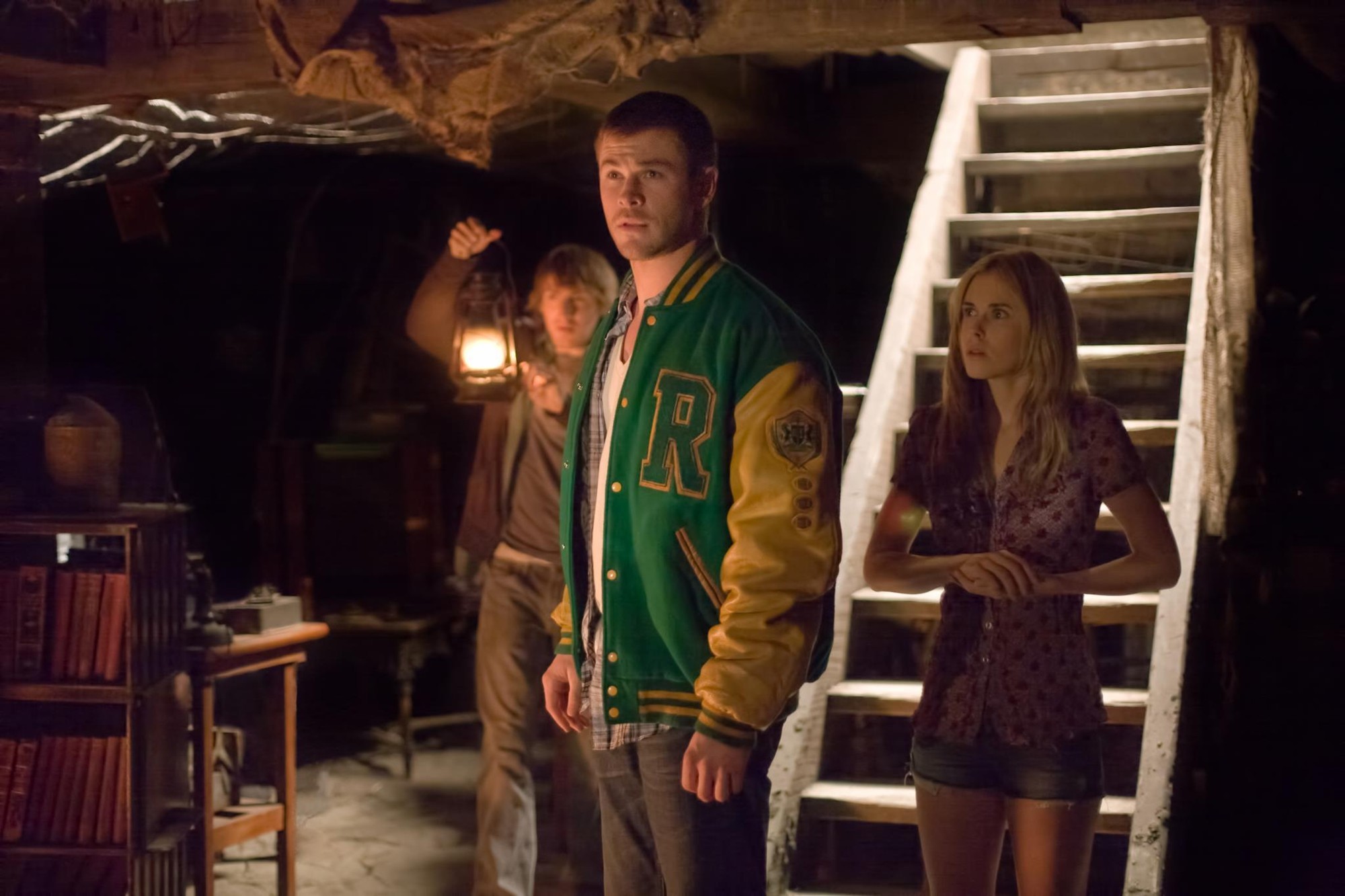
The Cabin in the Woods (2012, Lionsgate)

It’s one thing to deconstruct a genre, however, it’s another entirely to reconstruct it following said evisceration and build a beautifully grotesque new prometheus in its stead. It’s the second half of its master plan that put The Cabin in the Woods over the top.

The First Annual Neutron Star Award

The Neutron Star Award

2012 Honoree

Vincent Price

As tends to be the case when I’m breaking out a new honor (e.g. The Ingmar Bergman Lifetime Achievement Award or the Robert Downey, Jr. Award for Entertainer of the Year), my initial write-up about it will be fairly short.

OK, so what is the Neutron Star Award? As I watched older selections through the year, I was frequently compelled to pick a film based on the fact that Vincent Price was in it. When I was younger I was very actor-oriented, more so than with directors. The fact that an actor had that kind of draw, and was one who is sadly no longer with us, made me think there had to be some kind of way I could honor them.

So I thought literally about stars, and being a nerd I confirmed that a neutron star fits the definition of a star that has gone out but glows more brightly after its passing.

Which brings me back to Price. If you look at my older films list this year you’ll find Vincent Price all over it. He was not only a talent, and not only elevated works he took part in, but in a way elevated the entire horror genre; in large part because of the horror icons he arguably was the longest-lasting and most identified with it. Christopher Lee, for example, has for years been synonymous with other kinds of films, but once Price got his foothold it was nearly his sole dominion.

I fight Netflix indecisiveness so anyone that great that makes me say “Oh, he’s in it? Good enough for me.” Is certainly worthy of some honor.

I truly like this idea and I hope it acts as another incentive to discover and get to know other actors’ filmographies in the future.

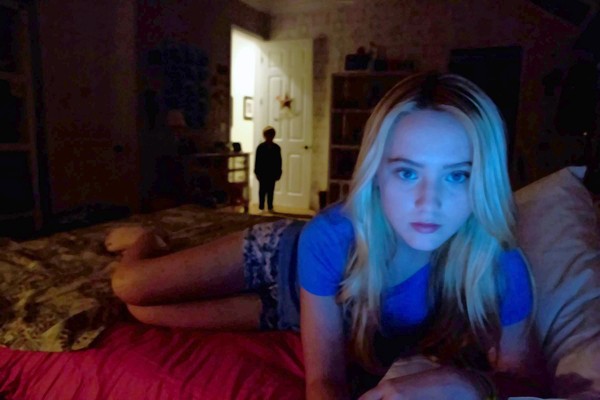
Paranormal Activity 4 and the Found Footage Problem

This year saw another installation in the Paranormal Activity series. I will not bemoan the perpetuation of the series. I understand that. They cost virtually no money and the profit margins have been fairly huge. As a business decision, it’s a no brainer.

When writing about the first installment of this series, removing the marketing scheme which was brilliant and the hoopla, I complained it was like a surprise symphony.

I have not given up on the series entirely and what I find odd is that each film has done something, in a particular section of the film, that if removed (as if that were possible) and combined with another section of another installment, would make a whole enjoyable horror film.

The main issue that this series has confronted in the sequels is that it hasn’t broken far enough away from the formula that the initial film established. If one looks at any lengthy horror series almost any of them will have a film that bucks the trend. Now, of course, that could backfire but at least it’s an attempt to shake things up.

What part three does best is have payoffs and a fairly good climax, but the build-up as per usual is fairly mind-numbing. In this recent installation certain motifs and twists are introduced, but it ultimately builds to something we’ve all seen before. Whether you’re a fan of the series or not, it’s not a progressive move.

Even purists couldn’t argue that the Halloween and Friday the 13th series kept trying to up the ante and find new avenues by which to lead into their new tales. What I can give to the first part is that it does catch you off guard, but the set-ups for the very modest scares are are too long, this film at least progressed (to an extent) the visual aesthetic.

Part of the dereliction of the series can be attributed to fear of rocking the boat, but the other part hinges on the found footage element. More often than not the found footage approach is used as a crutch rather than a license, or a challenge, to be more creative.

In four, I was very close to liking it, but they felt beholden to the formula.

Ultimately, how vital either this series or implementation of the found footage technique will be how varied, creative and unique the footage sources are. The image quality can be degraded but an over-abundence of static, uncut images is not modernizing; it’s regression to the advent of sound, if you’ll allow the hyperbole.

Cameras are now ubiquitous accessories, so there is much untrod ground in this series and the approach. It must be trod if found footage is not to die by atrophy.

Mini-Review Round-Up: November 2012

I had quite a review drought to end 2011 so I think the remedy for this kind of post would be to have the post be cumulative monthly. Therefore, after each qualifying film a short write-up will be added to the monthly post. The mini-reviews will be used to discuss Netflix and other home video screenings. Theatrical releases, regardless of how they are seen whether in an auditorium or on VOD, will get full reviews.

For a guide to what scores mean go here.

Ghosts of Ole Miss
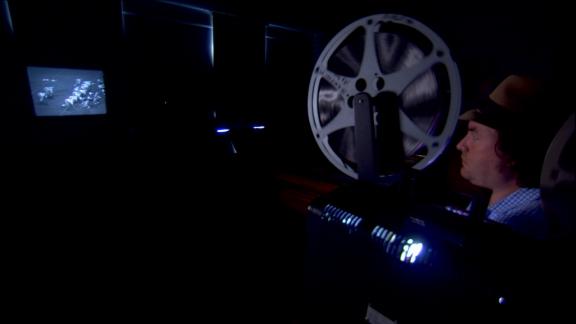
If it were in anyway possible, it’d be interesting to examine this 30 for 30 entry in a vaccuum. The reason I say that is: as a film about the integration of Ole Miss with a unique subplot about the undefeated football team that played and was overshadowed by sociopolitical unrest on campus during that year, it’s intriguing. However, the film purports to examine the team and be a testament to the team, to memorialize the forgotten squad. While there are plenty of interviews with players about on campus events and quick chronicles of game events and results, the team becomes a subplot in a film supposedly mainly about them. The struggles of integrating the school ought not be overlooked, but when there’s little overlap between the tales aside from time and place structural balance becomes hard to find.

The film does very well to examine the cultural morass that many face, southerners in this case, that exists when you’re trying to balance pride, heritage and also acknowledging past failings and dark moments. Some of the voice over is very well-written and poetic in a way that seems unique to the south, as much as the music is lyrical and local. However, this personal connection also fights for time with the football team’s tale and the exposition of the events surrounding the integration. Ultimately, the film succeeds by giving you barely enough to get by on each angle, but it would’ve been better served by restructuring and/or delving further into each aspect.

6/10

Benji

It’s a method I generally try to avoid, but perhaps the best way to discuss Benji is via comparative analysis. After I had seen Benji what occurred to me is that there was some structural similarity to 9.79*, and that being that it is mainly a chronology of events (this one far more linear) but there is a late-in-the-game monkeywrench thrown into the mix. I will not expose details to preserve surprise, but the late revelation here only has one side telling the story period, not just on camera. Furthermore, the revelation, in my mind didn’t really shift the legal burden of blame.

Regardless, for the most part, this is an effectively rendered tale for the most part that reveals a mostly unknown personage now. The film does well to just present its case and not comment upon it. The only other issue it suffers from is that there is a slight lack of ebb and flow. There is a definitive rise-and-fall, but its crescendo and decrescendo. The rigidly linear nature of this tale hinders its efficacy some.

7/10

Off White Lies

I find myself commenting on a film’s subtlety quite often. Rather than sounding like a broken record I will expound on that. It’s one think to tell an intricate story without spoon-feeding an audience like say Tinker Tailor Soldier Spy, and another to tell a simple story in a straightforward way. However, to tell a simple story, subtly; jumping in medias res and making revelations indirectly rather than with overt exposition is quite a feat. As is often the case, it’s not necessarily the end destination that matters with a film, it’s the journey. With necessary information being delivered when absolutely necessary and without drawing attention to itself we are allowed instead to focus on the characters and how they interact. This is especially helpful when dealing with a father-daughter dynamic. We see how they interact and the why becomes more and more apparent as we learn more about them.

The story, such as it is, moves rather smoothly ends at an appropriate time and features good performances all around.

8/10

The Dynamiter
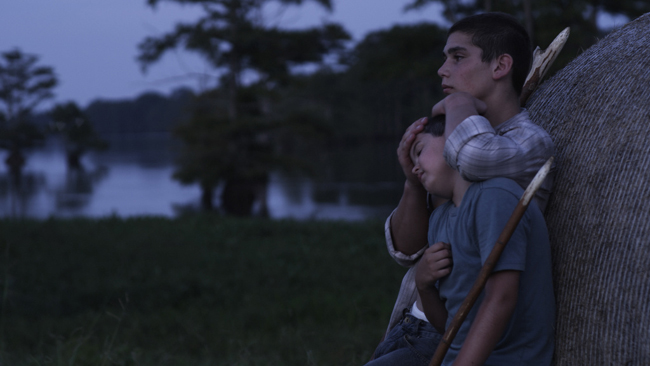
As I tweeted immediately after seeing The Dynamiter, it seems to be par for the course that every year there will be a Film Movement selection that will slowly, subtly work on me and leave me bawling nearly uncontrollably, and almost unbeknownst to myself, by the end. Last year’s film was A Screaming Man. What both films share in common is a simple tale of people with simple desires, facing seemingly mammoth obstacles to overcome and struggling mightily against them.

Yet, even that congratulatory paragraph doesn’t really do this film justice. For the magic this film weaves, it creates in a mere 73 minutes. It’s a running time so brisk you’d never imagine it’d have the power in its finale to sneak up on you, but it does.

In writing up any sort of reaction piece to a film, I am somewhat loathe to quote other works, be they literary or musical, to echo my sentiments. However, that’s really more a writer’s pride than anything because sometimes, with the really good films, they are more accurate. One such work is a spoiler so I’ll avoid it, leaving just one: this film does indeed seem to have “The Invisible Touch,” it takes control and slowly tears you apart.

It’s a film that’s deserving of a re-screening and a bigger write-up, but something tells me I’ll be writing about it again at the end of the year.

10/10

The Best Exotic Marigold Hotel
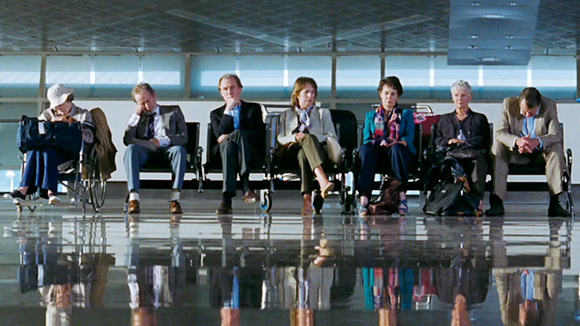
The Best Exotic Marigold Hotel is a cautionary tale, in the best way possible, and part of why I love the year-end sprint to catch up on releases of the year. Towards the end of the year, I get a little less finicky about selections and just watch things, not just to be adventurous but admittedly to bolster the BAM qualifiers. This may all sound quite underwhelming but the impetus to see this film was really a personal recommendation.

I knew of the film but frankly the trailer and all other marketing elements didn’t sell the film. What looked at the outset a rather myopically comedic tale turns out to be, in reality, a wide-ranging inclusive, heart-warming, bittersweet, charming and funny film; in short, one of the more well-rounded experiences.

The character’s narrative threads which start out very disparate reminded me in some ways of Love, Actually but with more interweaving and less contrivance to get things linked up. There is a general emotional over-current that makes this true also, not just some similar cast members.

Through the natural functioning of the narrative there is ample room, which is taken full advantage of, for commentary on myriad topics that is never extraneous, which adds to the enjoyment of the film.

One thing I can applaud the marketing of the film for is that it did leave many of the surprises of this tale in tact, and if you take this journey you will definitely be rewarded.

10/10

Teddy Bear

Teddy Bear is a testament, not only to Film Movement’s Film of the Month Club and the bonuses they include on their DVDs but cinematic acclimatizing. What I mean by that is not necessarily that the packaging of a film, or the presentation thereof, can condition a viewer, but when you’re visiting a slightly different avenue of film a bit of an introduction can be beneficial.

My best and favorite professor in film school was Max Simkovitch. Not only was he an uncanny “bill builder” in terms of doubles and triples, but he also put you in the right frame of mind to absorb the film you were about to see. Is that to say I liked everything I screened in his classes? Not at all. However, it kept me in place where I would and continue to fight against making the film what I thought it ought to be, take it for what it was and judge it on its own merits.

How this relates back to Film Movement is that for the DVD of Teddy Bear they include two prior shorts by Mads Matthiesen an up-and-coming Danish filmmaker. In seeing these two shorts, one of which was the basis for the feature Teddy Bear, you definitely get a taste for his style and in the short Kim Kold shows flashes that, yes, he will convey the effective gentle giant needed for the narrative.

The feature is an effective tussle between mother-and-son, portrait of loner trying to break out of his shell and an underdog love story. The pace is imperfect later on, but the tale is always engaging, endearing and watchable, if not completely realized.

7/10

The Pact
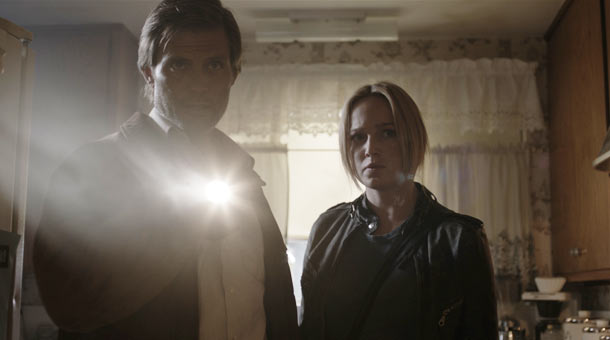
This is the kind of movie that will be referred to as a slow burn. The slow burn in the horror genre, the gradual but consistent build-up, has become more popular as of late. However, like any technique or philosophy it is not inherently good or bad. What I believe is that if you’re going to take this approach you have to take the escalating events to a fairly wild and unpredictable place. The stakes and incidents continue to increase and just when you think you have the film pinned down it expands.

The films imperfections, barring a seemingly nonsensical title and a jolt-shock end shot, are mainly that early pace that makes it a tough tale to get into. The performances are inconsistent, but the story does just enough to buoy it. How much each individual enjoys the film will likely vary on his or her patience, and their embracing or rejecting of the twists.

6/10

A Chrismoose Carol
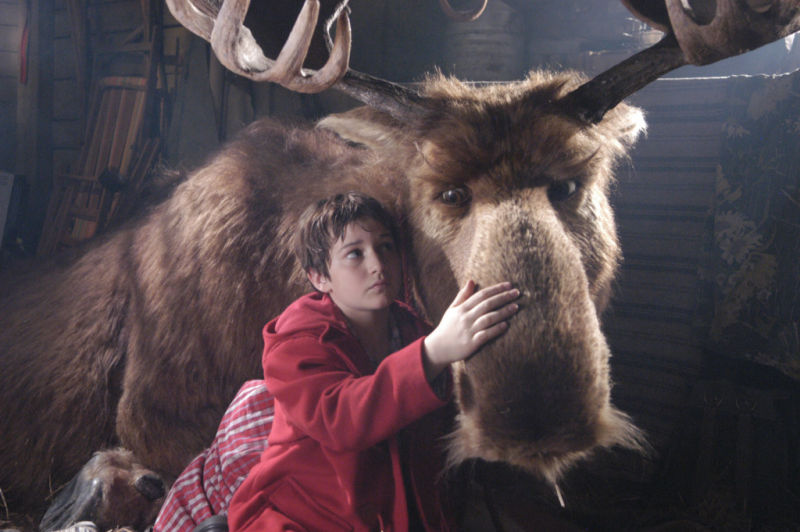
The review of this film can be found here.

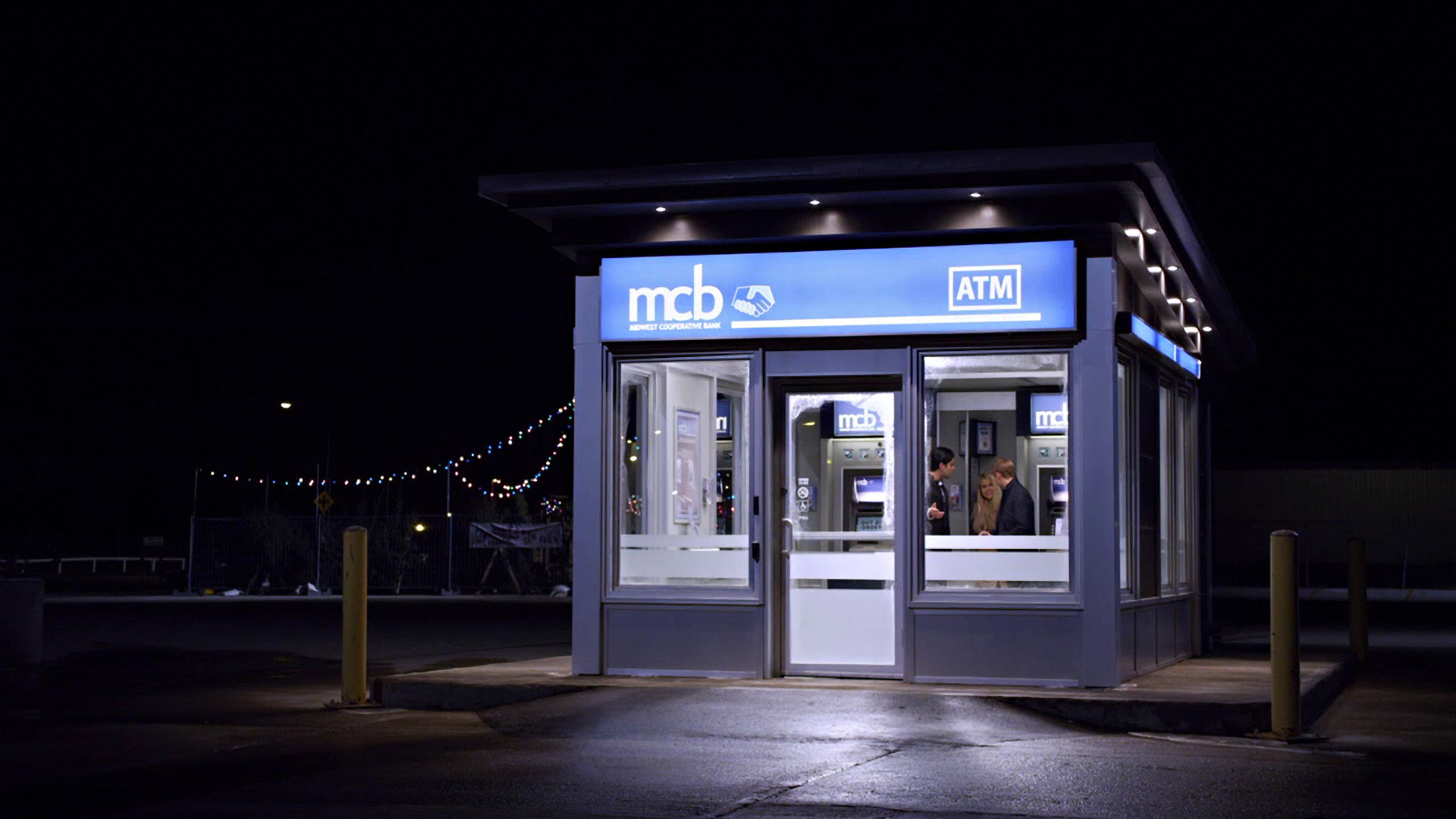
ATM
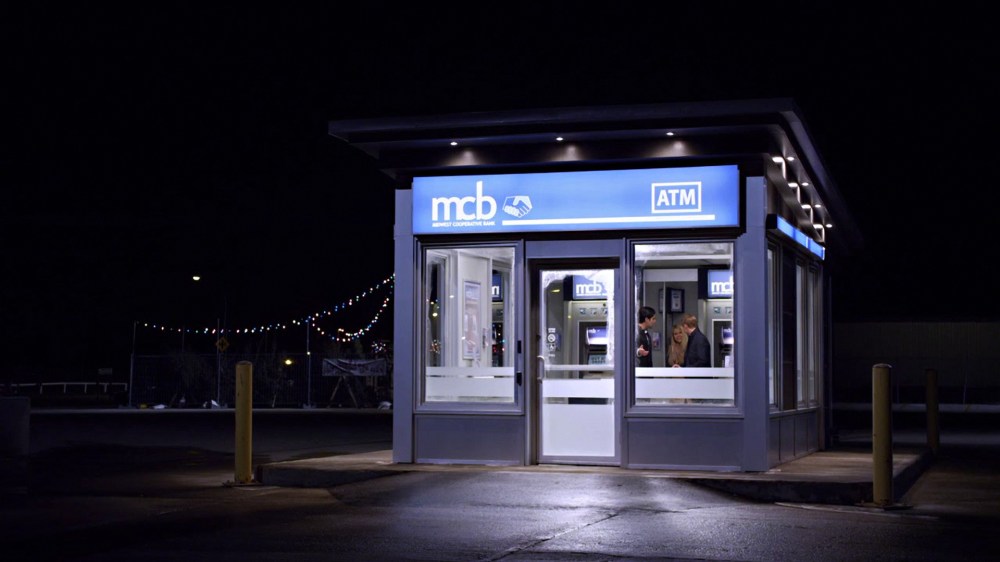
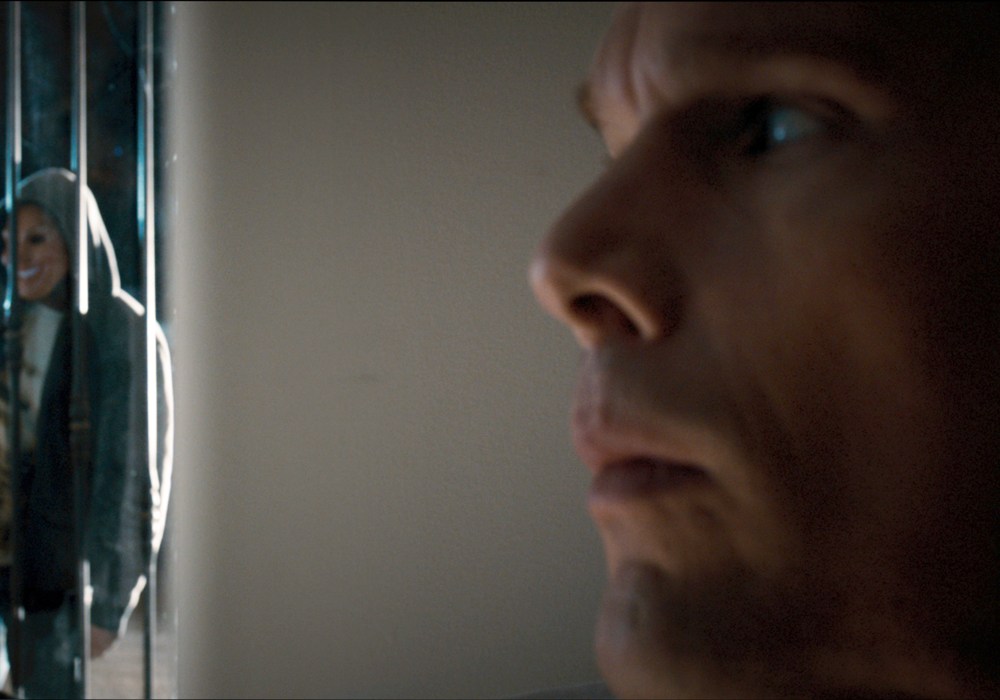
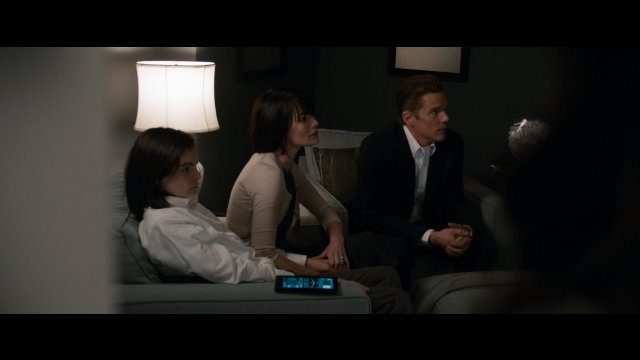
I often discuss the merits of going into a film as a clean slate. I can’t say I went in 100% clean to this film, however, I don’t see that as a detriment here. I found this was streaming, saw it qualified as a 2012 release, and added it to my queue without further thought for a time. One tweet by a fellow Twitter compatriot who disliked it, didn’t give much away, but intrigued me enough to give it a play.

A few things struck me as odd as it pertained to ATM: the first of which is that it does hold interest and a fairly believable premise through a much larger portion of the film than I expected based on what I heard. While I will credit the film for its set-up and a certain degree of cleverness in it maniacal plan, the second oddity is that the most major twist I was way ahead of, and the resolution was one that doesn’t stand up to harsh scrutiny, and the length of the reveal allows you to scrutinize it. It reminds me a bit of Penumbra but with more annoyance and less impact.

This is also a film that inflated its running time to its detriment. It cut out of the closing credits at least three, if not four times, to additional montages hinting at more villainous plots. Such were the cutaways that it bloated the credits crawl (which were slow to begin with) to nine minutes. The film clocks in at exactly 90 minutes with it included. It wouldn’t have saved the film, but it is OK to run less than 90 minutes. It really is. Add to that a very slow reveal, and you have an end that doesn’t end long after the point where the film becomes completely asinine.

4/10

Home Alone: The Holiday Heist

Home Alone: Holiday Heist (2012, 20th Century Fox)

For my review of this film please go here.

I didn’t quite catch up to the backlog of November titles viewed, seeing as how I managed to get into an end of year viewing groove early. The titles that would’ve been here will appear in the December running post. All these lists also qualify films for the BAM Awards, which have many exciting dates in the month to come.
Mini-Review Round-Up September 2012

I had quite a review drought to end 2011 so I think the remedy for this kind of post would be to have the post be cumulative monthly. Therefore, after each qualifying film a short write-up will be added to the monthly post. The mini-reviews will be used to discuss Netflix and other home video screenings. Theatrical releases will get full reviews, or another kind of write-up as per my recent shift in focus.

For a guide to what scores mean go here.

Note: Apologies for this post being late. Also, I am weighing what a cut-off should be for films that have has no US release date past. As for now they are all eligible. Some films viewed last month are listed here instead.

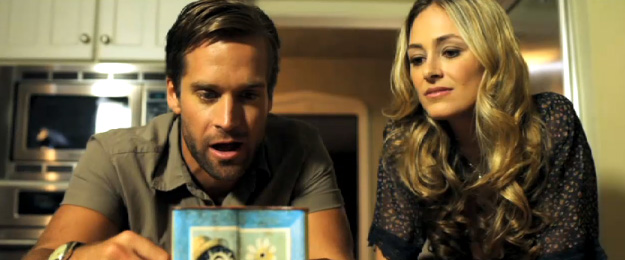
[REC] 3: Genesis

This is a prime example of having to go where the movie takes you and not judging it based on what you wanted or expected it to be. I have already expressed how much I love what [REC] 2 did for that series. When you hear that this one is going to be a prequel you assume, “Great, it’ll be about the patient zero.” The connection is more tenuous than that. However, what you do get in this [REC] tale is humor, great horror, action, effects and gore and more theological blanks filled in than before. Whether or not part 4 can, and will, be the conclusion this series needs/deserves remains to be seen, but this film is what it wants to be: a very strong, fairly stand-alone piece that contributes to a larger narrative.

8/10

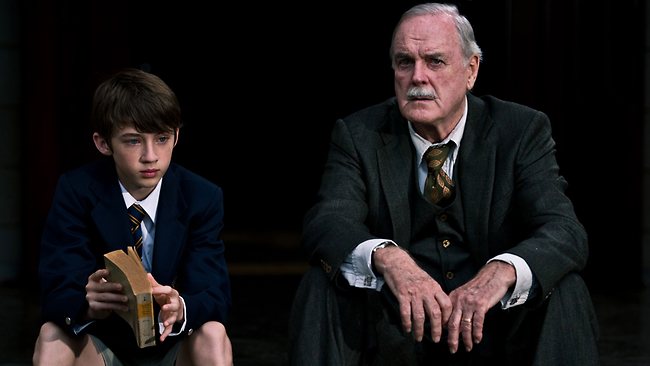
Spud

This is a South African film of some acclaim, which I sought a foreign region DVD of since its US distribution is more doubtful the further from its initial domestic release we get. Spud was nominated for six South African Film and Television Awards (the foreign award is something I may touch upon in November) and an adaptation of a famous novel series. The film stars Troye Sivan (most well known from YouTube or Wolverine) and John Cleese. The film sets as a backdrop the momentous events of 1990 and the release of Nelson Mandela, but what it focuses mainly on is a funny, occasionally touching, tale that’s a dawn of awareness, and coming out of one’s shell. It’s an appropriately episodic tale, that moves well for the most part and features great, surprising and fitting songs as well.

7/10

V/H/S

Yes, any anthology film by its very nature will have its ups and downs. You as a viewer will connect more with one piece or another, one section or another will be more well-executed or intriguing, especially if there are different writer(s) and/or director(s) handling each portion. This year I’ve taken to watching a lot more anthologies, which proliferate in horror more so than most genres. It has moments which are few and far between, set-ups are too long making it structurally askew in segments and in toto, acting is scarce; the frame of the story is fairly poor. This dereliction of pace and structure makes the two hour total running time seem nearly double that.

For a frame of reference here are brief comparisons to other anthologies so you know where I’m coming from: From a Whisper to a Scream has a stand-out segment, this does not; Creepshow has a brilliant frame, this does not. V/H/S seems to seek a unified tonality and aesthetic that it doesn’t quite achieve, Tales from the Hood does. Theatre Bizarre is wildly inconsistent, this is fairly consistent in its terribleness.

1/10

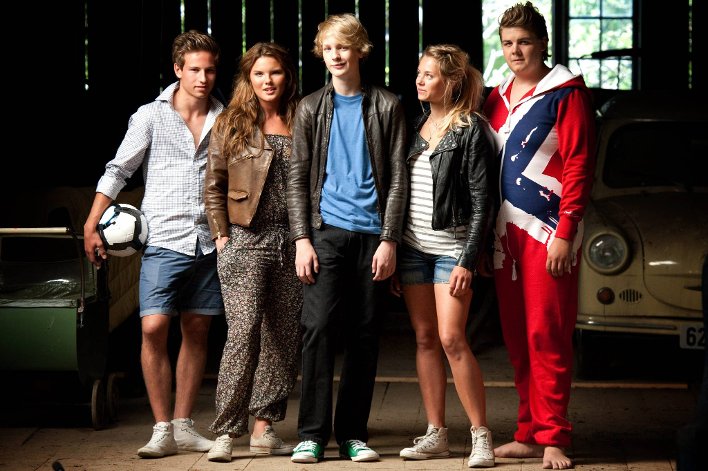
Amors Baller

Perhaps the most interesting thing about Amors Baller, aside from the way that it handles the Swedish/Norwiegian dynamic, is that it puts football (soccer) out front as the key to a boy (Kåre Hedebrant, Let the Right One In) winning over his new crush. While the junior tournament plays a major part, it’s a setting that doesn’t take up as much screentime and the results doesn’t factor in as much towards the end as you might expect. It ends up being more about relationships and friendship. It’s a funny, heartfelt and quick-moving film.

7/10

The Hidden Face

What is most interesting about The Hidden Face is what it does structurally. There’s an inventiveness to a surprising revelation made that allows for it to play with perspective and narrative point-of-view in very creative ways. There is a bit of steam it loses in trying to amplify every single odd moment that needs clarifying after the break, but it remains a very haunting, odd and twisted horror tale. It’s one that is definitely worth seeking out.

7/10

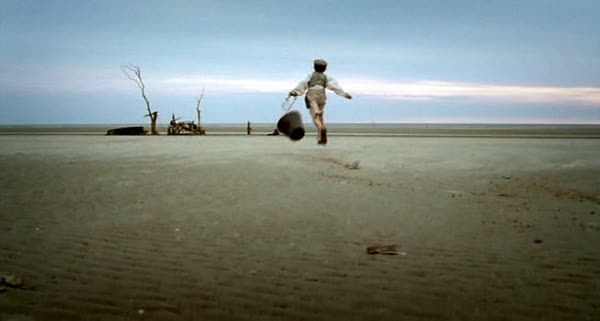
Nimmermeer

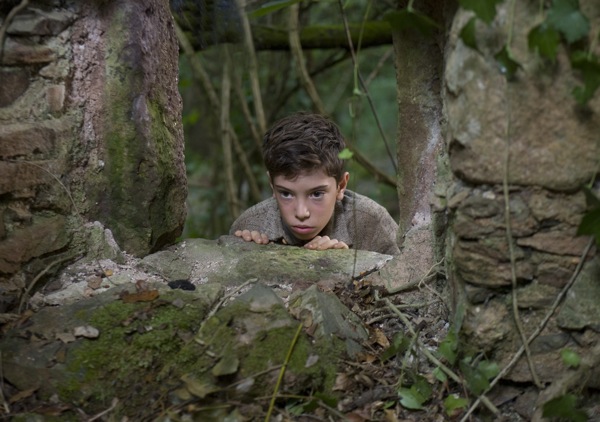
One of my first thoughts upon seeing Nimmermeer was how is Toke Constantin Hebbeln, the director of this film, a name I only now have just heard. Now, granted since this 2006 hour-long film he’s made other shorts and just last month released a feature called Shores of Hope in Germany. Regardless, it’s not only the narrative but the cinematography, the staging and the penetrating emotion of this film, which oozes magical realism, that really makes it standout. It’s told like a fairy tale replete with narration but in a context that is very real and immediate. Odd things happen and are not explained away. The story is what it is and it’s at the service of its protagonist and its audience in dramatically, beautifully rendering its message. Leonard Proxauf, who later starred in The White Ribbon, is great in this film.

10/10

Penumbra

What Penumbra attempts to do is something I can definitely appreciate. How it goes about trying to do it is what I really have a problem with. It overplays its hand in some regards and is a bit too broad in the portrayal of its protagonist, her dialogue a bit too blunt; not to mention the scenes that set-up the gotcha ending that only play more annoyingly once everything is revealed. It’s an interesting examination of the Spanish-Argentine dynamic but many other recent co-productions layer horror, colonial antagonism and modern Latin America’s socioeconomic climate better than this does, combine that with its failings as a horror film and it becomes quite bothersome indeed.

4/10

Vorstadtkrokodile 2 and Vorstadtkrokodile 3: Freunde Fur Immer

Perhaps one of the most interesting things that one can start learning or realizing when you obtain films from other regions is that various film industries world-wide are not too different from Hollywood, for better and worse. What we in the US get in art houses are the more erudite, obviously artistic films from overseas. If you look at trades when they report on international bureaucratic/business-related controversies art versus commerce comes up. Essentially, we get the independents from overseas. Next time you watch a foreign film pay attention to the credits and see how many production companies, governmental agency logos and other corporate logos pop up in the opening credits. But the major studios have presences overseas, and even without that each country has its own brand of genre cinema, which is generally made for domestic consumption. Subtitles aren’t found on all foreign-made DVDs and many times only languages of neighboring nations apply.

However, globalization is here and many films are seeking to attain some popularity in the home video market abroad by including more and more subtitles.

Which brings me around to the Vorstadtkrokodile movies. Or as they’re called in English The Crocodiles.

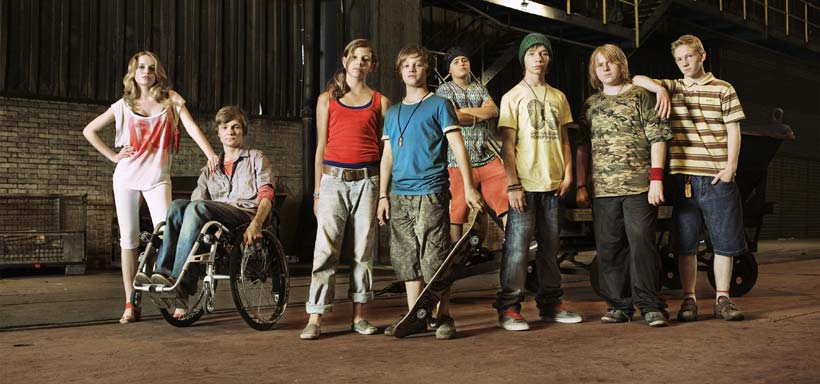
This version is a recent German trilogy based on a popular children’s novel, which I believe was even translated to English at one point. Not unlike American trilogies this series raced to the multiplexes with releases in 2009, 2010 and 2011. Such that the second installment feels a little flimsy and all over the place. There’s some cool fantasy elements, some good jokes but the characters seem to be in stasis. Also similar to American movies, a musician-turned-actor is in the mix; Fabi Halbig drummer from the popular band Killerpilze was recruited to play one of the main roles. Also, not unlike American films Nick Romeo Reimann, one of the latter additions to Die Wilden Kerle (The Wild Soccer Bunch) goes immediately from that series and takes the lead in this film.

Now, all that commentary may sound cynical but they’re just facts. What occurs in the third film is a very pleasant surprise. The story is far more unified. It starts light and frivolous and gets serious. There’s great comic relief and it connects back to the first film. It closes a circle and consciously concludes the series. Just taking a few series by example at the very least these series come fast and furious and know when it’s time to close. It’s a warm and heartfelt conclusion that takes some outlandish plotlines to real and honest places emotionally and give the trilogy great closure.

Reimann, now moving on to other projects, seems destined to continue finding work and may even transition seamlessly into adult roles. It’s a bit early yet, but considering his steady participation in two series, totaling six films, with increased emotional demands in each successive film; drawing a parallel between him and Daniel Radcliffe is not far-fetched.

4/10 and 8/10

Pan Negro

Francesc Colomer in Black Bread (Massa d’Or Produccions) Spains Official Selection not yet distributed in the US.

This was a film that featured previously on The Movie Rat during last year’s post about the Oscar Foreign Film Submission Process. It was a gutsy choice to submit this film over the likes of Almodovar’s The Skin I Live In, but I applaud gutsy choices such as Dogtooth. That and the fact that Villaronga is a director I’ve seen and like previously made me intrigued by this film.

One thing that’s a double-edged sword about it being Spain’s submission last year is its indigenous nature. It’s a film set in the the Catalan region and deals greatly with the Spanish Civil War and the aftermath thereof. It layers in horror elements, legend, drama, politics and coming-of-age with deft and not much bluntness. One’s familiarity with the vaguest aspects of the conflict will be aided greatly in viewing it.

The story divides itself neatly and the section whose title alludes to a later scene is the strongest.

7/10

Asterix and the Vikings

Asterix and the Vikings (M6 Films)

This is a movie that I have a rather unusual relationship with. I actually didn’t know about this fairly recent animated rendition of Asterix until I was in Orlando earlier this year. In Epcot, there was a book of the film and I got it. The book renders the movie fairly well and considering that I as a fan of Asterix was fairly disappointed in the live-action version I was excited.

What it really goes to show is that putting production elements in place: music, dialogue, voice actors, the different animation techniques and effects employed made the movie so much more immersive than I imagined. From the book it seemed like standard fare: fun bordering on cute. The film that the book represents is a very fully realized version of the tale and is highly recommended to fans of this beloved character.

10/10

61 Days of Halloween- The Final

Most holidays worth their while encompass entire seasons, such as Christmas, for example. However, as you may have noticed there is a corporate push every year for us to think about the next holiday even sooner. While this has many negative side effects I figure I may as well embrace it.

Since Labor Day is really only good for college football and movie marathons cinematically it is as significant as Arbor Day, which means the next big day on the calendar is Halloween and we can start looking toward it starting now.

Daily I will be viewing films in the horror genre between now and then and sharing the wealth. Many, as is usually the case, will not be worth it so for every disappointment, I will try and suggest something worth while as well.

The Final

This is the kind of movie I like to talk about. Immediately upon tweeting my reaction I got two very disparate reactions from others who had also seen it. In either case, I could understand the reactions from both of my Twitter compatriots who expressed differing views on the film. Essentially, I only took the tweet discussion so far because I knew I’d have enough characters here, not there, to explain why I come out on the positive side of the film.

Starting off on the negative end: this film has a rocky start. However, it epitomizes why I am very hesitant to give up on a film. The film has serious, serious issues in establishing its characters. A lot of the early set-up, mainly of the bullies in tale, falls into the stereotype realm and does come off as either overly-blunt or tin-eared.

So while The Final very quickly squanders its opportunity to be truly great, it does build its characters and works towards a set-up that is highly effective. Thankfully for the film the running time is not long, and the first act mounts steadily towards the turn in events such that the cumulative effect, even if uneasily handled, is a desired one. The goal of the protagonists is not only easily identified, but understood and anticipated.

To finish this point on stereotypes: is it lazy writing? Yes, but I feel they do melt away to an extent as you see the characters react to an extremely stressful situation. Also, when there’s the anticipated role reversal there is good conflict and illustrations of just how far these characters are willing to go. There is also the point that is difficult to deal with in art, which is that these types exist for a reason. I’d even go so far as to postulate the possibility that the exaggeration of types was a conscious choice to make the audience more readily become immersed in an outlandish and hard to deal with situation.

The rendering of the situation alluded to in the synopses for the film is what makes it work. What clinches it as very enjoyable is the the interpretation of events thereof, and what elevates it to about the heights it can hope to achieve, considering some of its issues, is that fairly adept commentary and the mirrored frame. The performances of Marc Donato and Lindsay Seidel are the strongest and most compelling.

In the end, The Final overcomes its inconsistencies to be a fairly impressive situational horror piece with built-in commentary on many subjects, whether it be bullying or school violence, that’s not overly-augmented by the characters. It’s a film that builds identification of type such that there’s a connection to torturous scenes besides mere voyeurism.

It’s a film you’re likely to fall on either side of. If you look at the synopsis and can handle it; I’d recommend it.

VHS Gems

Here’s another great list idea courtesy of @bobfreelander. Whenever contributing to a popular list I believe that once must always include their slant on it so you understand the selector’s criteria, perspective and so forth.

I do have a horror story of foolishly trusting a VHS-DVD dubber and then tossing the back-ups only to find the DVDs incompatible with any other players, save the one that broke from overuse; despite that VHS is not my favorite format. I’m fine with progress in that regard.

What I’m not fond of is losing access to titles and that’s what format changes have done. Granted, with streaming, DVD, Blu-Ray and movie on demand distribution we’re getting closer, eventually to having most of what is still extant available, completism is all that will satisfy me. Therefore, here are some of my top choices of films I saw on VHS but have not had an official region 1 DVD version (BTW, going multi-region will change your life, and blow your face off your head).

I did pick some titles to try and make them representative of a niche that is likely replete with missing titles and you may see some of these titles pop-up on another similar list soon.

Ghost Town (1988)

This is a film I actually heard of thanks to Rupert Pupkin Speaks. Then, as luck would have it, I found it on sale at the library where all VHS tapes that get donated cost $0.50. Quite a bargain. If you see enough Charles Band movies, and get a taste for them, you’ll find that as a director/producer he’s somewhat in the Roger Corman mold inasmuch as if you sift through enough of his refuse, there’s some good movies to be found, and this is one of them! Western-horror and ghost towns in general have always interested me, and while what’s delivered is not something quite like the box promises it is strong enough to withstand a late second act bout of sloth.

Song of the South (1946)

I’ll save my Song of the South rant for another post. In fact, this selection isn’t really about Song of the South but Disney in general. There are rumors abound that Disney will create its own streaming service. They’ve already put their toes in the water on an international line, and recently into an MOD line. Both of those are very small and release titles infrequently. It’s bad enough the animated classics get vaulted, but for certifiable Disney nuts like myself (and I’m more tame than most) Disney’s squatting on its titles is terribly bothersome and this is at the top of the list.

The Son of the Shark (1993) and Jacqout de Nantes (1991)

I combine these two selections to further illustrate a point, and that’s about foreign-language films in the US. Far too often when formats change, some new home video distributors emerge, others fall by the wayside; and to capitalize on new technology some older titles get overlooked. These two French films couldn’t be more different: the first is a hard, gritty, disturbing look look at juvenile deliquency the second is a delightful, charming warm-hearted portrait of Jacques Demy by his wife Agnes Varda. It is a film she made in memory of him, that features many clips of his films, as well as ho his childhood shaped them and his life.

These films have not made it to DVD or blu-ray in the US.

American Gothic (1988)

I have to be honest and confess that I really can’t recall that much about American Gothic, other than I can differentiate it from the excellent short-lived TV show of the same name. However, I do recall seeing it as a Blockbuster rental and enjoying it a great deal – it’d be perfect to revisit but I cannot.

The Cellar (1989)

The Cellar represents another interesting aspect of distribution inasmuch I first saw it on cable, I believe at some point during the DVD era, but it has not moved past VHS into further means of being viewed.

Blake of Scotland Yard (1937)


I needed an older film here but I also needed one representative of serials, which I do like but don’t get to see enough of. As for Blake of Scotland Yard it’s as good a choice as any. In fact, one of my first posts on this new blog was my consumer outrage at discovering that such a thing as a composite serial, or as I like to call it “Studio Sanctioned Nonsense,” exists. I’ve probably seen it three times through in one for or other and it should be in print.

So those are just 7 films that are on VHS alone as of this writing. If I sat down I could find many more I am sure, but these were the ones that came quickest to my mind and also highlight gaps in distribution patterns that hopefully get picked up.