Bernardo Villela is like a mallrat except at the movies. He is a writer, director, editor and film enthusiast who seeks to continue to explore and learn about cinema, chronicle the journey and share his findings.
The film festival post, both yesterday and today (and perhaps those to come) came to me by accident after falling into YouTube rabbit holes. I don’t fall into them often and rarely with such delightful results.
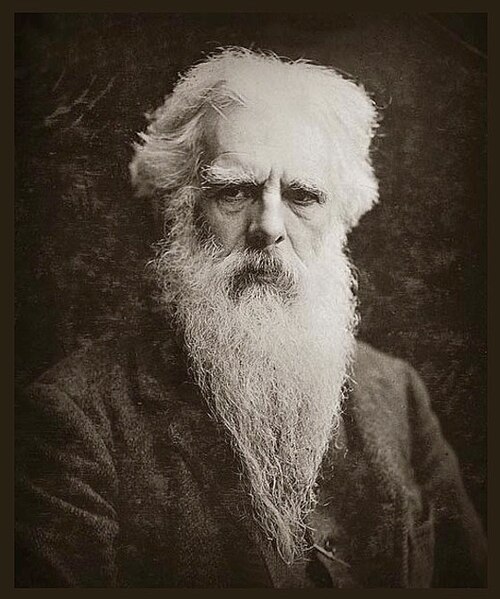
This happened about a year ago, so the deatils are a bit fuzzy, but I think a repeat viewing of Nope, and discovering a book of his studies in motion had me looking up Eadweard Muybridge again.
Lore has it he photographed a man riding horse as part of a bet to see if all four hooves are ever off the ground at once (spoiler: they are). The story goes on to purport the 24 cameras set up created a happy accident. Still images that appeared to move when shown in rapid succession.
That’s true enough, but that makes it more of a “eureka moment” than it really was. Having discovered the book, I saw Muybridge assiduously used film to study motion over many years. Also, Nope, was correct. While many Muybrdige’s subjects (even horses) where named in intertitles, the horse’s jockey in his most famous film, was not. But it is noteworthy that while the horse ride sets motion pictures off. There were quickly many disparate experiments with motion pictures that are fascinating, even exciting to see now, so many years later considering their early vintage.
The film festival post, both yesterday and today (and perhaps those to come) came to me by accident after falling into YouTube rabbit holes. I don’t fall into them often and rarely with such delightful results.
This happened about a year ago, so the deatils are a bit fuzzy, but I think a repeat viewing of Nope, and discovering a book of his studies in motion had me looking up Eadweard Muybridge again.
Lore has it he photographed a man riding horse as part of a bet to see if all four hooves are ever off the ground at once (spoiler: they are). The story goes on to purport the 24 cameras set up created a happy accident. Still images that appeared to move when shown in rapid succession.
That’s true enough, but that makes it more of a “eureka moment” than it really was. Having discovered the book, I saw Muybridge assiduously used film to study motion over many years. Also, Nope, was correct. While many Muybrdige’s subjects (even horses) where named in intertitles, the horse’s jockey in his most famous film, was not. But it is noteworthy that while the horse ride sets motion pictures off. There were quickly many disparate experiments with motion pictures that are fascinating, even exciting to see now, so many years later considering their early vintage.
Below you’ll find a small sampling of his experiments. This final channel has the most complete playlist of his films that I’ve found, if you want to explore further. Enjoy!
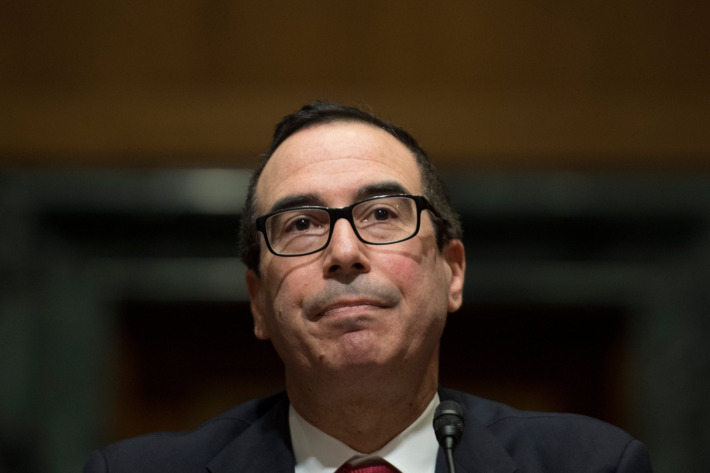
President Trump’s Treasury Secretary, Steven Mnuchin, has been confirmed. Mnuchin as a former hedge fund manager with Goldman Sachs it instantly drew criticism in political circles. Don’t worry further political commentary will be saved for my new embedded page The Democ-Rat.
This post is to discuss Mnuchin’s recent rampant and highly inconsistent run as an executive producer of Hollywood films. He has 34 credits to his name from 2014 through the end of this year if his forthcoming productions come to fruition.
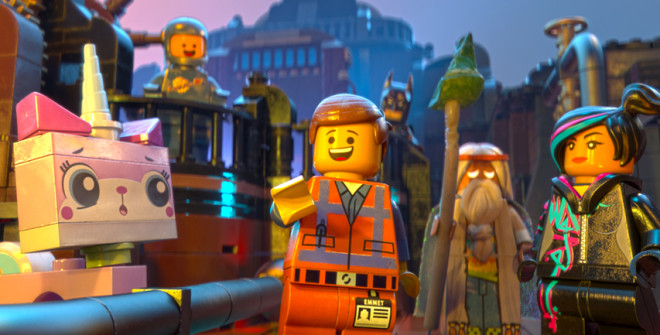
The kinds of these movies he’s helped financed vary as much as his box office performances, some of these titles include surprise hits (The Lego Movie, Edge of Tomorrow, Mad Max: Fury Road), funding auteurs (Midnight Special and Rules Don’t Apply), Reboots or Extensions of a Franchises (Annabelle, Entourage, Vacation, The Man from U.N.C.L.E., Pan, Batman v. Superman: Dawn of Justice and The Legend of Tarzan), and Clint Eastwood movies (American Sniper and Sully), to name a few.
Clearly, like many Executive Producers a lot of these decisions have been dictated by what movies need funds and what can get me a return. Hence the varied type of film and the hits and misses, most notably in the reboots no one especially seemed to be clamoring for.
With Mnuchin confirmed I suggest a magnanimous move on his part would be to have his (blind?) trust still fund films but be open to suggestions from the very public that would benefit from the enjoyment of these films. It could very well be a long, contentious four years why not have a pipe-dream to bide the time? If the swamp isn’t being drained, we may as well have the Treasury Secretary get some projects out of Development Hell if he can and distract us from the madness.
In the meantime, if you need to build a film festival check out his IMDb.
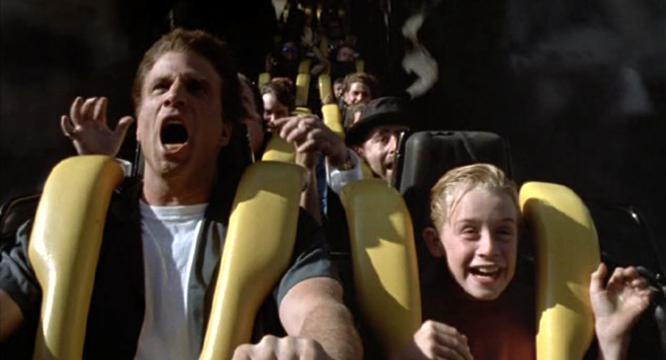
I’ve been planning this post for a while. It’s been put off a few times due to timing. I, unlike many, am not interested in poaching traffic when the tabloids create a story based on the latest candid shot of Culkin replete with speculation on his health, state-of-mind and the like. Therefore, the only logical date upon which to post such a festival/retrospective list would be on his birthday.
One reason Culkin’s birthday always stuck in my head is because he’s precisely 366 days older than I am. So aside from being the matinee idol of my generation, I always felt a certain kinship due in part to that fact.
In assembling this list, or a list of any actor’s work, there will be hits-and-misses, the order of this list is based on a combination of the the quality of the film and the quality of his performance.
Without further ado the list. Happy viewing, and happy birthday, Macaulay!
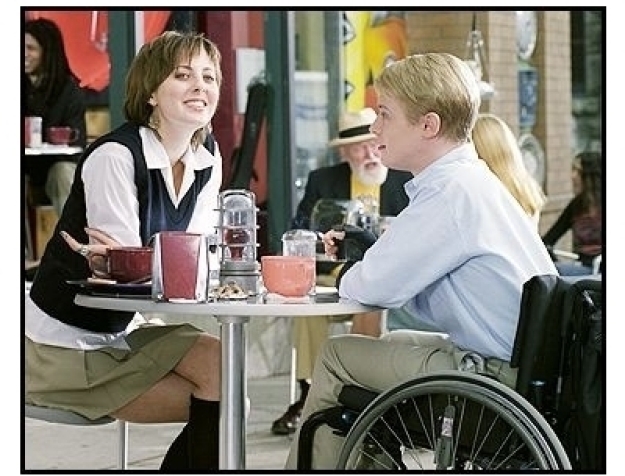
10. Saved! (2004)
I had no issue with the intent of the satire, but it just didn’t work for me; it’s been done so you better be damn good at it and it wasn’t . It wasn’t righteous indignation so much as self-righteous indignation. It was good to see Macaulay with a cast of his peers for a change, it just seemed like stretching for stretching’s sake. Ironically, it was his younger brother Rory who became better at post-adolescent snarkiness.
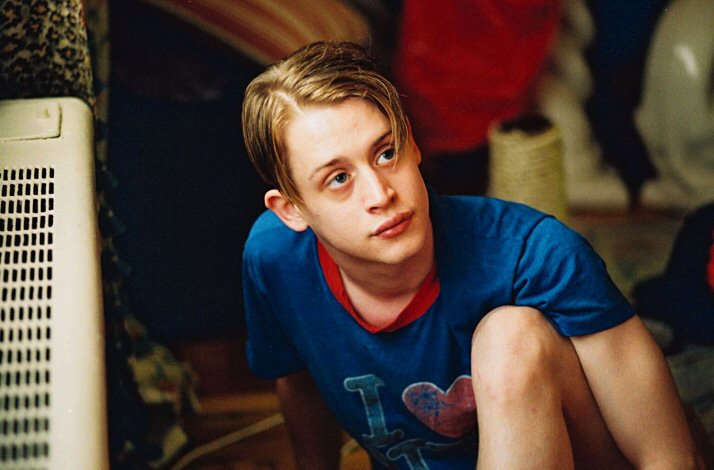
9. Party Monster (2003)
If this list was predicated solely on the quality of his performance this one lands much higher. It slips based on the film. I thought he really kicked ass and was on the comeback trail. Maybe others thought there wasn’t a lot of acting going on and that was the persona he’d grown into, I disagree.
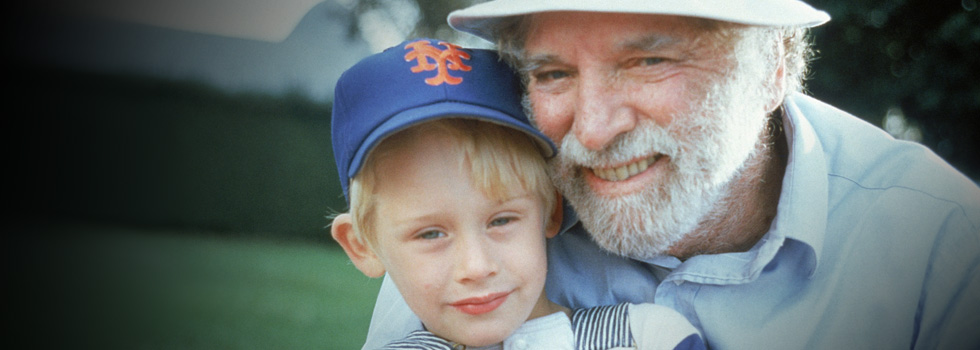
8. Rocket Gibraltar (1988)
This one is not omitted and sneaks on to the list for two reasons: First, it’s a larger, in terms of screen time, and less well-known pre-Home Alone appearance than Jacob’s Ladder. Secondly, it’s a late-career appearance by Burt Lancaster. Those are both qualities that make it worthy of some note. And, frankly, if you haven’t seen Jacob’s Ladder get off the Internet and get to it already.
7. Getting Even with Dad (1994)
At least in this film Culkin seemed to draw on his personal experience to make the movie a modicum better than it would’ve been otherwise. There was a bit more press about behind-the-scenes aspects than onscreen about this one, such as Culkin’s salary. Kit’s dealings and negotiating tactics were beyond infamous at this point. One thing that made its presence felt in the film was this as reported by Lehigh Valley’s Morning Call:
Macaulay Culkin’s character was supposed to have a short haircut in this movie, but Culkin, who had let his hair grow at the time, liked his looks and did not
want to cut it. His father, Kit Culkin, demanded on behalf of his son that he be allowed to keep his hair the way it was, pointing out that his character was
more a rough around the edges, working class boy and not a clean-cut, prep school one. He got to keep his long hair.
Quite honestly, it was these few bits of truth that made and otherwise milquetoast film tolerable.
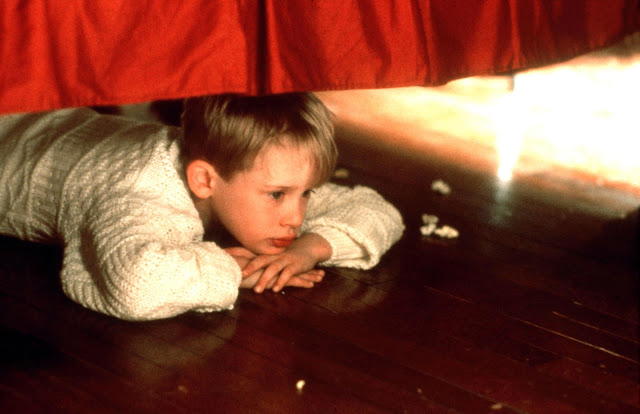
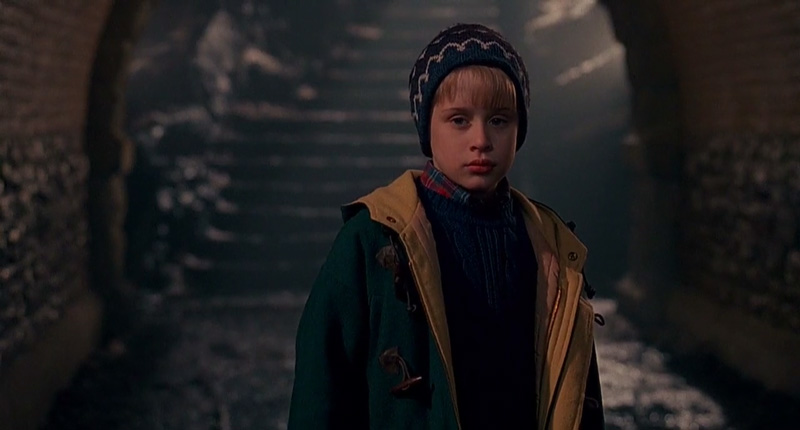
6. Home Alone 2: Lost in New York (1992)
This film is, as many have noted, a mirror image of the original. He’s not actually home, nor is he really alone. It’s a good imitation by him and the film. The wolf-in-sheep’s-clothing aspect made me backlash against it when I realized it. I almost tried to keep it off this list, but it was the first time I ever laughed so hard I cried so that’s why it’s here.
Rather than readdress reservations discussed in the aforementioned link, I think this could’ve been a more chameleon-like turn. Culkin by this point just seemed like he was going through the motions, so the character had to be more him than the other way around.
It is, however, a frightening simulacrum also when you extrapolate to his real life at the time “poor little rich boy.”
So there is some ambivalence but I still like it…though maybe not as much as I did then.
Again, in the above-linked post I discussed this film. This is his father/manager’s ultimate triumph. This film was his wish-fulfillment not Macaulay’s. He looked the part, and they didn’t ask him to dance it; so as a hybrid it’s a better film than a ballet. I’m surprised it maintained Balanchine’s name on it for that reason now that I think of it
3. The Good Son (1993)
There are actually a lot of good talking points to this film I find. It seems like a film that was too easily dismissed at the time due to its cliffhanger. I think the scripting, credited to Ian McEwan (a writer not yet on my ‘Essentials’ list, but who I have read a bit of), is underrated; and the tension is quite palpable throughout. While it does take a Bad Seed-style approach things never get too outlandish.
Again, if you dig, there are behind-the-scenes dramas, namely Fox’s initial desire to cast an unknown and Kit’s power-playing for Macaulay’s inclusion. In the end, it created one of the best young tandems I’ve seen: Culkin and Elijah Wood.
2. Home Alone
Perhaps what has not been said about the original Home Alone is that it is yet another example of John Hughes’ prophetic casting genius. I heard many such stories at a screening of The Breakfast Club, however, this was one too. Culkin’s character interrogates his uncle’s girlfriend through the mail slot in a door in Uncle Buck, (omitted from this list) and that was the spark for this film.
Aside from that, you probably have heard it all: it’s an actually-deserved Golden Globe nominated turn and a new-age Christmas staple, hilarious, rewatchable and memorable film.
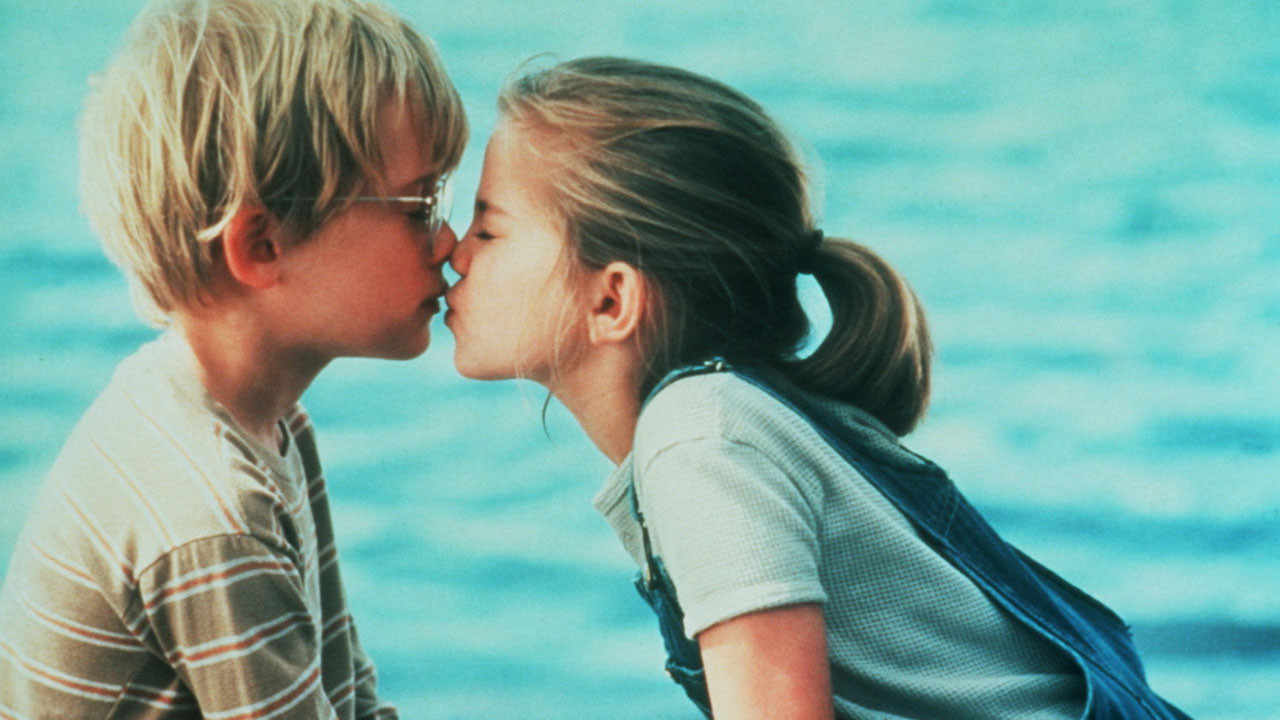
However, this was once upon a time my all-time favorite film and, of course, still holds a special place in my heart. Specifically to this list, My Girl was awesome for him because it really wasn’t his persona before or after. It’s probably his best performance to date because of that. In light of that fact and his clout it was also amazing he was attached to it considering the fate of his character.
Honorable Mentions
As noted in the body of this piece, a few titles were left out, and rare ones remain unseen. You can view his complete filmography here.
I already mentioned Jacob’s Ladder above.
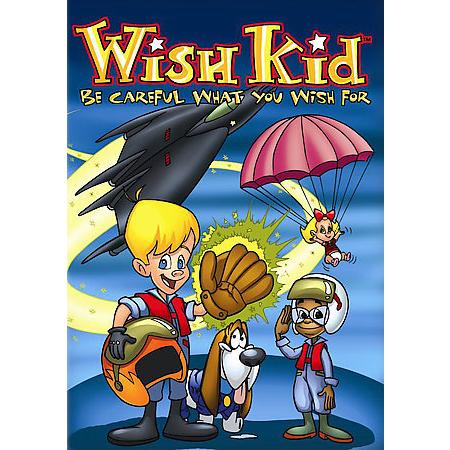
Macaulay Culkin also took over a part of my Saturday morning cartoon line-up in the twilight of my obsessively watching whatever cartoon offerings were available; so if you feel like looking out for his 13-episode series called Wish Kid it is out there.
Lastly, the Michael Jackson’s Black or White was a big deal at the time, both its premiere and its groundbreaking artistry and he kicks things off there too.
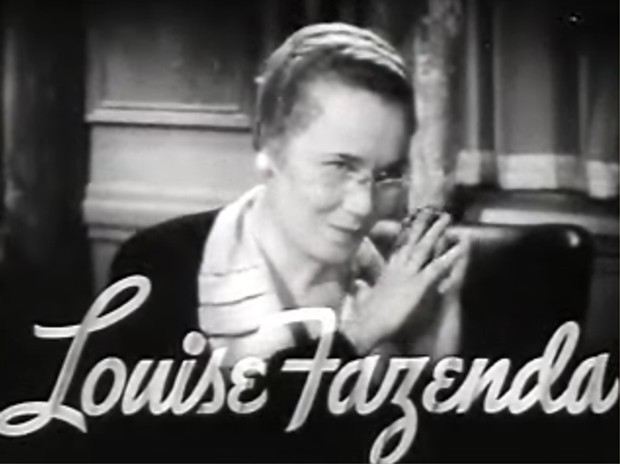
When I heard about Movies, Silently’s blogathon about funny women the first name that came to mind was Louise Fazenda’s, and that was almost instant. However, unlike in my recent Children in Film Blogathon post wherein I knew Jackie Searl’s works, but had just discovered a new side of his them; here I’d quite honestly never heard of Louise Fazenda until I read the wonderful book The Keystone Kid.
The Keystone Kid is part film history and part memoir. The recollections of Coy Watson, Jr. speak most fondly of Louise Fazenda, not only as she became a close family friend, but also of her talents as a comedienne.
My discovering Fazenda’s work, any of it really, is a testament to the importance of The Keystone Kid as a document of film history. As we move further and further in time from given eras in the artform, thumbnail sketches and one line synopses become what we take to be the truth about era, films and performers alike, while other instrumental figures can be forgotten entirely.
Examples of this would be that through Watson’s book I learned that Bobs, whose talent and fame for crying I knew and have been witness to, was the youngest of a large family; that Coy, Sr. was a pioneer in wire effects in Hollywood and that there was an actress named Louise Fazenda who was highly regarded. However, even in wanting to give her what was her due, and he did so citing her notoriety; and two stories (one on set and one off), I still knew nothing of her really, and I was very intrigued. This was not just because she was an unknown silent actress to me, but also because even her name, which means farm in Portuguese, fascinated me. It was a decidedly “un-American” surname yet remained unchanged.
Method
So this post has that element of excitement wherein I’m not coming of a position of having known a bit about, and having insights into, said performer, but instead was discovering her. And that’s great because part of why I don’t read books about film as voraciously as I could is that element of “I wanna see that, and that and that” for various reasons and being disappointed to find said titles are rare or hard-to-find.
My tactics in finding her, owing to the fact that I didn’t have too much time to get cracking, were to hit two internet resources one was YouTube, the other the Internet Archive. I didn’t scour compilations as it may have taken too long to uncover he appearances there.
The films I was able to see all or part of were as follows:
Your Show of Shows(1929) Wilful Ambrose (1915) Ambrose’s Fury (1915) When Ambrose Dared Walrus (1915) Ambrose’s Lofty Perch (1916) Ambrose’s Nasty Temper (1917) Once Over Lightly (1944) The Bat (1926) Her Fame and Shame (1917) Her Torpedoed Love (1917) A Versatile Villain (1915)
General Impressions
If I had only seen Once Overly Lightly, a 1944 moviereel style compilation of many silent films with a voice-over track full of insincere wistfulness and backhanded apologies for silent tropes; I still would’ve known little. Again she’s cited as one of the best but all that’s cut into the film is one very apt pratfall. This release being just five years after her last credit mind you.
Yes, Louise Fazenda survived into the sound era. As the first clip I watched showed (Her segement in Your Show of Shows), though she was playing the straight man, she remained quite funny, versatile and had a pleasant speaking voice. She had a good run in the transition to sound, at least in terms of years, it seemed apparent even in 1929 that writers didn’t know what to do with her talking though – a harbinger of the influx of stage influence in the craft of writing and acting perhaps.
So those first two bits only gave me small glimpses. As I sat down to write this I wondered, maybe the internet has some insights. I found on Golden Silents her bio from Who’s Who on Screen 1920:
“Louise Fazenda, famous Mack Sennett comedienne, was born in Lafayette, Indiana and educated in Los Angeles. After a short season in stock she secured an emergency engagement with Universal, going from there to Keystone and Mack Sennett. Miss Fazenda scored notable success in “The Kentucky Lady,” “Her First Mistake,” “Her Screen Idol,” “The Village Chestnut,” “The Village Smithy,” “The Foolish Age,” “Hearts and Flowers,” “Treating ‘Em Rough,” “Back to the Kitchen,” and “Down on the Farm.” She is five feet, five inches tall, and weighs a hundred and thirty-eight pounds. Her hair is light and her eyes are blue. In spite of her remarkable characterizations of homely girls, Miss Fazenda is one of the screen’s most beautiful actresses.”
At least, here you see some popular titles at the time. It can be worth looking into those down the line, but I’m fairly sure that time has been very unkind to many of her earlier works. Oddly enough through my viewing over this week, I didn’t see what was cited as her staple character:
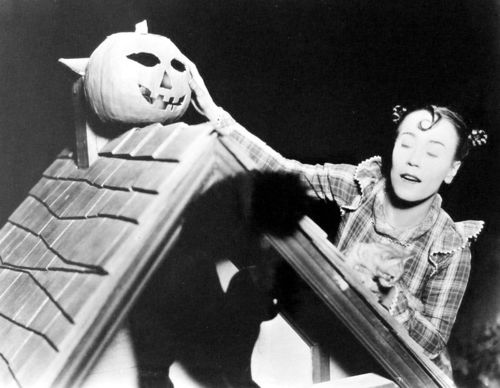
Her best known character was her country bumpkin — complete with spit curls, multiple pigtails, and calico dresses, a look that went on to inspire such later comics as Judy Canova and Minnie Pearl.
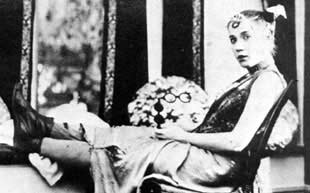
However, I did see her range one of the amazing things I picked up by watching Fazenda, even in the fleeting glimpses I saw, was that there is an elasticity, a chameleon-like quality to her appearance. In the teens she played lovestruck young ladies and matronly housewives. When you compare that to her appearance in Your Show of Shows, she looked more refined, mature (as she could look) but hardly like 14 years had passed.
Sure there was movie magic even back at the very beginning but ones facial structure and the quality of their features have to be perfectly conducive to such a seamless transformation. Fazenda did what needed doing to create her character and seemed to take it seriously even in entirely goofy films. That grounding in reality, even of just one element can be essential for comedic success. It’s not a wonder that legend has it that Mack Sennett would bring in Fazenda to try and quiet Mabel Normand’s comments on the caliber of films Keystone put out.
Fazenda seems to have a physicality that’s ahead of her time, possessing not only natural ability but the innate ability to seem natural on screen. Silents weren’t communicating with words so gestures, movements and looks had to be exaggerated such that those who could be big but also convey and get desired results with restraint are noteworthy. As cameras moved closer to actors broader was no longer better and those who could make subtle communicative gestures continued to work consistently. Fazenda proved early on she had that innate ability.
Her facial expression in Wilful Ambrose as she lines up a “bonk” in Wilful Ambrose is priceless. A husband being smashed on the head is a standard bit, but to make the anticipation funnier than the result is great and the mark of a good comedian. All of these traits, including a good singing voice, were on display in the sound era.
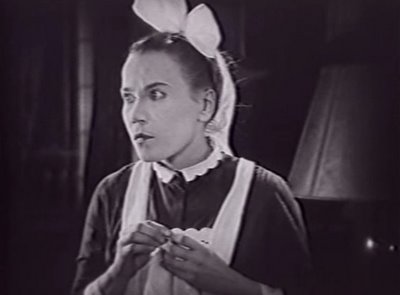
In The Bat you can see that she was the comic relief and brought that levity when needed but her fear always seemed very real. She instantly asserts her presence. Her character, for as superstitious as she is, is often correct to be fearful and it ends up being one of the charms of the film. While that film had its failings it is perhaps the best illustration of her persona that I was able to see: deft physical comedy and seriously grounded commitment.
Conclusion
Going back around to the beginning, it really is a wonder what The Keystone Kid, or any written work about film can do. You open the book with a vague interest in the subject matter and learn of very specific avenues to explore. They are entryways to new constellations in the universe of film. Due to this book I now have definitive thoughts on why Louise Fazenda is great. I no longer take that statement and remember it like a cinematic platitude such as film X is great and film Y is such-and-such’s best. I’ve now seen some of her work for myself.
If a piece of film writing leads you find one new artist of film it’s done a great service. If you find many it’s a debt that can never be repaid save to thanks again. I am now a fan Louise Fazenda’s thanks to Coy Watson, Jr.’s book, and I’m quite grateful I am.
I did a post like this for the Vancouver games a little more than two years ago and I shall unearth it again at some point at least on Letterboxd because that was certainly a lot more fun and in many cases weirder. However, the variety that is provided by the over-stuffed nature of the summer games is nothing to sneeze at. I think that these films that feature the sports of the warmer Olympiad will likely introduce you to something you want to check out. I know I found a few. These picks will be posted in three parts, this being the last. You can read part one here and part two here.
Table Tennis
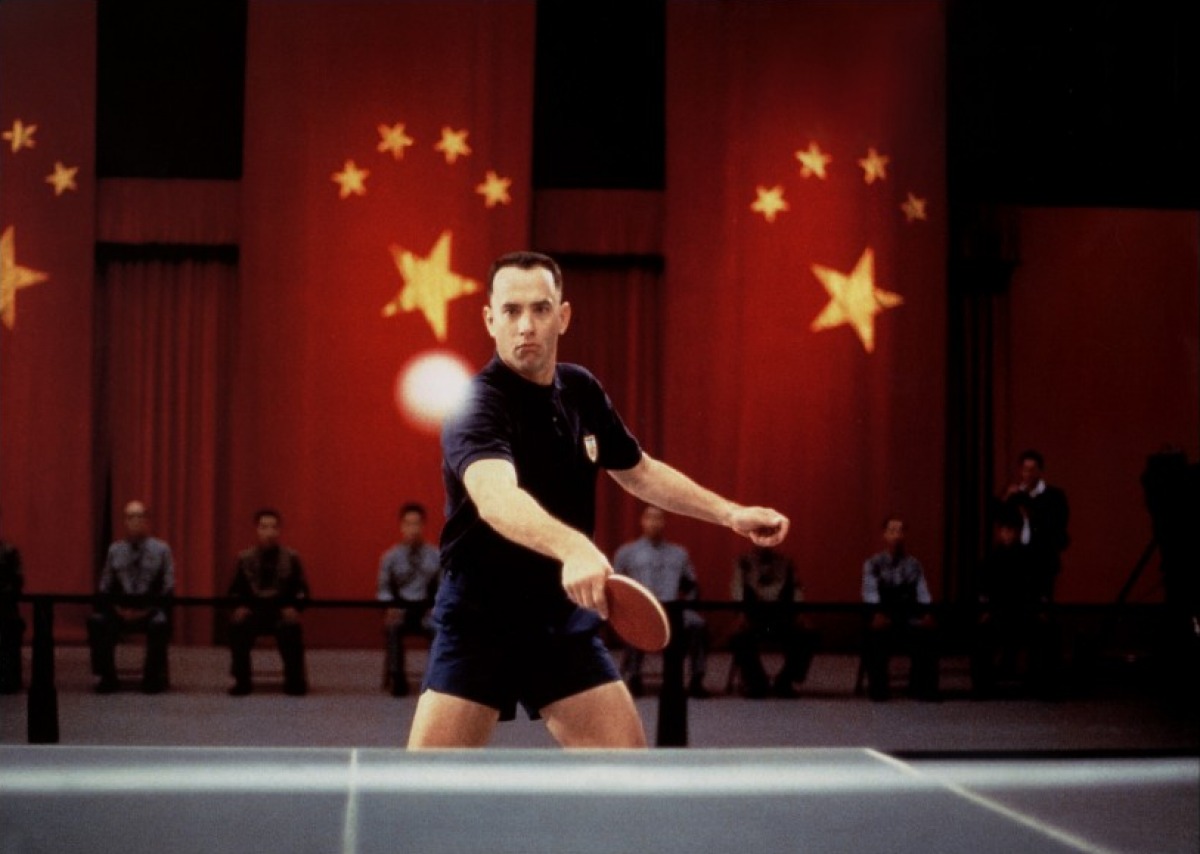
If you like your sports inclusion to be tremendously silly there are a handful of recent comedies about table tennis, including Balls of Fury. If you’re OK with the sport taking a backseat but like your featured athlete to be prodigious, then Forrest Gump may be the way for you to go.
Tennis
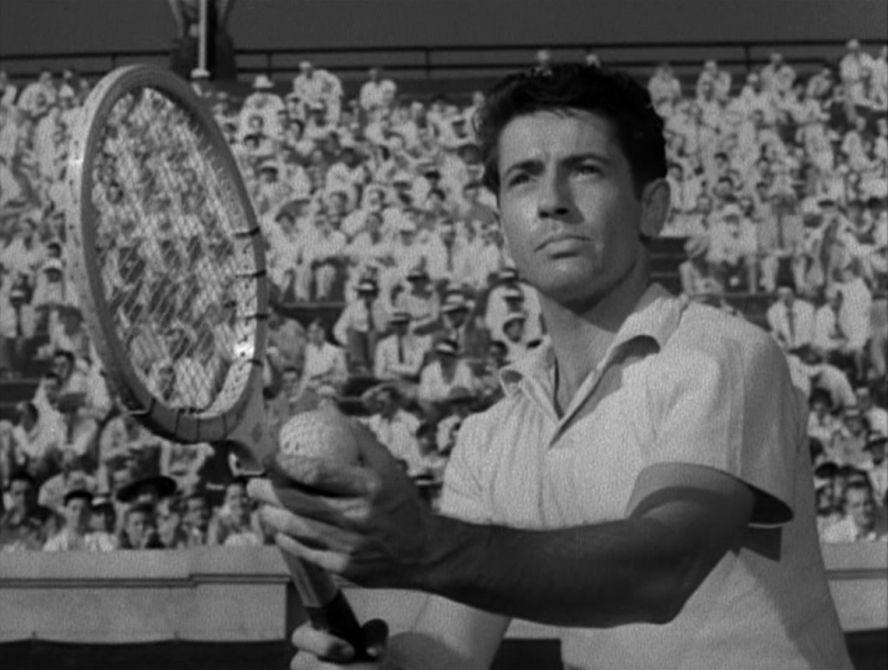
I haven’t seen some of the more recent very head-on tennis-themed movies but it seems like overall the sport has been vastly overlooked. Clearly with this year’s games being in London and the the fact that tennis fans get an additional Wimbledon-based tournament, Wimbledon would be an obvious choice. Woody Allen’s recent Match Point would also be one to look into and one I’ve yet to see. Tennis has worked very well as a backdrop in many movies most notably Strangers on a Train, especially if you know a bit about the history of the game, it makes the tracking of Guy’s results a bit more creepy earlier.
Taekwondo
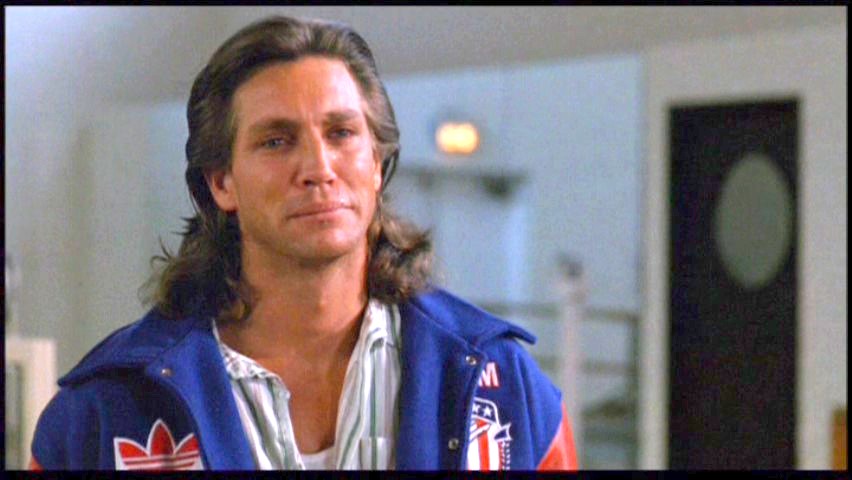
I can’t say I’ve seen many martial arts films. However, one interesting thing to consider is that with the martial arts disciplines is where you’re most likely to find the sport blending in to a story under a cloak. This Wikipedia page lists Taekwondo films based on the fact that it’s the fighting method used not necessarily because it’s a straight-up tournament-based story. However, there are a series of films that are a very direct treatment of the sport and that is Best of the Best. The original came out in 1989 and concerns a team from the US going to Korea for the world taekwondo championships. The film features Eric Robers, Philip Rhee, James Earl Jones, Sally Kirkland, Chris Penn and more. Based on some of the stills I found of this film it may be another I’ve seen but forgotten.
Trampoline
I found a movie called Trampoline but as for films about using the device in a gymnastic application they do not seem to exist yet. Rather than offer you nothing there was a documentary in 2008 called Slamball, which, of course, focuses not on the gymnastic discipline, but rather a form of basketball using trampolines for added elevation.
Triathlon
The triathlon doesn’t really have any movies dedicated to it. However, I did find a really good post about that with a very good inventory of synopses of cycling titles (one of the component sports) in it.
Volleyball
As mentioned earlier it was hard to ferret out traditional volleyball from the B-Movie friendly beach variety. However, there are a few indoor tales that have been told. One being a 2000 Thai comedy called Iron ladies, which is based on a true story of a men’s team made up of gays, transvestites and transsexuals who entered the national championship. For something a bit different you can substitute an Air Bud in more of these sports than you realize. Yes, that silly cinematic golden retriever has played many sports. He plays volleyball in 2003’s video release Air Bud: Spikes Back.
Water Polo
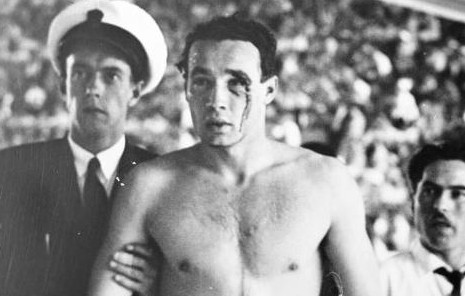
Out of all the sports in the summer games that you only really get to watch every four years, water polo may just be my favorite. Part of it could have to do with the underdog mentality that I have at times. Once I learned truly what it was and played impromptu pickup games with my dad, the horses-in-water jokes became tired and I like what it actually is. I also will invariably gravitate to sports wherein certain countries who scarcely win anything else are dominant. Hungary, historically speaking, are the titans of water polo. Whereas they had their one brilliant football team that came close but couldn’t win their consistency in the pool is staggering 15 medals (9 gold, 3 silver, 3 bronze) in 20 Olympic tournaments played.
That’s all a massive pre-amble to say I knew there had to be a water polo movie out there, there had to be a Hungarian one if from nowhere else. Surely enough, I found a dramatization of the 1956 Gold Medal Game versus the USSR on YouTube, the infamous “Blood in the Water” incident, but it was uncredited. Yet, as I searched another title surfaced Freedom’s Fury, a 2006 doc can be viewed on SnagFilms.
Weightlifting
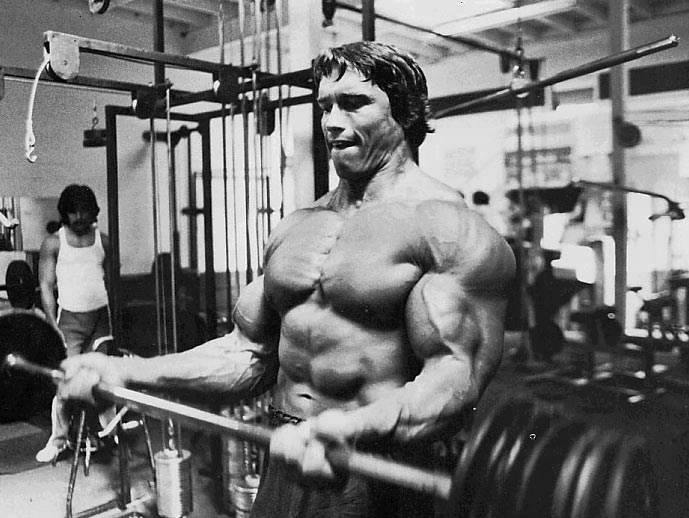
Weightlifting is usually an affectation of a character or featured as cross-training for other sports. However, there are a few instances of films about weightlifting, generally about body building rather than olympic style curls and jerks. The most notable being the 1977 documentary Pumping Iron, which is about the Mr. Universe and Olympia competitions and features Arnold Schwarzenegger amongst others.
Wrestling
Legitimate forms of wrestling feature in movies far less than the entertainment brand but that doesn’t mean they don’t have some fanfare when they do. Win Win won virtually unanimous raves last year and was among my favorites of the year. Wrestling is only a piece of the puzzle but an important one and the fact that it cast Alex Shaffer, champion wrestler turned actor helps it greatly.
I did a post like this for the Vancouver games a little more than two years ago and I shall unearth it again at some point at least on Letterboxd because that was certainly a lot more fun and in many cases weirder. However, the variety that is provided by the over-stuffed nature of the summer games is nothing to sneeze at. I think that these films that feature the sports of the warmer Olympiad will likely introduce you to something you want to check out. I know I found a few. These picks will be posted in three parts. You can read part one here.
Football
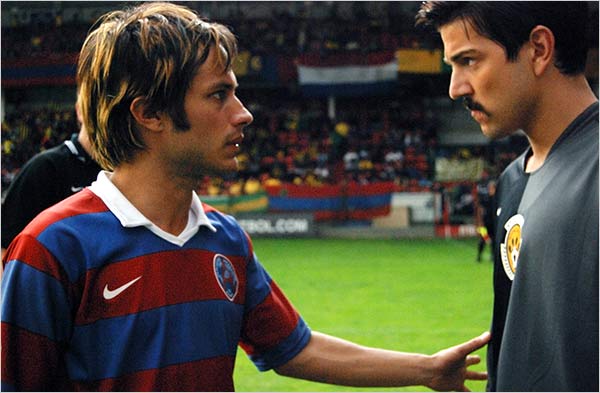
Since the Olympics is global I will use the international name and translate for America, this is soccer. All kidding aside, as I looked through some lists of soccer movies I was struck by the realization that the disparity between the greatness of the game and the quality of films generated by it is greatest here. Most of the ones I saw listed were sad. There are some I heard good things about but have yet to see, like The Damned United, Once in a Lifetime: The Extraordinary Story of the New York Cosmos, and Pelada. Many of them in the US are usually about a ragtag bunch of kids on a team the best probably being The Ladybugs. As for the adult version of the game the best most recent one I saw was Rudo y Cursi which gave us this song too:
However, world cinema does provide a few more options which are suitable for all ages. If you like your soccer with genre-bending weirdness, I’d suggest the Die Wilden Kerle series from Germany. However, I’d stress you not watch any of them dubbed. I saw one dubbed the first time and it was some of the poorest collective work I’ve seen, aside from the fact that in the US we for some reason altered the chronology.
Then O Menino Maluquinho (The Nutty Boy) has a climatic game which features brilliant, practically superhuman goaltending by the protagonist, which is one of many great aspects of the film.
Gymnastics (Artistic & Rhytmic)
Unless I’m missing something major, gymnastics hasn’t had a lot of great representation on the big screen. Christopher Campbell’s list definitely makes me want to see Gymkata and it’s certainly more compelling in concept than anything I thought of or found; a rash of biopics, lame parodies and anorexia-themed MOWs and, of course, the most unfortunately executed death in Final Destination 5.
Now, Rhythmic Gymnastics seems to be absent from any real representation. Like synchronized swimming it has its notable parodies like that on Lizzie Maguire and by Will Ferrell in Old School, but I can’t seem to find anything straight. It could be great fodder for a doc in the vein of what I perceive Pina to be, as I still need to see it. There is a niche waiting to be had.
Handball
Yup, this is what thew world thinks of when you handball, just another example of our at times jingoistic naming practices, though to be fair Wall Ball is used to describe the one we know better too. Handball is another sport I’m glad to see roll around every four years and I agree wholeheartedly with this Awful Announcing post that it should be a featured on ESPN more often.
With regards to movies there wasn’t much to find. There’s Szansa a Polish film which seems to pit a nurturing, caring, intellectual, literary teacher against a hard-nosed, disciplinarian, gym teacher who crosses the line to win and winning said handball games is good for the school. Then there’s Forever the Moment a fictionalized account of the South Korean women’s handball team that competed in the 2004 games.
Hockey
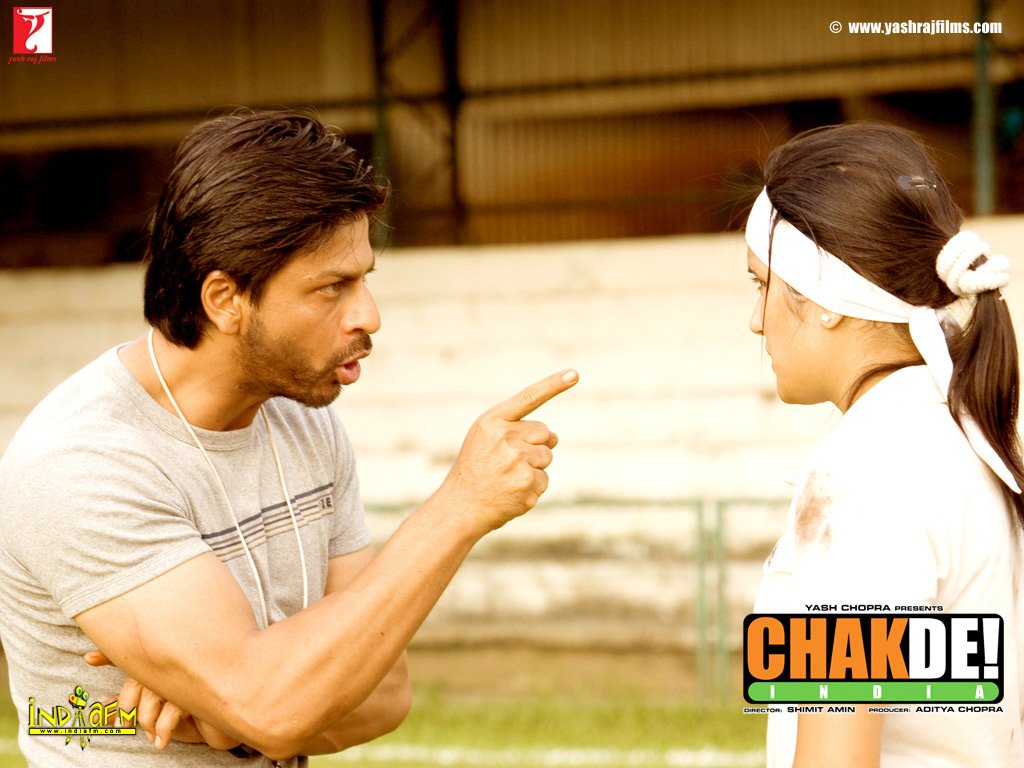
Only during my occasional watching in the last games did I finally come to appreciate the version of the game which is played on grass and not ice. The only movie that seemed to jump out was Chak De! India, which is a kind of underdog story about a former player turned coach who takes over the long languishing national women’s team. This title is available to stream on Netflix (US).
Judo
Judo is a martial arts discipline I enjoy watching and pretty much always have since I’ve known of the games. The issue, as with many of these sports, has been finding a filmic representation of it.
Some quick searches brought some docs partial and short, but then as it turns out Kurosawa’s debut is a judo film, Sanshiro Sugata, wherein a young man struggles to learn the nuances and meaning of judo and life. This film is available from Criterion in one of their excellent Eclipse collections. This film is accompanied by a sequel and is referred to collectively as the Judo Saga.
Modern Pentathlon
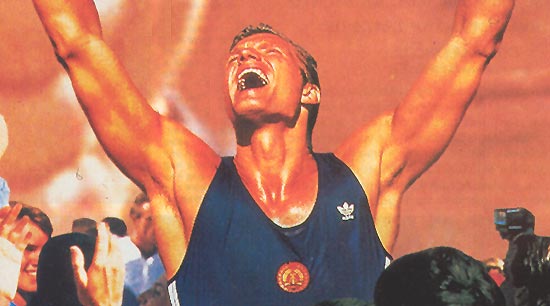
Honestly, when I went to search out film ideas for each of these sports the one I pegged as being the hardest was the pentathlon. Truth be told, I only found one movie to pick from, but it’s called Pentathlon and Dolph Lundgren is in it. Essentially, Lundgren’s character and his sadistic trainer meet up eight years after their Olympic sojourn in an ever-escalating series of action nonsense, much of which you could have spoiled for you by the Wikipedia entry. It sounds like one of those movies that’s so brash it’s brilliant or painful – it does strike me as one of those movies I’ve seen on TV and all but forgotten.
Rowing
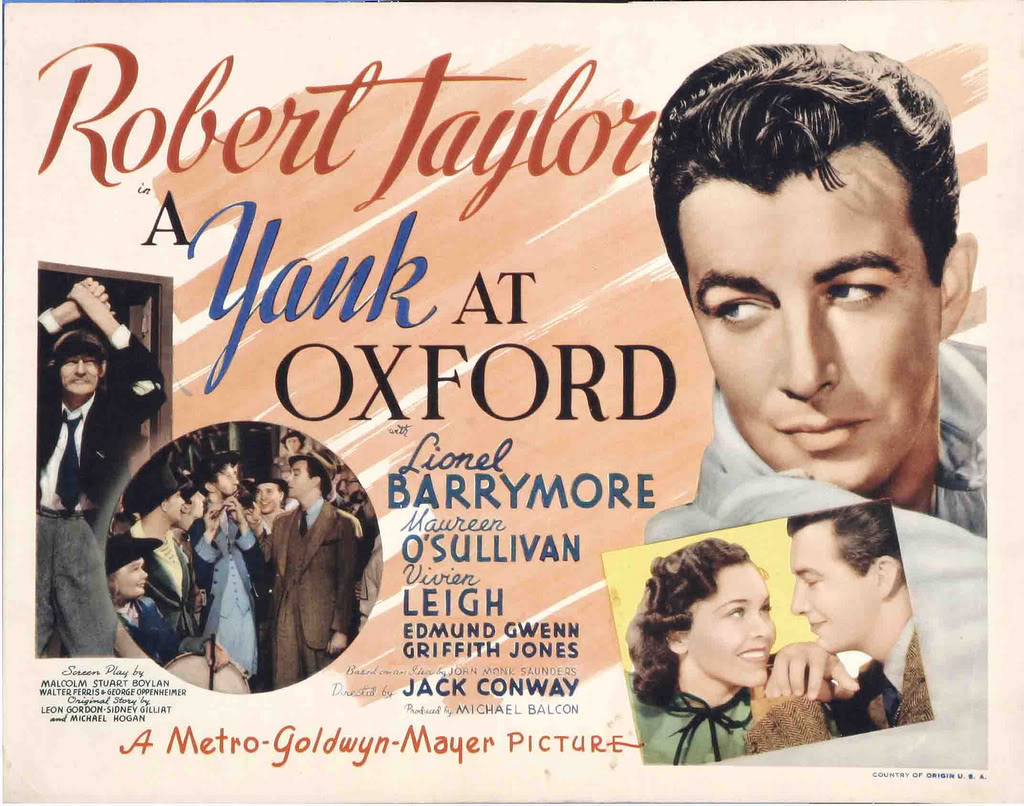
I mentioned in the canoe section that rowing could be found in The Social Network, however, there are a few more options to be had. You could pick either of two versions of the same tale, as comparing an original and a remake can be fun in A Yank at Oxford and Oxford Blues. For a more sports-oriented choice there’s True Blue (called Miracle at Oxford on US Home video) about a famous 1987 race. Lastly, if you want your sport as more of a setting for your drama than the premise, you have Summer Storm, which is about relationships and sexuality, and Queen of the Night, with a backdrop of politics, handicaps and romance.
Shooting
Now, I won’t be vague with shooting because the number of films that involve gunplay are countless. So I sought out films that at least feature competitive marksmen and there are two provided by Honk Kong cinema called Double Tap and Triple Tap, the former spins off from the first. Both involve rival shooters and getting involved inadvertently in crime and intrigue.
Swimming
Swimming is one of the most populated sports in terms of events, and one of the most popular at the games in general. Even on dedicated websites like Sports in Movies there isn’t a long list of swimming films. It’s hard to imagine that recreational swimming is something that needed to be created, much less that sport needed developing. However, there is a share of cinema in the pool.
Going back to 1931 you can watch Jean Vigo’s 2nd short film Taris, which is a rather artistic rendition and promotion of France’s swimming record-holder at the time. This film is available in the Complete Vigo through Criterion. If you prefer your star-power cinematic The Swimmer stars Burt Lancaster. If your inclinations are more stalker-crazy there’s the fairly recent Swimfan. In the more family-friendly realm there’s the fantastical DCOM The Thirteenth Year and swimming features somewhat in A Dolphin Tale.
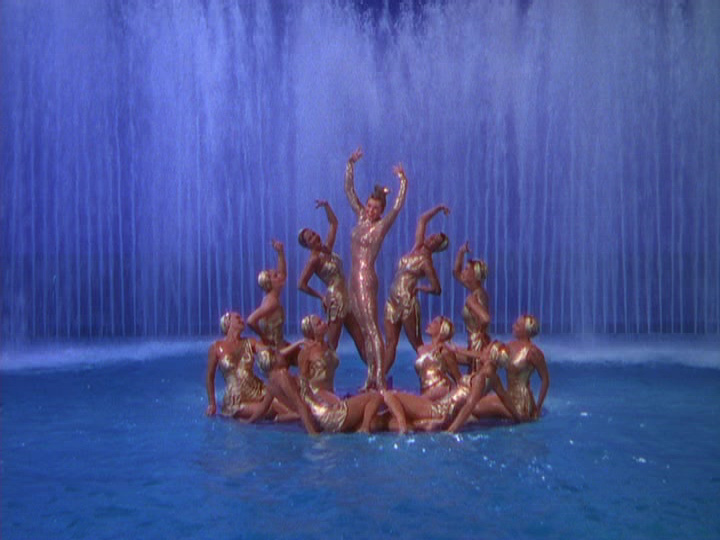
Synchronized Swimming
With synchronized swimming there is actually rather a balanced choice. You can either enjoy it rendered comically in this classic bit:
On in a light, whimsical, biopic musical called Million Dollar Mermaid.
It is just by its very nature one of the easiest sports to poke fun at but it is really something when done well, and something else when it’s not which both those clips prove.
I did a post like this for the Vancouver games a little more than two years ago and I shall unearth it again at some point at least on Letterboxd because that was certainly a lot more fun and in many cases weirder. However, the variety that is provided by the over-stuffed nature of the summer games is nothing to sneeze at. I think that these films that feature the sports of the warmer Olympiad will likely introduce you to something you want to check out. I know I found a few. These picks will be posted in three parts.
Archery
The very first sport alphabetically is one that will illustrate to you rather quickly that there are two ways you can see a sport portrayed in a film: direct (e.g. sports movies) or indirect (wherein the sport is a component of the film but not the focus). Archery is an ancient practical discipline, which is rather visually appealing. Thus, it makes cameos in myriad ways: whether the super-human precision of Hawkeye in The Avengers or the cold brutality of Kevin, as in the one who needs talking about.
Films about the sport itself are harder to come by but with all the Robin Hoods there should be something that tickles your fancy.
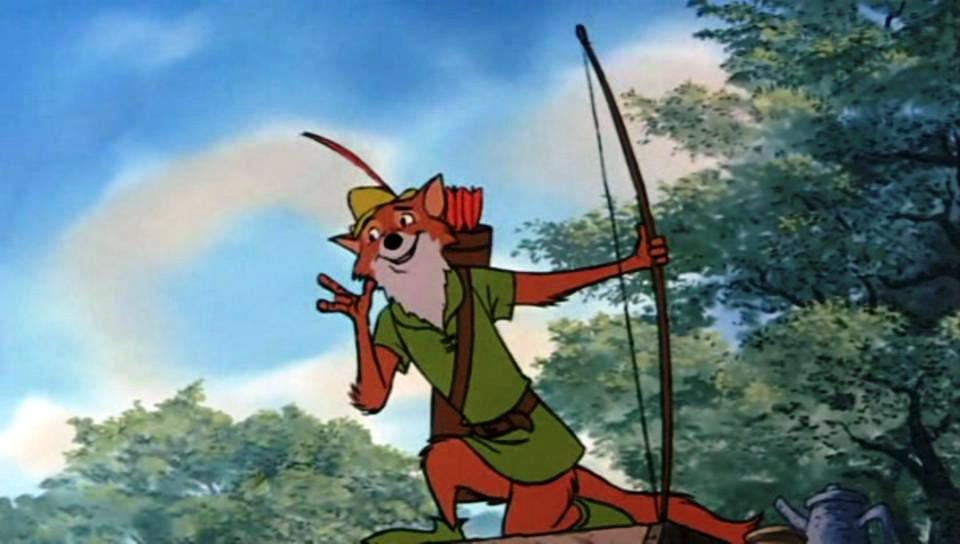
My official pick will by Walt Disney’s Robin Hood, though of course Disney/Pixar’s Brave also features a prominent competition, and Katniss Everdeen of The Hunger Games is quite skilled too.
Athletics
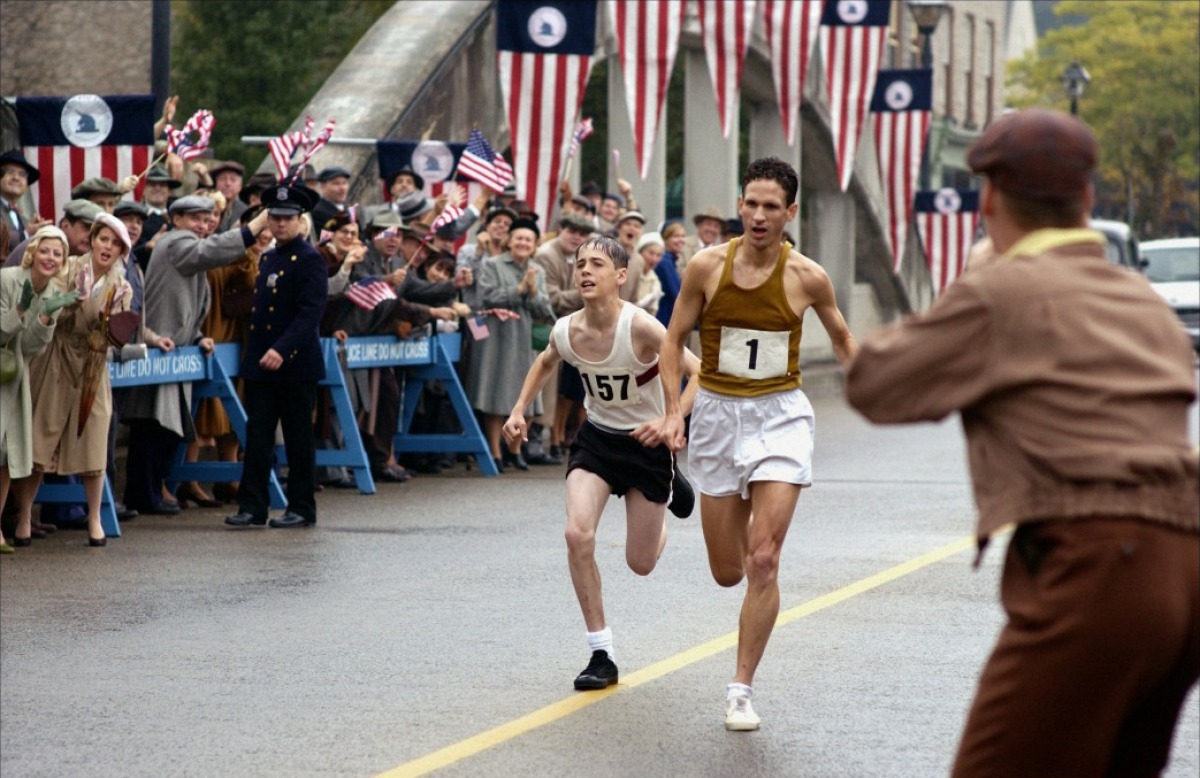
Another permutation of the sports movie you get is that of the biopic. This seems to be a particular purview of Athletics, specifically track and field events. Clearly, Chariots of Fire is the first title that comes to mind. Then there are the lesser known but still worth looking out for like Prefontaine and Saint Ralph.
Badminton
Here is the first of the challenging sports on this list. In looking into it I was reminded that badminton, like so many other things, has been included on The Simpsons. In film terms, I learned of two features that involve it, one I’d be interested in seeing and one not so much. The first is National Lampoon’s Golddigger, a newer and prior to this unknown to me installment of the series, and then an Indonesian biopic about Liem Swei King simply called King, which is clearly more appealing for the purist.
Basketball
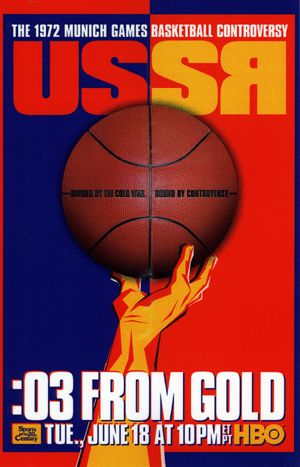
Basketball is one of the sports that has most frequently made for popular or entertaining films. Now, the two that jump immediately to mind are Hoosiers and Blue Chips. Having said that, since there are so many basketball titles, such that you can specifically cite the Olympics in some; I’d choose HBO’s documentary :03 from Gold about the ’72 Gold Medal Game between the US and USSR.
Beach Volleyball
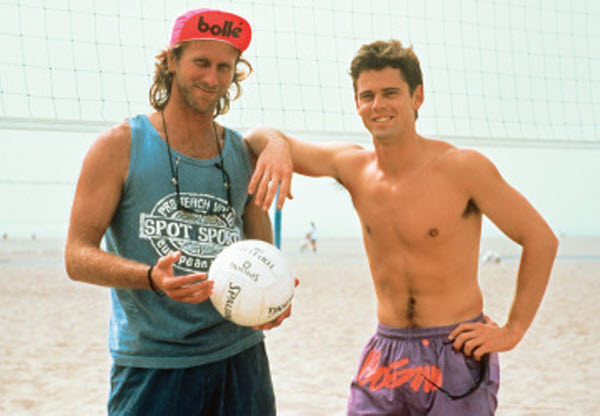
It was incredibly difficult to parse beach volleyball films from traditional volleyball ones. Beach ones are clearly more popular, but rather than being crass and to respect the differences between the two disciplines, they will each get their own films. The beach volleyball choice is Side Out, which I do believe I’ve actually seen Side Out (so help me God).
Boxing
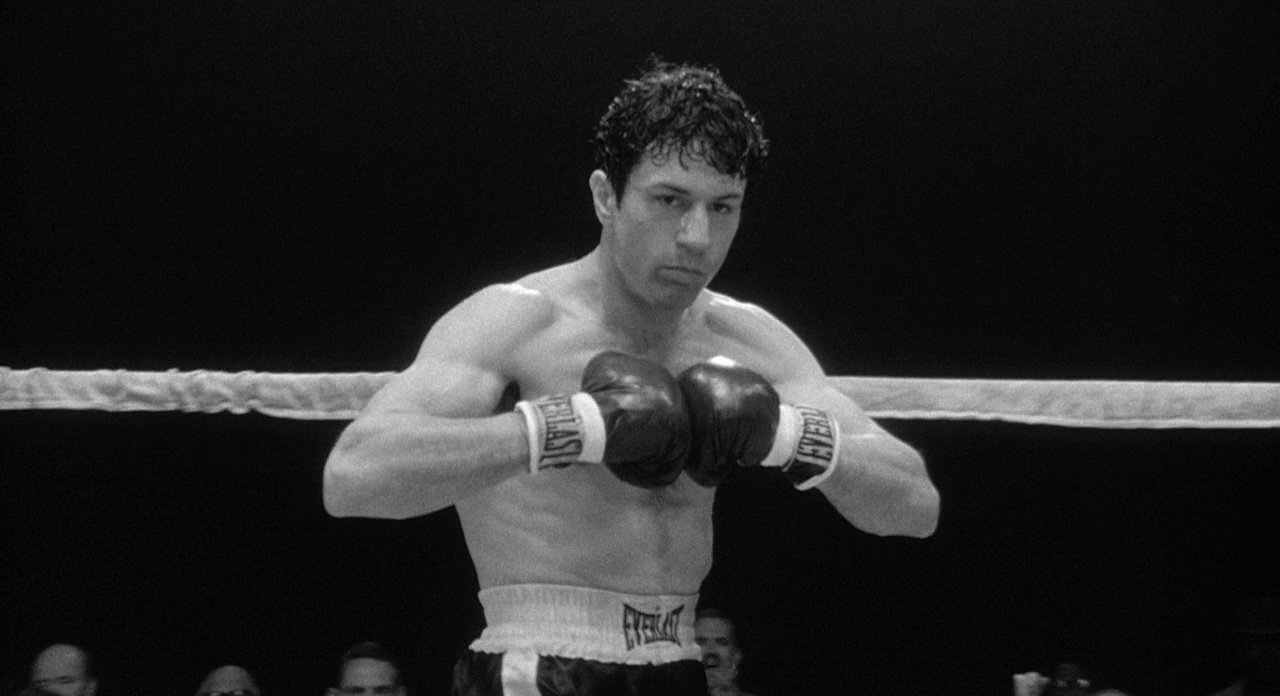
Boxing is the sport where I’m sure you’ll find the most movies to choose from. Of course, a movie about Olympic boxing is disqualified since the scoring system instantly introduces plot holes and confusion, but you can pick among the classics here Rocky, Raging Bull or whatever your preference may be you’re spoiled for choice with this sport.
Canoeing
Any of the paddle sports will be rarely found on screen and usually as a background element. In the Social Network the Winklevoss twins were part of a crew legacy, which could qualify that as a rowing movie.
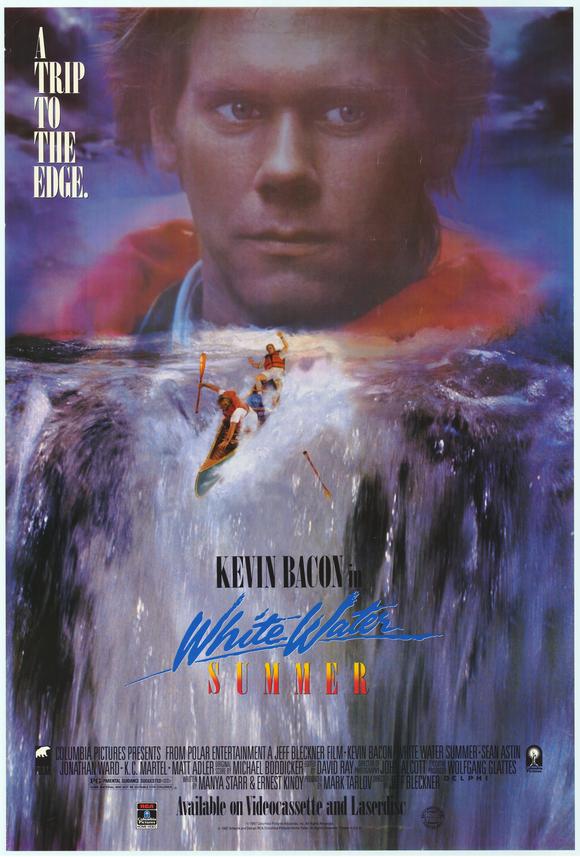
With regards to the canoeing/kayaking end of the spectrum that’s where you get to fudging it a little. The first thing that came to mind was White Water Summer, that was immediately followed by more Kevin Bacon in The River Wild, which is a rafting film but less all around odd and not at all ’80s. You could also turn to A River Runs Through It.
With regards to paddle sports it all depends on how ensconced you want to be. If you want just a hint of it you can certainly fudge a movie in in easily.
Cycling
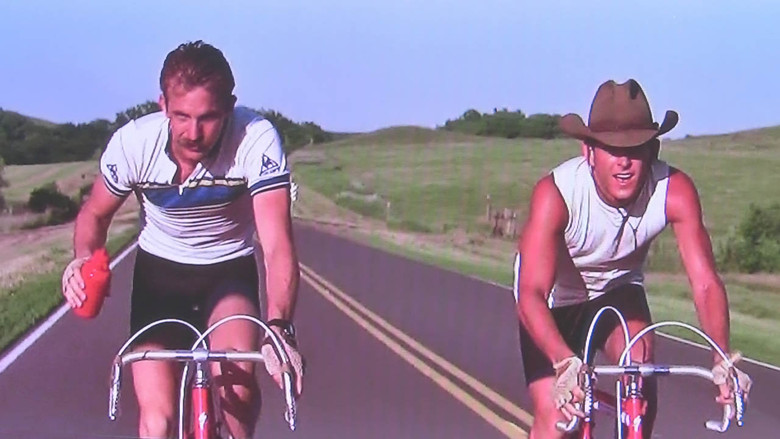
With many of these films I’m discovering them and wanting to find them at some point, with some they are oddities that I have seen and want to recommend. When it came to cycling I’ve seen two of the bigger cycling movies Breaking Away and American Flyers thanks to a family member who is obsessed with the sport.
They have their moments but have also bred some inside jokes based on the fact that it’s a “shown movie,” as in a “You should see this” kind of thing. However, in fairness, they seem to be the go to choices for enthusiasts.
One of those sports that pops up at the Olympics that grabs my interest are the track cycling events, which are more intriguing to me that the other disciplines. The Flying Scotsman seems to be a popular choice for that particular modality.
Diving
Diving, whether it be platform or springboard, is usually an affectation wherein we witness the externalization of a protagonist’s fear and his overcoming it, and rarely the focus of a film.
Perhaps the most notable examples are Greg Louganis: Breaking the Surface, and now with the games in London, Tom Daley four years on from a debut at the age of 14, wherein he finished 7th and 8th in his two events; has a BBC documentary about him to his credit along with being a serious medal threat.
Equestrian
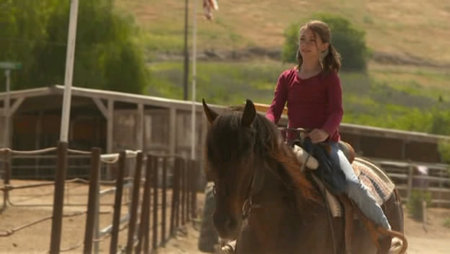
I’m not going to say I’m a horse whisperer or even any kind of an expert, but what invariably ends up bugging me in some horse movies is the whole nature of them participating in a sport. A notable example being The Black Stallion. The beginning, say the first 40 minutes is a gem, a perfect replica of a silent film. Then the horse becomes a racehorse and it’s kind of trite from there. I think that’s one of the greatest things about the handling of Secretariat, it makes it seem like the horse is more willful than his jockey.
When it comes to equestrian disciplines that’s less of a concern because I believe that typically it’s the rider facing more danger and if the horse doesn’t want to jump, he won’t jump; or whatever maneuver is intended. That and watching these maneuvers is rather hypnotic at times.
A recent film I saw that dealt well with equestrian if nothing else was Harley’s Hill. In reading a similar list I was enlightened towards International Velvet. If you can’t drop your reservations about equine sports, and are a member of the Disney Movie Club, you can look up The Littlest Outlaw wherein a boy frees a showhorse.
Fencing
Fencing is another sport wherein you can shoehorn many a film into your viewing to suit your taste. Any Zorro, Three Musketeers, Peter Pan will feature fencing-like swashbuckling. You can take your pick from those oft told tales or you can be a little more literal with something like By the Sword, a 1991 film featuring Mia Sara, Eric Roberts and F. Murray Abraham. Or perhaps The Fencing Master, there was one in 1915 and 1992, I suspect the latter would be easier to find.
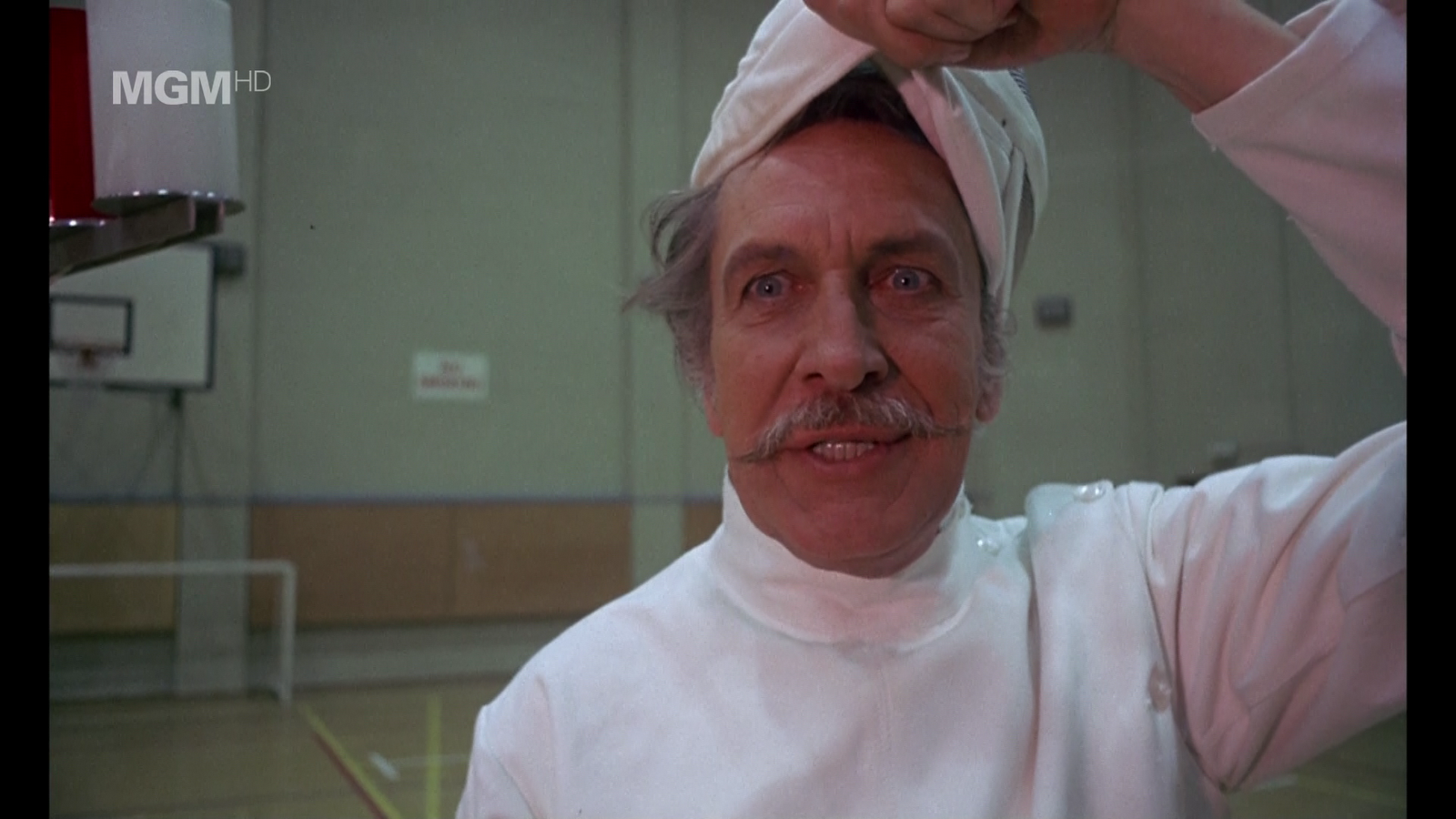
However, if you want to get creative I suggest Theatre of Blood. Not only does Vincent Price play a crazed, thought-to-be-dead Shakespearean actor seeking vengeance on a critics circle but he recites the Bard as he kills and once such scene is a fencing duel!
That’s all for now. Suggestions are more than welcome, and tomorrow’s films start with those about or involving football (aka soccer).
Another way, perhaps the more interactive and most definitely the most enjoyable way, to have your own short film festival is to have a friend or two (or many) over to watch a series of movies all in a row, and all of which you know are likely to be bad – entertaining hopefully because of that, but all-in-all bad nonetheless. While there’s nothing quite like watching a great movie it is quite an individual, singular and spiritual event. A bad movie, or at least cheesy one, can bring you closer or at least allow you to commiserate in the universal sentiment of “What exactly is going on here?”
This system, of course, works best if you haven’t seen a film yet so you and your friends are all surprised by the cheese, production values (or lack thereof), acting and other elements. Anticipation and hype can ruin such a thing. Try and pick things you have heard of that may fall into this category. If you happen upon something that might fit into a night like this that you were completely unfamiliar with even better, in fact, that’s the best.
For better or worse, there’s nothing better than going into a film, good or bad, as a completely blank slate. I’ve seen many films on either side of the spectrum that way. And of course, you always try to give something a fair chance but the minute you learn about a project you start, at least subconsciously, to form an opinion of it. It’s just human nature. If you’re looking for bad, how do you find it? Everyone has their own tastes and knows their own inclinations. Genres likely to be low-budget are martial arts, other action permutations, sci-fi and of course horror. Aficionados of any genre can spot the straight-to-DVD and other hack-jobs, typically those genres attract the most sub-par products and even true fans will readily admit it.
So to create your own bad movie night you need at least three movies, patience and a lot of snacks. Four were brought to my last one and three were seen, one left un-screened.
Here’s a recap of what we saw. Your proclivities and results may vary. What you will find below is an example and my reactions to the films seen. There were three people in attendance, none of us felt that we had accidentally stumbled into a good movie. You may disagree, and that’s OK:
Shogun Assassin – A movie cited at the end of Kill Bill Vol. 2 where we heard the English-version opening voice-over monologue because Bibi is obsessed with the movie and watches it before bed. The voice over in Shogun Assassin does get to sound more and more like Barrett Oliver in The Neverending Story as it goes on which is odd, and while having a kid along with the assassin makes it somewhat different the story is just essentially a series of individual slow battles with the assassin on the run from the Shogun’s henchman. While it does have its moments; it is proof that the result of inspiration can be much better than the inspiration itself.
Master of the Flying Guillotine – The bottom line is that there is about a 40-minute fight tournament sequence which ends in the wrong man being killed by the enemy and you kind of see that coming, so it really wouldn’t even be a feature if only necessary scenes were included.
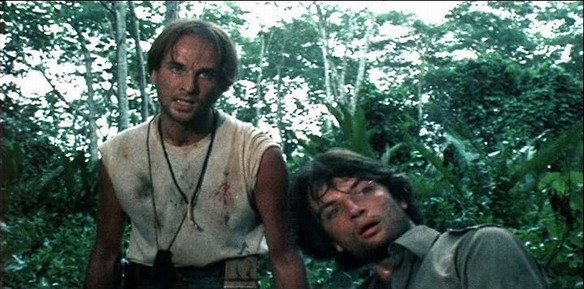
Cannibal Ferox – Directed by famed Italian horror director Umberto Lenzi is another failed cannibal film, which follows a similar formula to others that didn’t work. An overly long set-up outside the jungle then a long time being stuck in the jungle to a very short amount of disturbing cannibalism for a film which promises gruesomeness. Now this kind of film is not for everyone, my problem is that I am typically bored out of my mind before the payoff.
The fourth film which was unwatched was also cannibal-themed was Cannibal Holocaust, which I do believe we saw later on. The genres or sub-genres can be more mixed or less mixed if you like more theme-based like these were. Pairings will be discussed more later with better films but bad movies can be just as much fun – if not more.
Much in the way computers, be them Apple or PC, can liberate you from zone restrictions for a country-specific film festival the same can be true if you’re building a festival around an actor and they happen to be a foreign performer.
The focus of this film festival, which will serve as an example, is Robinson Stévenin. Acting, it would seem, has always been in Robinson’s blood. He is the son of the well-known French actor Jean-François Stévenin, who is perhaps best known for playing the role of François Truffaut’s Assistant Director in the film about filmmaking Day for Night.
His breakout role was in the film Bad Company (Mauvaises frequentations) where he played a young man who so enraptured his girlfriend she agreed to start an ad hoc prostitution ring with him. It’s a truly effective and great film that a one-line synopsis does not do justice to. For this role Robinson was nominated for a César Award (France’s Equivalent to the Oscar) as Most Promising Actor. He would go on to capture that award two years later for his role in Transfixed (Mauvais genres), which featured in this festival.
The Children’s Revolt
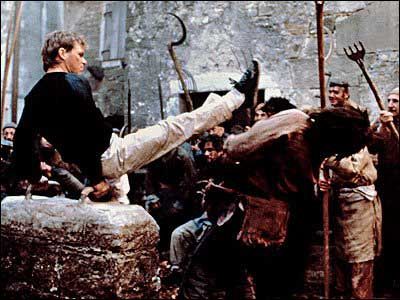
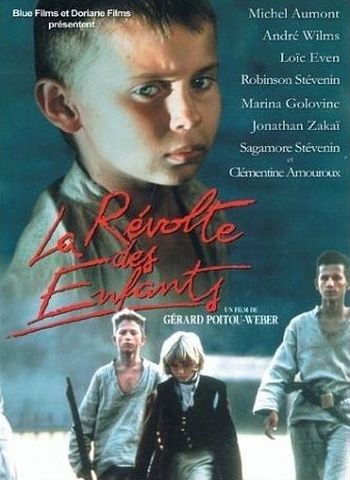
His first recognition came for his role in The Children’s Revolt a film about a rebellion in a children’s penal colony in the 19th century. Although he is by no means the lead in this film his performance, as the so-called Lil’ Shaver (Rase-Motte), he is such a standout as a precocious, funny, eloquent kid that he not only receives a favorable quote on the DVD cover but also captured Best Actor at the Paris Film Festival in 1992. What’s more impressive is that he seems to be playing a lot younger than he is in this part, and his scene with the Countess is most definitely one of the highlights of the film.
La Petit Lili
This is quite an interesting film and a great role for him. The film co-stars Ludivine Sagnier, known from Swimming Pool and Peter Pan, as his girlfriend and muse who stars in a short film he makes. He screens it for friends and family and it does not go as swimmingly as he hoped and in essence it starts snowballing in a way that will affect everyone. The characters retire to their separate quarters and start re-examining their lives. In this part he manages to portray the dichotomy of sensitive, brooding artist and also the malcontent who flies off the handle when hearing something he does not like. Yet his anger is justified at times and he handles intellectual dialogue with tremendous effect. He manages to turn the bitter petulant teenager into a character who is not reviled but can be an identifiable protagonist.
Transfixed
As mentioned above this is the role that won Robinson the César as Most Promising Actor. It is inordinately rare to see an actor completely and totally change his persona and not just his appearance. In this film Robinson plays a transsexual prostitute embroiled in the middle of a whodunit it in Brussels. He is completely and utterly transformed and plays the part to a tee. You are never truly left watching a performance but a character. For whatever is lacking in the plot the performance more than makes up for it.
Mon Colonel
Yet another face of Stévenin – here he plays a soldier serving under a totalitarian Colonel in Algeria. Through his diary he reveals the details of his tour of duty and these pages are slowly delivered to the military assisting the police in the investigation of the Colonel’s murder many years later. Here Stévenin can be seen as a duty-bound man with a conscience who is still a bit of an idealist, but slowly loses some faith but struggles to do what is right and not always just follow orders. It is a tremendous piece of work, and the fact that it is shot in black and white shows the timelessness of his star-quality.






















 The Movie Rat