61 Days of Halloween: House of Dracula (1945)

Introduction

For an introduction to the concept of 61 Days of Halloween, as well as a list of previously featured titles, please go here.

House of Dracula (1945)

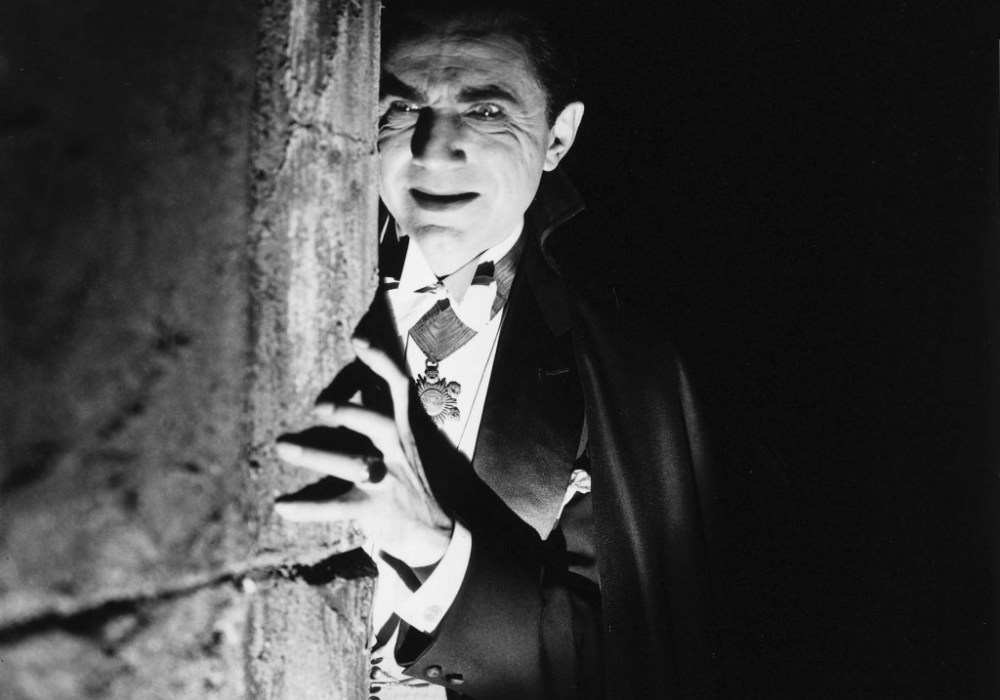
What House of Dracula attempts to do is similar to what House of Frankenstein did before it, and that is to create a tale that balances most if not all the Universal monsters. When people complain of the lack of originality in modern cinema I can’t say that I blame them, it’s only that they act like it’s new. There have always been property projects and series that became cash cows that studios went back to repeatedly. The smaller ones were more likely to over-exploit certain successes. So after House of Frankestein worked, why wouldn’t Universal try the trick again?

The problem here ends up being one of balance. The Wolf Man’s involvement, here it’s Lon Chaney, Jr. playing him as per usual, is perhaps the best because his storyline gets the fullest and most complete treatment. The notion of the current Count Dracula being the one to seek a cure, much in the way Dracula’s Daughter did, except this time through blood transfusions rather than psychiatry is an interesting one. His fairly static nature, as the battle is fought and lost isn’t really an issue, but rather it’s his scarcity. That scarcity makes the title a misnomer.

This film is really about the doctor all these monsters seek his counsel. However, that doctor’s plot is not without its issues. It may have been a hamfisted attempt at foreshadowing, but there is an uncharacteristically dumb and manic maneuver he tries early. If it is a foreshadowing attempt it’s in no way earned and poorly executed.

The element that’s used to bring the story to a conclusion is also one of the least effective in all of drama and I’ll leave it at that. It’s not that this film isn’t without moments but that’s all it can boast, and what do moments really mean when the center doesn’t hold?

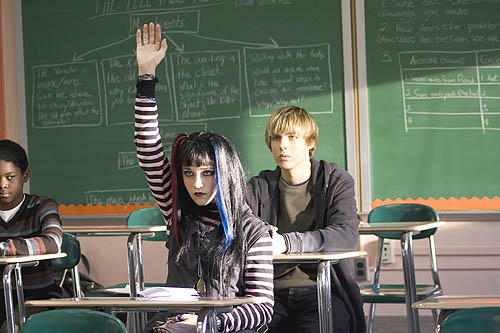
61 Days of Halloween: R.L. Stine’s The Haunting Hour- Don’t Think About It (2007)

Introduction

For an introduction to the concept of 61 Days of Halloween, as well as a list of previously featured titles, please go here.

R.L. Stine’s The Haunting Hour – Don’t Think About It (2007)

As I’ve reference a few times, in my youth I had an aversion to horror. I didn’t relish being scared back then. As someone who gravitated to the genre later in life, I take no umbrage with the idea of juvenile horror such as the likes that R.L. Stine creates. Yes, many kids (much younger than I when I was started to read Desperation), cut their teeth on Stephen King. However, not all kids are the same (which is a small part of why I avoid giving parental guidance advice). However, I can remember instances where a certain frightening tale did intrigue me; Poe would be an example. Had I at a young age know of Stine I may have gravitated to the genre earlier.

This year, having had a number of his books come to me secondhand, I’ve read quite a few before donating them to the local library; and as evidenced by the TV shows that bear his name, they are twisted tales that don’t always work out so great for the protagonist, which can really scare kids. (I hope to be able to prepare a post [or series of them] about The Haunting Hour, the series, before Halloween).

As for this film, it took me a while to get around to screening this one because the last film I’d seen based on one of his works was quite a bad miss. This one, however, thankfully, mostly works.

A lot of that has to do with the practical effects work by Gregory Nicotero, one of the best in the game right now, who created an awesome creature for this film.

The film works itself into its story slowly. It does follow its protagonist (Emily Osment) and builds her character, and motivations for all the characters involved, but it does so a bit languidly. When things do get going though they’re rather freaky and things resolve themselves nicely, with the characters growing and a well-earned horror-film end.

As this film felt a bit stretched, it will be interesting to see if the planned Goosebumps film, comes to fruition if the anthology-styling suits it better, which it should.

61 Days of Halloween: Dracula (1931 – Philip Glass Score)

Introduction

For an introduction to the concept of 61 Days of Halloween, as well as a list of previously featured titles, please go here.

Dracula (1931) Philip Glass Score

My reaction to my first viewing of Dracula was slightly more favorable than that of my first viewing of Freaks. I’ve seen this version at least twice, and I enjoy Browning’s work (and will look into more) but have yet to find the transcendence that others have in some of his titles.

Being a completist I seriously considered re-watching the original cut of the film before watching one with a newly orchestrated score by the genius that is Philip Glass. I decided to pass on yet another viewing and it was a decision that was almost instantly validated. I remember many of the beats precisely. I was able to finish many lines of dialogue, mainly Lugosi’s, and that’s because it’s memorable not just because all the lines have a very deliberate reading.

So I didn’t feel I was missing anything by comparison. One thing that I found peculiar, which is not uncommon in early talkies, is that the soundtrack is fairly quiet. People wanted to hear dialogue and the now-primitive-seeming sound-design. It seemed a few years would pass before scores would swell anew. And, that’s a bit difficult to adjust to in a horror film. Some, like The Birds, work especially without music; others need it.

Granted the scoring in a horror film can be looked at as invoking Pavlovian response (this music is eerie therefore you are scared) but it’s very much a part of the fabric of horror cinema, and a sight better than jump-scaring an audience to death.

The score laid over this version is not only brilliantly cyclical and quasi-monotonous as is Glass’ signature but the spotting, the decisions about where music would be overlaid is extraordinarily precise and inspired. It absolutely elevates the film to new heights because it’s done with a tasteful understanding of what kind of score would befit a film such as this.

This is as opposed to something like the Moroder version of Metropolis, which sought to put an ’80s interpretation of futuristic music on the film. The music, while good in isolation, is now dated and doesn’t jibe properly with the film.

There’s a fine line between artistic restoration and musical graffiti; Glass’ work at the service of Dracula is the former and Moroder’s production of Metropolis is the latter.

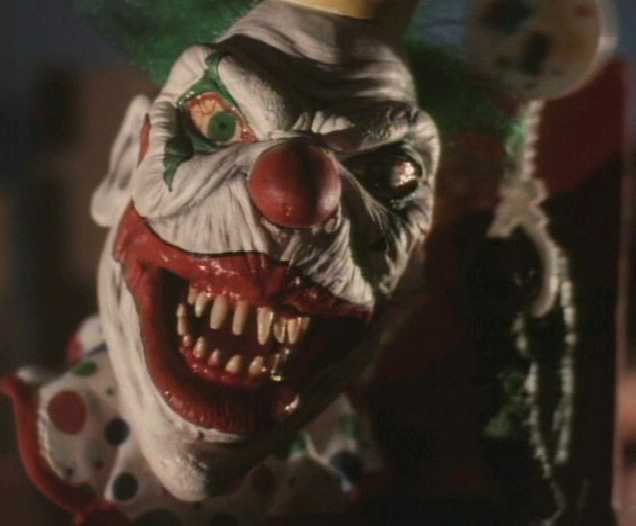
61 Days of Halloween: Demonic Toys 2 (2010)

Introduction

For an introduction to the concept of 61 Days of Halloween, as well as a list of previously featured films, please go here.

Demonic Toys 2 (2010)

While I did not include the original in this series, I did write about Demonic Toys previously. It was one of my favorite older movies first seen in 2011

This movie is part of the reason that this list is called “Favorite” and not “Best.” I don’t usually distinguish between the two but this is the rare film in my estimation that garners that elusive title of “So Bad It’s Good.” It has an audacious script by David S. Goyer (pre-Nolan Batman films) and a great albeit dubbed evil kid performance by Daniel Cerny, good flashbacks and chemistry between leads. For all its faults, which are myriad, I still found it to be very enjoyable to watch. Beyond that it nearly defies description. I wanted to include it in my 61 Days of Halloween series but I stuck with mostly posting about the original class, this year I may include it.

So at the most recent Mosnter-Mania Con I saw available on DVD this sequel. I actually saw the first a few times and decided to give it a try. This installment made quite a bit later, is a little less ambitious than the prior one and as such, while there’s definitely some cheese involved in dialogue and some of the effects work, and the acting must be forgiven; it too works. This tale goes into the collector realm and has the clan, with a new, valuable addition (as well as demons and ghosts in tow).

Having now seen only two of these films and more of the more popular Puppet Master series I’m not sure why this one doesn’t have more of a following. It’s funny, a bit more self-aware and so far still combines its tropes pretty well and gets good effect out of them.

It’s in this clan where I find myself a fan of the villains. It’s childish but Baby Whoopsie cracks me up non-stop.

Full Moon Features has recently started its own streaming service where this and many of their other titles can be found if you’re interested.

61 Days of Halloween: Gorgo (1961)

This is another selection that came to me by way of Stephen King’s list of horror films in Danse Macabre. I have to admit, I chuckled a bit and had some trepidation when I saw that this was a monster movie. After all I’m fairly sure that during the period from which King curated the list (1950-1980) there were other, more well-known giant-monster-attacks-city films; most notably the Japanese brood. So what makes Gorgo special?

I soon realized what it was and it’s not really about the fact that this species of prehistoric beast is discovered off the coast of an Irish isle, but rather the thing the film does in just 78 minutes. There’s a period of time wherein the film is like a proto-Jaws. There is a threat identified and a mostly unseen enemy. There is a plan to try and take it down.

What occurs then is a spin on King Kong, which has also been done. One notable example I viewed, that didn’t really work out, was Jurassic Park: The Lost World. However, here it does work because that second twist on the average monster film isn’t the last.

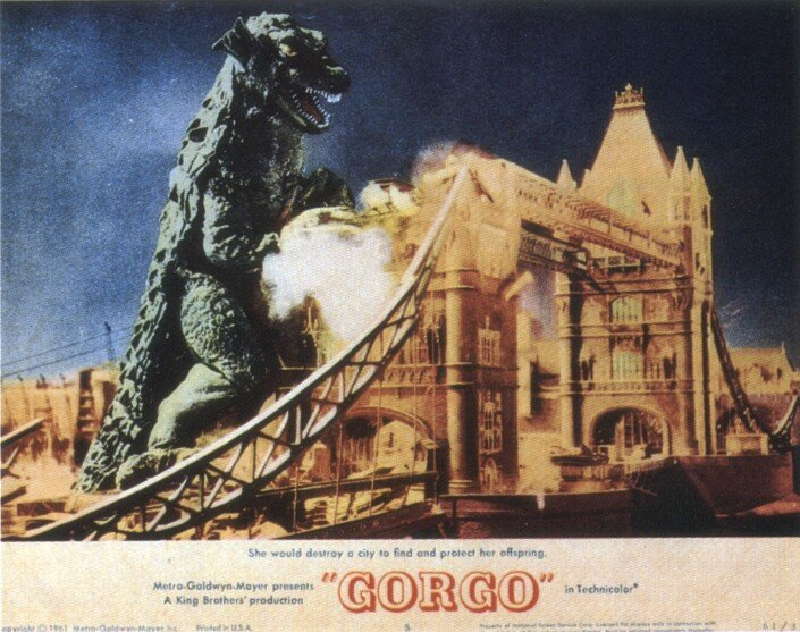
The last one is given away by this poster here. The beast that’s captured and taken to a London circus is a baby. Big, angry momma is coming for him and that’s where all the tense, well-wrought and choreographed chaos ensues.

I won’t say there aren’t period clichés and touches of cheese, both eternal and due to dating in the film, but it really is well done. There’s the especially disheartening note that the kid assistant, if he had only been listened to, could’ve saved everyone a lot of trouble.

One of the great things about going down this list is discovering titles you should have seen by now. An even better one is watching films you wouldn’t have seen otherwise, and this film qualifies in that regard.

The Book of Manning: A Personal History and Mini-Review

Introduction

This is another post that was intended as a Mini-Review Round-Up entry, but then grew legs and so I decided to post it separately.

Personal History

To be completely honest, though I knew about the upcoming slate of 30 for 30 films for this fall; I was caught unaware by this installment of the ESPN Films series under the banner of SEC Storied.

And apparently this was not the debut installment, but rather part of plan to have four conference-specific titles per year. However, when the subject of the Manning family came up it’s not a wonder that I heard about about it and then saw the documentary.

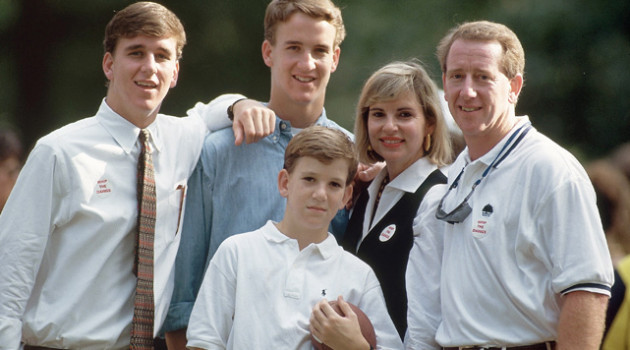
It’s only now with hindsight that I could see that my fascination with this family has gone on longer than I realized. I was too young to witness Archie Manning’s career as it was happening, but I remember seeing footage of the fleet-of-foot gunslinger left on an island and run ragged when playing for the mostly hapless New Orleans Saints. In fact, in my nameless-player, league-branded NES game he was a large reason I “created” my own similarly gifted and bedraggled field general for the same team.
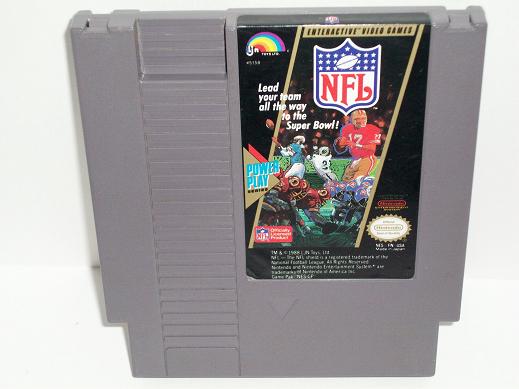
NFL (Nintendo)

Later on I, of course, became aware of Peyton in his college days and when he joined the Colts, though I am not a Colts fan, that would be the team I’d most consistently watch (besides the my own) to see him play. Peyton Manning is must-see TV.

Almost anyone can note how the story of the Manning family, at least in football terms, is like a fairy tale. However, it becomes a bit more so in my case. Of course, part of the fascination in watching Peyton play is not just his prowess, but a bit of envy, “Why can’t my team’s quarterback be just a little like that?”

I became even more aware of the fact that Eli was a college quarterback than I was of Peyton. Partially because he was the little brother. I think he was a sophomore when the pipe dream of his ending up on the New York Giants entered my mind and I laughed it away as an impossible notion. In fact, I never entertained it as something tangible until rumors started coming around about his not wanting to play in San Diego.
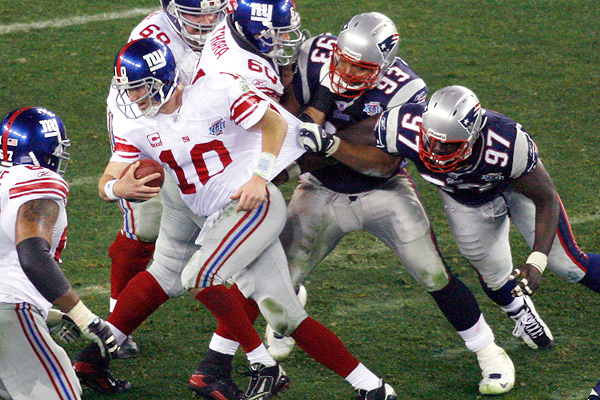
Super Bowl XLII (ESPN)

I can’t remember who else was in the running but the Giants weren’t the only team to need a quarterback that year, but were the only one’s who could pull the trigger on the deal. Eli Manning was a quarterback for the New York Giants something less than two years after I had the crazy idea. Not only that but later that same ill-fated 2004 season I lucked into a ticket for a late-season, virtually meaningless game against the Atlanta Falcons. Eli’s first start was a close-run loss wherein I screamed myself hoarse. After that history it’s not a wonder I was one of his few staunch-yet-silent-supporters as he and the Giants struggled to get their bearings. Despite the start to this season, two borderline-miraculous Super Bowl runs later, what’s not fantastical in that story?

The Film
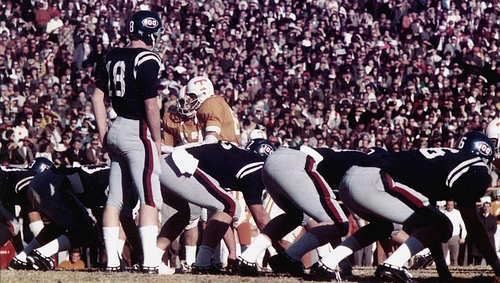
Ole_Miss_vs_Tennessee_1969_(4233310964)

As intimated above the footballing aspect of the Manning family seems to be a fairly tale. Yet I long ago learned of the unfortunate circumstances Cooper Manning faced in his freshman year of college. However, what makes this an interesting tale is that there are in Archie and Cooper’s stories highly unfortunate events. The first molds Archie in his personal life as a man, the next fuels Peyton in his will-to-win on the field.

So there’s a redemptive aspect to Peyton’s section of the film. Yet, although brief there is one to Eli’s as well because of the perceived slight the state of Mississippi felt that Archie and Peyton had levied upon them. Though there was no such slight and the reasoning each had for their actions were justified.

In editorial terms there is a slightly repetitious nature to the film. However, that’s one of the few things you can quibble about. There are a few brief, well handled re-enactments. The stills, pictures as well and the one-on-one interviews give you a more complete version of the tale than if there had just been game footage involved.

The college football, the Southeastern Conference, slant on the story allows it probably a better structure than one that took in more of each of the three pro careers involved and it ends up working better for it.

I could almost disqualify myself from a rating based on the aforementioned personal history, but you can consider that the grain of salt portion of the review. It still does work and I think, since it is a family story even more than a football one, and Olivia is interviewed quite a bit as well; non-fans will also enjoy it.

8/10
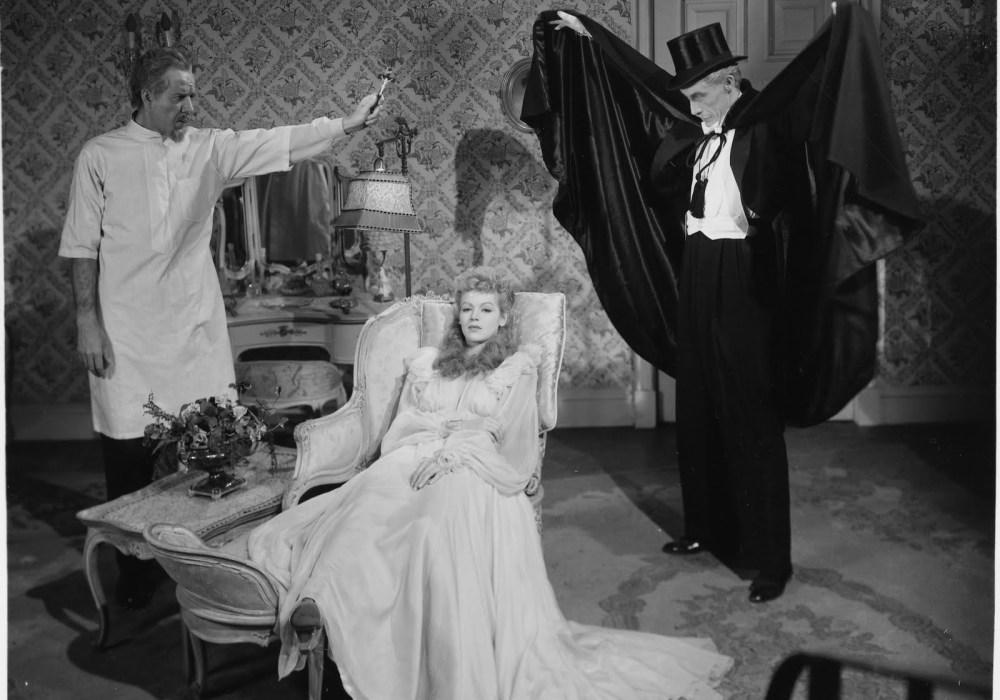
61 Days of Halloween: The Case of the Bloody Iris (1971)

Introduction

For an introduction to the concept of 61 Days of Halloween, as well as a list of previously featured titles, please go here.

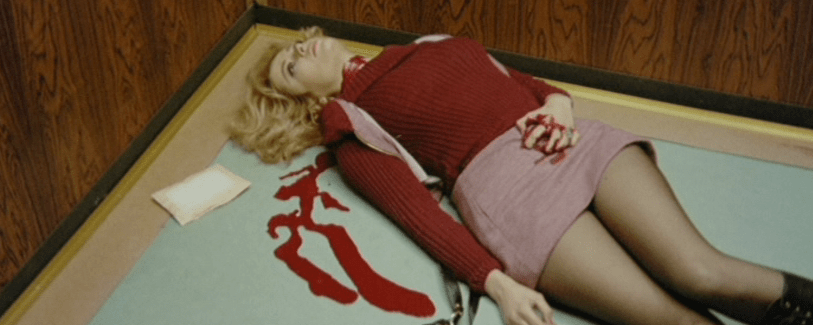
The Case of the Bloody Iris is a giallo film from 1971 by director Giuliano Carmineo. It’s written by Ernesto Gastaldi based on his own story. Now as is the case with many Giallo films it could end up being “just another one,” especially considering that this one does take place, at least in part, in the world of fashion (as quite a few do). Staple actors of the genre Edwige Fenech and George Hilton are leads. A lot of it boils down to how it all shakes out in the end.

Without spoiling it, I was highly satisfied with the result of the whodunit. There were, in my estimation, a few unsavory possibilities in that regard, and the best path was taken. The outcome does leave a question or two, but most of it works.

Yes, there are a few elements that do date it however some of the representations (both in terms of ethnicity and sexuality) while ensconced in the lack of political correctness of the day are somewhat departures from the norm, which was refreshing to see.

The mystery is cloistered about one building. The police involvement can be counted on for a bit of bumbling, and comedy, but they are mostly competent. It’s just that the enigmatic nature of the case does prove to be a rather difficult one.

For as many complications this film foists upon itself and engaging in the occasional flashback sequence, it never gets confusing which is another win for it. And, on a pet peeve note: gialli have some of the greatest, most florid titles in cinema. However, the more often than note end up being a bit of a stretch (one example would be The House with the Laughing Windows) that is not the case here. Despite its strong elements I can’t say it’s a great giallo, but it is a good one that is worth seeing if you’re a fan of the genre.

61 Days of Halloween: Bride of Chucky (1998)

Introduction

For an introduction to the concept of 61 Days of Halloween, and a list of previously featured films, please go here.

Bride of Chucky (1998)

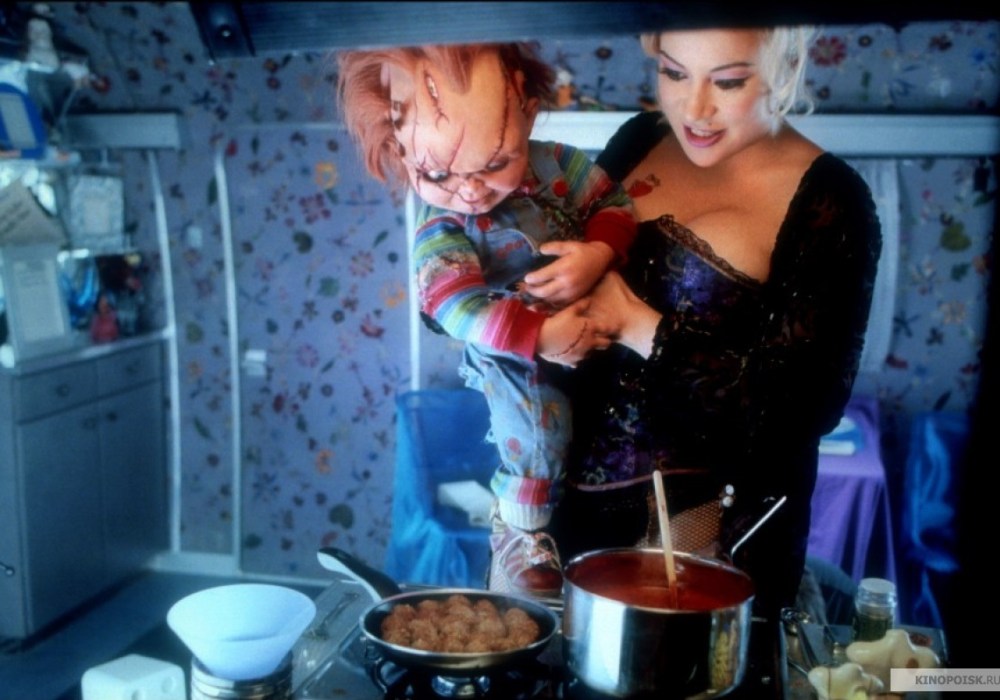
This is the point wherein the Child’s Play series takes a departure from its original course. Not to say that there’s anything wrong with that. In general, horror sequels can be repetitive enough as it is without having the same antagonist/protagonist paradigm every time out. However, what happens here, after a halfway-decent setup, in which Chucky’s ex-girlfriend finally hunts him down in doll form and resurrects him; is that this installment wanders too far into the realm of self-parody.

As I previously noted, comedy was always a part of the equation in the initial run of these films, as there is a reboot in the offing. However, far too much of this one is comedy. Furthermore, it falls into the trap of late-series horror films of making the antagonist the star. While the films were always referred to commonly as “Chucky movies” his name never made it into the title until this installment.

The antagonist becoming the lead late is not inherently a bad thing, but what matters is who they’re up against, how present they are and what they hope to achieve. Far too much of the film is spent with Chucky and his newly-formed doll-bride sitting and waiting, listening as a troubled girlfriend and boyfriend are eloping, and then running from the law because of what the demon dolls did.

Not only are this couple annoying but the girl is portrayed by Katherine Heigl so it’s essentially doomed from the start. The Frankenstein myth-lending is fine but the spiral this film goes down, and ends up being even more ridiculous, less humorous and interesting than I had anticipated. Mind you this is following a first act that was slightly better than expected. However, at the end I was left wondering not only what Jennifer Tilly was doing in this film, but everyone involved.

61 Days of Halloween – Films to Keep You Awake: Blame (2006)

Introduction

For an Introduction to the concept of 61 Days of Halloween, and a list of previously featured films, please go here.

Blame

This installment of the series is offered by Narciso Ibáñez Serrador. The only other film I’ve seen of his is Who Can Kill a Child?, the original not the remake, which I enjoyed a bit more. Although many years later it’s interesting to see a filmmaker only twice and at two very different stages of their career, especially when some of the themes that are being explored are similar. This title is the most recent of his listed on the IMDb. While there are some interesting aspects to the film, and some of it is well-handled; I can’t help but feel it shares a lot of the difficulties the earlier film works: namely there are some dubious decisions by characters and some head-scratching moments.

However, what this film has going for it is that its tale is, eventually, a more layered one and touches upon themes too often avoided in American horror films. However, there does come a point in a film where it can be said you’ve been playing coy for too long and are starting to hurt the end result. The delayed nature of the reveals adds a sudden choppiness to the reveals and a very quick escalation with minimal time to absorb the impact of what is seen.

There is certainly a deftness of hand in how this tale is wrought, but it ultimately encounters some issues that titles truncated to have shorter running times do; inasmuch as I feel this film would’ve benefitted from being expounded upon such that the overall flow of it was more consistent. As it stands there are interesting scenes a themes, as well as effective sequences, that don’t gel into a completely successful whole.

61 Days of Halloween: The Dead Father (1985)

Introduction

For an introduction to the concept of 61 Days of Halloween and a list of previously featured titles please go here.

The Dead Father (1985)

I have covered the films of Guy Maddin on a few occasions here. However, even with all that coverage there are a few of his films I had not seen. One such film was Tales from the Gimli Hospital, his first feature.

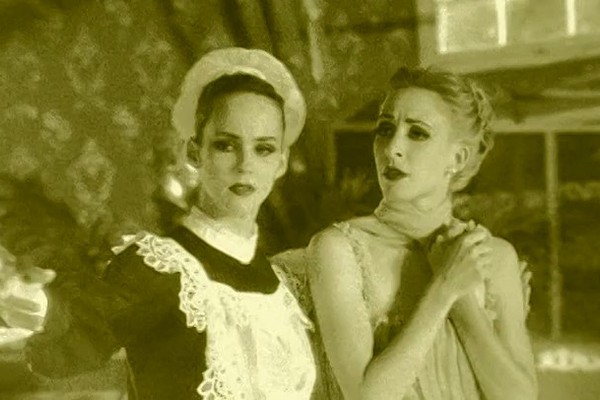
On the DVD of that film, one whose horror qualifications are disputable, there was the short film The Dead Father. This is one that is more obviously a horror tale. It’s one in which death is a transient experience. One misapprehension I recall from my days in film school is that writing “homey” or family-based tales was us students playing it safe, sticking far too close to writing what we know. However, it’s not the motif or the milieu you work with, but rather how you use it. Much of Maddin’s works, this one included, are family portraits but you could not confuse Maddin with any other filmmaker because of how he tells his stories in narrative, visual and editorial senses.

Even with it poetical use of voice over and sparse use of dialogue there are still silent film tropes all about this film starting with the introductory photo title cards of the characters. Maddin’s style is embossed on this film, and though he has experimented with different kinds of tales; he has created his own approach and that really started here.

While short films are a starting point for most, if not all filmmakers, few modern auteurs can be referred to as short film artists and Maddin is most certainly that. He continues to make many shorts and he tells tales that are as long as they have to be and is not only making features but made a short as recently as last year in an anthology, and one due out next year.

This is a film that sets its tone with weird off-kilter photo albums immediately and continues to its creepy, gross finale with occasional humor and persistent oddities throughout. Unlike many of his shorts, this film is not available online but instead is on the Kino edition of Tales from the Gimli Hospital it is definitely recommended viewing if you’re looking for something a bit different.