Bernardo Villela is like a mallrat except at the movies. He is a writer, director, editor and film enthusiast who seeks to continue to explore and learn about cinema, chronicle the journey and share his findings.
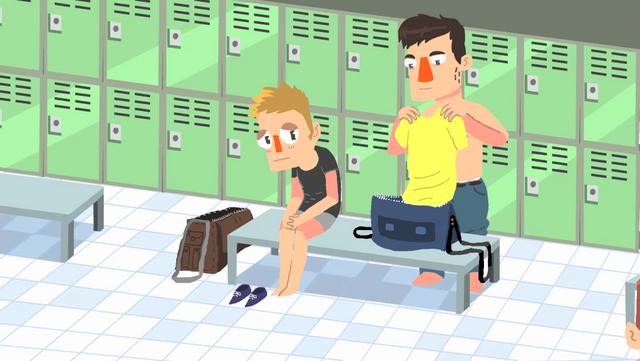
Here is another selection in honor of LGBT pride month here in the US. This one is also a comedic, yet heartwarming take whose idea makes itself readily apparent quickly. A fairly funny animated tale with a great payoff.
Any film, feature or short, can be boiled down to a ‘what if’ question. This one humorously explores the notion of pinpointing the exact moment in time wherein the seeds of homophobia were first planted.
Viewer discretion is advised as it does contain adult language.
This week’s short film piggy-backs off last week’s train theme. When I read this fascinating blog post about how the silent film got so closely identified with a woman being tied to train tracks, and why that might not be so accurate, there was a link to one short that’s a famous example of it.
It’s a fairly humorous and straight forward tale. Though D.W. Griffith is most noted for making cross-cutting a staple of film technique, he was by no means the only one implementing early in the development of cinema and here Mack Sennett really does the technique justice and makes the short very compelling. Another interesting thing you’ll note is that this short film is bereft of score. I am fine with that. Very few silents have their proper score attached to them to this day – some never had a specified score and that was left to the discretion of the live accompanist. Chaplin’s work, as he was also a composer, is an exception; furthermore, the restoration of the original Metropolis score is a large part of what made that reconstruction so very brilliant. Anyway, this is quick, fairly humorous short full of silent tropes.
Here you will find two quick clips that show some early progress in film as a documenting tool.
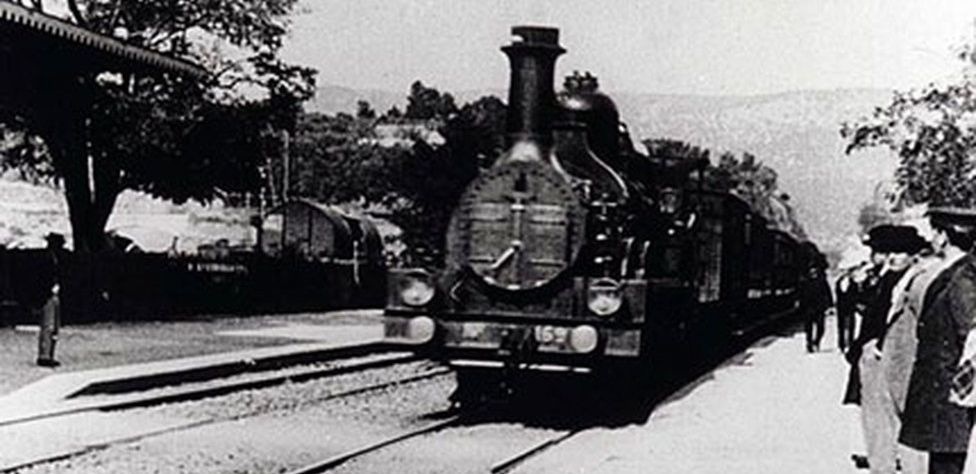
One of the first shorts ever in 1895 was of a train arriving at a station by the Lumière brothers.
Compare that to this shot 18 years later when a train collision was caught on film. In the meantime, storytelling developed but the journalistic possibilities were always apparent.
I believe the last time I posted a trailer it was in conjunction with another short just so it wouldn’t feel like such a cheat. Here, however, the trailer is for a short, and since the story is cool and the film looks to be of significance; I will make another exception.
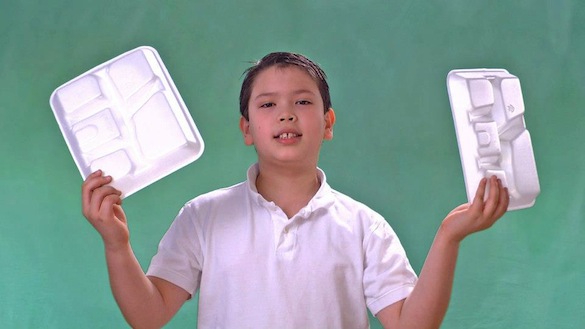
This hit a number of websites the other day as it appears to be making a splash at the NYC Independent Film Festival. Quite simply, Yuck is a short documentary created by a 4th Grade student at P.S. 130 in New York about the poor state of public school lunches. Aside from the cleverness, courage and talent of this burgeoning filmmaker, the thing that is as impressive as it is scary about the film is the topic. I myself went through the New York City Public School system from grades 5 thru 12 and the most frightening thing is a lot of this food looks exactly the same, which is why I’m glad I brown-bagged it most of the time. It also makes forcing me and my classmates to sing “Food, Glorious, Food” at fifth grade graduation all the more hypocritical.
As for Yuck, you can learn more about the film on its official site.
UPDATE:The film has since hit Vimeo and been linked to me. The timing is coincidental due to the fact that I just recently saw A Place at the Table , which looks at hunger in America and discusses the budgetary constraints around school lunches.Yuck is very well done, funny and finds what I may have expected: false advertising, smoke and mirrors PR and redundant food stuffs all too often. It’s definitely worth a watch. Enjoy!
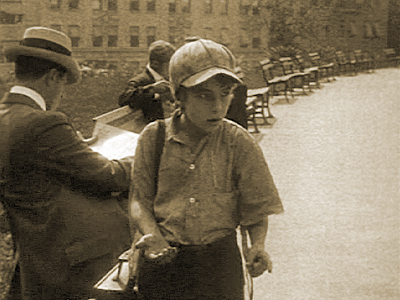
There are a few things to note here: the first is that this is the second Griffith title I watched for this weekend. The first I felt, though more interesting in its construction, is not as effective a narrative. Also, interesting to note, and I haven’t seen too much of this even in the silent era, but the title role of Billy, a boy, is played by Edna Foster, a girl. This is a practice more common on stage and in ballet than on film. In spite of that it is still an enjoyable film that gives you a sense of Griffith’s penchant for melodrama and social problem films.
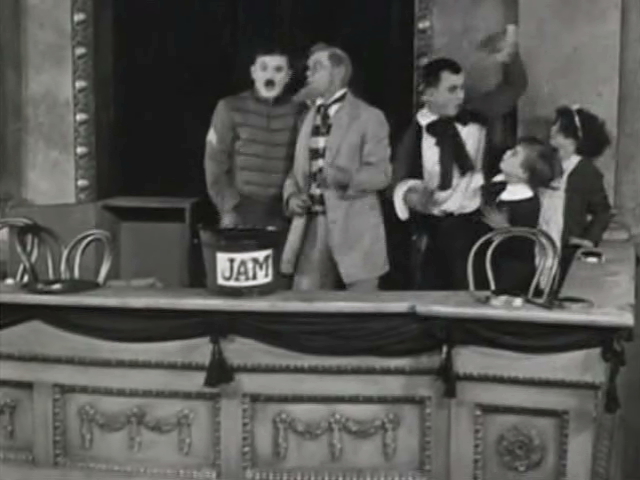
There are a few interesting things to note about The Show. Firstly, this is a silent and solo appearance by Oliver Hardy. I know both he and Stan Laurel both worked in the silent era, but they only truly excelled with one another and after the inception of sound.
Hardy does fine but is not nearly as dynamic silent as he is with audio. The lead is Larry Semon, though it seems at times in silent comedies that the gags were the star rather than the actors. The gags in this film are great and kept me laughing pretty consistently.
Lastly, the reason I even knew of this short is because I recently read a wonderful memoir called The Keystone Kid. In it author Coy Watson, Jr. chronicles his childhood in Edendale, CA; (Where the first west coast studios were established), the exploits of his father, Coy, Sr., an ingenious behind the scenes man most noted for being the first wire technician in films; as well as his own and those of his siblings who all acted. In an appendix there are descriptions, photos and a filmography. I have been in search of many of them and this is the first I found.
His entrance in this short is noticeable. He is part of a family who is frugal and creative when it comes to theatregoing. Enjoy!
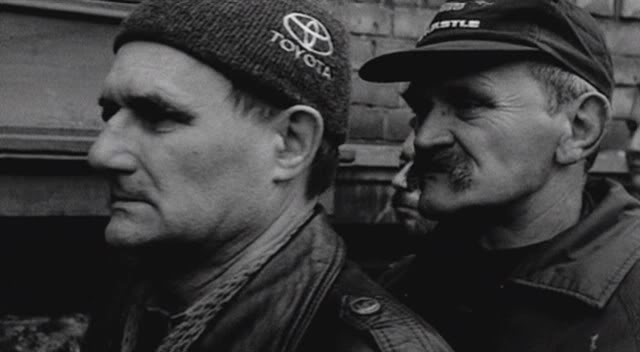
One recent tradition I have unintentionally started is that I will kick-off a new theme or series through Short Film Saturday. It makes sense since Short Film Saturday is my most frequent and longest running post. The theme that this short will correlate with is the beginning of a Bela Tarr retrospective. Another decision I have come to organically is that the winner of my Lifetime Achievement Award will be the focus of a series of posts the following year. It began with my Spielberg Sunday posts and this year I will look back on many of Bela Tarr‘s works. This short is actually one I had not seen yet.
Visions of Europe is a 2004 anthology film wherein various acclaimed European directors made short films about Europe, specifically their own corner. Bela Tarr‘s short acts as the prologue. As those who know him will attest the attributes of this short are not surprising: it is comprised of one long take and the haunting, soul-encompassing, cyclical score by Mihaly Vig. This short makes me want to watch the rest of the film and and is a perfect introduction to Tarr I feel.
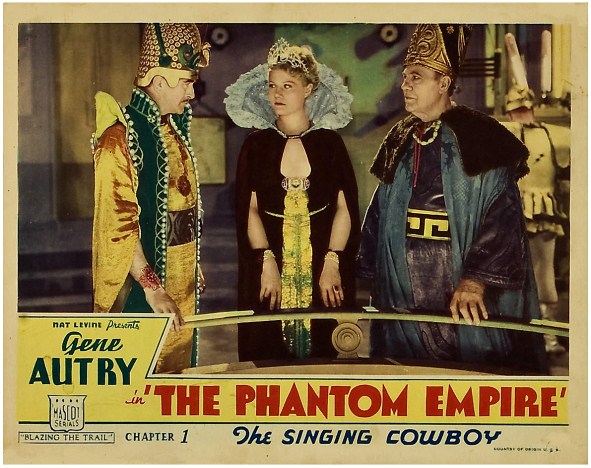
The Phantom Empire may be the most unique movie serial ever created. I was told of its existence by my favorite film professor in college and I was fortunate enough to have found it on VHS shortly thereafter. After having viewed it I was glad to have given it to him. Now I have since reacquired it on DVD. It stars Gene Autry in his usual singing cowboy persona but there’s also science fiction mixed in and quite a few other things along the way.
Through Poverty Row April I will likely watch a composite version of this film but I am glad to be able to present to you the serial version of the the film thanks to The Internet Archive. To view please visit the links below.
The Phantom Empire may be the most unique movie serial ever created. I was told of its existence by my favorite film professor in college and I was fortunate enough to have found it on VHS shortly thereafter. After having viewed it I was glad to have given it to him. Now I have since reacquired it on DVD. It stars Gene Autry in his usual singing cowboy persona, but there’s also science fiction mixed in and quite a few other things along the way.
Through Poverty Row April I will likely watch a composite version of this film, but I am glad to be able to present to you the serial version of the the film thanks to The Internet Archive. To view please visit the links below.


 The Movie Rat