BAM Best Picture Profile: Wah-Wah (2006)

Each year, I try and improve the site, and also try to find a new an hopefully creative and fun way to countdown to the unveiling of the year’s BAM Awards. Last year, I posted most of the BAM Nominee and winner lists (Any omissions will be fixed this year). However, when I picked Django Unchained as the Best Picture of 2012 I then realized I had recent winner with no write-ups. I soon corrected that by translating a post and writing a series of my own. The thought was all films honored as Best Picture should have at least one piece dedicated to them. So I will through the month of December be posting write-ups on past winners.

Wah-Wah (2006)

In many of these recaps I discussed my pre-life with the film. In some cases they were either adaptations of stories I already knew rather well, or that I had anticipated for some time. I had no idea Wah-Wah was coming or even existed until right before I saw it. There was a review for it in the weekend section of the Philadelphia Inquirer and I decided to head out and see it based on that.

The last time I’d seen Nicholas Hoult onscreen prior to this film was in the marvelous About a Boy, which made a rather significant dent in the 2002 BAM Awards. This tale is a bit different but one I was drawn to nonetheless. Being perhaps the most obscure title I’ve ever selected as Best Picture I will cite an IMDb synopsis.

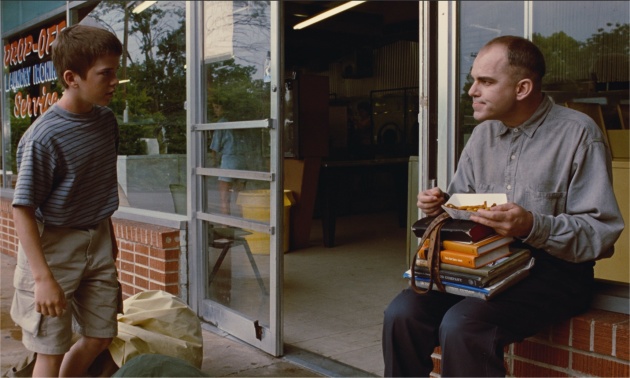
Set at the end of the ’60s, as Swaziland is about to receive independence from Great Britain, the film follows the young Ralph Compton, at 12, through his parents’ traumatic separation, till he’s 14. It is written and directed by Richard E. Grant, and based on true events from Richard E. Grant’s childhood.

So you have a few things at work here: although playing off two completely different cultures, I could certainly relate to the story of a British boy growing up in Swaziland. As a dual-dual citizen there is a that sense of belonging in two places that’s a commonality. With the impending independence there’s also the perfect backdrop for a coming-of-age tale. The feeling of ex-empire underscore Harry’s (Gabriel Byrne) feelings of inadequacy. The family and their situation are viewed with perfect clarity by Ruby, Harry’s new wife, played brilliantly by Emily Watson, who vocalizes the film’s title as an imitation of the family’s complaining. Alongside them is Miranda Richardson, as Ralph’s (Hoult) mother, and Julie Walters, too, as a neighbor.

In preparing this write-up I read on the IMDb page that this was the first film ever to be shot in Swaziland, which is certainly an interesting footnote. Of course, one of the great things about cinema is that it can take you places and underscore things you had never really considered before. The liberation from colonization of Africa had many ramifications and permutations and this is just one of them. It’s also a wonderful means of personal expression, of course, and that’s where this film succeeds. It’s not run-of-the-mill but it does put you as a viewer in a position to identify with situations even though the world you’re witnessing is not of this time and not your own.

Wah-Wah is a captivating, funny, heart-rending family drama and coming of age story that is one not much talked about that’s just waiting for you to discover it.
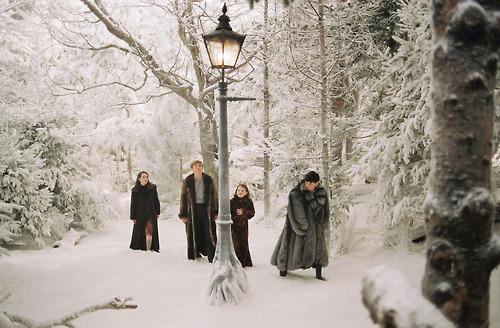
BAM Best Picture Profile- The Chronicles of Narnia: The Lion, the Witch and the Wardrobe (2005)

Each year, I try and improve the site, and also try to find a new an hopefully creative and fun way to countdown to the unveiling of the year’s BAM Awards. Last year, I posted most of the BAM Nominee and winner lists (Any omissions will be fixed this year). However, when I picked Django Unchained as the Best Picture of 2012 I then realized I had recent winner with no write-ups. I soon corrected that by translating a post and writing a series of my own. The thought was all films honored as Best Picture should have at least one piece dedicated to them. So I will through the month of December be posting write-ups on past winners.

The Chronicles of Narnia: The Lion, the Witch and the Wardrobe (2005)

The Chronicles of Narnia is another series that I have a long history with. I presume it must’ve been The Lion, The Witch and the Wardrobe that was a book read aloud when I was in a Montessori grade school. We later saw the BBC animated rendition of that book at least (if not more of them- and it’s a far less frightening animated version than their take on The Hobbit). I don’t recall ever revisiting the books, or continuing the series in my childhood.

Then when the first film version was due out naturally the books became more prominently displayed in stores again. I seized the opportunity (as films have been known to occasionally act as catalysts to me reading) to acquire the omnibus presentation of the entire series in the now-preferred reading order; the one first suggested to Lewis by a young reader named Laurence. Since I commuted quite a bit at the time, and it was the end of the semester, I had quite a bit more free time on my hands. I ended up reading the entire series in a weeks’ time, at least one of the books being the ever-so-rare re-read.

The Chronicles of Narnia: The Lion, the Witch & the Wardrobe (2005, Disney)

This had to be less than one month prior to the release of the film. Therefore, I was quite ready for it. However, I was not expecting what I ended up getting. Firstly, as I’ve highlighted before distance between the reading of a book and then seeing the film can be a great, even a beneficial thing. It leaves you less encumbered by the facts and more willing to accept a tonally true version. So the film had that against it rather than for it.

I ended up finding myself very engaged and enthralled by the vision of this land presented in a way I’d not seen, nor ever imagined. Perhaps more so than in any other book in the series, Wardrobe focuses on a character’s struggles with temptations and greed. In the “Pevensie Tales” it is Edmund who is the most layered and interesting and it is in this story, through the writing, directing and rendition by Skandar Keynes that he fully, vibrantly comes to life. Alongside him is one of the more brilliantly portrayed antagonists in recent memory – Tilda Swinton’s White Witch.

It’s reflecting back on this film this year that lead me to a truth: I cannot cite thinly-veiled propaganda or allegory alone as a dismissal of a film; films both good and bad can be hung with that label. I say that because the Biblical allusions in the series, this installment especially, are fairly overt. However, what’s at the core of the tale are things far more universal and eternal: basic values and human struggles that are not unique to those of the Christian faith. It just seems these books/films take a lot of backlash (especially via ridiculous comparison to the works of Tolkien and friend and rival of Lewis’) as if they were some Bible-thumping bore. Whereas I’m rather sure the same fundamentalists appalled by Harry Potter, don’t take to kindly to talking beasts; especially a godly one (symbol or not).

The Chronicles of Narnia: The Lion, the Witch and Wardrobe was another late-in-the-year jolt to my awards picture. It was the beginning of what, most certainly behind-the-scenes, has been a long and most unusual journey. The series through three films has seen two studios, and now survives based on its international grosses. The fourth film, The Silver Chair, has a green light, a writer, a new production company and potentially a new studio (that remains to be seen). This was the start, and even in my fandom, I admit Prince Caspian was a letdown, but think the series righted itself. Now as it awaits its next port I still look back on this installment with the greatest of fondness; not just for bringing a treasured childhood tale to life, but to the cast for making the Penvesies more engaging and vibrant than I could have imagined.

BAM Best Picture Profile: Mean Creek (2004)

Each year, I try and improve the site, and also try to find a new an hopefully creative and fun way to countdown to the unveiling of the year’s BAM Awards. Last year, I posted most of the BAM Nominee and winner lists (Any omissions will be fixed this year). However, when I picked Django Unchained as the Best Picture of 2012 I then realized I had recent winner with no write-ups. I soon corrected that by translating a post and writing a series of my own. The thought was all films honored as Best Picture should have at least one piece dedicated to them. So I will through the month of December be posting write-ups on past winners.

Mean Creek (2004)

There are a few things that can be said concerning the viewing of this film, considering what the IMDb cites as its release date, and the fact that I know I saw it at the Landmark Sunshine Cinema in New York upon its release; I can fairly guess that this was what is as close to a birthday movie as I had in 2004.

As opposed to some prior titles, this is not one that I had anticipated for a very long time, but one that I ad heard of in indie film previews of the coming summer slate.

In casting terms there are a few things of note in this film: One of the more notable appearances in the film is that or Rory Culkin. Aside from his participation in Signs there was not really a very noteworthy credit on his resume yet. Certainly nothing with the teeth this film has.

And teeth, in a figurative sense, is what this film comes down to. In a prescient plot Mean Creek deals with a group of kids who trick a bully into going on a boat ride, the situation and the fallout thereof allows each of the characters to show their true colors and different reactions to the moral dilemmas faced.

The film also deals enigmatically with the bully, in perhaps one of the strongest demonstrations of just how hard it is to get inside someone’s head. The bully in this case played by Josh Peck. This a departure for him at the time as he had just finished up his time on The Amanda Show and was about to being Drake & Josh; and it remains his best work to date.

Not only amongst these kids do you have one actor playing completely against his type but you also have a revelatory kind of performance and a mind-changing one: The revelation in this film is the work of Ryan Kelley, he playing one of the characters on the more sensitive side of the spectrum (in another great tough he’s the adopted child of a same sex couple, while that it not the focus of the film). This was the first in a string of a few great performances from him. The mind-changer being the performance of Carly Schroeder. Who at this point I only knew from her work on Lizzie Maguire. Her character on that show was supposed to be on the annoying side, but it was not standout work she did there.

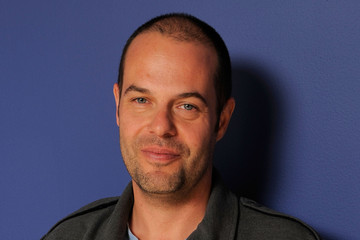
Jacob Aaron Estes

Jacob Aaron Estes

These casting choices and performances owe a lot to writer/director Jacob Aaron Estes who not only imbues this film with a great situation rife with dramatic possibility and ripe for the character development that ensues, who placed his trust in this young cast and they delivered in spades. Had I had parity in my award categories at this time Mean Creek definitely would’ve taken the Youth Ensemble prize as I’m not even done enumerating the great performances within it.

Then you also have the foils, Marty and Rocky. They seem similar enough but do have a split. Scott Mechlowicz is a assured and spot on as the calculated type; I saw him in a lot of indie work around this time and this is I believe the best and most widely available of those films. Then with Rocky, played by the always great and frequently under-appreciated Trevor Morgan, you have a seeming tough guy who does have a conscience and and empathy as events escalate.

Mean Creek is perhaps one of the best most recent examples of how you needn’t have a high concept to be highly engaged in a narrative.

BAM Best Picture Profile: Peter Pan (2003)

Each year, I try and improve the site, and also try to find a new an hopefully creative and fun way to countdown to the unveiling of the year’s BAM Awards. Last year, I posted most of the BAM Nominee and winner lists (Any omissions will be fixed this year). However, when I picked Django Unchained as the Best Picture of 2012 I then realized I had recent winner with no write-ups. I soon corrected that by translating a post and writing a series of my own. The thought was all films honored as Best Picture should have at least one piece dedicated to them. So I will through the month of December be posting write-ups on past winners.

Peter Pan (2003)

While I didn’t really post explications that I can easily access for the BAM Awards back in 2003, this was a year wherein I lost my nominees and can only find winners) I was able to quote myself from an unusual source nowadays, my IMDb reviews:

There should be a rule that bars people from remaking a story when the definitive edition has been made. While I loved the much maligned ‘Hook’ and Disney’s version PJ Hogan created the perfect version of this tale. It uses more from the book than ever and even improves on some elements. The proper theatrical conventions are kept like Hook and the Father being played by the same actor and also the proper ones were done away with like a woman playing Peter’s role.

This is the way the story of Peter Pan should be told The imagery is balanced between fantastical and realistic. Every single character is perfectly cast, especially Jeremy Sumpter as Peter. The special effects were so amazing and unique I was actually surprised to see that Industrial Light and Magic did them. The film flows beautifully with scenes that seem as if they are pulled straight from my dreams.

This is a story that has always been very dear to me and I feel that people are making way to much of this film. Peter’s escape embodies a fear all children suffer from at one point or another: growing up. This is the essence of the film and the conflict is heightened by the fact that Wendy loves Peter and for him to love her back he knows he’d have to grow up. One day we know we must grow up. As children we envy Peter’s being but know that our destinies are more those of Wendy, Michael and John. As adults we find Peter’s dream of perpetual childhood beautiful but as we see his heart breaking because he cannot change who he is and live with the Darlings, so do ours. For that is our plight. There is not an audience this film can’t play to for that very reason.

It’s a heartwarming, swashbuckling, funny, adventurous, to say that its an experience doesn’t do it justice. This film is truly a dream come true.

It’s impossible not to like this movie. Open your heart, shut off your brain and watch Peter Pan the way it was meant to be seen.

Yes, I included that in its entirety even though there are some aspects I’d caveat or amend today. One of the amendments would be about stopping remakes. My point was that there’s a crystallization of a narrative in a certain form, to me this version of Peter Pan is it. It’s conscientiously still a storybook version but more real than prior versions, darker and more dramatic.

The second statement above that would need clearing up was the “shut off your brain” segment. While I still agree that Peter Pan is more a visceral than intellectual experience I wrote that as a knee-jerk reaction to some of the over-analysis of certain production decisions I read at the time. In terms of the intellectual aspect this version perhaps places the most emphasis on the tension between Peter and Wendy and the inner struggle each faces; Peter’s clinging to childhood and Wendy’s realization that she needs to go towards adulthood. Furthermore, the Hook/Pan dynamic, to borrow a trite modern colloquialism, the “frenemy” status exemplified by Sumpter and Isaacs is brilliantly portrayed.

Quite a few of my selections I believe were directors going where they were not necessarily expected to, and PJ Hogan hadn’t done anything in this vein yet. That’s for sure.

Peter Pan (2003, Universal)

One history of the BAM Awards-related note. I used to in the days before streaming and on demand selections call the end of the year on-or-about Christmas. I believe Peter Pan’s release date was 12/27. Based on the conception and the strength of the trailer I extended the deadline that year and it became the first last-minute title to claim the number one spot.

This was and is a story I have a long history with. There was never a version quite like this one, and I don’t anticipate there will ever be one like it again. It’s something rather special. I knew that from the moment James Newton Howard’s “Flying” began (Another BAM note is that I erroneously eliminated it from scoring contention because of the classical cues used, when most of what I loved was original work).

Peter Pan
, in the face of being written off by many, won a slew of BAM Awards in one of the most dominant showings ever, and I can explain why further if need be, but I think my case is made.

BAM Best Picture Profile: Star Wars: Episode II – Attack of the Clones (2002)

Each year, I try and improve the site, and also try to find a new an hopefully creative and fun way to countdown to the unveiling of the year’s BAM Awards. Last year, I posted most of the BAM Nominee and winner lists (Any omissions will be fixed this year). However, when I picked Django Unchained as the Best Picture of 2012 I then realized I had recent winner with no write-ups. I soon corrected that by translating a post and writing a series of my own. The thought was all films honored as Best Picture should have at least one piece dedicated to them. So I will through the month of December be posting write-ups on past winners.

NOTE: The 2001 winner was covered extensively in a very long series starting here.

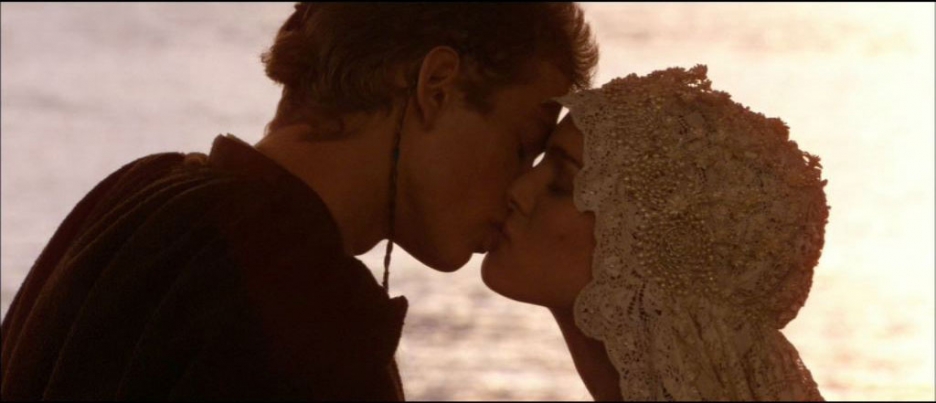
Star Wars: Episode II – Attack of the Clones (2002)

Basically I will here, as I have done with a few of these posts, synthesize not only my writings on the given film, but also discuss my personal history with the film. And understanding where I’m coming from with both Star Wars and the prequels is key to at least cutting me a stone if not understanding and agreeing with what I say here.

Here’s a brief intro to my history with Star Wars and why I didn’t even think I’d like this one that much in the first place:

I saw the Star Wars prequels first. Having never felt the urge to see the originals, and then hearing about the prequel concept which was popularized, if not invented by, Lucas – I wanted to watch the movies in the story’s chronological order. So I waited until 2005 to see the original trilogy. After having seen The Phantom Menace I just didn’t get the appeal, but I stuck it out and went to see Attack of the Clones and then I got it – Star Wars – Episode II: Attack of the Clones is awesome. The Phantom Menace was just not that good at all and it never will be no matter how many times I watch the film. Star Wars – Episode II: Attack of the Clones won the BAM for Best Picture in 2002 (BAMs are my personal movie awards – look out for those here next year).

So allow me to continue what I discussed with regards to Invalid complaining about the prequels in general:

Here’s where my watching the series knowingly in chronological, so far as the narrative goes, order starts to factor in. This is one of the most over-debated and over-analyzed aspects of the entire saga. You can like or dislike it as you please, but I really don’t see the point in getting all up in arms about this point, when you have so many you could possibly choose from. Granted you implement things in the prequel trilogy that don’t follow through to the original and it removes an element of mystery but how much does it really detract? Furthermore, to parlay the filmmaker point above, it was introduced when the prequels were very much Lucas’s design, as concessions may have been made later on, so clearly he had it in mind. So it may not fit your vision but it fit his. Essentially, if one if offended by the very notion of the prequels they ought not waste time on this factoid. Conversely, if this is your biggest issue with the series that’s not so bad or you’ve blown it way out of proportion.

I later realized I probably saw snippets of them growing up, but that’s not really seeing them. And having seen these first things like midi-chlorians which were later introduced are easier for me to stomach as a “late-series” change.

Now while I will always defend Jake Lloyd from the lynch mob, I agree The Phantom Menace is no great shakes. However, a few things bear considering: the first is that if you think there are problems with that film he’s one of the very small ones, there are others. Next, oddly enough, and my brother and others in his generation are a testament to this; Lucas really did make that one for kids. In essence, he always did, at least to the kids in adults. Over the years while no new follow-ups emerged the legend ballooned, the grandiosity, importance and gravitas foisted upon the series by fans sky-rocketed.

To such an extent that when I saw The Phantom Menace, with no prior frame of reference, I was like “That was OK, but I don’t see what the big deal is.” When Attack of the Clones came out – that’s when I started to see what the big deal was. The 2002 BAM Awards are a testament to that.

While you can sit there and write-off the awards as a newfound fanboy heaping love on his new pet if you want some things are separate from the film that were awarded merely on technical and artistic merits of the work done. Williams’ scoring in this film remains one of my favorites in his canon; arguing against ILM on a Lucasfilm project is folly; cinematography in CG-heavy films does matter (perhaps the Academy was a bit misguided in choosing Avatar to recognize that notion, but it does). And wooden dialogue or not this film does move wonderfully and has great situations and is a bifurcated tale of romance and political intrigue. It plays much closer to its serial film roots here.

It’s also a film I’ve revisited very often since I saw the original films and given the chance to do this year over again I doubt I’d change my mind.

BAM Best Picture Profile: Titus (2000)

Each year, I try and improve the site, and also try to find a new an hopefully creative and fun way to countdown to the unveiling of the year’s BAM Awards. Last year, I posted most of the BAM Nominee and winner lists (Any omissions will be fixed this year). However, when I picked Django Unchained as the Best Picture of 2012 I then realized I had recent winner with no write-ups. I soon corrected that by translating a post and writing a series of my own. The thought was all films honored as Best Picture should have at least one piece dedicated to them. So I will through the month of December be posting write-ups on past winners.

NOTE: I have skipped the 1999 Best Picture in this retrospective because I covered it earlier in this post.

In the history of the BAM Awards Titus has taken on a rather important place. Prior to the year 2000 I was even looser with release dates than I am now. With this film, my renting and viewing it after a very limited release in late-December 1999; I had to create some kind of eligibility rule, especially considering how much I liked it.

Here’s my post that explains the rule in detail:

Below you will find a paragraph which was prepared for the Best Films of the Decade list:

9. Titus
This is the over-looked film of Julie Taymor’s cinematic career thus far and it was here debut. It was an emphatic statement of style and vision but it also combined with substance to reinvent Shakespeare’s most violent tale with verve and surrealistic panache. The ensemble, headed by Anthony Hopkins and Jessica Lange, is brilliant and not overly-stagey even dealing with such cumbersome dialogue. The film is visually stunning and engulfing.

All this is true. What’s further true is that Taymor adds a bit of surrealism to the tale not only with the hallucinogenic interludes that appear on occasion, once to try and convince us Titus is mad but also through the opening of the film. An opening which introduces us not only to the character of Lucius, played very aptly by Osheen Jones, but also to the mix of modern technology, furniture and settings that will be mixed into this film. We see a child epitomizing with action figures and ketchup the kind of over-the-top violence that will be the reality of this tale, a reality he is put into. A reality he is a mute witness to for approximately an hour of the nearly three that the film runs.

All that is well and good but some of you may be asking why this film didn’t make the final cut. It was based on a technicality. The technicality is this. Titus was released by Fox in New York and Los Angeles on December 25th, 1999 in order to qualify for that year’s Academy Awards. It was resoundingly ignored. It’s wide release to general consumption and an equally absent public audience was in January of 2000. Upon double-checking the release date on the IMDb app on an iPhone I proceeded to re-screen the film to confirm inclusion on the best of the decade list. It fit. Then before publishing a trip to the IMDb proper showed all release dates.

Based on the wide release date it was the best of the year in 2000 but due to its actual release date not on the best of the decade list. Therein lies the problem. The good films get sat on until the end of the year and those not able to attend special advance screenings are left with many a film in a no man’s land.

Recently, there had been a reticence on my part to allow films from the prior year entry into award consideration, which punished The Reader. While it seems difficult to consider Titus a film of the aughts because that is a much bigger threshold to tread over I will no longer be disqualifying end of year releases from consideration in the next year. It’s only fair. While Titus can be denied a place in this decade passed it will always be a standout of year 2000 to me.

Going back to the film more than the business and politics of release dates, which I may come back to in a separate post at some point. Since I’ve completed my formal education I’ve not successfully picked up a Shakespeare text without first viewing an adaptation. While painstaking and pedantic, the formalized, syllabus-based approach slows it down and structures it such that I can better absorb the text off the page.

However, I’ve found that viewing a representation of it on film, no matter how modernized, breaks that barrier down. This film was the first that showed me that and it was while I was still in school. That fact has re-proven itself with Coriolanus and with yet another Romeo and Juliet adaptation recently. One task I may want to partake in next year is viewing more of these modernizations, including also reading A Winter’s Tale, which I’ve started many times.

If there’s a bit of youthfulness about this choice its my connecting to one of Shakespeare’s early works, as presented in this film. Titus, like my first Best Picture selection, influenced me, but for far longer than that title did.

Technicalities and rallying cries aside Titus remains a film I’m very fond of and a testament to the power of film to introduce the uninitiated to Shakespearean works.

BAM Best Picture Profile: Central Station (1998)

Each year, I try and improve the site, and also try to find a new an hopefully creative and fun way to countdown to the unveiling of the year’s BAM Awards. Last year, I posted most of the BAM Nominee and winner lists (Any omissions will be fixed this year). However, when I picked Django Unchained as the Best Picture of 2012 I then realized I had recent winner with no write-ups. I soon corrected that by translating a post and writing a series of my own. The thought was all films honored as Best Picture should have at least one piece dedicated to them. So I will through the month of December be posting write-ups on past winners.

Central Station (1997)

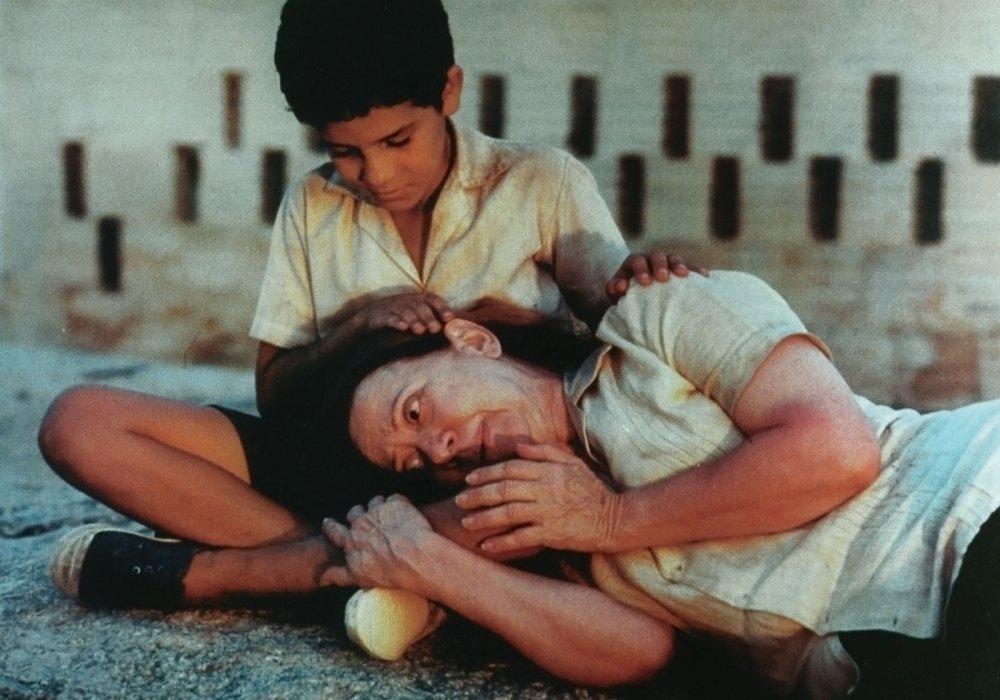
Central Station would be the first time the BAM Awards ventured to foreign soil to pick a Best Picture winner. However, maybe it’s more apropos to say that it ventured to soil foreign to the US. For I am a dual citizen of the US and Brazil. In fact, I first saw this film while visiting family in Brazil and I believe I later revisited it when I was back home.

It is so great, so big a hit and important enough that I did discuss whether or not it was the emblematic Brazilian film, first with regards to how the film was cast:

If you hire an amateur child from substandard living conditions you should, as Walter Salles did for Vinícius de Oliveira in Central Station, help improve their station in life. At that point you truly are picking a lottery winner rather than just casting a role.

Then about the film in general:

What of Central Station then? Central Station made quite a bit of money in the US. It was nominated for an Oscar for Best Foreign Language Film and Best Actress. Brazil has more a pedigree on the high-end of world cinema than most would expect. What separates Brazil from most is the consistency of product and, of course, due to the dictatorship there was censorship and artists had to fend for themselves. Now, the government is more active in promoting the arts, the major studios have a presence in the country and so forth. Yet, the fact that Brazil has been up for the Oscar, is the only Latin American nation to win the Palme d’Or (O Pagador de Promessas) and has also scored at Berlin (Elite Squad) is not what is going to dictate the most Brazilian film. Those are just indicators of quality.

Therefore, what’s the quality of Central Station? It has memorable source music, it’s a heart-wrenching drama, it tells a tale of a letter-writer and poor illiterate boy. It crosses that divide and it check off a lot of the qualities I’m looking for in a film representative of Brazil. Not to mention that it’s named after the largest train station in the country, therefore it’s a metaphor for the country and the letter-writer hears many stories from people of all walks of life that are indicative of the country and its people. The blend that exists.

Central Station is one of a long list of, I believe, far more enduring films that didn’t win Best Foreign Language Film. It didn’t win because America had a momentary brain fever and decided to ignore the issues of suspension of disbelief and taste that had Benigni’s film win everything. I can’t say I didn’t fall under it at the time to an extent, but not such that I thought it should win.

However, thanks to that foreign language film nomination it did allow one of Brazil’s great actresses to be nominated for an Oscar and be seen on the world stage. Sure, I’m as cynical about the Oscars as anyone. Had it not been for my own opinion splitting with theirs so violently I wouldn’t have created my own awards, however, I still recognize that it’s a great show and of great significance.

Central Station is a moving an enduring film that has been renowned the world over. Although it may not have won many of the prizes it was up for it surely wasn’t a case of me reaching very far afield for a winner.

BAM Best Picture Profile: Sling Blade (1997)

Each year, I try and improve the site, and also try to find a new an hopefully creative and fun way to countdown to the unveiling of the year’s BAM Awards. Last year, I posted most of the BAM nominee and winner lists. However, when I picked Django Unchained as the Best Picture of 2012 I then realized I had recent winner with no write-ups. I soon corrected that by translating a post and writing a series of my own. The thought was all films honored as Best Picture should have at least one piece dedicated to them. So I will through the month of December be posting write-ups on past winners.

Much like my first selection, this film was one I first viewed on video and a year later than its initial release. Although, Sling Blade being a highly acclaimed film unlike my first choice, was a later-in-the-year release poised for awards season.

I have revisited Sling Blade again recently enough such that I didn’t feel the need to see it again to be able to write about it comfortably. One thing that bears noting is that since a fair amount of time has passed, and considering the trajectory of Billy Bob Thornton’s career; this is a film that deserves to be talked about and remembered. Trajectory more in terms of the kinds of roles and films Thornton has made more often since then. Sure, Sling Blade has its comedic and heart-warming moments but at its core there’s a classical dramatic arc to the story. He’s played a lot more straight comedies since this film than dramas or even dramedies.

All of that is meant to underscore the fact that Sling Blade may be one of the greatest “showcase” type films ever created. Actors often will, and at times are encouraged, to develop their own idea to showcase a side of themselves they can’t seem to in other films, or simply to prove themselves in a meaty role. They do happen, but few are this complete a film and as accomplished works by said actor in all phases he/she participates. In this case Thornton wrote, directed and starred in the film.

However, a film that exists merely to highlight one actor has a hard road to getting to “Best Picture.” What is needed is not only a great supporting cast, but also a great narrative. In story terms it’s not only a tragedy at its heart, but also a story of redemption and looking beneath the surface, there’s a Southern Gothic element.

The cast features great actors, both character and not, like Robert Duvall, J.T. Walsh and John Ritter, but it also features revelations like Lucas Black, whom was a virtual unknown since American Gothic was a very low-rated show; and the film incredibly impressive film debut of country-music star Dwight Yoakam.

What is also worth noting is that while more features than you realize are first born as shorts there’s not many you get to see, and fewer than are just a prelude. Sling Blade is one of those. I was lucky enough to find a copy of Some Folks Call It A Sling Blade and watched it and I was amazed that’s its really just the interview scene, one that’s emulated in the feature, and a great set-up for who Karl is and who he is perceived to be. You can watch it below:

If you can watch that and not want to see the feature if you’ve not there’s nothing else I can say to sell you on its greatness. I’ll close with perhaps the best one-line encapsulation of the film offered by Roger Ebert:

If “Forrest Gump” had been written by William Faulkner, the result might have been something like “Sling Blade.”

It’s sheer brilliance. Enough said.

BAM Best Picture Profile: Mulholland Falls (1996)

Each year, I try and improve the site, and also try to find a new an hopefully creative and fun way to countdown to the unveiling of the year’s BAM Awards. Last year, I posted most of the BAM nominee and winner lists. However, when I picked Django Unchained as the Best Picture of 2012 I then realized I had recent winner with no write-ups. I soon corrected that by translating a post and writing a series of my own. The thought was all films honored as Best Picture should have at least one piece dedicated to them. So I will through the month of December be posting write-ups on past winners.

This may prove, by the end of this retrospective, to be the one and only film I had to go back and watch over again. As I dusted off my ancient VHS I first realized that I’ve never seen this film in its proper aspect ratio, but rather have only in pan & scan. It’s sort of a testament to how old this film is by now, relatively speaking, and how young I was when I saw it. Now, I’m not about double back on this film. Granted it may not retain the luster that some of the Best Pictures I’ve revisited. In fact, some of the “retroactive” BAM Winners that I created (and no longer acknowledge because they weren’t truly picked at year’s end) are much stronger films.

However, this was what started it all. In 1996, I sat there and perhaps for the first time I paid close attention to Awards Season as the nominations were coming out. I was quite young (15) and I was very unaware to the process, critical buzz and the like. Regardless, I needed an outlet to express my opinions. Therefore, with the aid of ticket stubs, and I would suppose the IMDB (as this film was a rental that I had viewed during the year), or maybe even just memory; I started assembling my first nominations. Even back then I refused to bow to release dates and did pick a 1995 title as my favorite film of the year because of my lack of a reasonable chance to see it.

I’ve since gotten a bit more strict about that rule, but the spirit of it remains the same. So being my first Best Picture, from my first award slate (one if I recall correctly had about 25% or less the total eligible titles this year will likely have), sure, there was reticence to revisit it. However, I long since stopped engaging in revisionist history. It’s a snapshot. I still like the film, moreover, I still know exactly what it was that had me respond in so enamored a way then even though the surprise, and to an extent, some of the thrill is gone.

Mulholland Falls (1996, MGM)

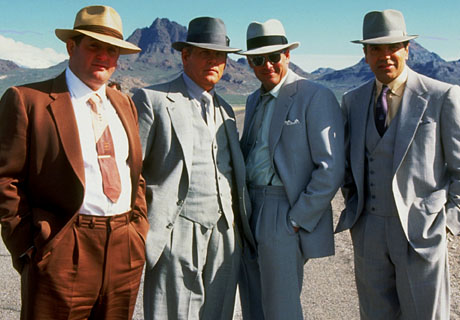
Back then I was far more actor-oriented and there are many in it I tracked closely at the time (Nick Nolte, Melanie Griffith, Chazz Palmentieri, John Malkovich) some I’ve since come to know better (Kyle Chandler, Jennifer Connolly, Treat Williams, Chris Penn, Stephen Baldwin, Ed Lauter). Perhaps more noticeably I realize now that many behind the scenes names are know more well known to me Sally Menke (Editor most known from Tarantino’s works; May she rest in peace), Haskell Wexler (Legendary DP perhaps best known for One Flew Over the Cuckoo’s Nest and Who’s Afraid of Virginia Woolf?) and Lee Tamahori (Director who broke out with Once Were Warriors)

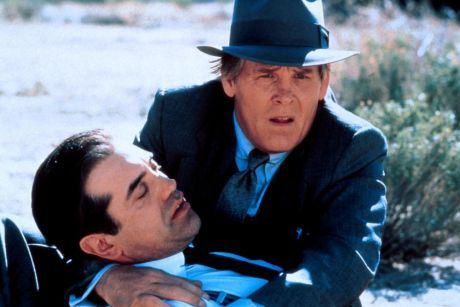
While the film may not be technically a noir tale, its got many of the elements that I was just recently introduced to and starting to become enraptured by so that most definitely captured my imagination. Aside from the titillating aspects, it’s also the multi-pronged plot wherein Hoover (Nolte) was squared off against the the military and FBI in the interests of solving a case that has personal significance for him. He goes rogue, for lack of a better word; and it’s not like he’s a by-the-book kind of guy as the film takes its name from how he and his team deal with the organized crime element in LA.

Mulholland Falls (1996, MGM)

I enjoyed, and still do, many of the performances. And upon revisiting it not only remembered many of the lines I connected with but the line readings (“They brought me a film” as Malkovich says as he’s sick and “You broke my heart” as Melanie Griffith says to close it out; to name a few).

Aside from using film itself as a storytelling element, the narrative also starts with a simple case and opens up into a more complicated, entangled mystery much bigger than the players involved. The professional and personal co-mingle and the characters take justice into their own hands. All these things and more are what I connected to.

In conclusion, it’s not that I regret this choice, as I’ve stated it was most definitely true and correct at the time (and that’s the least you can ask) but it’s one, perhaps the only one, that I feel really dates me. It is still a solid, entertaining mystery that I believe can pack a punch on first-viewing.

Year-End Dash: The Book Thief

In the interest of full disclosure, I’ve not read The Book Thief. Now usually the read/unread status of book only bears mentioning when I have read it and am insulating myself from either some comments on fanboy-dom or adding a grain of salt. Here I mention it because this seems as if it was a tricky adaptation to pull of. I say that because there are some rather literary traits to the story that are far easier to execute in prose than onscreen. However, the film while not avoiding missteps in the adaptation of said traits does put it forth immediately. While that same approach is part of what gets in the way of the final impact of the film there is much felt throughout that is worth noting, and, ultimately recommending.

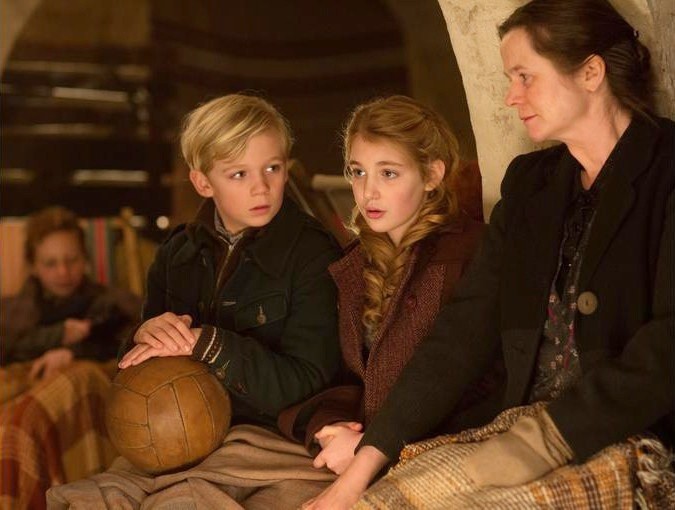
First and most noteworthy in the story are the five principal figures. I used that diction specifically to discuss both character and performance. For the engaging part of The Book Thief is the humanity it finds and expresses in its characters. Its signature piece of dialogue alludes to to that underlying truth. The zeitgeist in World War II films is to explore the gray area. Not that this film is specifically gray, but it does go somewhere many films don’t which is to deal with Germans who didn’t quite follow the party line in a number of small and significant ways.

To bring those thoughts and emotions to life, and to show them truly (even to show them in a conflicted manner and still engender empathy) is the grand task of this fine cast. Perhaps it’s symbolically apropos that they each call a different nation home and portray German characters (US, Canada, Australia, England and Germany respectively). Taking that fact into consideration they also blend seamlessly well with one another and handle the anglicized German dialect they’re given superbly. Sophie Nélisse in my estimation had her breakout role with Monsieur Lazhar; here however her role is larger still, more dialogue-driven and in accented English such that her feat is perhaps even more impressive and she’s well on her way to becoming a household name. Geoffrey Rush and Emily Watson play two diametrically opposed types and parents, but the end result and the emotions the engender and exude in the end must be the same making their characters fairly ideal dramatic foils if those inhabiting the roles deliver, which they do. Ben Schnetzer as Max has the task of being sickly much of the time, believably and naturally poetic and philosophical in the face of, and in tandem with his emotions. His performance is such that his presence lingers even when his image does not grace the screen. Last but not least there’s Nico Liersch who stands out as the revelation of this film for his well-rounded and sensitive portrayal of Rudy a character who pines for Liesel from the moment he is introduced but never comes across as a doormat in that or any other situation, as characters with that affectation can at times.

The Book Thief does eventually come through with very moving moments, and while doing so in a very populist manner does cause people to think and reflect on the varied reactions and actions of people during that era in history.

7/10