Contenders for Favorite Older Films First Viewed in 2013

Here is where I will assemble the titles that will have an opportunity to make a list wherein I chronicle my favorite vintage titles that I first saw during the last calendar year. It is a concept introduced to me by Brian Saur that I have done two times prior. Here is the 2011 version. The 2012 version was published in five parts: you can get to them here, here, here, here and here.

I have debated renaming this list Favorite Film Discoveries and being rather semantical about it, meaning if and when I correct gross sins of omission in my cinematic repertoire, it will not exclude lesser known titles from getting their due on this list. In other words, if you note the first two titles below, I expected them to be great and everyone knows they are. My adding them to the 2013 list is a formality and not news to anyone. If the list is inundated with previously unseen, but fairly obviously great films, I may siphon them off into a separate post.

I have not finalized that decision, but I reserve that right. Unlike my BAM considerations where I will now post a new entry monthly, I will have this list run through the entire year, but will denote when titles were added.

Without much further ado the contenders.

January (9)

The Godfather
The Godfather Part II
The Divorcée
Maya
Tarzan of the Apes
The Marriage of Maria Braun
Rio Das Mortes
The Great Ghost Rescue

February (8)

Tarzan the Ape Man
Who’s Afraid of Virginia Woolf?
The Narrow Margin
Imitation of Life
A Dog of Flanders
The Life of Emile Zola
Bad Day at Black Rock
Blossoms in the Dust

March (8)

Muppet Treasure Island
Zokkomon
Babes in Toyland
Death Valley
Bolt
The One and Only, Genuine, Original Family Band
A Wicked Woman
Atta Girl, Kelly!

April (11)

Veronika Voss
Time of My Life
The Ghost Walks
Rabid
Tangled Destinies
Hearts of Humanity
The Phantom Express
In Love with Life
Dick Tracy
(1945)
Peter and the Wolf (1995)
Scanners

May (10)

A Lizard in a Woman’s Skin
Tarzan and His Mate
Stroszek
Mirage
(2004)
In a Year with 13 Moons
Duma
Celia
Blood Car
Life Boat
Little Tough Guy

June (6)

Mon Oncle Antoine
The Merchant of Four Seasons
Rainbow on the River
Tarzan’s Desert Mystery
The Smart Set
Ariel

July (2)

Wake In Fright
Blondie (1938)

August (3)

Stolen Kisses
The Little Prince (Great Performances)
Love on the Run

September (9)

Miss Annie Rooney
To The Left of the Father
Asylum (1972)
Orphans of the Storm
The Return of Dr. X
Dead of Night
The Case of the Bloody Iris
Trilogy of Terror
Sisters

October (12)

Demonic Toys 2
Gorgo
Dracula (1931 -Philip Glass Score)
Dracula (1931 – Spanish Version)
R.L. Stine’s The Haunting Hour – Don’t Think About It
Dracula’s Daughter
Dead Souls
Hell Night
The Ghosts of Buxley Hall
Dead Ringer
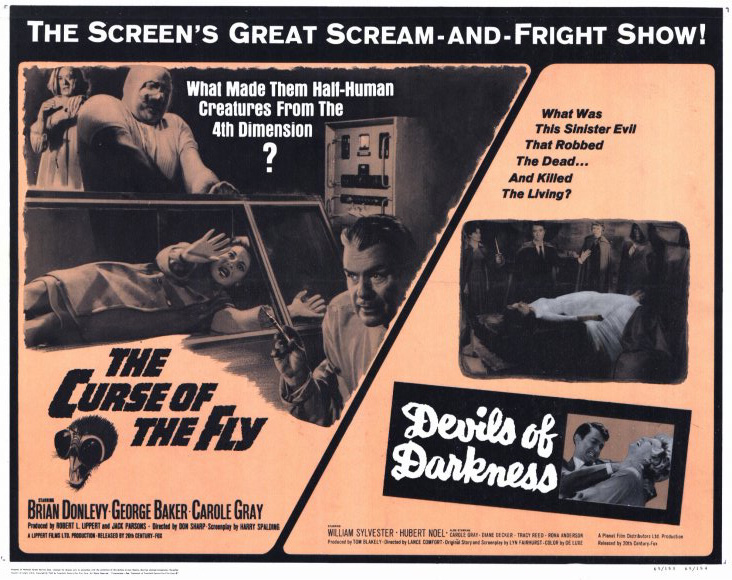
Return of the Fly
The Fly
(1958)

November (1)

The Neverending Story (German Cut)

Short film candidates: Selections by Georges Méliès, Little Rascals, The Show (1922), The New York Hat, Captain Eo and Alice Guy, Louis Feuillade.

60 total features so far and the aforementioned shorts.

61 Days of Halloween: The Blair Witch Project (1999)

Introduction

An introduction to the concept of 61 Days of Halloween as well as past films discussed can be found here.

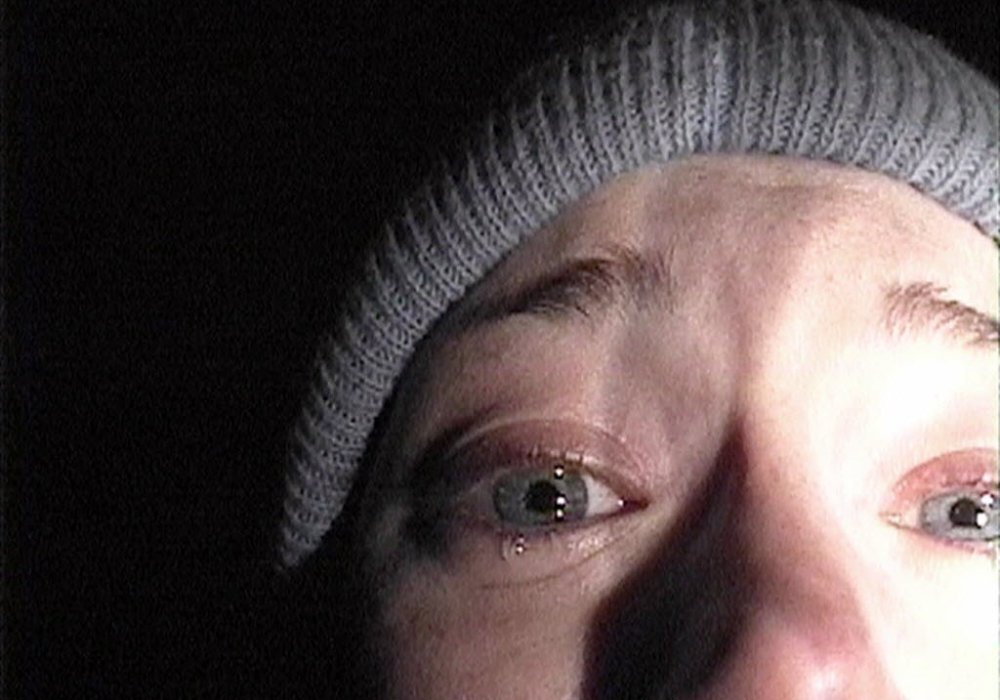
The Blair Witch Project (1999)

To kick off this year I figure I’d go with a film I know and like, one I would gladly revisit anew for the purposes of this piece. The first thing that should be mentioned with regards to this film and myself is that I was fairly young when it first came out, and I first viewed it. Therefore, I fell for the marketing ploy hook, line and sinker; meaning, I fell into the trap that this was real footage. That made my first viewing of the film particularly intense, and perhaps the most affecting fright I ever felt.

Between that time and when I revisited it anew, I learned the truth. I came full circle with my reaction. At first, of course, I was quite angry. However, when it came time for me to see it again I took it as it really was- as fiction. I would’ve likely seen through the ruse the first time had I looked into the film more, but I hadn’t. This was one of the few real instances one can have of “seeing it again for the first time.” I knew a lot of the beats and took it all in, and it’s impressive how well it works, especially the performances. Due to the fact that there’s a brief period of expository information, and much walking and arguing, it can be easy to miss the set-ups and escalation.

I won’t spend too much time discussing it as the progenitor of many found footage films since, save to say that a lot of the shots are clear (barring the running sequences of course) and there’s escalation, pay-off, focus on character/performance, and, perhaps most importantly, it cares about explaining where the footage came from and why it was shot.

It’s a film that mixes sources of footage and has a respect for the process of filmmaking. It’s intelligent enough to be clearly edited, but it doesn’t go too far. Far too often in new-age found footage there’s too much “Hey, look this is real raw footage!” scenes clogging up the first act. By switching cameras and stocks the film spices up the beginning without wasting too much time. Having come full circle with it, it’s a film I’ve really come to admire a whole lot. It’s films like this one that make me come back to the found footage approach as tired and low-percentage as it’s been. The Blair Witch Project is a truly great film, that I just had to add to my collection. Being lost can be truly terrifying whether something is after you or not, few films exploit it as acutely as this one.

61 Days of Halloween 2013: Introduction

Prologue

I figured this year I’d change things up, oh-so-slightly. Rather than have the following intro bulk up the beginning of each post I’d have it in its own post. Not only that I figured I’d also have a huge list of the films included in the past for two reasons: one, so you all can have easy access to the titles featured previously and, two, so I don’t accidentally repeat one. Enjoy and look for 2013’s first title later today. I also hope to have much more than last year’s offerings, and ideally a post a day. Subscribers be prepared to occasionally get a few notices a day as some regular site features will continue as per usual.

Introduction

Most holidays worth their while encompass entire seasons, such as Christmas, for example. However, as you may have noticed there is a corporate push every year for us to think about the next holiday even sooner. While this has many negative side effects I figure I may as well embrace it.

Since Labor Day is really only good for college football and movie marathons cinematically it is as significant as Arbor Day, which means the next big day on the calendar is Halloween and we can start looking toward it starting now.

Daily I will be viewing films in the horror genre between now and then and sharing the wealth. Many, as is usually the case, will not be worth it so for every disappointment so I will try and suggest something worth while as well.

2012 (31 Movies, 1 Retrospective)

Call of the Cthulhu
The Crazies
(2010)
The Children (1980)
The Children (2008)
The Other
The Mist
A Nightmare on Elm Street
(2010)
Case 39
Devil
Zombieland
A Haunting in Connecticut
Survival of the Dead
The Last Exorcism
Paranormal Activity
Frozen
Daybreakers
House
(1977)
Cat in the Brain
Vinyan
The Sinful Dwarf
The Final Destination
Village of the Damned
(1960)
Children of the Damned
The Final
Girl vs. Monster
Trick ‘r Treat
Texas Chainsaw Massacre
(1974)
House of Long Shadows
Friday the 13th Part 2
Friday the 13th Part 3
Friday the 13th Part IV: The Final Chapter
Friday the 13th Part 6
A Nightmare on Elm Street
, the Series Revisited

2011 (47 films, 1 list)

Children of the Corn III: Urban Harvest
Mother’s Day
Genesis
Aftermath
Crawlspace
Hatchet for the Honeymoon
It! The Terror from Beyond Space
The Beast from 20,000 Fathoms

Children of the Corn
Children of the Corn II: The Final Sacrifice
The Video Dead
The Prowler
Children of the Corn IV: The Gathering
Masters of Horror: Family
The Evil Dead
It’s the Great Pumpkin, Charlie Brown
Children of the Corn V: Fields of Terror
Satan’s Little Helper

Masters of Horror: Pick Me Up
Garfield’s Halloween Adventure
Teeth
Masters of Horror: The V Word
Halloween (1978)
Halloween II (1981)
Child’s Play
Halloween III: Season of the Witch
Halloween 4: The Return of Michael Myers
Halloween 5: The Revenge of Michael Myers
Child’s Play 2
Halloween: The Curse of Michael Myers
Halloween H20: 20 Years Later
Halloween Resurrection

The Amityville Horror (1979)
Tremors
Friday the 13th: A New Beginning
Amityville II: The Possession
Halloween (2007)

Top Evil Kids in the Children of the Corn Series
Amityville 3D
The Curse
Homicidal
The Stuff
Santa’s Slay
Die, Monster, Die!
Freaks
Vampire Circus
All the Colors of the Dark
A Blade in the Dark

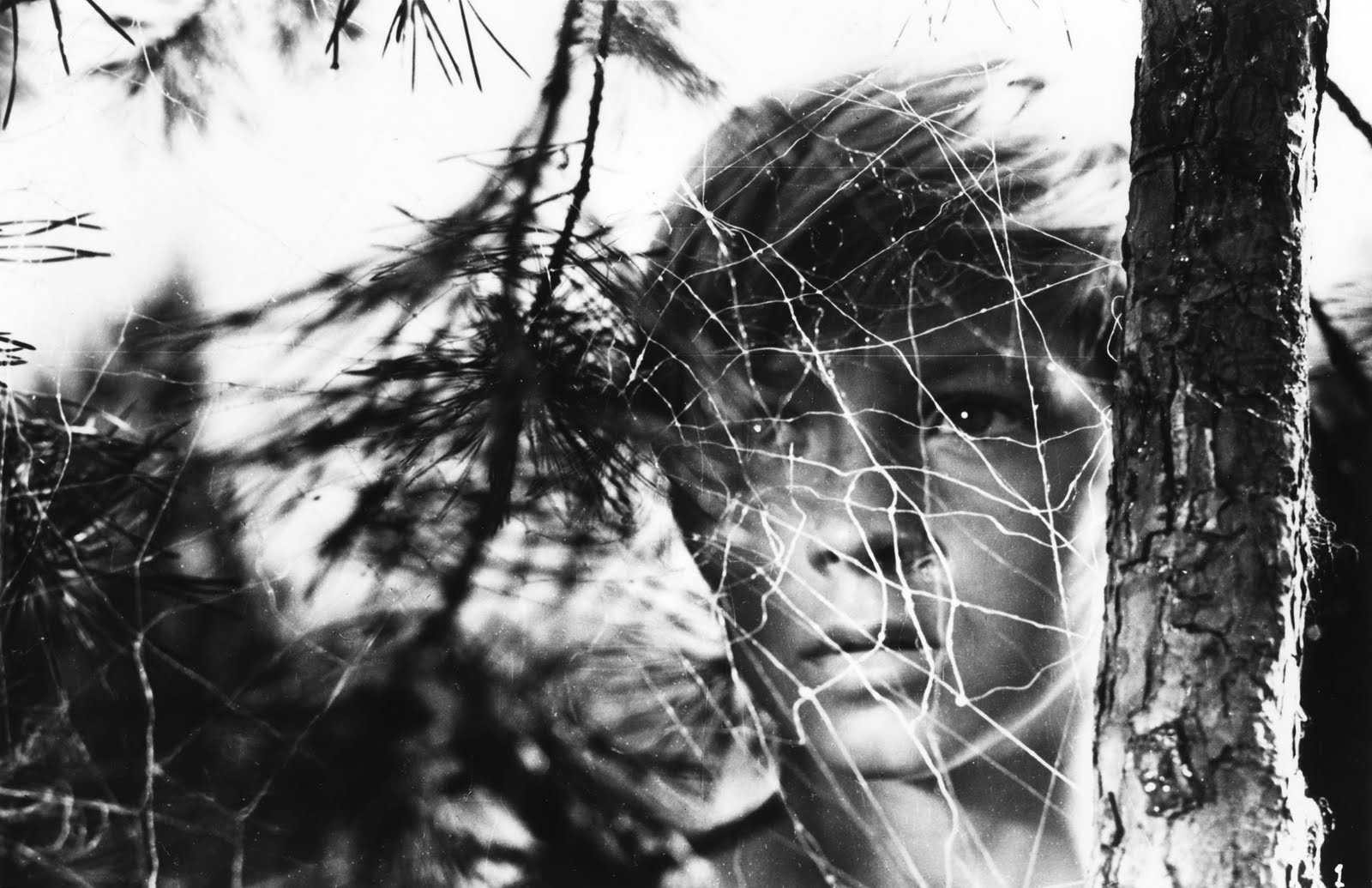
The Arts on Film: Ivan’s Childhood (1962)

Introduction

Enumerating how many artistic disciplines exist is not the purview of this series. Rather the idea of this series is to briefly explore an iteration, an instance, of another artform in the world of cinema.

In an upcoming series of posts I will state that I believe that cinema is the ultimate artform because of its ability to encompass or represent all the forms that came before it. Its elasticity is such that I believe it will be able to dialogue with whatever comes next.

However, this film seeks to satisfy a simple aim by illuminating a work cited by a film. To learn more of it and the artist in question. In short, just a bit more than information the film deems suitable.

Ivan’s Childhood (1962)

Ivan's Childhood (1962, Janus Films)

This series does not occur without Edmond Davis-Quinn‘s poetry. I was reading it and got to thinking about what the last time I read a poem was. I knew it was likely an allusion to one in a film and so this series was born (and it won’t always be poetry but democratically traverse the arts).

When thinking of the idea of references to other artforms in films one of the first ideas of poetry in Ivan’s Childhood, Andrey Tarkovsky’s first feature film. There isn’t a direct quotation here but when I revisited this film (I viewing many of his works in hopes of having a better frame of reference for his book Sculpting in Time, which I still need to finish) I read the Criterion booklet and they translated one of Arseny Tarkovsky’s poems for the booklet.

In such films as Mirror (1975) and Stalker (1979), Andrei Tarkovsky explicitly references the poetry of his father, Arseny. Although no such direct quotation exists in Ivan’s Childhood, there are striking connections between the imagery in the film and his father’s 1958 poem “Ivan’s Willow,” thus distinguishing it as a possible source of influence. It was translated for this release by Robert Bird.

Ivan’s Willow
by Arseny Tarkovsky

Before the war Ivan would walk down the stream
Where they grew a willow, no one knew whose.

No one knew why it loomed over the stream;
No one knew this was Ivan’s willow tree.

In his canopied raincoat, killed in combat,
Ivan came back to his willow’s shade.

Ivan’s willow,
Ivan’s willow,
Like a white boat, it floats downstream.

Not only the images strike one as being similar, but also in referencing his father’s work, at least by inference, Tarkovsky may have by that means made the film more personal. For as cerebral as he was, he was still working from a very personal place and working from a short story, it was key to bring it closer to home.

While I came to greatly appreciate the works of Andrei, the works of Arseny were elusive. Now I search and see they are available. Perhaps, I anglicized his name wrong prior. Alas, in this booklet and in Tarkovsky’s films I caught glimpses of another artist, another work of art that intrigued me.

Ultimately, that’s the idea of this series: a quick underscore of another work highlighted in a film that’s worth noting. This was the first that came to mind and hopefully more will follow.

Contemporary Trailers That Work

A while back I posted a long, but not ill-conceived, rant about why I hate spoiler-ridden trailers and how terrible they are. I did have a counterbalance of some “newer” trailers that I think evoke mood, create intrigue, and give me that I-wanna-see-that sensation. However, two things have occurred: I’ve wondered to myself “Was that too ‘Get off my lawn!’?” and I’ve seen some really great trailers as of late that are far more current examples that deserve kudos.

This is a great trailer. Owing to the fact that I know the film and can see what’s being withheld:

In The Family

But that’s an indie, you say. So here are some bigger films in terms of budget and marketing push. All of these are upcoming or have not yet been seen by me:

The Secret Life of Walter Mitty

The Wolf of Wall Street

Fruitvale Station

Now with those three the common thread is that at most you have a sense of what the movies about, as opposed to those I complained about that have you feeling like you just sat through that whole film unwittingly and unwillingly. A trailer is small fraction of the content of an actual film but some do make it feel like the film itself, only longer.

Now I realize I may be a bit of a throwback wanting to be surprised as much as I can and not always know what’s coming around, which is why I usually wait to see trailers at a multiplex rather than the day they drop. So here’s what I think is a great trailer but plays closer to convention in form, inasmuch as you see many plot points. What’s great is that it being a suspense film that likely has more twists and turns than indicated, and it jumbles up the pieces somewhat so you don’t feel like you know all that’s a head of you.

Prisoners

So those are some of the trailers that have gotten my attention, and while there will be many more that stink and tell too much I’m always willing to acknowledge those that seem to get it.

Film Thought: Walking Out of a Movie

Previously I had written about the conundrum of when to turn off a film. However, if there is one mark of delineation I drew there it’s that Netflix has somewhat changed my approach to that whole question. With Netflix, or any other service that gives you movies at the touch of a button, the tendency is to just push play with less consideration than in the past, unless you’re paying just for that film. With films that are included with a subscription we tend to treat them like they’re free, or at the very least we’re more inclined to click just to try and get the most out of our subscription.

However, the way I approach movies at the auditorium is a bit different. Whereas home viewing can be far more impulsive there is still a shrine-like, quasi-religious reverence granted to a movie being screened as it was intended. This is why I have no tolerance for disruptive, completely unnecessary, loud talking; cell phone use and other breaches of etiquette. While I’m at it it’d also be great if the glow stick brigade at my local theater, which is part of a large chain of multiplexes, would stop traipsing through the theater at the beginning and end of a film, when focus is more critical.

Due to the elevated status that I give seeing a movie in an auditorium (Though I see a much larger number at home than ever before), I am far more hesitant to abandon a screening that I’ve gone to see in person. There are a few reasons this is so: firstly, there is the time invested. Whether or not I’m close to the theater I still like to show up early, there are a significant number of trailers playing before the film so the time invested is more than the running time. Secondly, the financial investment is invariably greater. I’ve mentioned it on a few occasions, and the numbers are easy to figure out, if you’re viewing a film on demand you are renting it so it’ll play on your TV. They don’t verify how many people you have sitting in front of that TV so the savings are obvious especially if you snack at your home theater and at the multiplex. Lastly, it just seems like a much bigger move to get up and walk out. Yes, there is the complication of if you’re with a group of people, but hitting a stop button and walking out of an auditorium are two massively different things.

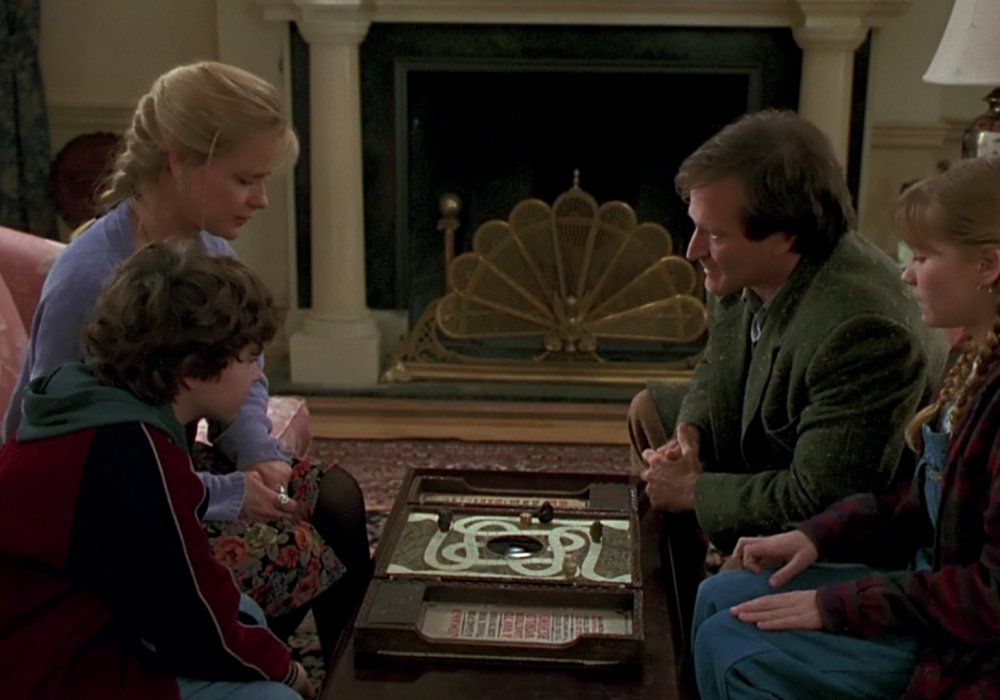
The last time I felt the twinge to want to leave a film was when I saw Creature. However, it was ultimately too much train wreck to ignore so that leaves Jumanji as the only film I voluntarily walked out of because I just couldn’t take it anymore. I could count Big Fish also, but the decision was aided by a fire alarm that allowed me to realize “Hey, I don’t care if I finish watching this movie now. Thanks!”

So there’s my take. How about you? What have you walked out on and do you find it’s easier to shut off a film at home than to walk out?

Short Film Saturday: Yuck

I believe the last time I posted a trailer it was in conjunction with another short just so it wouldn’t feel like such a cheat. Here, however, the trailer is for a short, and since the story is cool and the film looks to be of significance; I will make another exception.

This hit a number of websites the other day as it appears to be making a splash at the NYC Independent Film Festival. Quite simply, Yuck is a short documentary created by a 4th Grade student at P.S. 130 in New York about the poor state of public school lunches. Aside from the cleverness, courage and talent of this burgeoning filmmaker, the thing that is as impressive as it is scary about the film is the topic. I myself went through the New York City Public School system from grades 5 thru 12 and the most frightening thing is a lot of this food looks exactly the same, which is why I’m glad I brown-bagged it most of the time. It also makes forcing me and my classmates to sing “Food, Glorious, Food” at fifth grade graduation all the more hypocritical.

As for Yuck, you can learn more about the film on its official site.

UPDATE: The film has since hit Vimeo and been linked to me. The timing is coincidental due to the fact that I just recently saw A Place at the Table , which looks at hunger in America and discusses the budgetary constraints around school lunches.Yuck is very well done, funny and finds what I may have expected: false advertising, smoke and mirrors PR and redundant food stuffs all too often. It’s definitely worth a watch. Enjoy!

Once Upon a Time in the 80s- Introduction (Part 1 of 17)

In his Biographia Literaria Samuel Taylor Coleridge* postulates how a critic’s faculties and tastes are influenced by his life experiences and exposure to art. I open with this statement because in writing about the 1980s a decade in which I was a child, I realize there can be a certain amount of filtering due to nostalgia or longing for ‘the good old days,’ thus, with each film I discuss in the 1980s I think it important to note when I first saw the film. Some have stood the test of time. Others are recent discoveries. I’m also trying to examine all of these films in a new light to ensure subjectivity.

I also think it’s important to note the genesis of this concept in my own reasoning as it has most definitely shifted. A little more than a year ago [as of this writing] I saw a film called Amazing Grace and Chuck for the first time and I thought to myself “This film could’ve only been made in the 80s.” I thought this both because of its aesthetics, the grain and milieu common to the 1980s. I started postulating upon that on my cornerstone on defining the 1980s noting that the 50s, 60s, and 70s had each had their own unique looks. I noted there was overlap such that early 80s films still looked like they were shot in the 70s. Yet this would be too technical and pedantic an approach. What really struck me about Amazing Grace and Chuck was the subject matter. And while you can’t pin down a decade as sporadic and variegated as the 80s (As opposed to the heavy focus on Sci-Fi in the 50s) you can see there were ideas buried even in these heavily Hollywoodized films. Yet I come to realize as I’ve viewed nearly 30 films for analysis that saying this is what the 80s were all about is folly. However, within the context of each individual film I can display a reflection of cinematic or social thinking at the time.

This is an overview of a decade of innovation. A decade where the blockbuster was ever more predominant than in the 1970s yet there seemed to be a last gasp of artistry. There were great films released amongst the garbage. Also, we would see the trends that would lead to the decline in quality in the 1990s. It was a decade with artists who still had a spark of idealism and still had something to say albeit through indirect channels.

While many of the films make connections to my youthful sensitivities, it is important to note that these films for the most part do not condescend or talk down to its intended audience which is a problem that has become more and more apparent as time has moved on. These are also films that for me have stood the test of time. Some of what was good in the eighties was adopted in the 90s and turned sour and what’s worse some of what was terrible also stayed and became worse. In this paper I will look at the motion picture in all its forms film, television, animation and the newly-invented, at the time, music video. No matter how you look at it the 80s did matter and I want to examine the decade here. It was a decade I grew up in it is true but now I can look back subjectively and examine a decade I’ve come to love.

* While primarily a poet and philosopher Coleridge wrote an abundance of dramatic criticism, introduced the term ‘suspension of disbelief’ to the artistic world, and is one of the most important concepts in cinema.

 Note: This is a recapitulation of a paper I wrote in film school. It will be published here in installments.

My Rating Scale

Since my post on lists not being complete, which is an essence an amendment to my initial manifesto, I have not written many reviews, but I will have cause to with 61 Days of Halloween coming up. Keeping that in mind, it has come to my attention, both through my own ruminating and from some comments, that there is a slight incongruity to my rating scale. I have changed it very slightly at the bottom end.

I have not yet, but may still, sample my scores and average them. I know I tend to grade generously and don’t really make apologies for that. However, I’ve realized that the top end definition doesn’t mesh with the bottom end. In short, it’s easier, by definition for a 10 to be assigned than a 1. More to the point, it’s been easier to assign a 2 than a 1. Therefore, both the definition for a 10 and a 1 now include references to best in the year and downplays all-time, since that’s hard to gauge instantaneously.

Here is the altered rating scale:

Below is my rating scale. I try to be as precise as possible in describing what each number signifies. If you need further clarification please feel free to leave a comment.

1. = Terrible, no redeeming qualities, one of the worst films of the year, occasionally ever.
2. =Awful but of some minute value- among the worst of the year.
3. =A film with one maybe two strong elements but overall unforgivably poor.
4. =A film with a few mistakes too big to overlook.
5. =Marginally bad, a film with it’s good points but ultimately suffering from a fatal flaw that prevents it from achieving decency.
6. =A mediocre film; not bad but nothing special.
7. =Better than average, definitely worth viewing.
8. =A standout film with promise that is not quite fulfilled.
9. =A film which is just an iota, a minor fix or two short of greatness.
10. =A great film. Best genre can achieve, contender for best of year & rarely all-time. There are gradations in all ratings.

Adding To Your Classics Library

A while back on Twitter, Bill Milner a great young actor, as well as past nominee and honoree, asked a simple yet important question: it was about bolstering his library of classics.

This is a fascinating question for me, and for any cinephile I feel, because it brings up the elusive question of “What are the essentials?”

My response was, and is, one that I think is not only apropos, but one I think a lot of people can use. Now, a reminder this is not a piece that aims to be a starter kit by cherry-picking milestones in film history, but rather one that will augment your collection when you think to yourself: “Well, what should I be getting now?”

My proposition is simple and personal, we all have our favorite directors throughout the various eras of cinema. I suggest getting the oft-overlooked works of these greats. More often than not these are the films I’ll point out as being a personal favorite.

Anyone, and everyone, can, and has, write, speak or opine on the greatness of Jules and Jim or The 400 Blows, but the film of Truffaut’s that affected me most was The Green Room (aka The Vanishing Fiancee), and its absence from DVD for so long bothered me. Hitchcock would be another good example. Everyone knows the widely recognized masterpieces he made. However, few of his films ever engaged me on first viewing like Rope did, even though he wasn’t too fond of his no-cut experiment, or for that matter Dial M for Murder, though I’ve never seen it in 3D.

Those are just two quick examples with a few films to illustrate my point. Who the directors are that you seek out the oft overlooked works in their ouevre is your choice entirely, but when one has the staples you’re filling in the pages, and, I for one have always been one to seek things out that are a little off the beaten path even amongst the most highly regarded cineastes.