Foreign Language Film Issues 2013: Multiculturalism (Part 2 of 5)

As has been the case in years past I will here look at some of the issues plaguing the Best Foreign Language Film nomination process at the Oscars. Since this year I am touching on a large array of interrelated topics I thought it best to post my thoughts in a series. To read the introductory post of the series go here.

Multiculturalism

This is the driving force behind my writing this year. When you look at many of the top film producing countries in the world quite a few of them are multilingual/multicultural. Even countries of smaller population and film production have to balance choices of films in different languages, from different regions.

Some examples:

Belgium

belgium-flag

With a Belgian film ranking high on my year-end list last year, along with my having seen many eligible for this year be they bi-lingual, in Flemish, French or a co-production; Belgium was clearly one of the motivating factors for me to even think of this oversight. Belgium is a small country but not one without cinematic pedigree. Therefore, when you factor in the nation’s bilingual status selecting one representative film can prove tricky.

I asked Yves Verbraeken, producer of North Sea Texas, for his insights on the process of selecting the Belgian representative. The process is as follows:

“A jury of six film industry professionals chooses the submission from a shortlist of four preselected features. The four get to defend their case and one is then selected. Always keeping in mind if the film will stand a chance with the voters.

How that shortlist is determined was not know but “all distributed films in theory are examined.”

In its history Belgium has had a fairly balanced slate of nominees in terms of language of the official submission (19 in Flemish or Dutch, 19 in French, 2 Bilingual) I agree that usually the better of the finalists is likely to have been opted for, but I think it’d be ideal (in a nation fairly equally divided linguistically) if there was a chance at an additional submission.

There is a general acknowledgment the more I discuss the process with people that strategy, with regards to Oscar chances, does factor in. However, removal of national film bodies from the process does not seem to be the answer.

“I think the system works. I didn’t like it either that ‘North Sea Texas’ was not the Oscar entry but on the other hand what would have been its chances considering the profile of the voters in that category.”

I kind of have the same thoughts with regards to a votership with some members that would fill out a ballot like this or give rationale such as this when interviewed even anonymously. So no it won’t be perfect, but it can get a little better, and the committees internationally have their place but they can get help.

Canada

800px-Flag_of_Canada.svg

The interesting thing with regards to Canada is that Fast Runner, a tale about the Inuit people in their native language, not only created a new spin on neorealism at the very tail end of the 20th century, but though it was that it was 1999 release, and an Academy Award nominee six years before the Academy waived its “Official Language” rule.

Now when I hear the term ‘Official Language’ I get extraordinarily literal. The official languages of Canada are English and French. After all being an Official Language, especially in a nation that’s officially bilingual, usually carries with it quite a few stipulations. However, how can one claim that a language spoken by a First Nation doesn’t qualify as an “Official Language”? I know I wouldn’t try.

Presumably the potential for disqualification was discussed and seen internally as a non-issue, I would’ve been inclined to try to talk to the Academy about it (if they’d answer the question). Though not a language concern, I kind of saw the Czech Republic’s disqualification coming and am not sure why that film was submitted in the first place. Therefore in 1999-2000 I would’ve been paranoid about submitting such a film and done all I could to make sure it’d count.

I made contact with a press agent for the production company that made the film but they had no substantive comment on the matter save for the fact that they did communicate with committee members in Canada leading up to the selection.

Regardless, Canada, as well as any other nation with an indigenous population, is a country that one may not often think of when the prospect of strong candidates in different languages emerging from the same nation. The third film in the series, Before Tomorrow, was not an Academy Award nominee but one of my top 10 films of 2009.

India

1000px-Flag_of_India

When it struck me that language was another potential barrier in the one film/country rule that the Oscars are holding steadfastly to, India was clearly one place I thought of that may be hampered by such a stipulation. Bollywood is the world’s biggest film industry, but not unlike the US and other nations there is an indie and regional scenes. Combine that with the fact that there are myriad cultures and dialects and you have a maelstrom of possibilities and potential pitfalls in the selection process.

Sure enough this year there was a big kerfuffle when India announced it’s choice. However, when I asked Twitter friend, Abhirup Maitra, about that incident specifically here was his rendition of it:

What essentially happened was a massive ego clash.The Lunchbox was a well made film but so was The Good Road, India’s entry into the Oscars. When the latter was chosen to be the official entry into the Oscars, chaos ensued from the opposite camp.It was produced mainly by Anurag Kashyap’s AKFPL which is a big enough production banner in India. What I couldn’t comprehend was, even though your film wasn’t chosen, you should be humble enough to respect the one which was selected. Instead, they took to Twitter saying how utterly “flabbergasted” they were when the news of the selection came out. That is reprehensible behavior in my books. Respect the other and move on! Try to rectify your errors and eradicate them in the future. Instead they chose to attack the jury et al. Some people never learn.

So it appears that while one film was a Mumbai-set Hindi film and another a Gujarat narrative this “controversy” was inflamed more by professional discourtesy than by any perceived regionalism.

As Abhirup put it culture clashes are “…a factor but not a big reason. India is so diverse, everyone actually welcomes perspectives…people (cinephiles!) are interested to know about the daily life of a labourer from Himachal Pradesh or someone from Gujarat.”

Yet Abhirup echoes sentiments I have about “accommodating more multi-cultural nations” and also that “international co-production should be encouraged.” Which all points both toward how films are moving and to how the Academy is out of step in this regard. I feel that with the simple changes I will propose that perhaps even this clash could have been avoided.

Part 3 will go live tomorrow!

Foreign Language Film Issues 2013: Introduction (Part 1 of 5)

As has been the case in years past I will here look at some of the issues plaguing the Best Foreign Language Film nomination process at the Oscars. Since this year I am touching on a large array of interrelated topics I thought it best to post my thoughts in a weekly series.

Introduction

The time has come again in the year when I look at the the Best Foreign Language submission process. As opposed to years past when I looked at the overall process and discussed pie-in-the-sky solutions here I’ll look at some more microcosmic issues that will illuminate some other issues with the process that need to be looked at; some of these issues will have been discussed prior but here are looked at under a different guise and others have not been discussed. This time I’ve not contacted as many people as I did in previous years but I did glean some insight and just want to get some issues mentioned. Every year, at least in the trades, this process is brought up so it’s one that even the Academy will admit is imperfect and constantly tweaked. A majority of the discussion highlighting what is not taken into consideration under current rules.

One Film Per Country

One of the key Oscar rules that, I have frequently hearkened back to, is one film per country submission policy. In the past I discussed the possibility of adding more viewers and a “merit-based” quota. This year aside from tossing out potential alternate systems I did want to discuss some of the things that create issues in the current system. This is one of the first and foremost offenders. And, yet again, I found new ways in which this can be limiting.

    To be continued

No Worst or Most Overrated Picture Ever Again

Recently the BAM Awards had a change in which two categories were contracted. I never really elaborated as to why. No with Awards Season upon us the time has come for me to adequately explain this decision.

Last year, in reaction to the Razzies slate I debated compiling a list of stupidest Razzie nominations/wins but I didn’t feel like wasting my time. My point in slamming the Razzies is not to sanitize movie opinions. My point is that they’re lazy/pointless.

I personally, through the BAM Awards, do not want to partake in worst lists anymore. That doesn’t mean I’ll not express my opinion honestly. It’s prioritizing for me and a preference. I used to pick a worst, but felt like moving on. I write an awards slate, top films, horror list and older movies list so fatigue is a small factor. I’d just prefer not to dwell on the bad more than is necessary. Being excited about finding a film you love is a much more rewarding thing.

That reward is multiplied when you inform people that this is a movie they might (even by word of mouth) or express how you were affected. This is also why on my blog I don’t force myself to write reviews. Some, especially the bad ones, are like pulling teeth. I always want to be certain I’m contributing something that I find to be of value to the conversation on a given film.

As for overrated, and in a way underrated. In the case of those monikers what the perception of others is plays into it and if I’m making a list that really shouldn’t factor very much. Overrated is devoid of meaning if you ignore the commentary of others. It’s when you get to the bottom of it a meaningless putdown as it’s usually stated alone with not other statement. It’s crutch and replacement for actual thought. You can like or dislike whatever you see fit so long as you are prepared to defend it and that’s what I felt was the most crucial thing to learn.

Therefore, saying underrated alone, or even quantifying what was highly rated that I just didn’t like started to feel like a waste also. However, seeing as how there is still a positive impetus behind the underrated selection process, I will keep the thought and have changed the name to Most Overlooked Film. This may seem like merely a semantical change, but what it does is more accurately reflect my thought and decision-making process. In the past two years both with Toast and lat year’s Kauwboy I chose films I felt desperately needed a wider audience.

In other words what this means is that a $100 million-dollar-grossing film that was nearly unanimously slammed isn’t a front-runner anymore. Rather a film with little to know distribution that is great is.

So these are the most recent, significant changes to the BAM Awards and they should be fairly permanent. Now, with these explications they’re more formalized. Onward to the 2013 slate!

Thankful for World Cinema- Reading: It’s All So Quiet (2013)

Introduction

Please note: this is an in-depth commentary on the aforementioned film. For a spoiler-free review please go here. For an introduction to Thankful for World Cinema in general please go here.

SPOILER ALERT: Please do not read this section if you have yet to see the film.

Reading: It’s All So Quiet

As became clear when I was watching the It’s All So Quiet, and you may have inferred if you read between the lines of my above reaction, the passions and unrequited loves in question are homosexual in nature. For better or worse, when that enters the mix the film, for all else it may be, is usually lumped in LGBT films. That’s completely an affectation of society as there is an unspoken heteronormative mandate in genre cinema.

However, in thinking about this film in that regard, instead of just as a great film, a few things came to mind by way of comparison, things that this film succeeds in doing moreso than many.

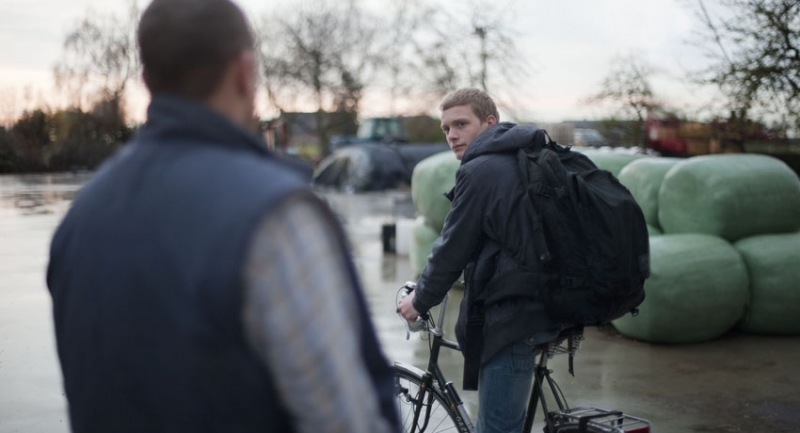
When I wrote about North Sea Texas at this time last year I took to task many of the gay-themed tragic love stories. Or, to be more accurate, I took to task the notion that all the stories had to be laced with a sense of tragedy. What North Sea Texas does that I love is offer a light glimmering at the end of the tunnel for those watching it whom may need to see that light there, and know that it’s a possibility.

Not that there hadn’t been great works with a tragic framework, but that needn’t be all of them. When I considered the fact that this was a repressed romance it took me back to Brokeback Mountain. When I discuss that film I have to take care to make sure I don’t sound as if I’m flagellating it. I don’t hate it, though it’d be easier if I did, I think that there are issues with it as well as things about it that are generally overlooked.

One thing that’s fairly apparent in that film is that it is a star-crossed romance. It’s society, as well as the parties involved, that do the repressing. However, one must consider the fact that they do have the occasional, passionate, not-as-delicately-rendered-as-it-could-be tryst. This film has none of that. This film doesn’t have “I wish I could quit you” because nothing ever starts and that’s what makes it a more evocative, bitter and effective film. It speaks to that place that every gay man has been; the closet, to the terrible tongue-tied doubts, to the self-hating silent denials and crying yourself to sleep.

Emotions boil over here on occasion sure, but as a gesture, a slight overture or a half-mumbled utterance directed to a half-conscious, half-dead father and therein lies the power of this film.

It’s a shame, only to a very small extent, that the film was not constructed in a more popularly palatable way because this is the powerful statement about repression and self-ostracism; the loneliness and regret witnessed here. This film paints a sensitive portrait that you’d almost have to bend over backwards to twist into a hateful place. For the danger, the double-edged sword, of the tragic homosexual romance onscreen is that it can be seen as inadvertently reinforcing homophobic societal mores.

In short, the importance of It’s All So Quiet is in its stealth, tender telling the tale of self-repression in a very humanist way. It’s not the only thing the film deals with. It deals with Helmer in all he does, as a whole. However, this man cannot be whole (not through the duration of this film) for he refuses to accept one fraction of his nature. So, though he may seem fine at other times and we see him ably, warmly do other things; there is an underlying sadness that isn’t just due to his father’s infirmity and death. It’s due to this complete portrait of an unfulfilled that dialogue can be furthered, and it’s due to the skill from all aspects of the production of this film that this strong statement can be made.

Thankful for World Cinema- Short Essay and Review: In Bloom (2013)

Post-Soviet Cinema and the New Postcolonialism

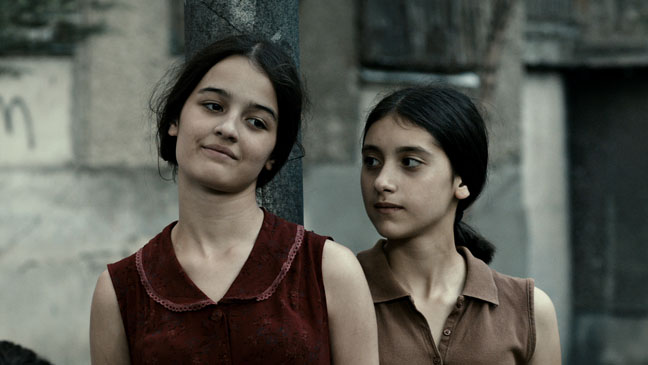
One thing that jumped to mind when I had concluded In Bloom is that it holds a fairly unique place in cinema, one that I’m not sure has been fully examined or surveyed just yet. The story of this film is a coming-of-age tale set against the backdrop of Tblisi, Georgia in 1992; shortly after the independence of the new nation. In essence what you have is a slice-of-life look at a new-age postcolonialism.

Much postcolonial cinema deals with the Old World and the colonies spawned from its outward expansion. Therefore, the tales both about the colonial age, and the cinemas born in new nations (mainly those in Latin America), were the First Wave of Postcolonial Films.

However, as this film underscores, there is a New Wave of Postcolonial Films to consider and that is of the former Soviet states. Throughout the entire history of the cinema (barring a brief period where Georgia declared independence following the Bolshevik revolution and was under British protection) Georgia has been a part of another nation and with no outlet to express its national identity to the world at large.

In the early 1990s with the collapse of communism 15 new Post-Soviet nation-states came into being. That’s 15 new cinemas, new voices and a brand-new wave of post-colonialism in the world. That’s just out of Russia alone, when you consider the division of the former Yugoslavia, and other changes in the Balkans, you can see this is not a small topic. It’s subject that would make a fascinating research and writing for one well-versed both in cinema and in those regions. This film is just a peephole into that newfound reality.

Review of In Bloom

In that light, In Bloom offers an interesting glimpse, not only as my first exposure to Georgian film, but also to the concept that a brand new cinematic world opened up.

That being said, there is only so much intrigue that can be generated by such non-diegetic thoughts within the diegesis of a given film. What the film does do well is sketch the backdrop and the world that these characters are growing up. It’s a society a bit difficult to swallow to a Western sensibility but the general lawlessness of the tumultuous time is apparent, and that is something often glossed over.

Usually, independence is treated as the endgame. Whereas here in this tale, and with nations, it’s really just the beginning. It’s what happens next that really matters. How does one get ones feet under oneself when their fledging nation is still war-torn and barely standing on its own two feet?

The backdrop works, and the performances of the two leads: Lika Babluani as Eka and Mariam Bokeria as Natia really are tremendous. I see many impressive performances by young actors. However, it’s very rare to see two performances in one film from neophytes that are not only exceptional, which these are, but also read as if they are veterans; and furthermore should continue acting for a very long time to come. Babluani and Bokeria certainly achieve that and make this film as watchable as it.

However, the issues that end up plaguing the film are not that unique to slice-of-life tales. Essentially, what these films boil down to is: is that approach the more effective telling of the tale than something more conventional? Quietly and without too much fanfare these girls are doing tremendous things and defying social mores but the pace struggles; the telling is a bit matter-of-fact; the eye on the story too far removed. Major occurrences are treated with ho-hum indifference by camera, edit and characters alike.

The unique backdrop and performances are enough such that I would advise people to see this film for themselves, but the facets that work against this film are such that I cannot say I enjoyed it.

5/10

The Gish Sisters Blogathon: Orphans of the Storm, Dorothy and Lillian Together

Introduction

Firstly, my apologies for this post being late, and to subscribers who may have seen this post come up raw, unfinished and unedited. I’ll do my best to keep that kind of thing from happening again (it’s already happened far too often).

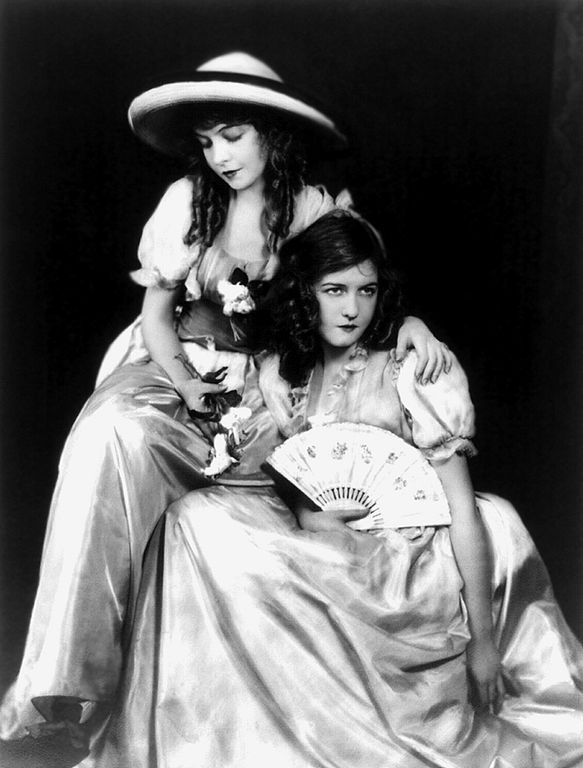
My goal in this post for this blogathon was to through viewing the works of Dorothy and Lillian working together not only come up with a unique angle on their collective filmography, but, also get to know them better. Yes, I know Lillian’s work on Night of the Hunter. Her quote about children is one of my favorite in the annals of film history. However, I can’t claim much knowledge about them. I knew more about them than I did about Louise Fazenda, but not too much. Therefore, a perfect opportunity to learn.

If looking at it like a science experiment I used many of the same methods to hunt down the Dorothy and Lillian titles that I did with Louise. Sadly, though The Internet Archive yielded me no results. Youtube did get me the chance to view nine films, however, few featured them very prominently. Those that did will be embedded.

However, even if this strikes me as somewhat disappointing, I have gained some knowledge and surely my goals are always lofty and not always likely to be reached. For I should recall that it was Lillian Gish herself who said:

I’ve lived long enough to know the whole truth is never found in history texts. Only the people who lived through an era and who are the participants in the drama, as it occurred, know the truth. The people of each generation are the accurate historians of their time.

So, no, in this approach only finding a few of the works they did together I can’t be all-encompassing but perhaps there’s something new that can be found.

Films Viewed

An Unseen Enemy (1912)

An Unseen Enemy (1912)
So Near, Yet So Far (1912)
The Burglar’s Dilemma (1912)
The Musketeers of Pig Alley (1912)
The New York Hat (1912)
The Painted Lady (1912)
Judith of Bethulia (1914)
Home, Sweet Home (1914)
Orphans of the Storm (1921)

Observations

Gish Sisters

Firstly, almost by accident I watched these films in something resembling chronological order. I searched based on the IMDb list, which sorted them that way and then I created a YouTube play list in the order things were found. As per the official Lillian Gish site An Unseen Enemy marks her debut.

In my note-taking I was a bit more poetical about the ladies’ participation in this film referring to them as “mournful ingenues” rather than “damsels in distress.” However, that’s what it boils down to. There’s nothing atypical about this work from Griffith, not anything exceedingly spectacular save for the fact that it began their association with him and it would prove rather fruitful for both. It was an auspicious start to watching them both because they’re scarcely apart for even a second.

In terms of working in tandem The Musketeers Pig Alley is not a prime example as here Lillian plays a significant role and Dorothy plays a small part as “frizzy-haired woman in street,” as would end up being the case quite a bit; as it was Lillian who was regarded as one of the greatest actresses of the silent age, but I was keen to re-examine it after I saw it earlier this year and thought nothing too much of it. What created that turnabout was Scorsese’s mention of it in this brilliant article. The film didn’t appeal to me too much more but the shot he refers too, which was unusual for the time, did.

As little as that film has to offer for both of them, Lillian’s physicality does shine through in her contributions to the narrative.

Going in chronological order through much of the early small works the sisters both did for Griffith/Biograph did have me rather dejected regarding my hopes of finding something worthwhile.

A note to all those writing about film is that one must watch first and find the angle second. Reversing that equation can have very adverse effects on your viewing experience. Giving me little fodder to discuss, but a film I thought was very enjoyable, such that it buoyed me to continue was The New York Hat.

Closing out what represented the selections that marked the early part of their careers was an odd little film called Home, Sweet Home. Here these another good scene of the sisters together. As the protagonist (Payne played by Henry B. Walthall) flirts with his sweetheart (Lillian) her sister (Dorothy) get some great reactions while facing away from them. The story is an interesting pre-cursor to what Griffith would later do in Intolerance structurally, though I suspect this is far less successful. The sisters start the film but do go out for a while. If you can stick it out it’s worth taking in. I had difficulty doing so, I must admit.

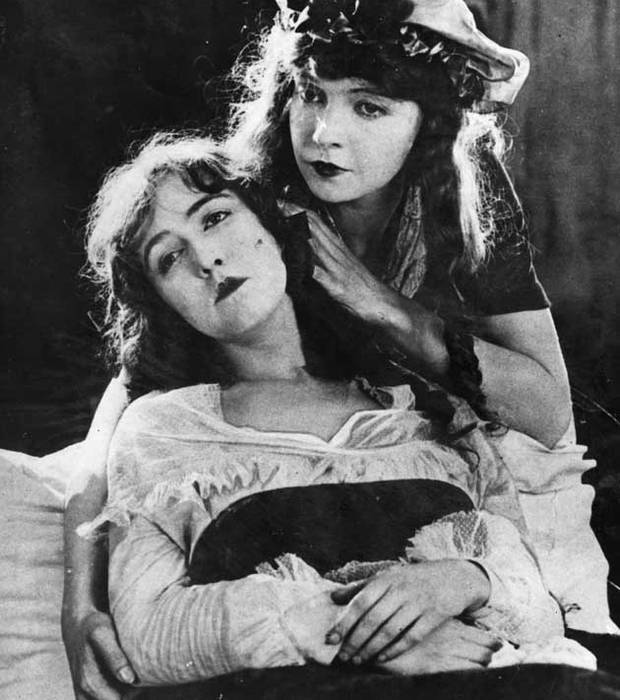
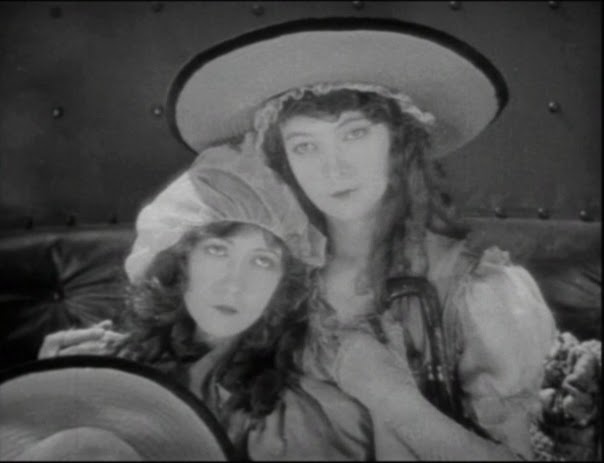
Much as my playlist did for me, I save the best for last for you. This is one of three features that I took in and this one is a long one at over 140 minutes but truly the story is a fairly epic one, but also intimate. Fate, more specifically the events leading up to, during and immediately following the French Revolution; tear apart these two sisters many times over. Louise, played by Dorothy, is blind, and Henriette, played by Lillian, is even more protective of her because of it. You add into the equation things like: it’s another D.W. Griffith work; one of his sprawling, great melodramas and you can see how special this title is without, even factoring in other things like that it was the last time Lillian worked with Griffith and that she suggested the film, as it was based on a popular play.

However, the film is not just excellent, but both Lillian and Dorothy are exceptional in it. Playing blind in the silent era is not something I think I’ve been privy to yet so it’s not quite as big as I expected it to be and that’s a credit to Dorothy. The fact that one sister is a caretaker for another is augmented by the genuine sisterly affection that shines through their performances.

Here is where you see a citation, much as I alluded to earlier, being personified. Lillian was one of the finest actresses around, but the already more naturalistic style that came in as cameras moved closer to actors was something that she was already more than capable of previously. The litany of scenes and different emotions conveyed by the two in this film is would be quite long if I enumerated them all.

However, key in this film is that they each have significant screen time in the film, but much of it is spent separated and in search of one another. Thus, each sister gets her chance to shine. This makes it perhaps a more powerful and impactive film as Lillian’s career continued strongly for years and Dorothy didn’t transition to sound nearly as successfully.

The Syndrome of Siblings in entertainment, particularly film, can be a vicious one because whether or not a rivalry does exist; the public, both at large and within an industry, has a tendency to compare. And comparisons can adversely effect the sibling who is generally perceived to be the lesser of the two making an isolated and impartial evaluation hard or impossible to come by.

One example of how they both shine is in a fleeting reunion, which can be referred to as this film’s “balcony scene.” For a scene such as that to work both of the actors have to pull it off, especially in a wide angle (which at least a portion of the scene is) and they do, emoting as befits their character.

Conclusion

Gish Sisters

Regardless of how history may recall the Gish sisters individually “the whole truth cannot be found in history texts.” What can still be found are some of their works. I did, through my limited exposure in the past, come to post with a hierarchy in mind, but as I saw the first short with faces so similar and performances virtually on par it made me wonder about that – even identifying them become difficult in these version. Perhaps what it illustrates is that both were better together, and Lillian was more capable when they were not paired.

Yet, I can’t help but think bigger than that. For film is collaborative art: without Lillian Griffith doesn’t have Orphans of the Storm to his credit; without Dorothy Lillian may not even think to suggest it; without each other they can’t deliver the performances they do. And then, what of us, filmmakers and lovers both, where are we without both of them, without our ability to enjoy and learn from them? It may be impossible to quantify, but thankfully one needn’t answer that question but can merely enjoy what they have contributed.

Birthday Movies 2013

This is a new edition of this post, it’s a follow-up to one wherein I chronicled the films I could recall having viewed on my birthday. Some have been good to great, some have been awful. I usually try to make the selection something befitting a mood I wouldn’t mind being in on that day (hence I saved Amour for today) and something I think I would remember. I think both the titles from yesterday. For a guide to what these ratings mean, please go here.

Twixt

Twixt (2011, American Zoetrope)

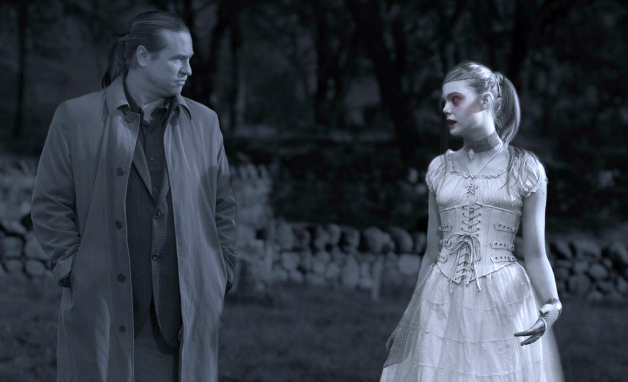
This is a film that I wanted to see first because it’s Coppola returning to horror, but then also because of some of the people involved. I cannot argue by any means that it’s perfect. However, if there’s one thing that gets under my skin is when people argue “It’s just a horror movie” implying: there’s a ceiling to how good it can be, or it’s OK if it’s stupid, or worse, it’s allowed to be unambitious. I don’t think this film falls into any of those tappings. It’s hard to say if going beyond a standard horror film’s running time would’ve benefitted or hurt it, but I think it may have hurt. I recall that why I liked My Soul to Take so much was underscored by what was left on the cutting room floor. The exposition that was deleted spoon-fed things I and my friends pieced together after it was over, and that made it more powerful. There are deeper mysteries and enigmas here and multiple plots all horrific and well-wrought, though they don’t always seem so. After seeing him in a few that were not-so-great, it’s good to see Val Kilmer in a fascinating horror film.

8/10

Blue Jasmine

Blue Jasmine (2013, Sony Pictures Classics)

The allusion I made above to occasional greatness definitely applies here. For a filmmaker such as Woody Allen who on many occasions has been accused of using his films as therapy and being un-cinematic this film is a rebuttal. For myself, as a long-time devotee, it’s wondrous not only to see him work a story that again employs a wonderful editorial language that is quickly-learned and never off; but also such a non-judgmental character study. It’s a film of revelation rather than reparation. It has its humor, too, but is perhaps the most searing, honest drama he’s committed to the screen since Husbands and Wives. The casting, as well as the cast, is flawless; but it’s really Cate Blanchett who makes this film work. She’s as powerful, if not more so, in her character’s detached, pained moments as she is in the “big” ones, which is what makes her turn so immaculate. It’s a performance that towers not only due to the sparsity of great roles afforded women in the American cinema lately, but because of how titanic an effort it is on its own.

Engaging and enthralling from the first frame this film of a life shattered, whether by design or not, may be his most Bergmanesque, and is truly one of the year’s best.

10/10

Contemporary Trailers That Work

A while back I posted a long, but not ill-conceived, rant about why I hate spoiler-ridden trailers and how terrible they are. I did have a counterbalance of some “newer” trailers that I think evoke mood, create intrigue, and give me that I-wanna-see-that sensation. However, two things have occurred: I’ve wondered to myself “Was that too ‘Get off my lawn!’?” and I’ve seen some really great trailers as of late that are far more current examples that deserve kudos.

This is a great trailer. Owing to the fact that I know the film and can see what’s being withheld:

In The Family

But that’s an indie, you say. So here are some bigger films in terms of budget and marketing push. All of these are upcoming or have not yet been seen by me:

The Secret Life of Walter Mitty

The Wolf of Wall Street

Fruitvale Station

Now with those three the common thread is that at most you have a sense of what the movies about, as opposed to those I complained about that have you feeling like you just sat through that whole film unwittingly and unwillingly. A trailer is small fraction of the content of an actual film but some do make it feel like the film itself, only longer.

Now I realize I may be a bit of a throwback wanting to be surprised as much as I can and not always know what’s coming around, which is why I usually wait to see trailers at a multiplex rather than the day they drop. So here’s what I think is a great trailer but plays closer to convention in form, inasmuch as you see many plot points. What’s great is that it being a suspense film that likely has more twists and turns than indicated, and it jumbles up the pieces somewhat so you don’t feel like you know all that’s a head of you.

Prisoners

So those are some of the trailers that have gotten my attention, and while there will be many more that stink and tell too much I’m always willing to acknowledge those that seem to get it.

5 Topics 30 for 30 Should Cover and the Next Slate

As I recently noted in my recent, I was glad to finally take the plunge into the Nine for IX series of docs. Aside from the online shorts I have been a very loyal devotee of the series owing both to my love of sports and my need to see more documentaries.

As this new slate shows there are a few titles where it’s about time the topic got covered like No Mas and Tonya and Nancy and some that should be eye-opening like the film on Eddie Aiku.

However, the world of sports filled with intriguing stories both off-the-field and on. Here are a few that came to mind as worthy subjects:

1. Danny Almonte

Danny Almonte

There are a few reasons I bring this topic up, none of them have to do with Almonte’s semi-pro career though. I think Little Big Men adequately covered the fact that Little League success doesn’t necessarily translate to the next level where fields match professional dimensions. However, this scandal did have a significant impact, not only on that tournament, but I feel it impacted a few to come. Furthermore, it changed, based on my knowledge, how Little League has handled some of these incidents since then. Most notably the Ugandan team’s visa issues a few years back. The media spin forces you to read between the lines to spot eligibility concerns, and when those facts came out they were consciously buried.

2. The 1994 MLB Strike

1994-mlb-players-strike

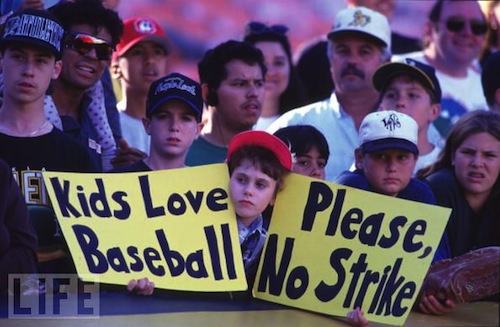
Well before all the NHL’s labor woes baseball took a huge backslide due to this strike. Its impact was a decline in popularity (only revitalized by a now-tainted era), a franchise’s eventual relocation and more. The fact that a stand-alone World Series was considered would only be one intriguing aspect of the story.

3. Colombia 86ed

El Bogotazan

If you look at the Wikipedia article on the 1986 World Cup, eventually hosted by Mexico, it glosses over the issues that lead Colombia to resign its bid four years prior to the actual tournament. It would also be enlightening to learn about the replacement process that led to Mexico being awarded its second tournament in 16 years. A very short span when you consider that other soccer powers (Brazil and England to name just two) have had to wait in excess of 50 years for a second chance. With a rise in the popularity of soccer this story would have an audience and it could be one that is layered.

4. 222-0

Scoreboard-Georgia-Tech-Cumberland

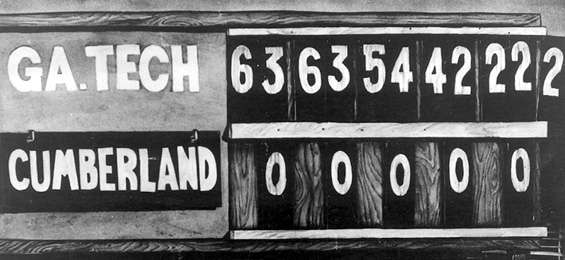
Maybe this is just a pipe dream that I’m better off submitting to Ken Burns, but, perhaps the single most fascinating scoreline I ever saw was this Georgia Tech dismantling of Cumberland in 1916. I first learned of it in the Guinness Book of World Records when I was young. I’m also glad to know I’m not alone in being fascinated by it as there has been a book written on the subject which could be the starting point.

5. 1996 Olympic Park Bombing

Olympic Explosion (CNN)

There are actually a few American off-the-field Olympic tales that could be told. I also considered the tale of the Salt Lake City bid scandal. However, this now-often-overlooked act seems like it’d be more relevant fodder for a documentary treatment.

Batman, Superman and the Future at DC

One of the bigger stories coming out of Comic Con, though as per usual dwarfed by Marvel Studios’ slew of announcements, were the announcements by DC about the trajectory of their film universe as it pertains to their superhero properties.

There is the biggest being the Batman/Superman team-up in 2015. For a film that Warner/DC is calling Batman vs. Superman. Then there will be The Flash in 2016 and The Justice League likely following in 2017.

Now, recently just before the Con Diane Nelson, DC Entertainment Chief, sat down to talk to the Hollywood Reporter about DC’s blueprint, as much as possible, and what other characters they have could be likely headed for the big screen.

Man of Steel (2013, Warner Bros.)

What’s interesting, at least at the outset, is that DC is kind of thinking what I’m thinking at times, and in others not so much.

To start on the more optimistic side, two areas where they echo what I’m thinking are: a kind of building-block approach that occurred to me as I watched Man of Steel. Which means, and this hearkens back to how I got back into comics, and more specifically more into superheroes than I had ever been; was that I would get to know a character, or group of characters, then in finding who he/she/they associate with branch out to those other characters. Essentially, as DC builds its cinematic universe it’s doing this. It’s re-established Superman, granted not without some controversy, but certainly in a more palatable way than they tried to a few years back, and will now try to add pieces from there.

In the next film there will be both Batman and Superman. Now, to be honest I was thinking more of a cameo/dovetail approach, having Batman appear in a Superman film as quietly as possible. Then when a third character is introduced, the Flash in this case, have Superman and Batman play ancillary roles.

The Dark Knight Rises (2012, Warner Bros.)

The second way in which DC echoed my sentiments is by putting off the Justice League film. It was like they were trying to put the cart before the horse. The Avengers was gradually built-up to establishing several heroes before they all joined forces. It seemed for a time DC was going to try and shortcut that when the new Batman wasn’t yet decided.

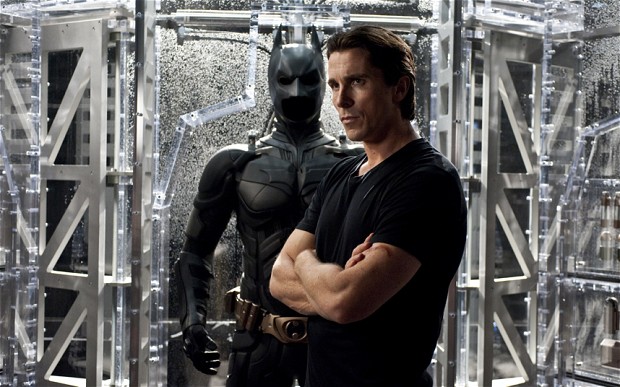
To get to some of the not-so-great aspects of the plan you have a few in the Batman/Superman film potentially. First, Christian Bale has re-confirmed that he will no longer be the caper crusader, which is fine. However, now you’ve hitched yourself to Henry Cavill and whomever happens to be Batman next time out. Hopefully he’s a good choice as past Batman selections are a mixed bag.

The next is the title. And, yes, I’ve discussed titles not meaning much in the past, even as recently as a few days ago, but versus more likely than not means something. I hope it’s just a gimmick to get people to show up should they not like both, but I have a feeling they will be adversarial throughout most of the film. Therefore, they’re setting themselves up for a vacuous experience not unlike those in the horror genre (e.g. Freddy vs. Jason). Batman and Superman have had joint series and stories in comics for years on end, if you’re introducing them to one another on screen, OK, have them not understand each other to start. However, there is a lot of common ground and it would likely be better if they found that quick.

The Green Lantern (2011, Warner Bros.)

God forbid I wander too far in fanboy rantings but even just looking at the most basic facts about these two you can see where these character share a common bond despite their different abilities. They are both orphans who are seeking to right the wrongs of the world and help the helpless, to spare others the suffering they’ve been through. If people got up in arms about Superman smashing buildings and breaking Zod’s neck, having him and Batman duking it out for two hours prior to discovering that “We’re not so different, you and I” isn’t going to engender a lot of good will.

The other mixed bag is that having hopefully successfully launched a third character cinematically (The Flash) The Justice League is up. Now, granted The Justice League could very well re-introduce a newly-recast (or not) Green Lantern, or another character altogether, but I still feel that perhaps one more hero being launched before that film would not be a bad thing: be it Aquaman, Shazam (a.k.a. Captain Marvel) or Wonder Woman. The first and last being the most likely.

Even with some of these reservations it does look like DC is on a far more disarable course than it was. Whereas prior they seemed to say “Well, we still have Batman don’t we?” Now they’re getting their feet firmly planted underneath some stronger properties and developing ones that have a great chance to bolster their standing in the race. For if there’s one thing that Man of Steel unquestionably did is convey the speed of Superman’s flight better than renditions past and maybe, just maybe, putting the Flash on the big screen prior to this current era wouldn’t have felt right. Now it does. There is still some leeriness abut the future but DC seems to have a much firmer plan than it had for its films, and it’s about time.