Bernardo Villela is like a mallrat except at the movies. He is a writer, director, editor and film enthusiast who seeks to continue to explore and learn about cinema, chronicle the journey and share his findings.
During the World War II Hollywood’s biggest animators joined the war effort with entertaining instructional and propaganda shorts. For years these titles were scarce, the most hard-to-find were the Private Snafu shorts directed by the Warner Brothers stable of animation directors including the likes of Chuck Jones, Friz Freleng, Bob Clampett and more along with the voice talent of Mel Blanc in his best Bugs Bunny/Brooklynite voice. However, these have started to become more available since the advent of the Internet. With it being Memorial Day weekend in the US, it seemed an appropriate time to share these.
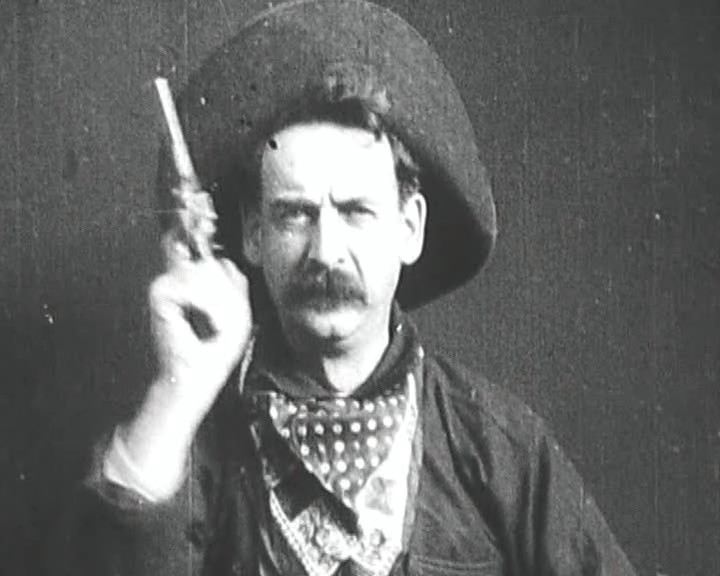
When I searched my page’s archives I realized I’d yet to feature one of the undisputed landmarks of early cinema, The Great Train Robbery, on my page. So here it is…
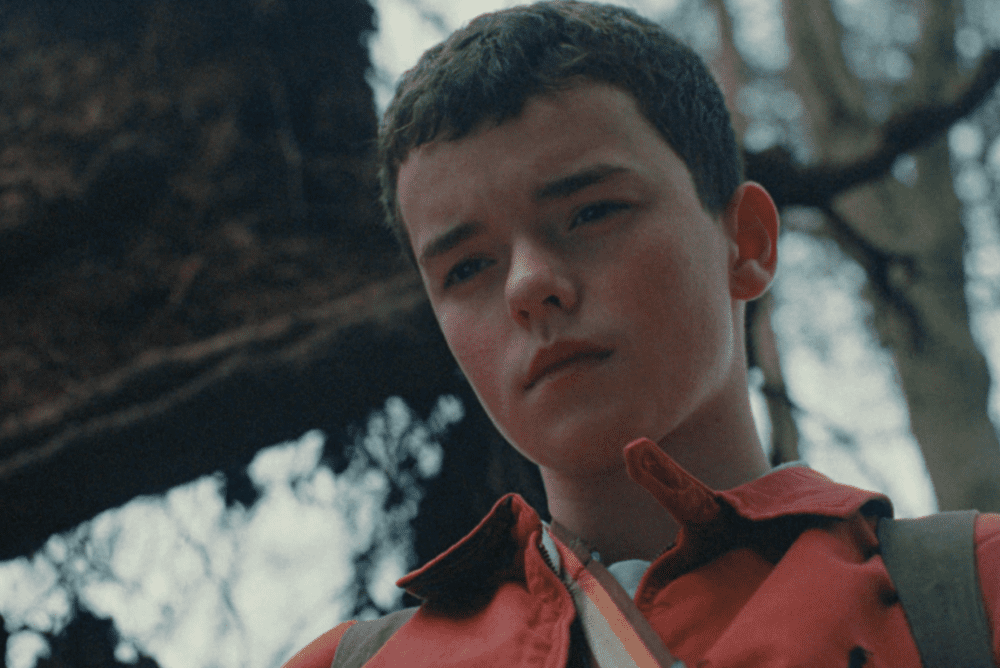
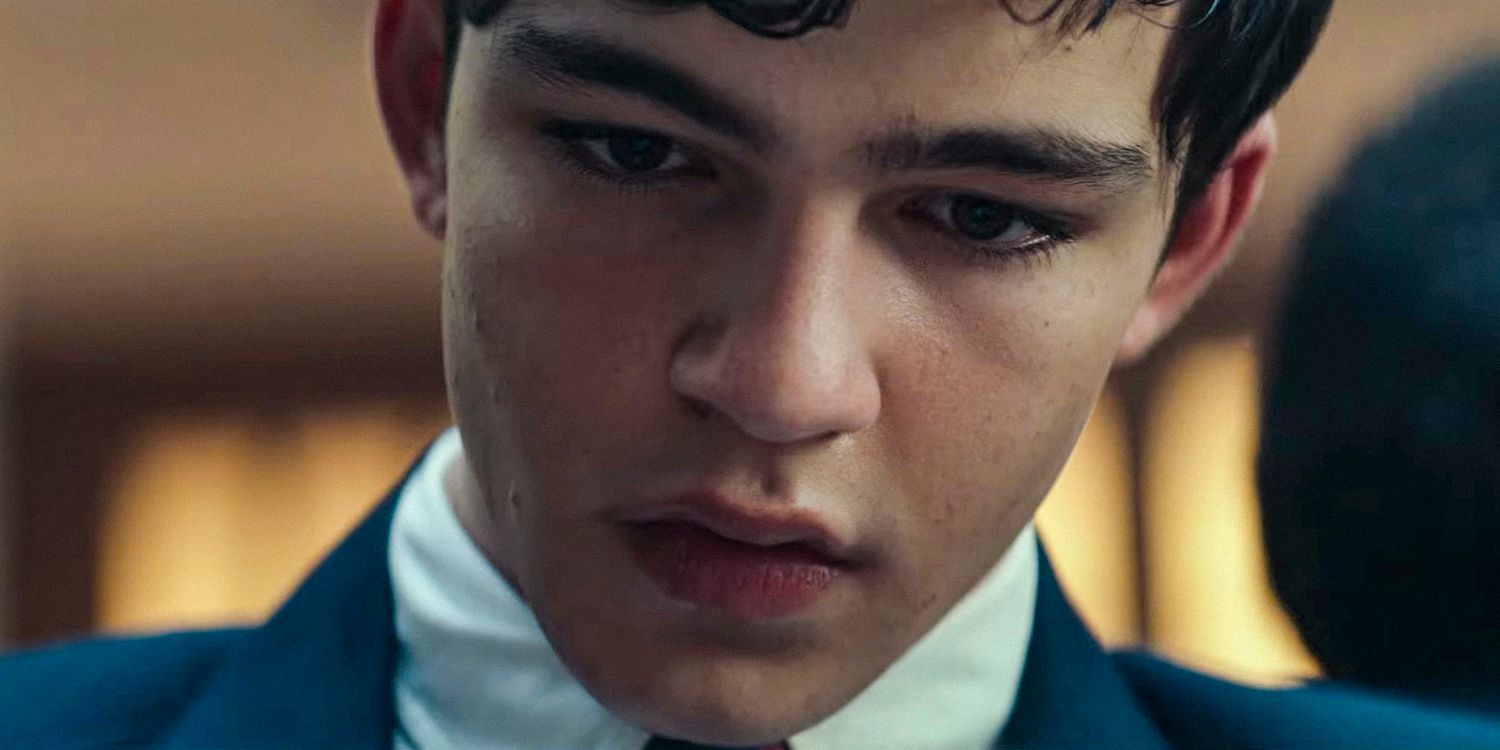
Earlier this year both the Netflix limited series Adolescence and its young star, Owen Cooper, took the world by storm. Last week, Cooper made his first appearance in a music video. You can view it here.
Unfortuntely, director James Foley died last week. He was the director of many noteworthy films such as Glengarry Glen Ross, Fear, The Chamber, the series House of Cards on Netflix as well as many collaborations with Madonna starting with music videos and then features. “Papa Don’t Preach” was the genesis of my love of staccato cuts.
I haven’t posted much lately and I’ve considered many themes that I could begin. That has only fed my procrastination. So, first things first, I’ll try and get Short Film Saturday back up by not trying to stick to a given theme, but rather just trying to post one weekly. Enjoy1
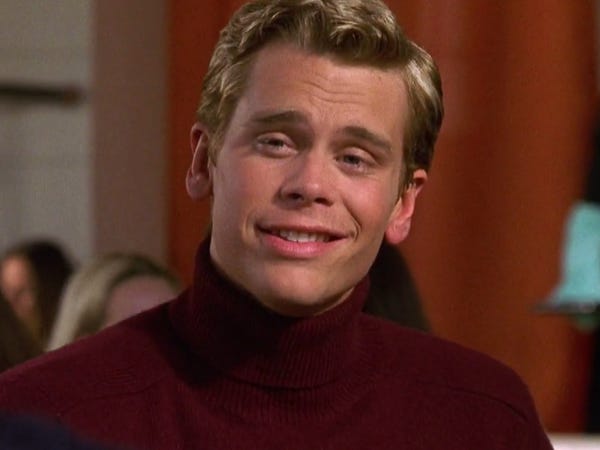
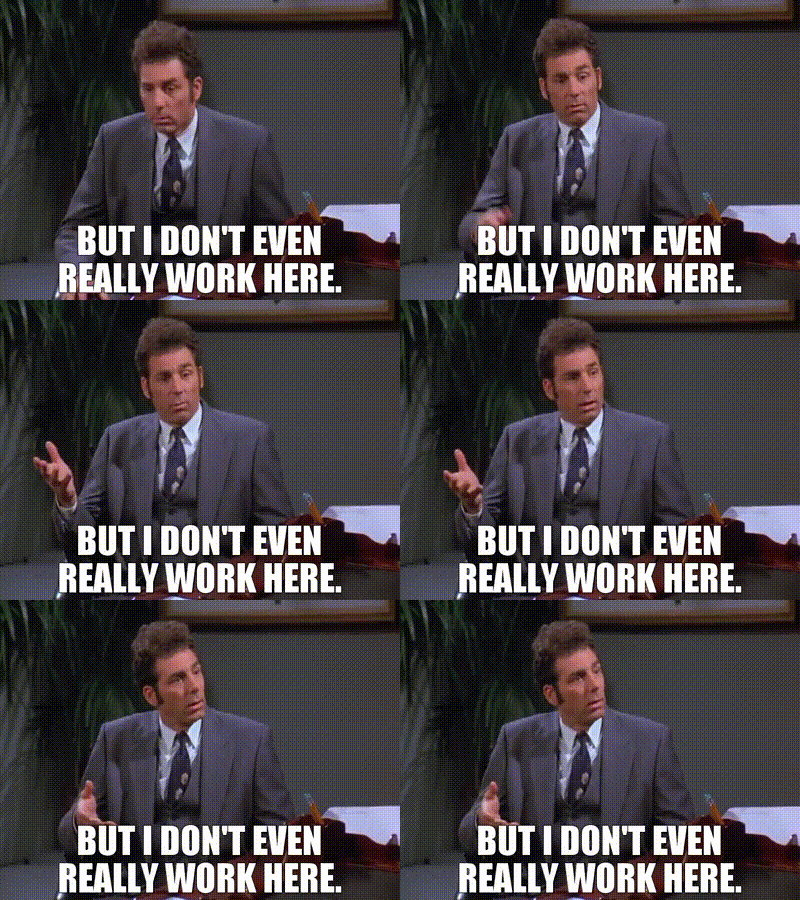
“You just ruined my perfect season, Señor You-Just-Ruined-My-Perfect-Seasòn!”
I’ve avoided posts like this in the past because once upon a time I found it too granular, a concept thatwallows too deeply in minutiae; but with the existence of a sites like Get Yarn which helps people clip the tiniest most obscure lines in cinema and on television, a short post about why one particular line-reading is perfect along with a video example is not that outlandish.
Not Another Teen Movie is one of many comedies my brother and I have been obsessed with for years that I’ve noticed has picked up a cult following after coming and going without fanfare during its initial release. This was crystallized for me for this film when I saw David Ehrlich wrote a piece on it about a decade ago.
Much of the dialogue sticks with me from this parody of teen movies from the ‘80s to the early 00s, but the line in question especially.
To understand why, first the set-up (if you’ve not seen this moview yet reading this won’t spoil anything; the film is so outlandish one can’t really “spoil it”). Austin (Eric Christian Olsen) and Jake (Chris Evans) are high school rivals. They have a standard teen-movie bet going (I bet you can’t turn so-and-so into prom queen) and in this scene Austin is mad because they’re both quarterbacks on their high school football team, Austin left the final game of the season injured, Jake subbed him and lost it.
The only other thing that adds humor to the line I’ll examine is that Jake’s redundant putdown format was introduced earlier in the film…
The introduction of the format
The callback and the aforementioned perfect line-reading
I realized recently this dialogue kills me and the line reading is so perfect for the following reasons:
1. Eric Christian Olsen’s delivery of this, like many of his character’s idiotic dialogue in this movie is perfect.
2. He dips into Spanish (with the honorific) and French (with the accent). Whether that was scripted or his contributionthe confusion on the accent is brilliant.
3. The redundancy of these putdowns works in the film because he’s playing them dead-serious, not even approaching tongue-in-cheek which makes more subtle joke like that in a film with all manner of humor (many of them broad or crass) slide by most viewers.
4. Olsen’s commitment to this preposterous greeting also acts as a microcosm of the perfect confluence of intelligently crafted stupidity and instinctual ridiculousness that make this film what is.
While it’s true explaining a joke kills it, but that’s if you didn’t get it in the first place. If you love or loath one it’s worth examining why. It was a sudden epiphany that had me realize this silly, practically a throwaway joke, really encapsulated what works for me about this film.
I hope to write up more of these types of lines, not just in comedies but first I had to kick the topic off at long last.
2024 was a great year for horror, as reflected in this year’s awards. The overall year in film wasn’t as great but these ten films are likely to stand the test of time for many years to come.
Dìdi is not just a great coming-of-age film, but it’s also a great film about parenthood and the immigrant and first generation American experience.
The Wait (La Espera) “is an outstanding film that contains payoff after gut-punching payoff. Set-pieces that are testaments to the fact that execution can be more important than unpredictability.”
Longlegs is riveting as a horror film, a procedural, and also as a character study
Furiosa: A Mad Max Saga was an overlooked film and a brilliant origin story.
I Saw the TV Glow was the film that most grew in my admiration since the end of my first viewing to the end of the year.
Dune: Part Two was worth both the running time and a long trip to a theater that projected it on 70mm film.
Problemista was the highest ranked streamed film. I saw the trailer at the movie but it didn’t come to my local theater. It’s funny, irreverent, imaginative and occasionally moving.
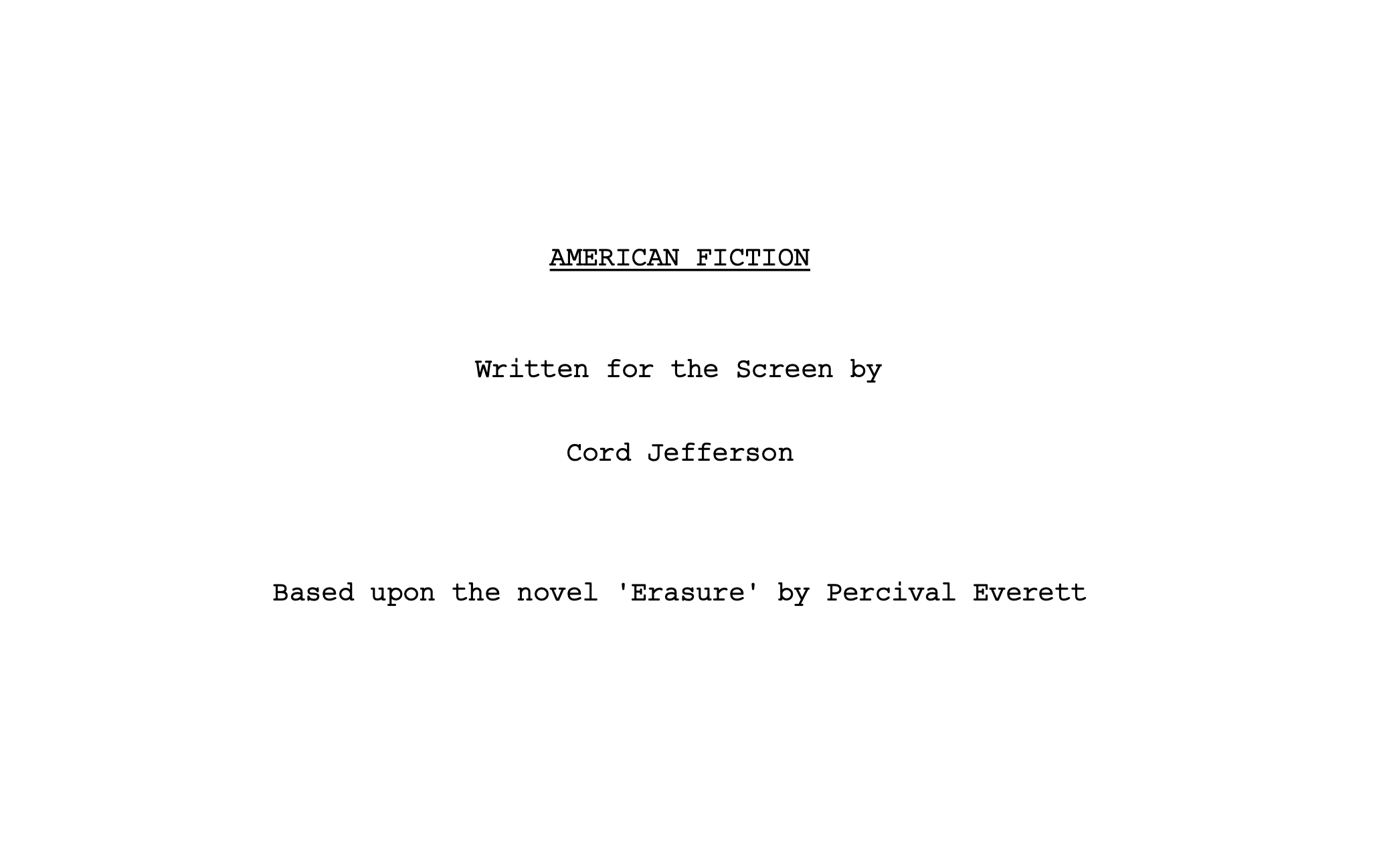
American Fiction was a film from last awards season that I saw last January when it was released nationwide. It’s one I really connected with immediately but that grew over time and was always near the top, and was amongst my favorite films the longest last year.
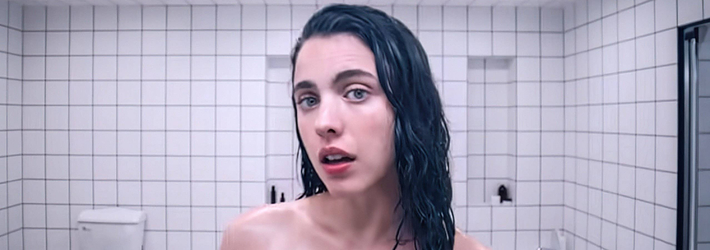
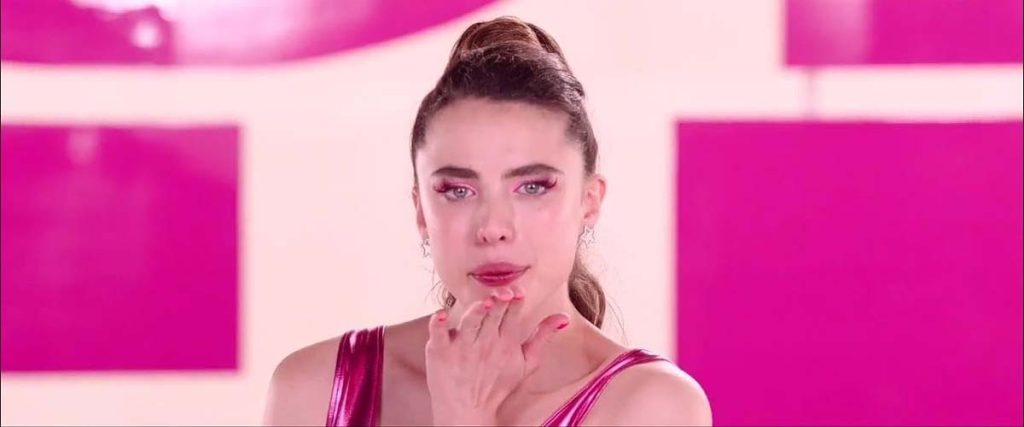
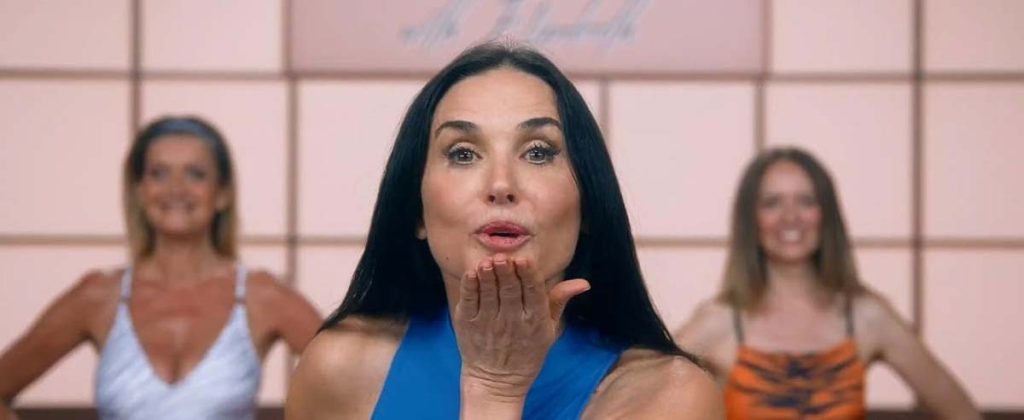
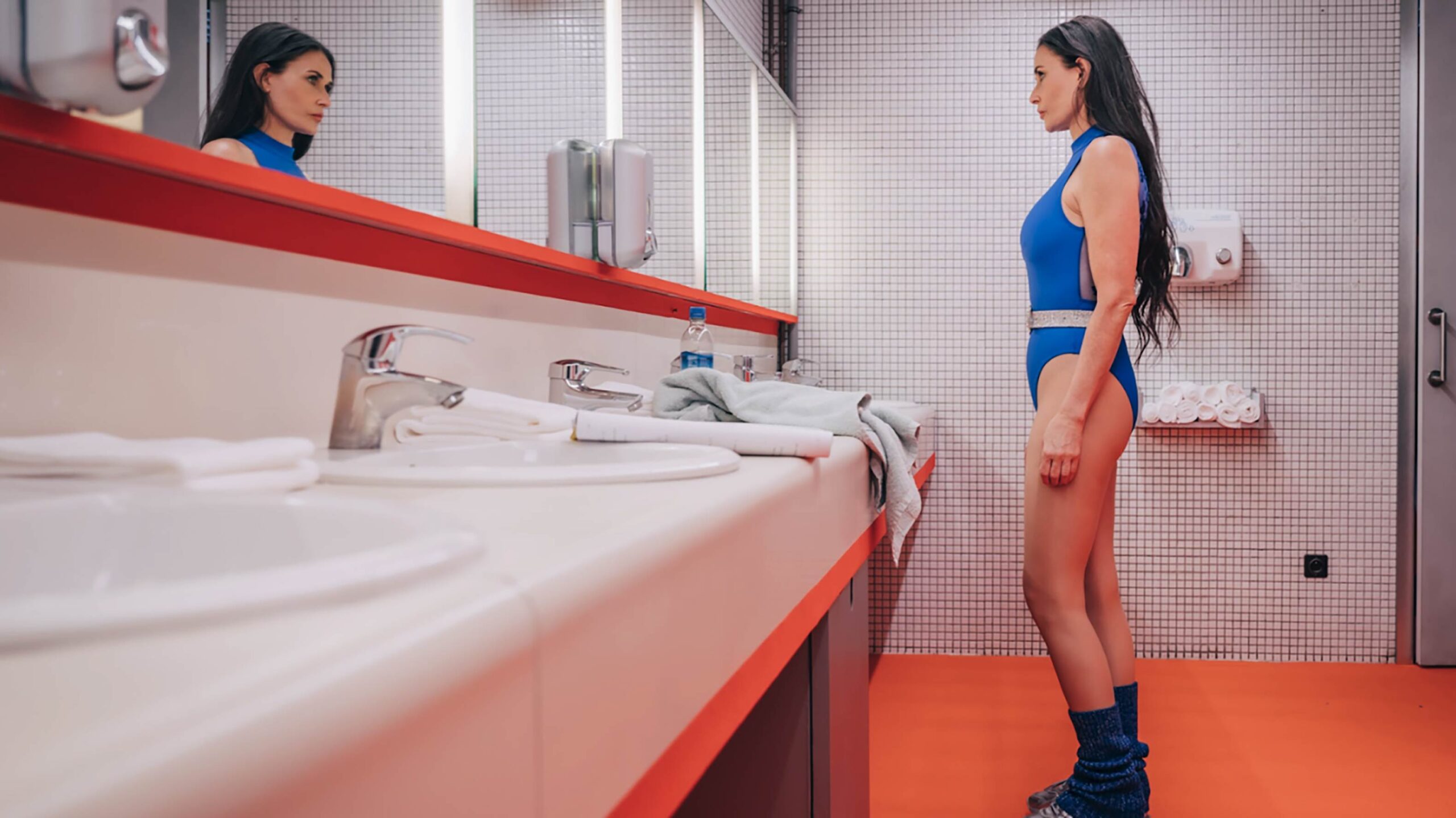
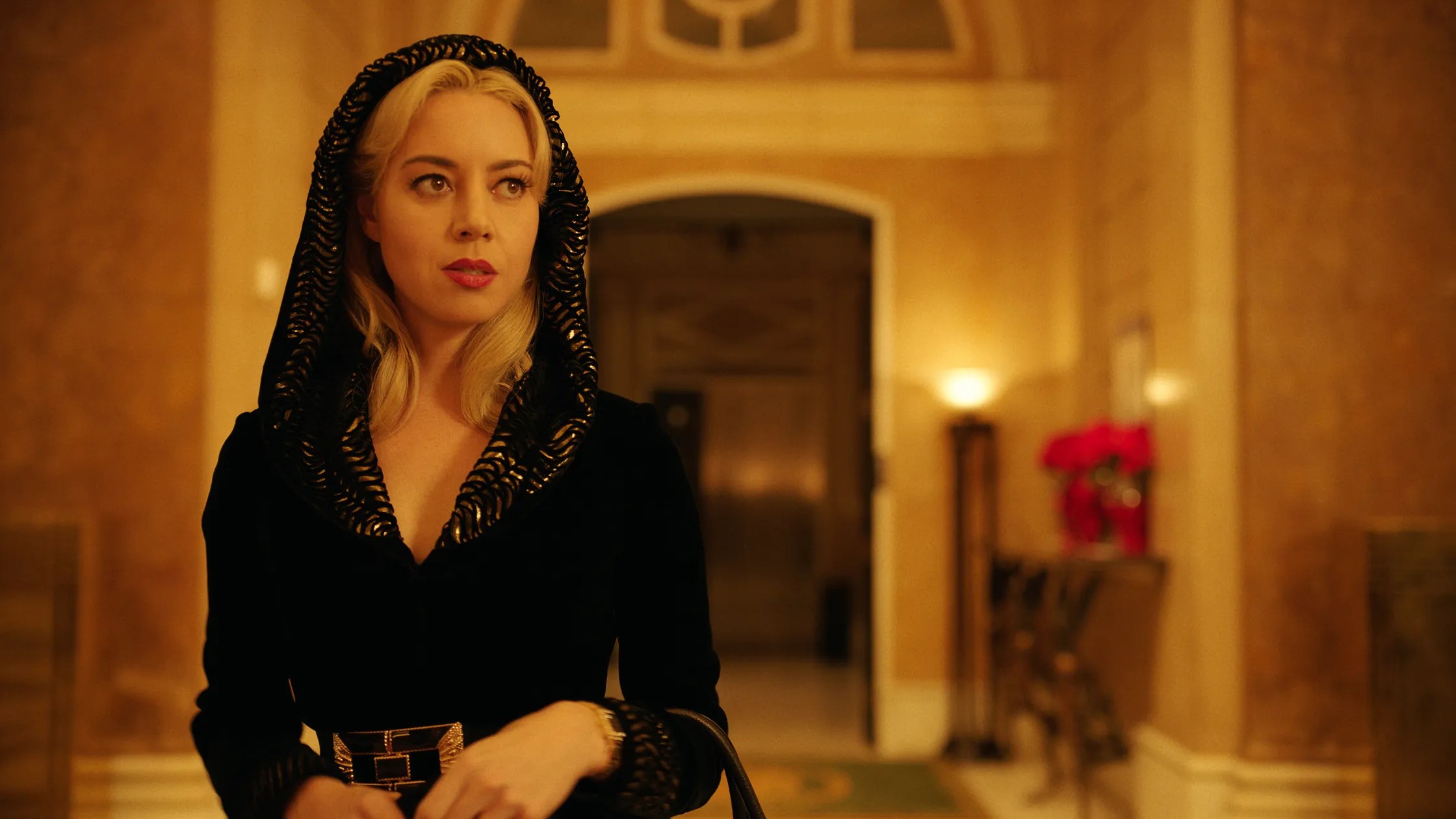
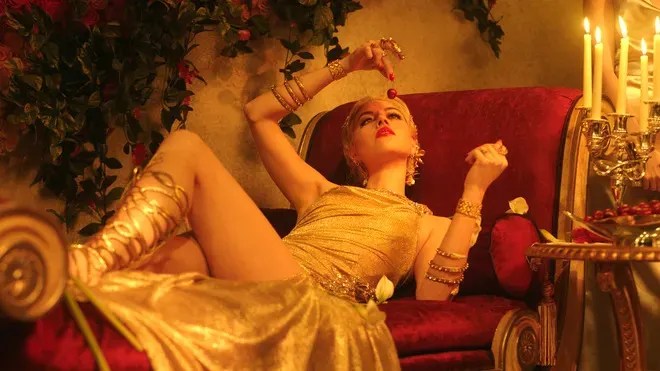
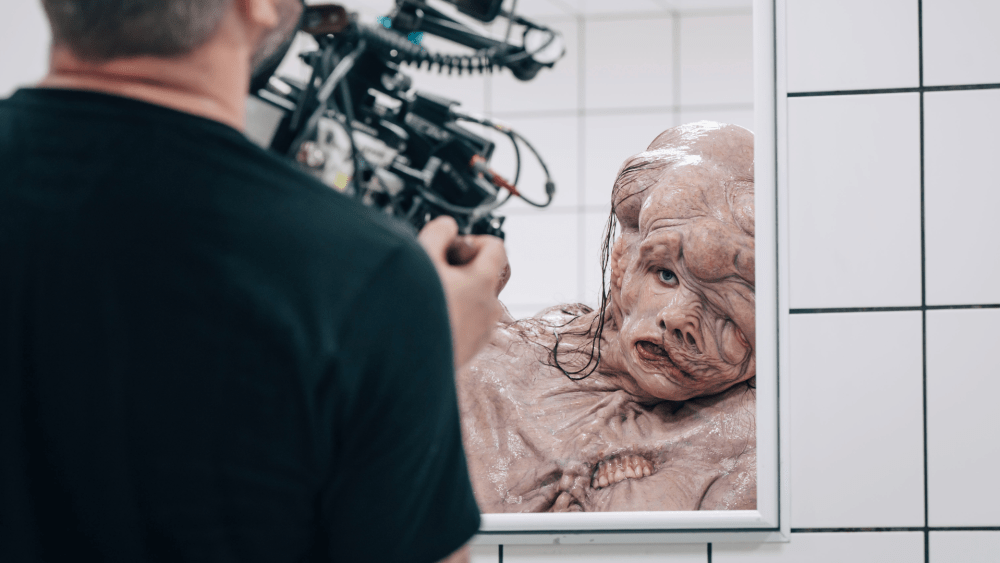
The Substance is not just a great horror movie. It’s not just a great parable about the fickleness of fame. It’s not just a feminist statement. It’s all of those things and more.
I try not to gauge a remake by its faithfulness or improvement upon the original, and that applies equally whether I liked the original or not. And one of my takes that will get pitchforks out is that I’m not enamored by the original Nosferatu, but that’s a story for another time.
So far as Eggers’ version goes, you either buy-in immediately or you don’t immediately as it dives right in and drives steadily ratcheting up the intensity. It’s also a testament to my central of horror that if the horror elements fail to scare an individual, the dramatic underpinnings are strong enough to keep you involved. For me, it excels on multiple levels all the way through.
I was thrilled to learn that Rumours, a Guy Maddin film would be playing at my local Regal. I think one of the better developments in the industry post-pandemic is that more indies are getting screenings at multiplexes. The last Maddin film I saw theatrically was The Keyhole at an arthouse. We Grown Now is a well-crafted finely rendered film that should have gotten more notice when it was out. A24 releases that aren’t horror titles seem to get a little less notice, I only saw Problemista on HBO MAX and it stuns me more people weren’t talking about this movie. Drive-Away Dolls had a decent amount of TV ad but didn’t seem to draw many people and this is a funny, quirky caper, that feels like an old-school indie with 21st Century sensibilities. The winner is the The Wait (La Espera) though, because had I not received a mailing about this film I wouldn’t have heard of it. Film Movement continues to represent some of the best films you’re probably not watching and you should check them out.
These directors crafted the top five films of the year (the particular order will be released tomorrow ahead of the Oscars).
Four of the nominees wore multiple hats in their respective film. Villeneueve built on his own work and expanded it. Eggers expanded on his two key influences for this film. Farageat weaved cinematic influence into her original tale. Torres distilled his unique personality, biography and comedy into something wholly original. Cord Jefferson guided a story from the novel form to the screen.
All these films are brilliant as are the directors who crafted them, but its Coralie Fargeat who’s sear vision most stands out.
This year I decided to go with six nominees in all the acting categories. I had usually only done so for the young actor categories, this year I wanted to put everything on equal footing. As was observed many times during last year’s awards season, Emma Stone’s physicality in Poor Things is something special and she is phenomenal. Just because it was noted then doesn’t mean it oughtn’t be noted now.
On the other side of that spectrum, I feel that Tilda Swinton’s range is so boundless that it’s almost been taken for granted. This is even more true when she’d playing a character so impossibly difficult on the surface, as she does in Problemista. Of course, that’s part of the design of the film and layers are revealed but it seems too many were unwilling to look past the window-dressing to the work she did in this film.
In another difference in perception, Julia Louis-Dreyfus’s comedic gifts are so plentiful that her ability to play drama and comedy simultaneously, or just straight drama, are often ignored en masse. One of the more difficult deliberations in recent memory was when she’d made You Hurt My Feelings and I went back and forth on the nominations that year. I was in danger of falling prey to what I complain about in regard to evaluating her again this year, when I decided not to fall for it again and I realized I could go with six and not minimize anyone’s work. This is her best dramatic work to date, but it also hints that much more could be in store. As such her turn in Tuesday is tremendously rending turn, restrained throughout much of but also raw and pure.
The other half of the nominees offer differing degrees of surprise to me: having been a fan of Wicked since it first burst onto the scene on Broadway, I tried to avoid it, but set nearly impossible expectations for the leads. It was the worst kind of stubbornness, truth be told. I knew what Cynthia Erivo was capable of but I was still somehow dubious I’d enjoy her Elphaba. I was ecstatic to be wrong and glad to admit I’d expected to be disappointed in the film, casting, or both.
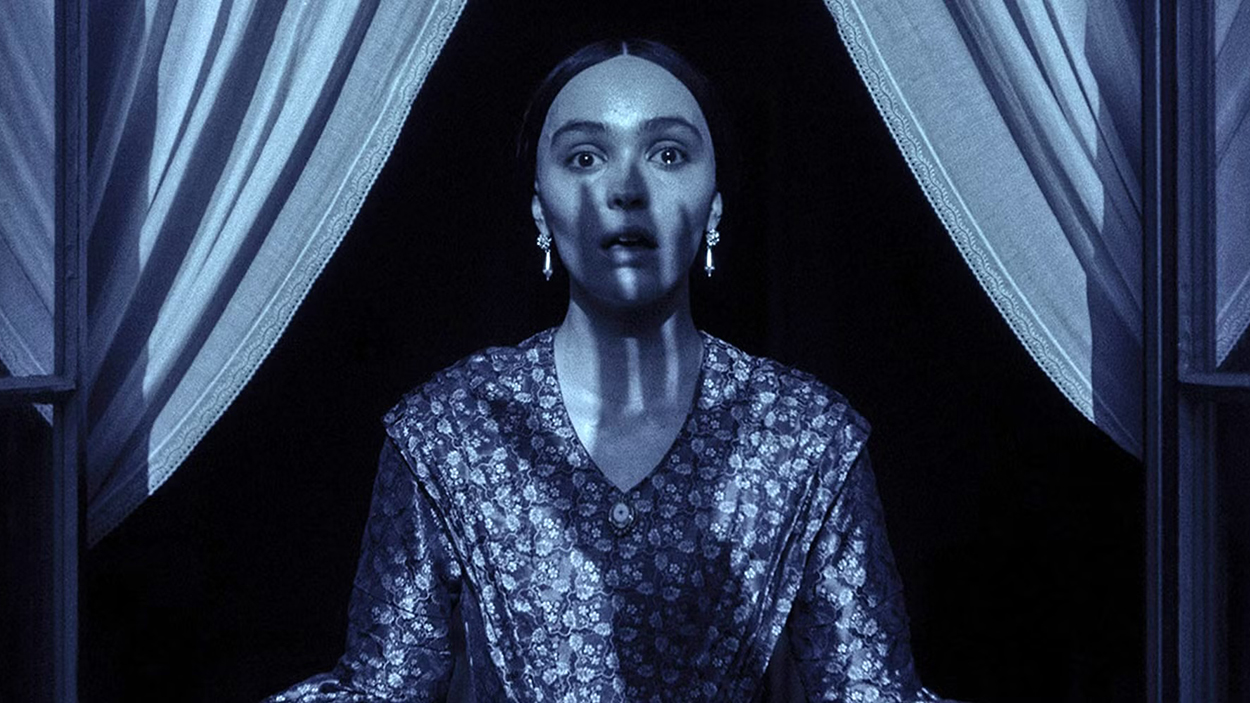
I’d seen some of Lily-Rose Depp’s work before but this was the first of her performances that demands to be watched. It’s revelatory.
In the past eight years or so, it’s been fabulous to watch the occasional re-emergence into prominent roles of some the female actors who I admired as my love affair with cinema was beginning as a teenager. These were women who were A-List, or A-List to me, who formed a sort of Mount Rushmore—or perhaps more accurately—a sort of monument park around a fantasy Hollywood sign in my mind. Made more real by the fact I cut out many photos of them from magazines to cover a mirrored sliding-door in my room that I hated to gaze into. Many nominees in my 1997 BAM Awards nominations were on that door: Jodie Foster (Contact), Jessica Lange and Michelle Pfeiffer (A Thousand Acres), Meg Ryan (Addicted to Love). In 2001, one of my biggest reference points, Melanie Griffith, was the honoree for her work in Cecil B. Demented. Sharon Stone and Demi Moore were included in the monument park up there as well, being two actors who I felt whose abilities were underestimated due to their status as sex symbols. When I was a more performer-oriented moviegoer I was there for many Moore’s films on opening weekend or for the cable premiere date.
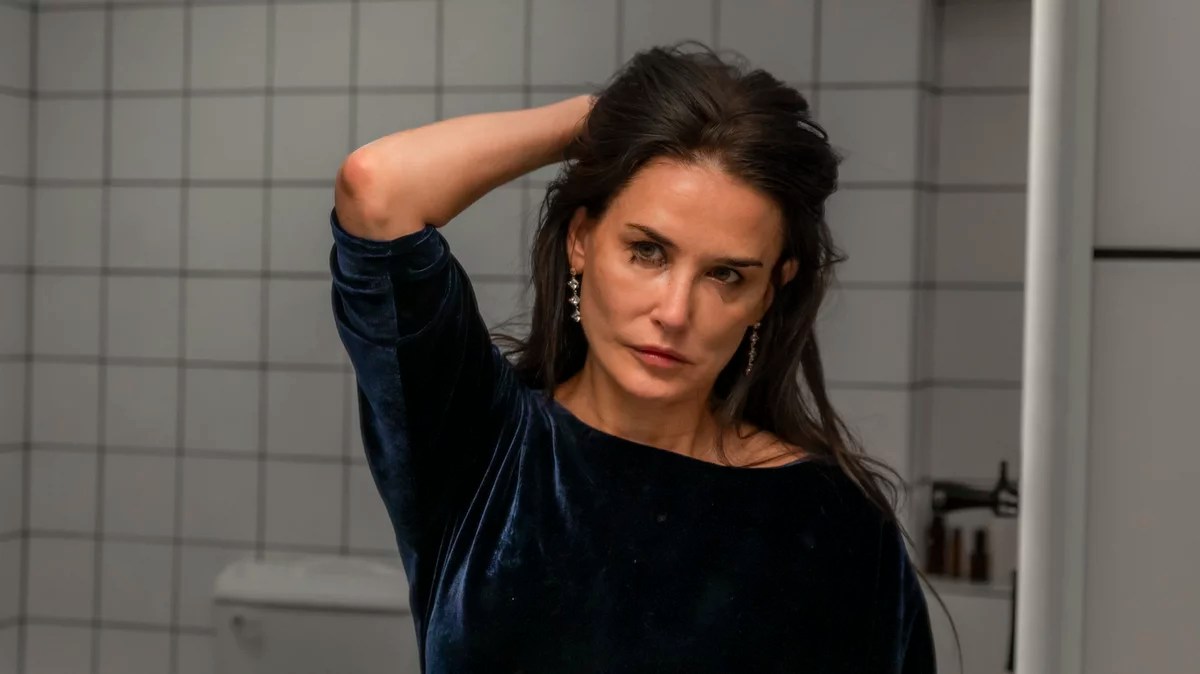
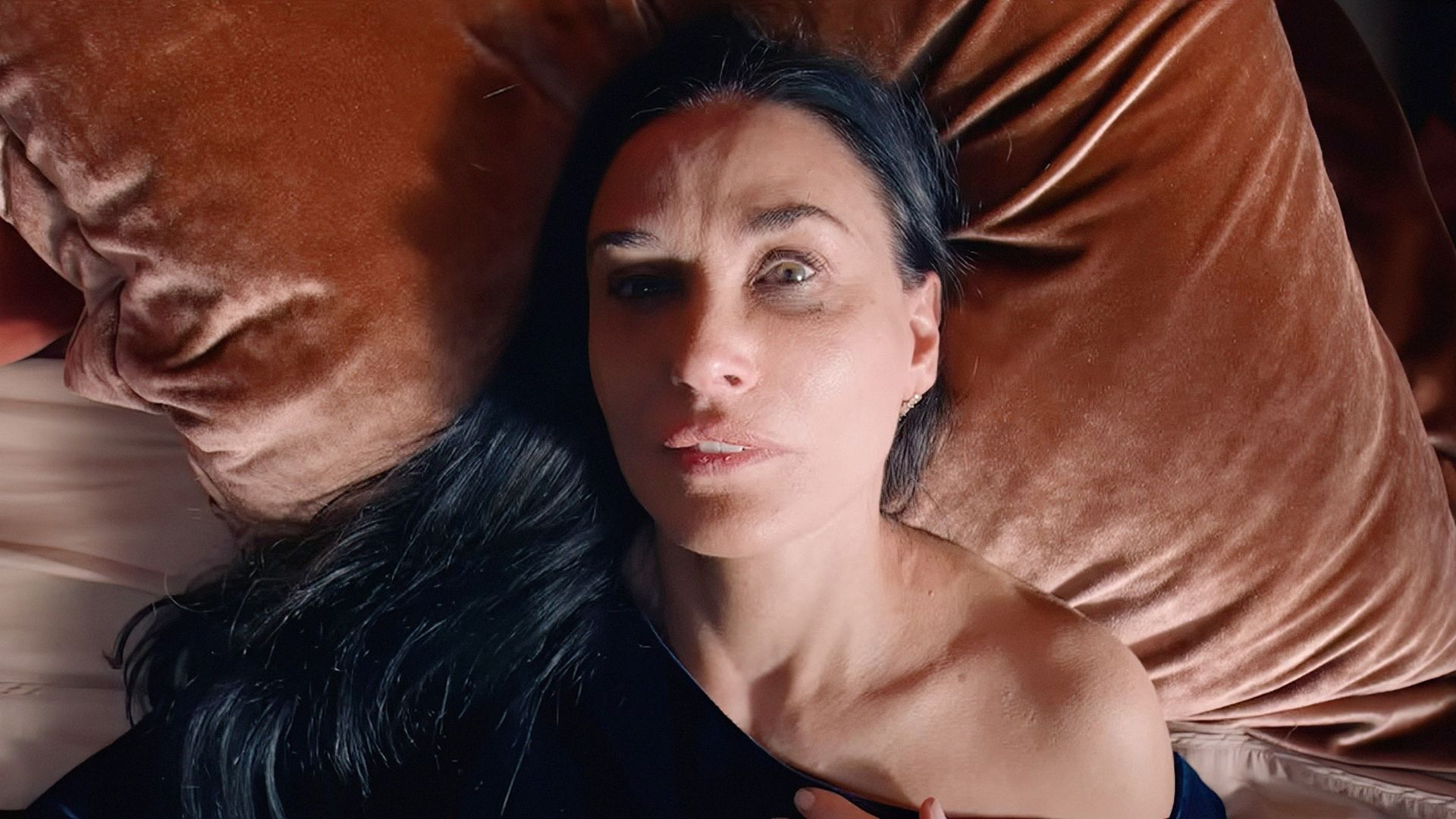
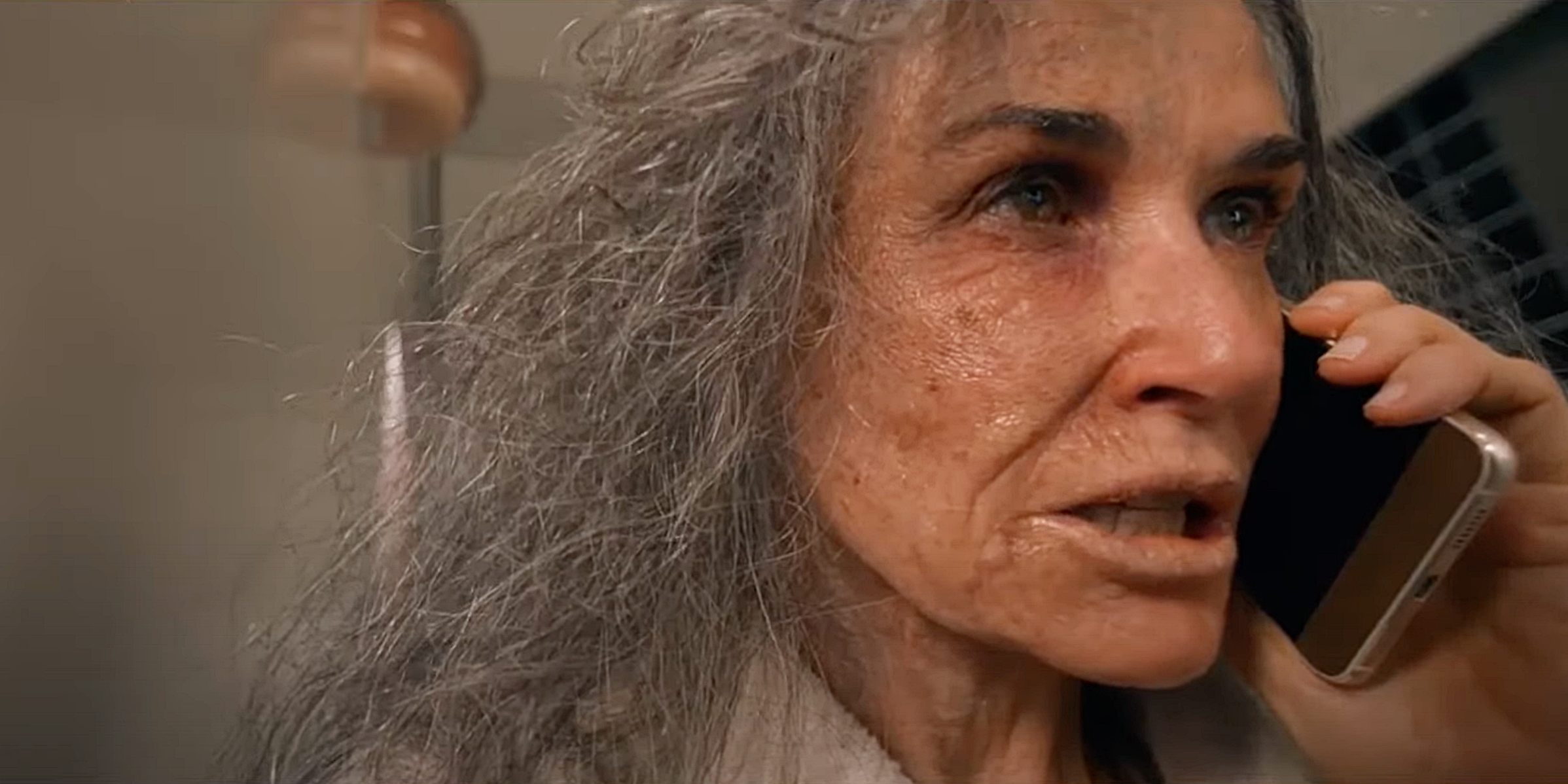
While some of the recent returns to prominence (or a prominent role) have been more low-key—garnering my attention but not much else—like Melanie Griffith popping up in The Disaster Artist, or Meg Ryan’s seemingly out-of-nowhere two-hander What Happens Later with David Duchovny, or Jessica Lange’s more recent work; others have been seen by wider audiences and greatly appreciated like Jodie Foster and Michelle Pfeiffer’s recent works. However, Demi Moore in The Substance is perhaps the most joyful and gratifying of these occurrences. I didn’t have much buzz to base this on, but as I was watching this movie it occurred to me “Oh my God, she’s going to win an Oscar for this.” Now, I’ve thought this kind of thing in isolated incidents before and been dead-wrong. Hence the long run of my awards. But one of the joys of this awards’ season has been that many have recognized the perfect confluence of performer, performance, character, and plot here. There were many people willing to look beyond traditonal reasons not to nominate or honor this performance like genre and narrative structure—and thank goodness. It’s not a career defining or re-defining role, it sets the record straight once and for all and that’s so much rarer an occurrence to see someone put it all out there, to deliver many times over, and get their just rewards.
Many of the reactions to Heretic were that Hugh Grant played Hugh Grant. And that was usually stated as a compliment but it also severely undervalues what he does in this role. He not only plays an ingratiating (on the surface host) to guests no one is eager to see; but he also deals with heaps of dialogue; but much of it is deep, pontificating text exploring the depths of religion and human nature. He has to then turn to the sinister side and carries the film. You need a certain amount of magnetism to play such a part but it takes considerable talent to make what could be overly dry, riveting instead.
Justice Smith plays a journey of many years with conviction, quietude and truth. It’s a role that also requires he play a lot of subtext, aside from his overt obsession, yearning and the voice-over work that he delivers very soulfully.
Ralph Fiennes partners with most of the actors in this film either in an ensemble scene or one on one. It’s a quiet turn for the most part but nonetheless he plays a character who’s inner-conflict propels the entire film and his brilliant depiction of that struggle makes it a very engaging film.
To call Timothée Chalamet’s performance in A Complete Unknown transformative is cliché, but sometimes clichés are true. Almost from the very beginning he is Dylan and he embodies him and performs as him throughout.
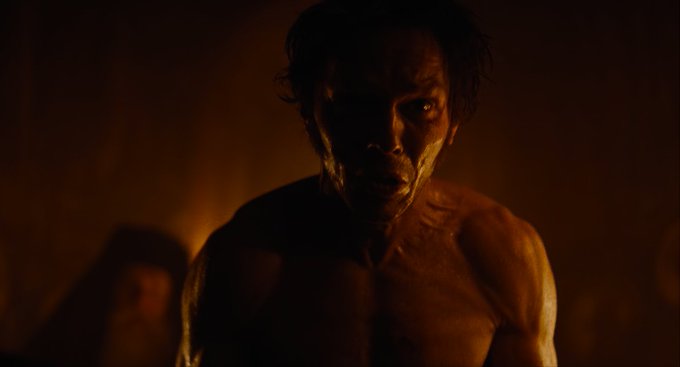
Victor Clavijo’s performance in La Espera is the epitome of quiet intensity. He holds wide and tight shots with equal power and emotes without dialogue throughout. This performance and film are worth seeking out.
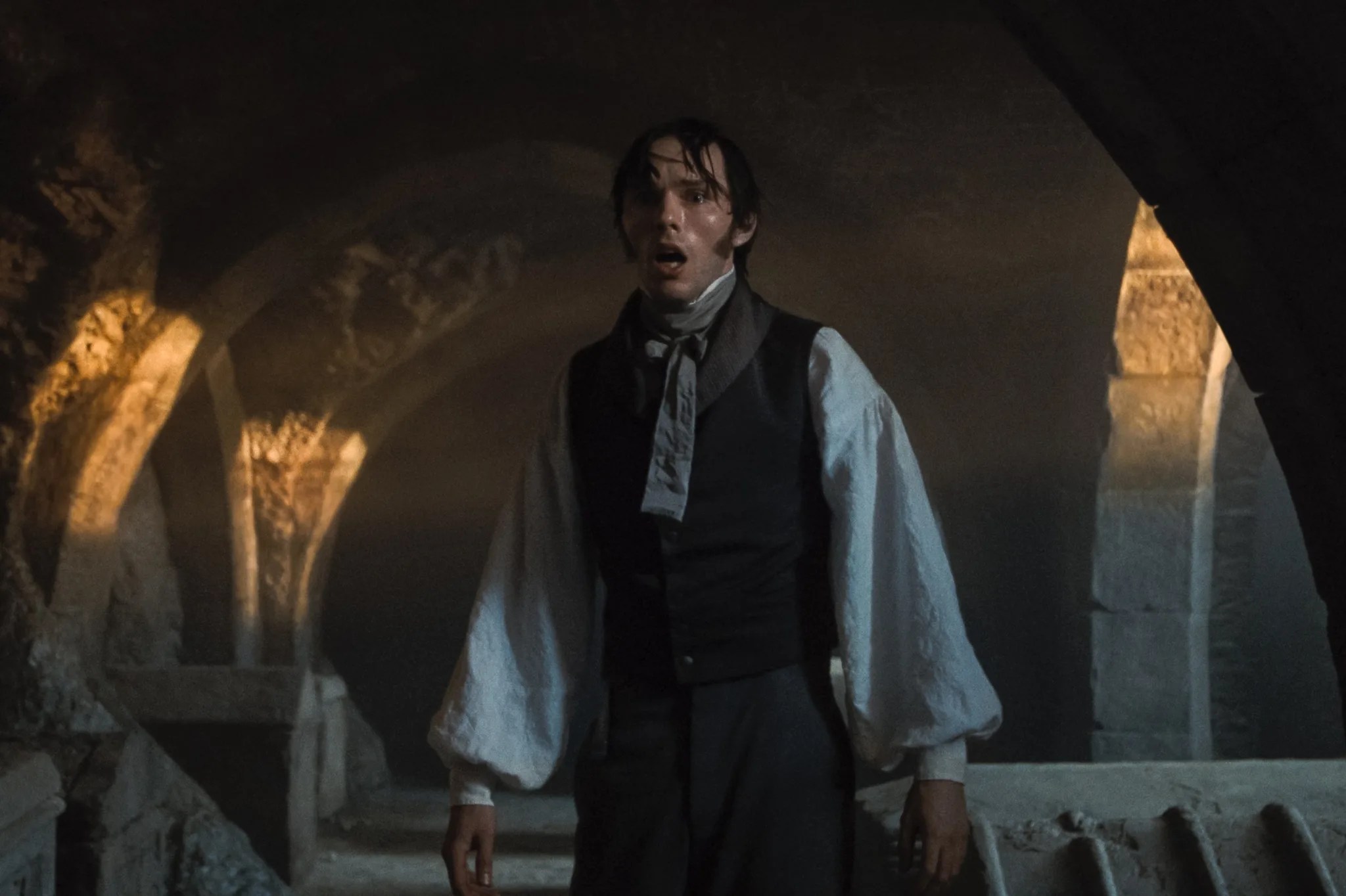
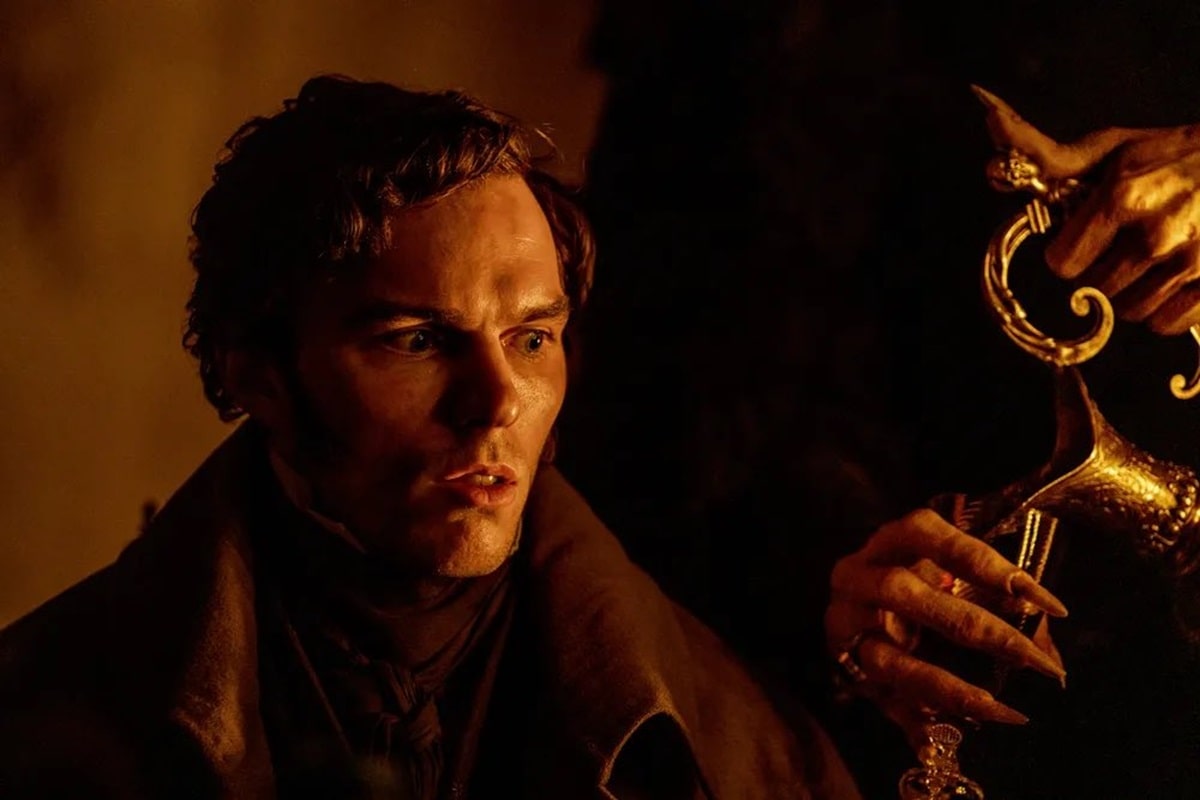
Nicholas Hoult’s character is put through the wringer in this film. He’s fearful of Orlok and for his wife, as things progress he becomes frantic, almost possessed by proxy and then single-mindedly seeking help for her. What he demonstrates here is that he’s one of the most persistently under-appreciated actors working right now.
All of these performances are wonderful, and this proved to be one of the most difficult of the deliberations. Much of the success of these films relies on their lead actors and all of them need to elicit disparate emotions from the audience. But, ultimately, I selected Hoult because of how much the role demanded of him and what tightrope he walks and keeps his balance.
Along with having six nominees, I decided not to deprive someone of a nomination because of optics. The optics being that yes there are two women who played nuns in this category. Yet, the role they play in the church functions almost like a mask in classical Greek theater. Because aside from wearing habits, Sônia Braga in The First Omen and Isabella Rossellini in Conclave play very different characters superbly.
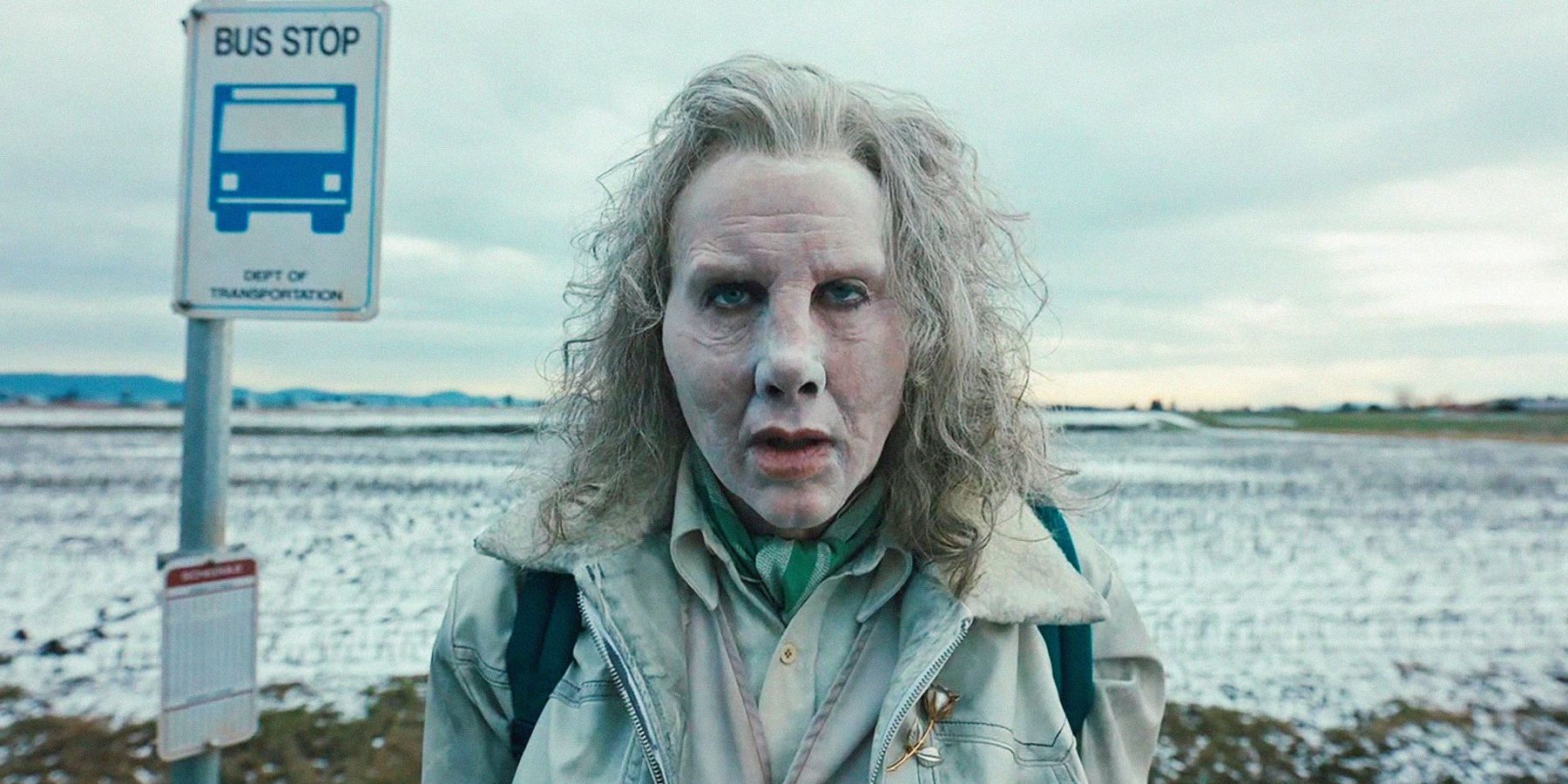
Nor did I want to over-emphasize how much or how little screen-time a particular performance had. Because Alicia Witt’s portrayal in Longlegs is captivating and magnetic for every single second she appears in the film. That even holds true for when she speaks brief words, practically devoid of meaning when we first hear them, over the phone.
Michelle Buteau in Babes was one of the year’s revelatory performances—immensely funny and authentic.
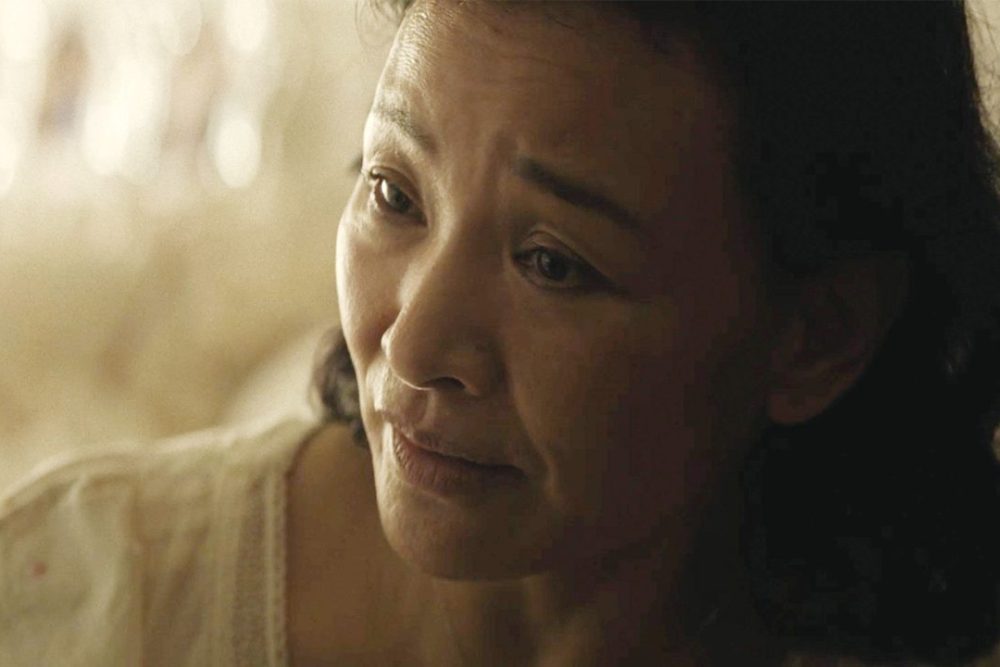
Most of what makes Dìdi such a wonderful debut is that many of the topics it explores adolescence, being a first-generation American, the travails of parentings, the immigrant experience in America are explored with little to no dialogue. Certainly the largest beats are decisions made an enacted without speaking. It is film-acting at its purest. And Joan Chen’s virtuosity comes through mostly in her physicality and how she emotes so much without the aid of dialogue. When she does speak her delivery and conviction is spectacular in a bilingual performance.
The story of this year’s nominations in this category are a contrast playing the part big and playing the part small.
Those who played their roles on the more reserved end of the spectrum are Sterling K. Brown in American Fiction and, surprisingly, Christopher Walken in Dune: Part Two. Brown’s performance is beautifully nuanced, Walken’s performance is quietly menacing.
On the bigger end of the spectrum Ruffalo plays comedic desperation, Willem Dafoe passionately, determined manipulation, Quaid brings the self-interested braggadocio of a Hollywood player.
However, much of the reason that Longlegs is so riveting is due to Nicolas Cage’s chilling, magnetically maniacal, quasi-operatic performance. That’s why he’s this year’s honoree.
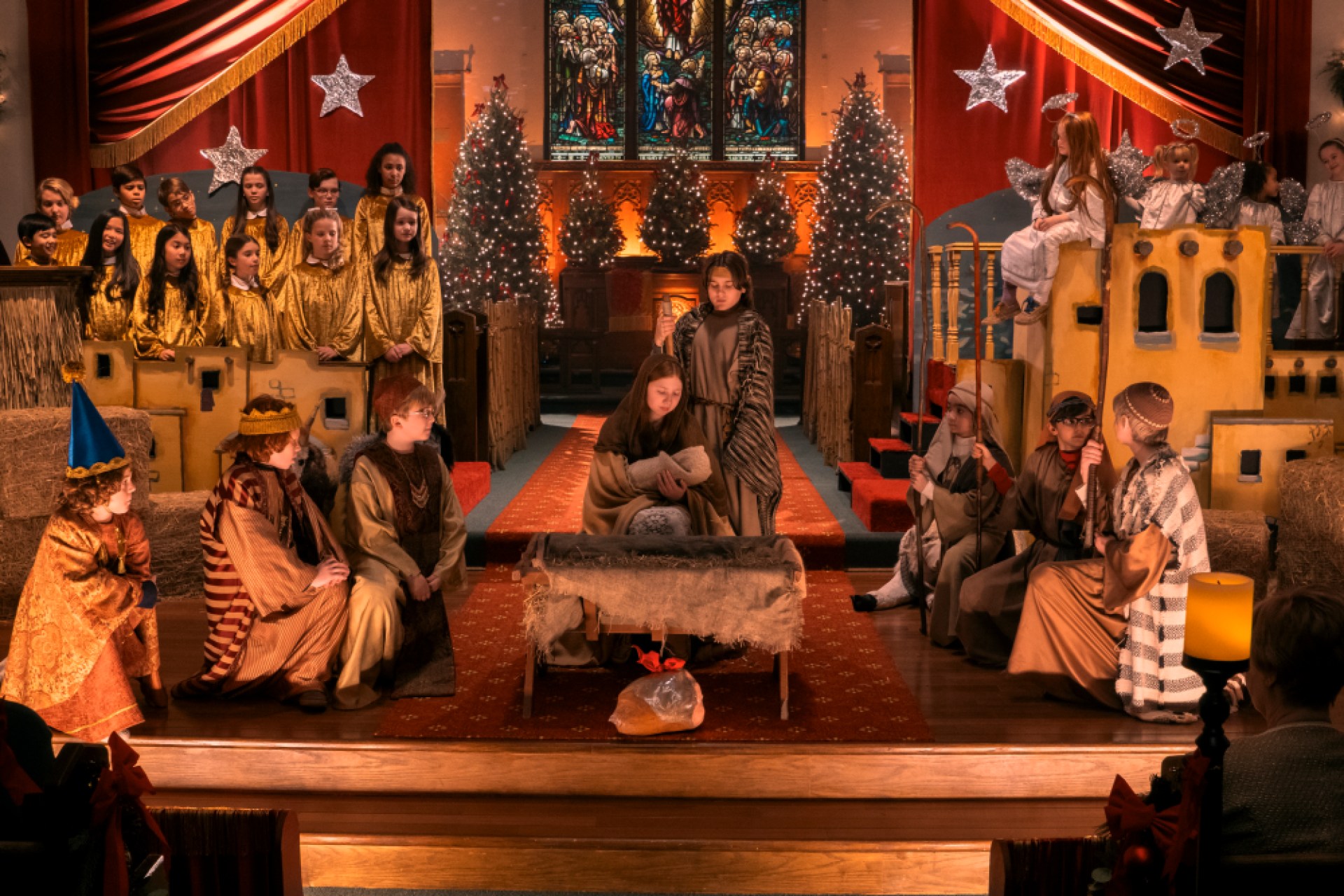
Beatrice Schneider The Best Christmas Pageant Ever
Pyper Braun Imaginary
Cailey Fleming IF
Ariella Glaser White Bird
Beatrice Schneider The Best Christmas Pageant Ever
Mia SwamiNathan Sight
Alisha Weir Abigail
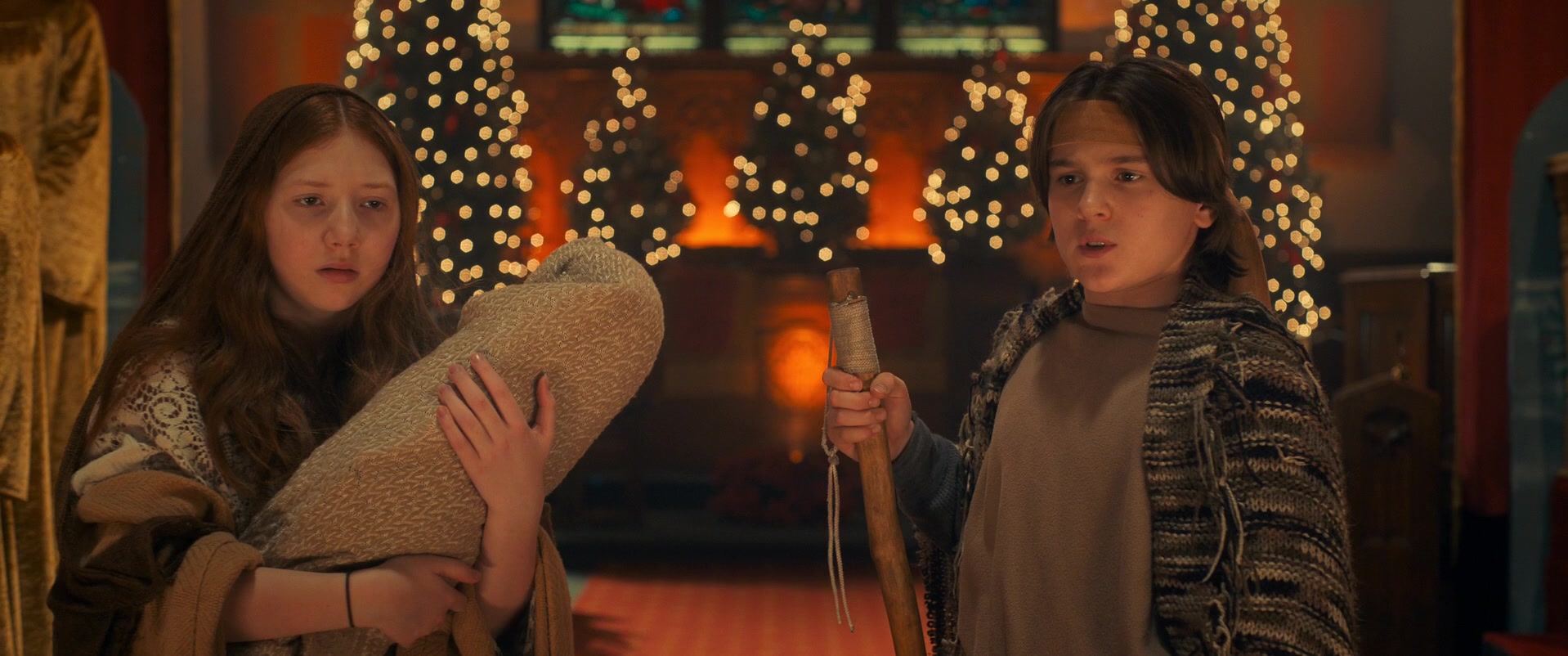
This was a very stacked category this year. All these actors were truly the beating hearts of their films and shouldered a lot of the burden and were a huge part of their respective film’s success. Ariella Glaser a character more nuanced than one might imagine at first blush, her arc from being fairly carefree despite all that went on around her to someone truly affected by the occupation and resistance was deft. Cailey Fleming had the unenviable task of seeing and interacting with creatures that would be created in post. Mia SwamiNathan convincingly plays a visually impaired girl who recovers her sight. Alisha Weir has to make her ballerina not only superficially sweet, but be able to turn into an intimidating, then a terrifying presence. Pyper Braun also works a lot with a companion she can’t see but has to make come alive and some of her scenes were among the most memorable of the year for me. However, what vaults Beatrice Schneider to being the honoree are not only the notes she played, not only the timing she displayed, but the raw, restrained emotion during the film’s climactic sequence that was so heart-rending.
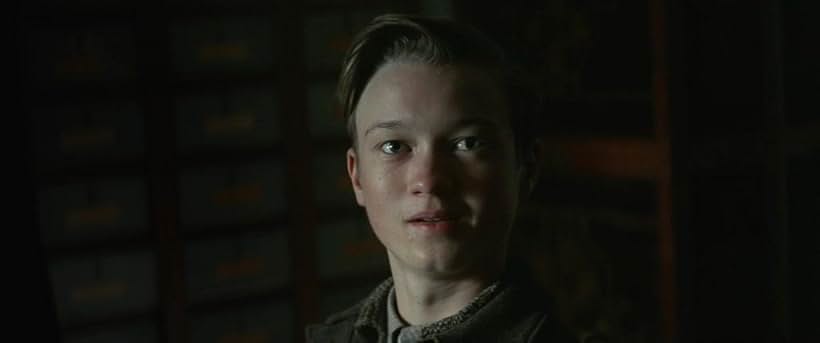
This category was also quite competitive. All the nominees are first-timers, a few were unknowns, others breaking through. Izaac Wang, for example, was a revelation in Dìdi. Luke David Blumm carried a significant portion of Lost on a Mountain in Maine. Rupert Turnbull gave a layered performance in a horror film. Homer Janson brought his balletic talent to a story, but his debut was stunning in all regards. Federico Ielapi was a revelation, but Cabrini looks like it’s the first in a long string of roles for him. Izaac Wang was a revelation, who I’d previously only seen in far smaller roles. However, Orlando Schwerdt is the honoree due to his ability to play both quiet, intimate scenes, the modulation in his voice, his exceptional line-readings and also do fairly fantastic Charles Chaplin impersonation.
Valeria Lamm The Hole in the Fence (El hoyo en la cerca)
Alix West Lefler Speak No Evil
Mahaela Park Dìdi
Molly Belle Wright The Best Christmas Pageant Ever
Molly Belle Wright plays the girl whose eyes the story is told through, which is not an enviable task because the story she tells is not only her own but mostly about these kids she knew. Yet there a naturalness to her performance, and a grounding aspect in this film. She also pulls of her arc quite ably.
Maheala Park, plays the object of Dìdi’s affection, but for as small as her part is in terms of screentime, it’s deceptively simple. There are subtleties that need conveying not only in the script, direction, and edit but in her performance as well. The job she does is quite skilled indeed.
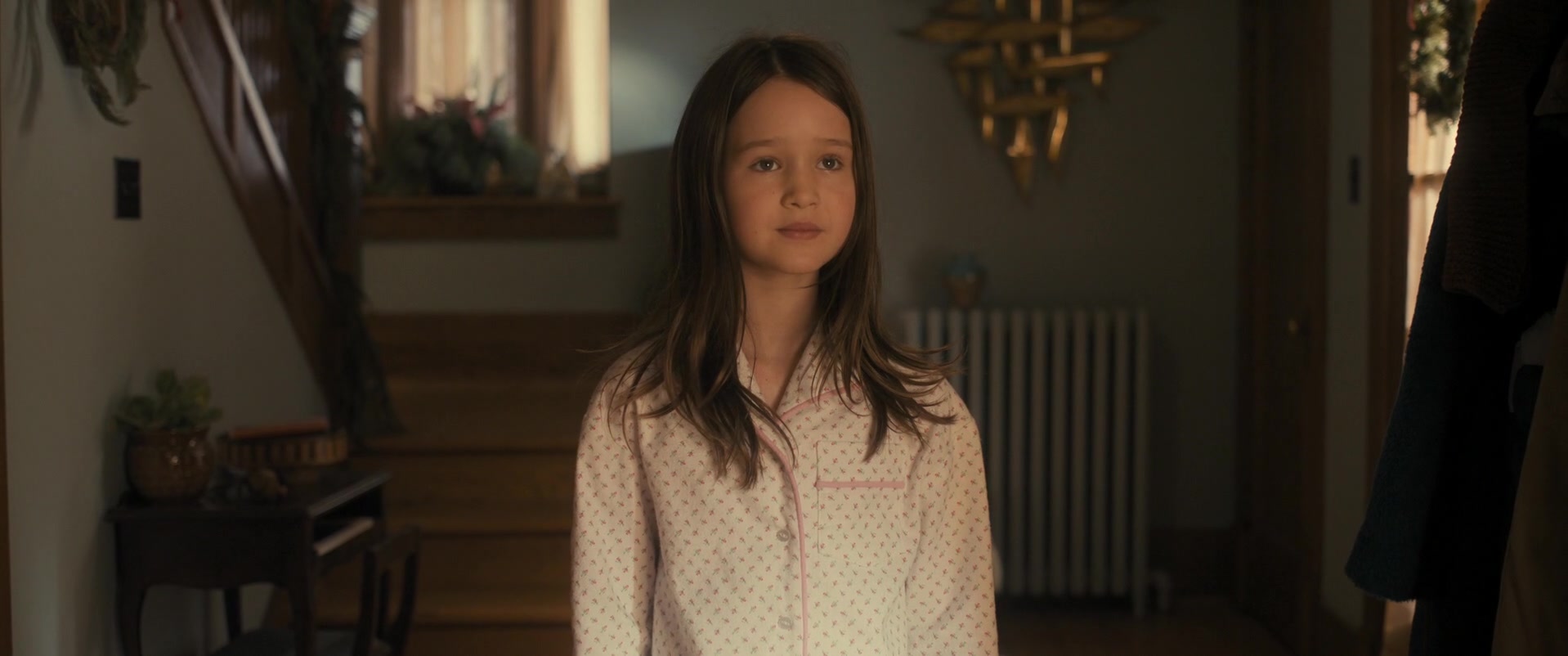
Children often have conspiratorial existences, which is to see they realize that sometimes they will see and experience things adults won’t believe. That’s the truth that Alix West Lefler plays so well in Speak No Evil. She sees the truth that her parents don’t yet understand and conveys that discovery and her struggle to keep herself and friend safe feel exceedingly authentic.
Madsyn Barnes does phenomenal work in We Grown Now, I never would’ve imagined this was her first credited.
Valeria Lamm stands out as a counterpoint to her male compatriots in the cast of this cutting horror satire. There’s a quiet cunning to her screen presence.
Ultimately, the honoree is Molly Belle Right for all I said above and in part because due to the structure of the story, I had some inner-debate about who the lead was.
Griffin Wallace Henkel Lost on a Mountain in Maine
Mason D Nelligan The Best Christmas Pageant Ever
Moisés Ruiz The Wait (La Espera)
Ben Wang Sight
Mason D Nelligan’s role in The Best Christmas Pageant ever is another difficult one to nail. He has to play someone who’s ostensibly a bully. Intimidating in appearance and used to getting his way, but he also displays curiosity and caring when he finds something he’s interested in.
Ben Wang plays Ming, one of the lead characters in Sight at age fourteen, and his involvement amounts to greater screen-time and importance than most “younger version” roles. He also plays his character when he emigrates to the US so it’s a bilingual role as well as being quite moving considering the emotional content of many of the scenes he plays in.
Griffin Wallace Henkel is not the “lost one” in Lost on a Mountain in Maine. He portrays a lot of guilt and is involved in rather intense scenes of sibling rivalry to start (including fights that are more than just roughhousing)
Maxwell Jenkins in Arcadian isn’t just tasked with playing frightened in this post-apocalyptic tale, but also has to play a sibling rivalry (another theme) and also being the louder, brasher brother.
Moisés Ruiz’s participation in The Wait (La Espera) is brief but quite poignant — to say too much more would risk spoilers but his work within the frame is rather impressive for someone his age.
Bryce Gheisar reprises and expands upon his role from Wonder. He appears but in the framing mechanism of this story. However, the emotional depths he has to plumb in short course, the denial he displays, and the guilt that still lingers years later that he needs to play is done so movingly and convincingly. The scenes he plays are quiet, impactful and he partners admirably with Helen Mirren. And these are the reasons why he is this year’s honoree.
Ralph Fiennes, Stanley Tucci, Isabella Rossellini, Brían F. O’Byrne, Sergio Catellito, Carlos Diehz, Lucian Msamati, Jacek Koman, Rony Kramer, Valerio Da Silva, Joseph Mydell, Vincenzo Failla, Garrick Hagon, Merab Ninidze, Mahdav Sharma Conclave
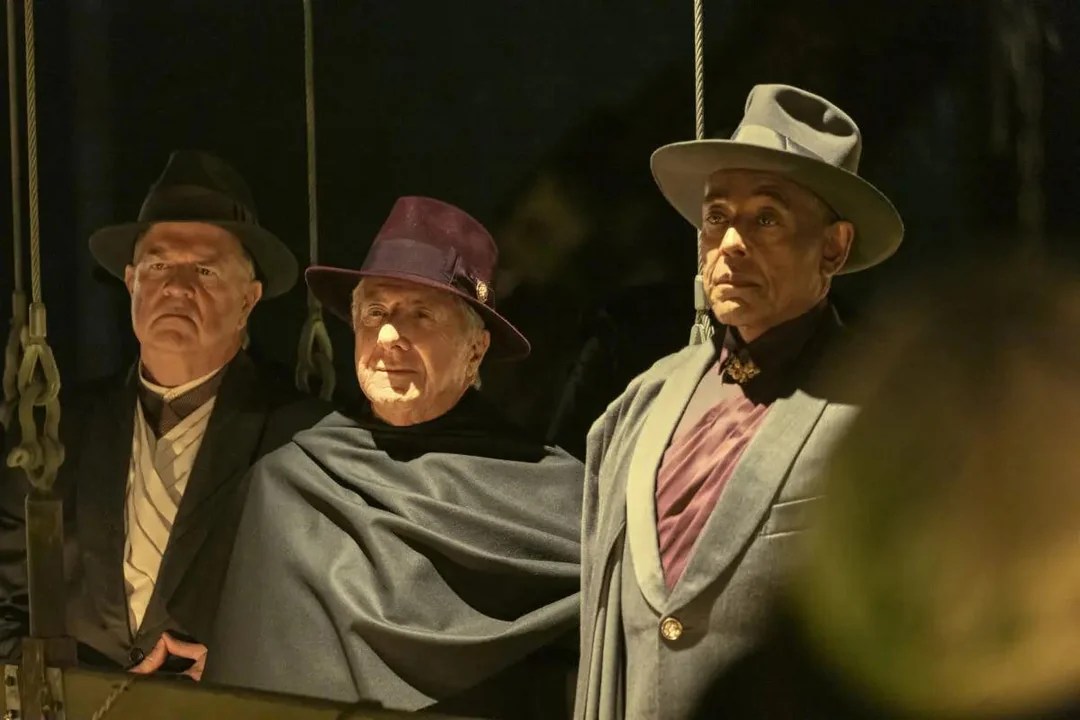
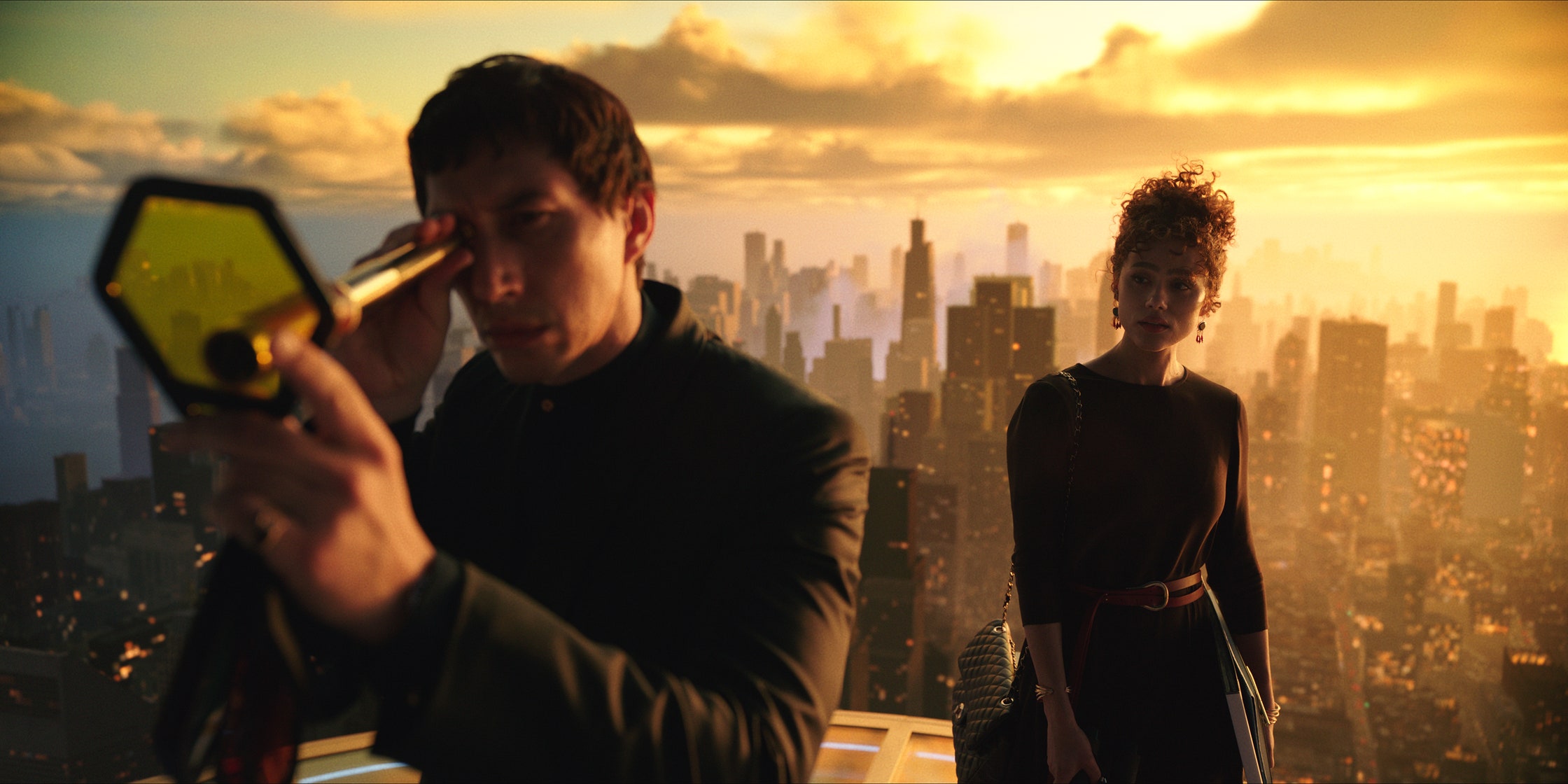
Adam Driver, Giancarlo Esposito, Nathalie Emmanuel, Aubrey Plaza, Shia LaBeouf, Jon Voight, Laurence Fishburne, Talia Shire, Jason Schwartzman, Kathryn Hunter, Grace VanderWaal, Chloe Fineman, etc. Megalopolis
Lily-Rose Depp, Nicholas Hoult, Bill Skargård, Aaron Taylor-Johnson, Willem Dafoe, Emma Corrin, Ralph Ineson, and Simon McBurney Nosferatu
Cynthia Erivo, Ariana Grande, Jeff Goldblum, Michelle Yeoh, Jonathan Bailey, Ethan Slater, Marissa Bode, Peter Dinklage, Bowen Yang, Bronwyn James, Aaron Teoh, Shaun Prendergast Wicked
Christian Friedel, Sandra Hüller, Johann Karthaus, Luis Noah Witte, Nele Ahrensmeier, Lilli Falk, Anastazja Drobniak, Cecylia Pekala, and Max Beck The Zone of Interest
Oftentimes, my inner-debate regarding the Best Cast copy unfolds thinking not only of moments, not only of individual performances, but also thinking of how the cast of characters functions within the film. Imagine if you will atomic diagrams the kind you had to label and decipher in chemistry and other science classes. Instead of particles being labeled with the names of elements to create water or other solutions or compounds, the particles are cast members who combine and recombine to form the dramatic makeup the film. Some films have one actor (particle) recombining with other actors (particles) one-on-one; other films are more intricate, featuring various different combinations. This analogy came to me rather strongly this year because the genres of the films I selected are not only quite disparate, but the ways in which the casts interact are as well.
In The Zone of Interest, there is a surface that is seemingly calm, but beneath the surface, obscured from sight, fission has begun. As characters break apart, you can see the vicious truth bubbling to the surface.
In Megalopolis, you have pieces with diametrically opposed properties that combine to form something new and necessary. Wicked has dark tones and serious behind the overtly bubbly, toe-tapping music and fantasy world, which are all brought to the story with equal aplomb by all the cast members.
What’s most impressive in Nosferatu is that most of the characters are almost always near emotionally boiling-over, are always simmering at the least, yet there is modulation, control, restraint, when needed, and when things explode they do so to great effect at the right time and not to an excessive degree.
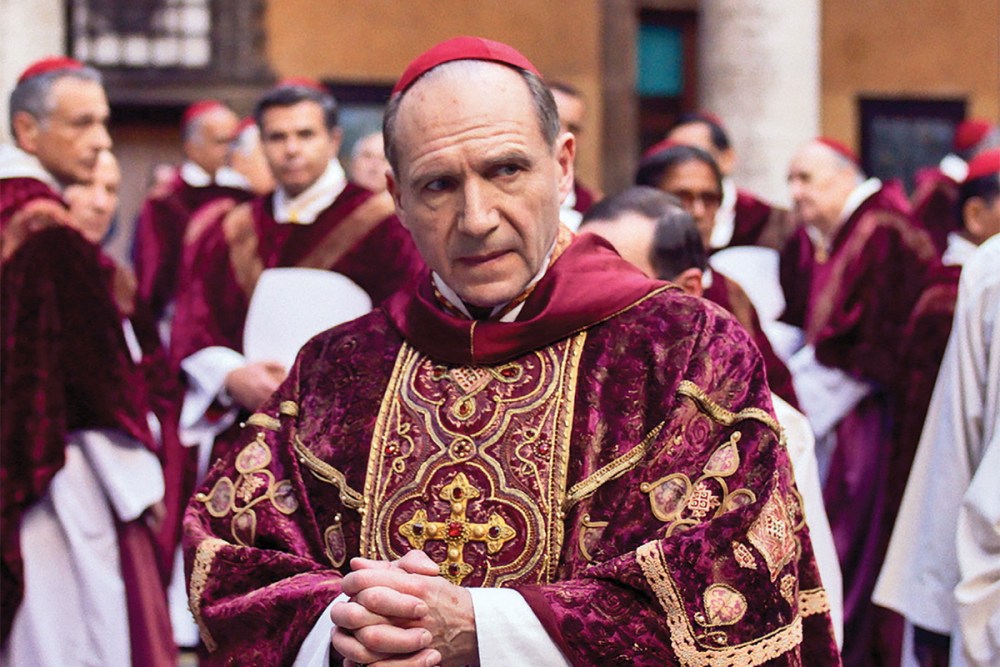
What separates Conclave from the rest of the field, to go back to the analogy I started with, is that while much of the film does focus on the Dean of Cardinals (Ralph Fiennes), the permutations of interactions that he and others have with one another are quite distinct, while shifting tonally as appropriate. The dialogue is always at a high-level, the performances always nuanced and affecting, yet, each twist and turn works not just on a narrative political/clerical level but on a personal one as well because of the connected nature of the performers with their personages.
Kynlee Heiman, Sebastian Billingsley-Rodriguez, Wyatt Dewar, Matthew Lamb, Owen Mathison, Ewan Matthis-Wood, Essek Moore, Laurelei Olivia Mote, Mason D Nelligan, and Isla Verot The Best Christmas Pageant Ever
Valeria Lamm, Lucciano Kurti, Yuba Ortega, Santiago Barajas, Eric David Walker, Giovanni Conconi, Adolfo Osorio, etc. The Hole in the Fence (El hoyo en la cerca)
Mason Thames, Rafael Alejandro, and Ramon Reed Incoming
Blake Cameron James, RJ Lewis, Gian Knight Ramirez, Madsyn Barnes, and Giovani Chambers We Grown Now
Ariella Glaser, Orlando Schwerdt, Bryce Gheisar, Selma Keymakci, Jordan Cramond, Jem Matthews,and Mia Kadlecova White Bird
In the Youth Ensemble category the debate was a more typical one than me. There were two types of nominees: The larger, deeper cast (The Best Christmas Pageant Ever and The Hole in the Fence (El hoyo en la cerca), and the smaller cast, doing heavy-lifting (White Bird, We Grown Now and Incoming).
Depending on the specifics of the films and the year, I have made decisions between these two camps in different ways. At times by how deep the strengths run, others by how inextricably linked this particular type of ensemble is to the central themes and conflict. While in some years these kinds of debates have led to eliminating one camp or another early one. This year the decision came down between tone film in each camp, the two strongest collective performances based on each set of expectations: The Best Christmas Pageant Ever and White Bird.
While there are three spectacular performances by young performers in White Bird dealing with weightier issues, there are more a few more impressive turns in The Best Christmas Pageant Ever with young actors playing roles meant to elicit a wider ranger of emotions in less screen-time allowed per performer in a more grounded reality. That’s why the ensemble in The Best Christmas Pageant Ever is the honoree by the slightest of margins.
Strange Darling is a marvel of non-linear structure and subverting expectations.
Megalopolis excels at combining disparate influences into a modern fable.
Problemista is a triumph of imagination.
The Substance for the whole of its running time delves into a five-act tragic parable that speaks volumes without being preachy but is instead revelatory and captivating.
I Saw the TV Glow is a gripping examination of queer identity/(in)visibility, memory, perception and media.
The honoree is The Substance for it structure, message, audacity, concept and also how it draws on multiple inspirations to create its concept without being derivative.
Robert Eggers, Patrick Galeen, Bram Stoker Nosferatu
Cord Jefferson, Percival Everett American Fiction
Peter Straughan, Robert Harris Conclave
Denis Villeneuve, Jon Spaihts, Frank Herbert Dune: Part Two
James Watkins, Christian Tafdrup, Mads Tafdrup Speak No Evil
American Fiction weaves a lot of brilliantly constructed imagined scenes into a writer’s office. And it’s also a wonderful balancing act of family and work as well as inner-conflict.
The screenwriters in Speak No Evil sees writers ingeniously transport their story from the Netherlands to England. Bringing an Americanized spin on to what was before a purely European story.
Nosferatu creates a new work from two interrelated sources.
Dune: Part Two tackles the back half of dune, which when done well is preferable adaptation practice for a long work being converted into film. And in this case it’s a much more effective film than the first installment.
Conclave distills a novel full of intrigue and compelling dialogue into a concise, tight, tense film.
American Fiction is the honoree because of how the script combines it unique elements to make a funny, smart, insightful, and moving film.
First, I want to comment on the fact that I think its ridiculous that Hans Zimmer’s brilliant score was disqualified from Oscar contention. I realize there have to be ground-rules about what qualifies and what doesn’t but the fact that it’s reportedly due to a mathematical equation about how much music he was allowed to use from the first film is asinine. Leitmotifs are a musical tool and in essence he’s being penalized for using his own work from the prior film and building on it. Furthermore, it’s an artistic prize and to me, the new music in Part Two became the signature and was what made this a far superior work to the original.
Raffertie’s driving electronic score is the engine of The Substance. A film of its length would not be half as effective if not for the music pulling us along, through events, into the characters’ emotions and augmenting the emotional experience.
In Conclave, Volker Bertelmann has crafted a cyclical ensemble of strings that ratchet up the tension brilliantly. The music communicates viscerally, as it should, while the script and cast deal with weighty and heady issues.
Robert Ouyang Rusli’s score for Problemista, is whimsical, diverting, light, and captivating capturing the oddball soul of this imaginative heartfelt comedy.
In a year where Beterlmann’s string-heavy throwback of a score came out, we were also blessed with Robert Carolan’s Nosferatu which took the original subtile “A Symphony of Horror” to heart. This music is as beautiful as it is chilling and that’s why it’s this year’s honoree.
Jérôme Eltabet, Coralie Fargeat, Valentin Féron The Substance
Nick Emerson Conclave
Louise Ford Nosferatu
Sofi Marshall I Saw the TV Glow
Joe Walker Dune: Part Two
Nosferatu cuts between characters and locations frequently in the film. Contrasting emotions building emotional intrigue before it layers in the horrific elements. Then the intercutting intensifies on a collision course toward the climax.
The edit in I Saw the TV Glow travels both into and out of a TV show the two leads are obsessed with, it travels through time and into and out of Owen’s mind.
The pacing of Dune: Part Two is a masterclass, making its 2 hour, 46 minute running time seem brisk.
The visual flow of The Substance, like the score drives the story persistently. It also underscores the body horror in its editorial choices.
The edit of Conclave, much like its cinematography, is staid but is perfectly fitting within the world Edward Berger is constructing through is direction. And in an era where so many films seem fearful of allowing you to absorb anything—as opposed to hitting you with it—this film does that beautifully.
The honoree out of all these very deserving nominees is Nosferatu due to the modulation it incorporates throughout.
Brian Berger, Lawrence He, Jessica Tresidder, et al. Arcadian
James Ashton, Laure Montagnol, Jessica Meir et al. Furiosa: A Mad Max Saga
Dave Whitehead, Chris Terhune, Jeff Sawyer, Matt Stutter, Michael Babcock, Lee Gilmore, et al. Dune: Part Two
Michael Fentum, Anna-Agata Denzenova, Samir Foco, Mariusz Glabinski, Steve Little et al. Nosferatu
Martín Hernández, Charles Maynes, John Nathans, Alejandro Quevedo, Roland N. Thai et al. Terrifier 3
Furiosa has a slightly different feel than its predecessor, but that doesn’t mean the sound-work in this edition is of any lower quality than the first, it’s not as booming, but still paints a vivid aural portrait using a slightly different palette.
Terrifier 3 is out to unnerve, to frighten, and yes, to disgust. The way in which it achieves that end most often is through its sound design. Things in this film always sound grosser and realer than they look.
Perhaps the single best sound effect I heard in a film last year was the chaotic chomping of the creatures in Arcadian. It was one of those chest-thumping effects that made me flinch several times. That combined with the sound of the destruction they cause created a very affecting soundscape.
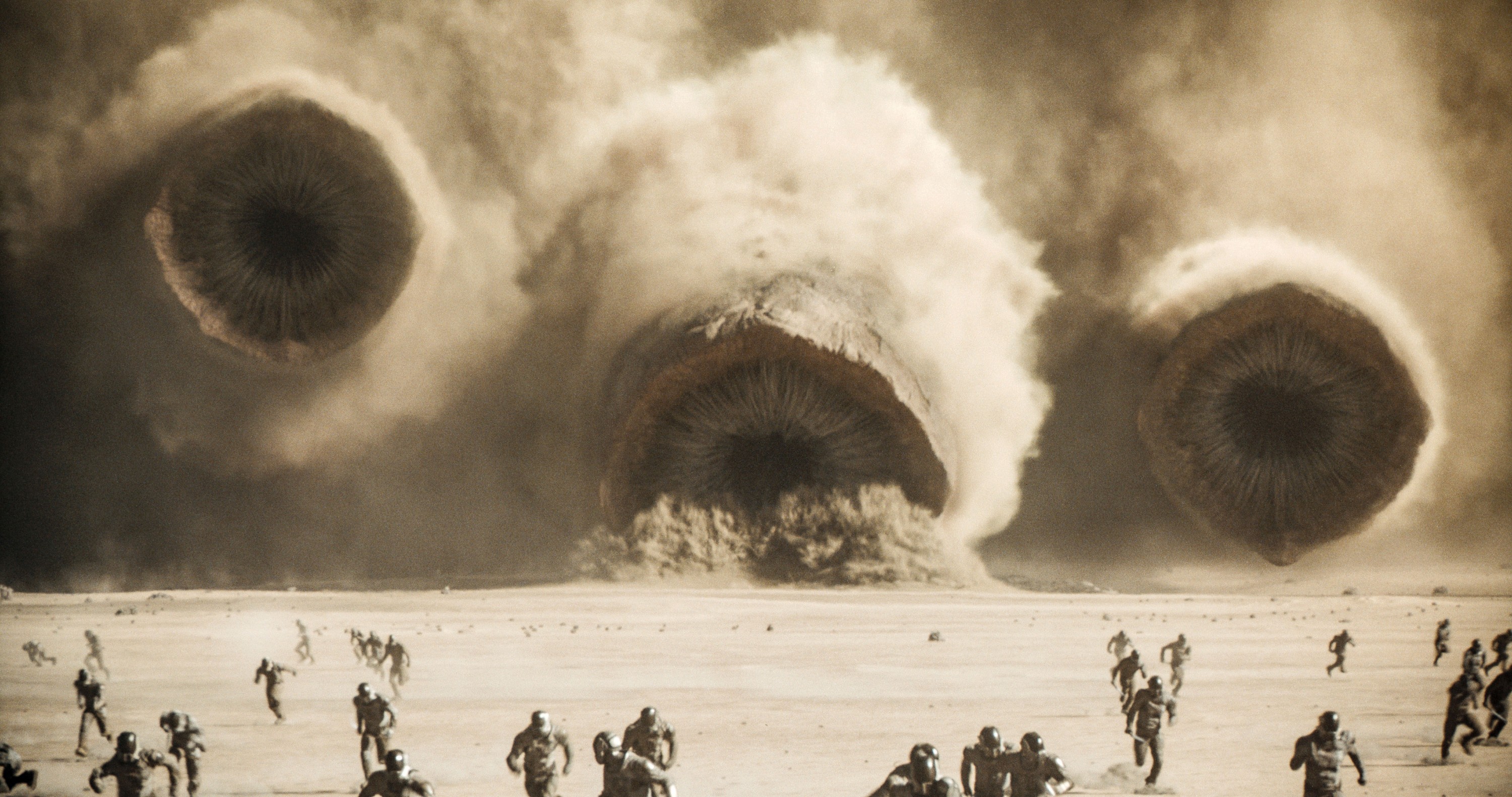
Dune: Part Two’s major introduction was the sand-worms and what they sound like, but the environs with ships, the score, the fights made for the creation of a veritable and true alien worlds.
Nosferatu doesn’t have the busiest soundscape but it does use its mélange of music, screams, cries, and the deep, ominous, rumbling voice of Count Orlok to its fullest effect.
However, the fullest, most effective in creating its soundscape is Dune: Part Two.
Miguel Ángel Mora, Raúl Lavado Verdú The Wait (La Espera)
The strengths of The Wait (La Espera) are overall composition, the use of landscape, and color balance.
That strength of Poor Things is its implementation of black & white and color photography, choice of lenses, the manner in which the visual language creates a world.
Conclave uses light and dark, and use of its sets helped to augment the tension inherent in the narrative. And also examine the interpersonal conflict.
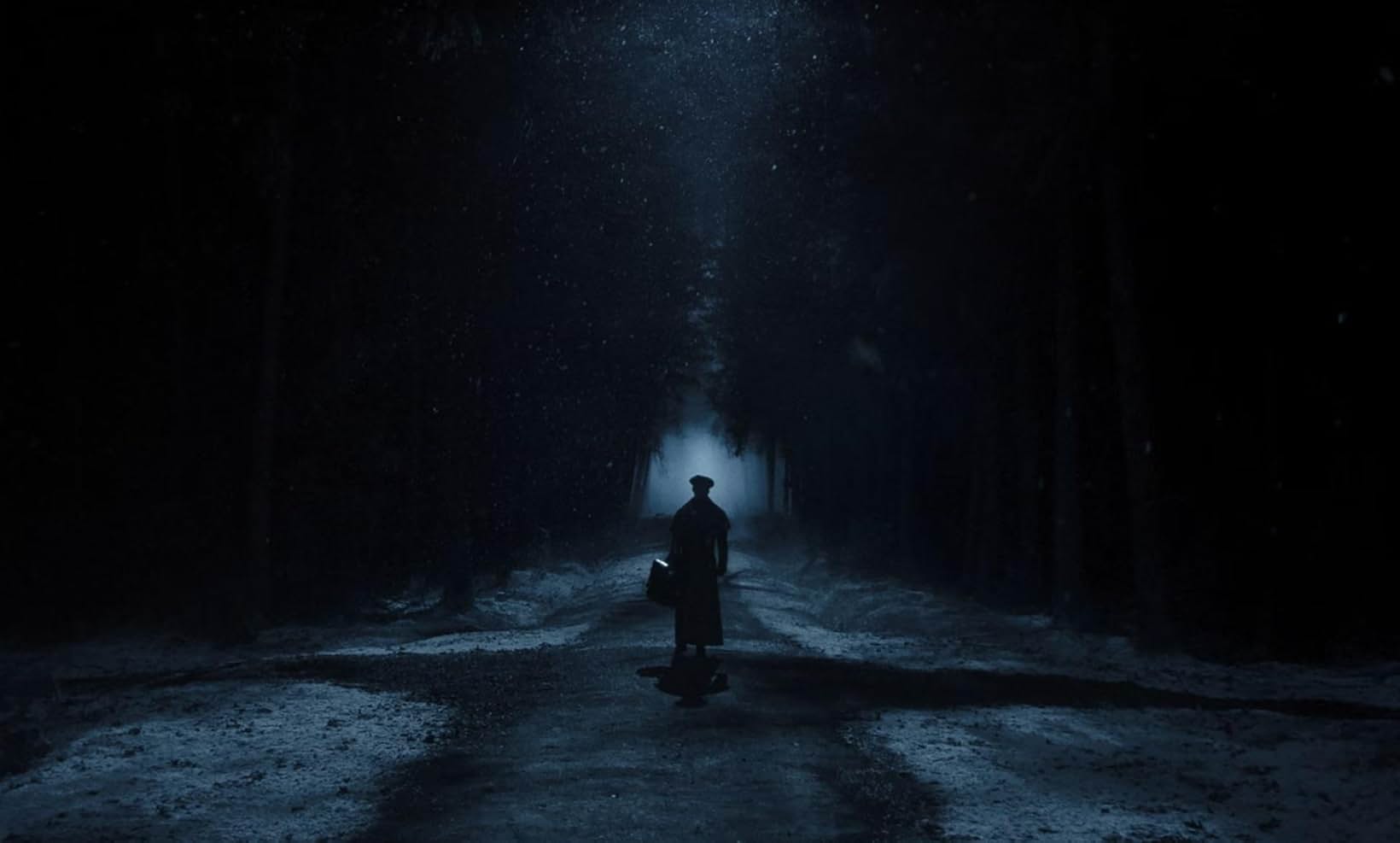
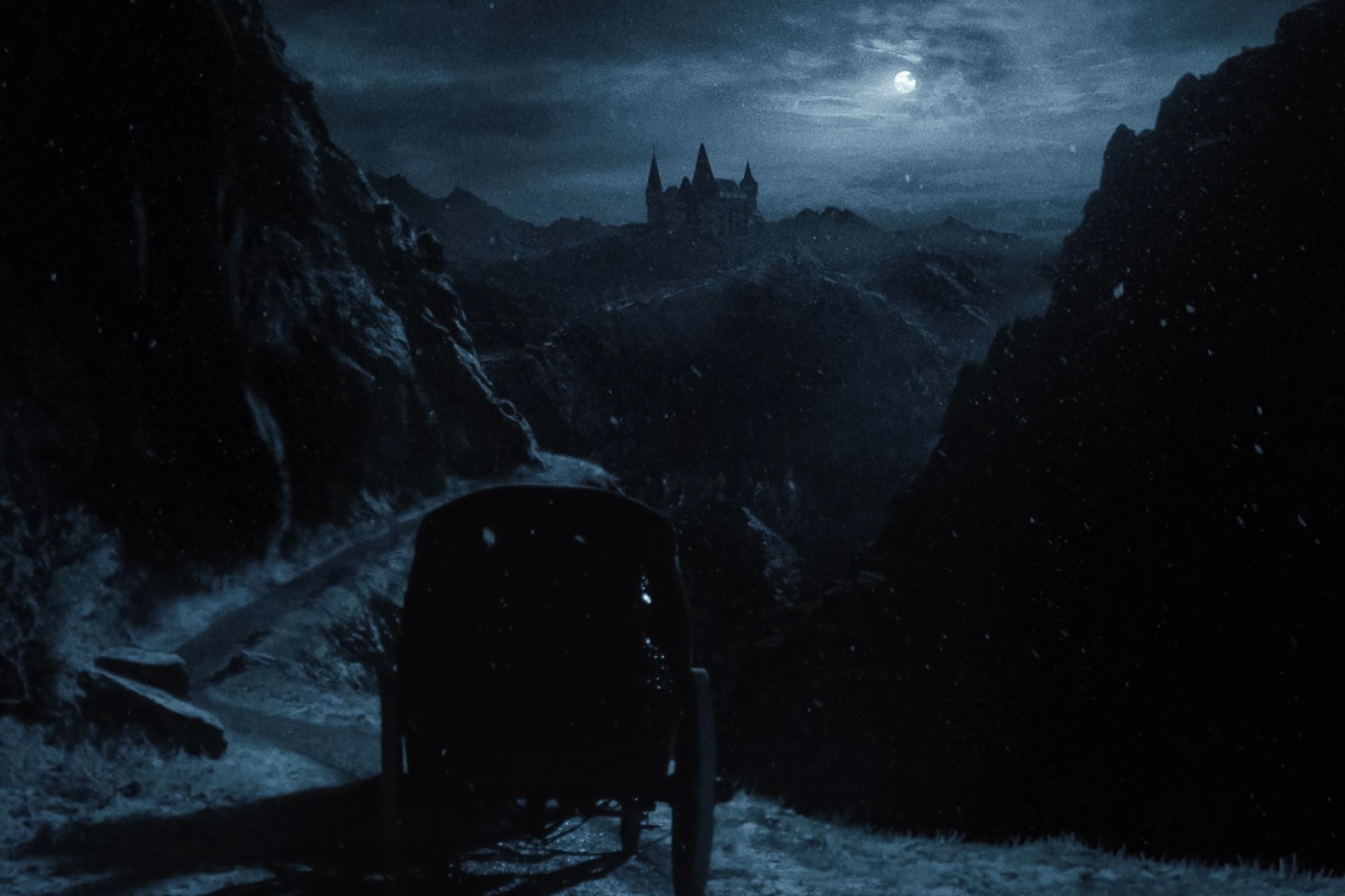
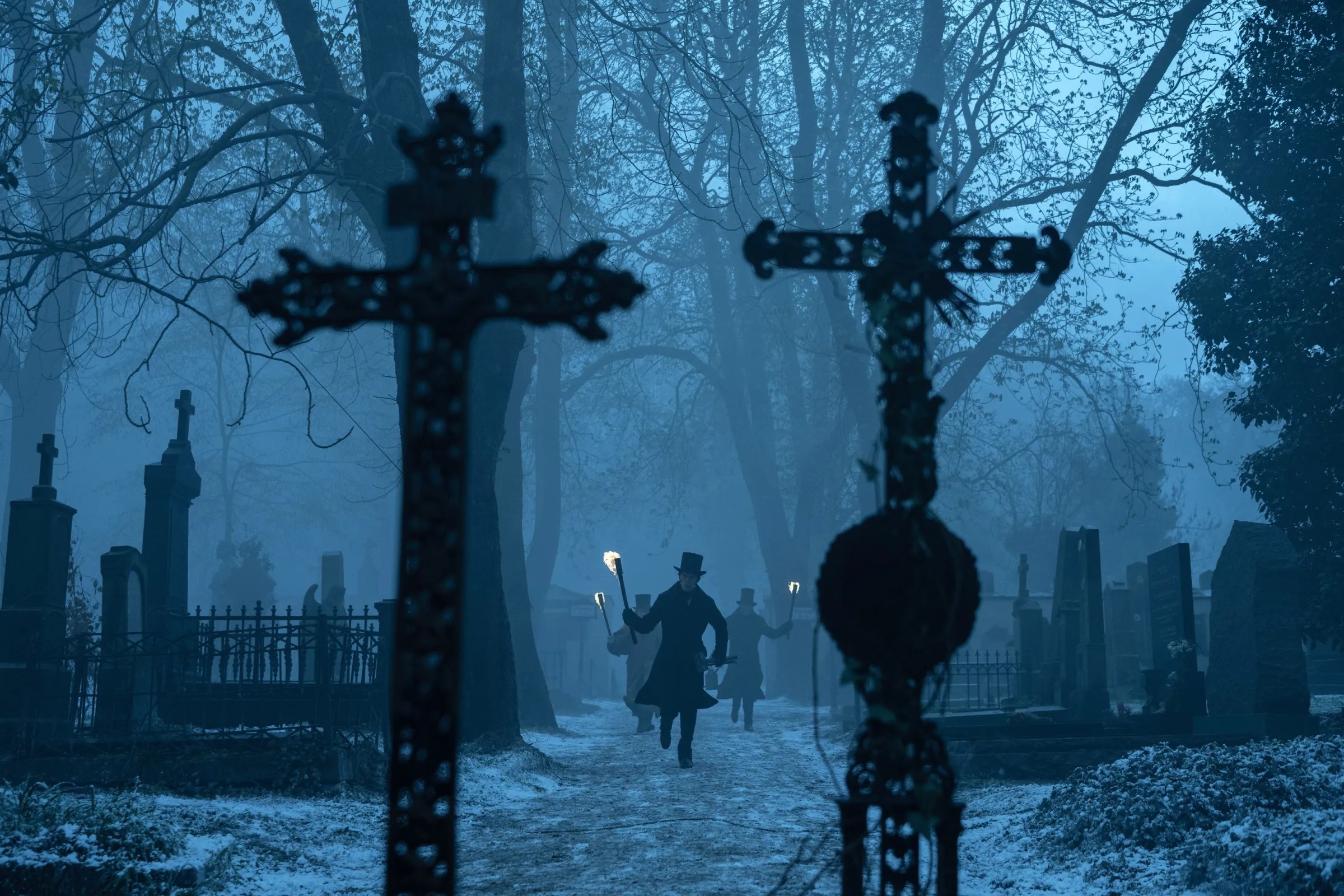
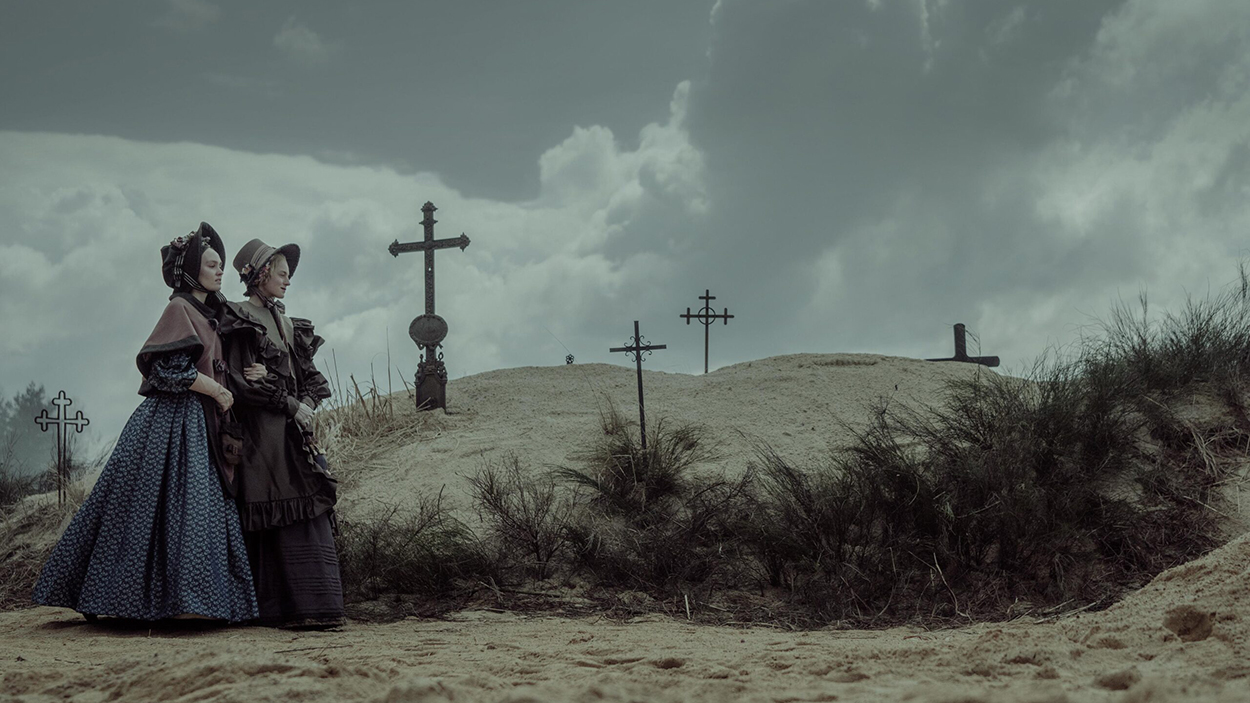
The two most accomplished visual spectacles of the year were Dune: Part Two and Nosferatu. Both do so in disparate manners: Dune with sun-drenched sandy landscapes; Nosferatu with bleak gothic vistas. All of these nominees are brilliant and ought to be watched, but what separates Nosferatu is he number of brilliantly framed shots in this film.
Much like the costume design, Megalopolis also pulled its art direction influences from various styles, eras and influences.
Nosferatu gives us Orlok’s castle, it gives us 19th century cities, cramped offices, dining rooms, and bedrooms of a bygone time.
The art direction when the sets are mostly mundane locations that are cluttered or rundown are often overlooked. The locations in Longlegs are all memorable.
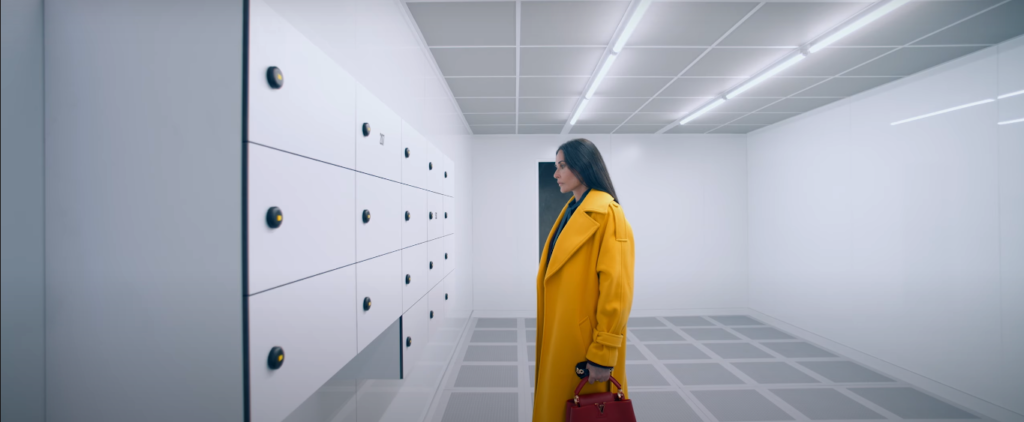
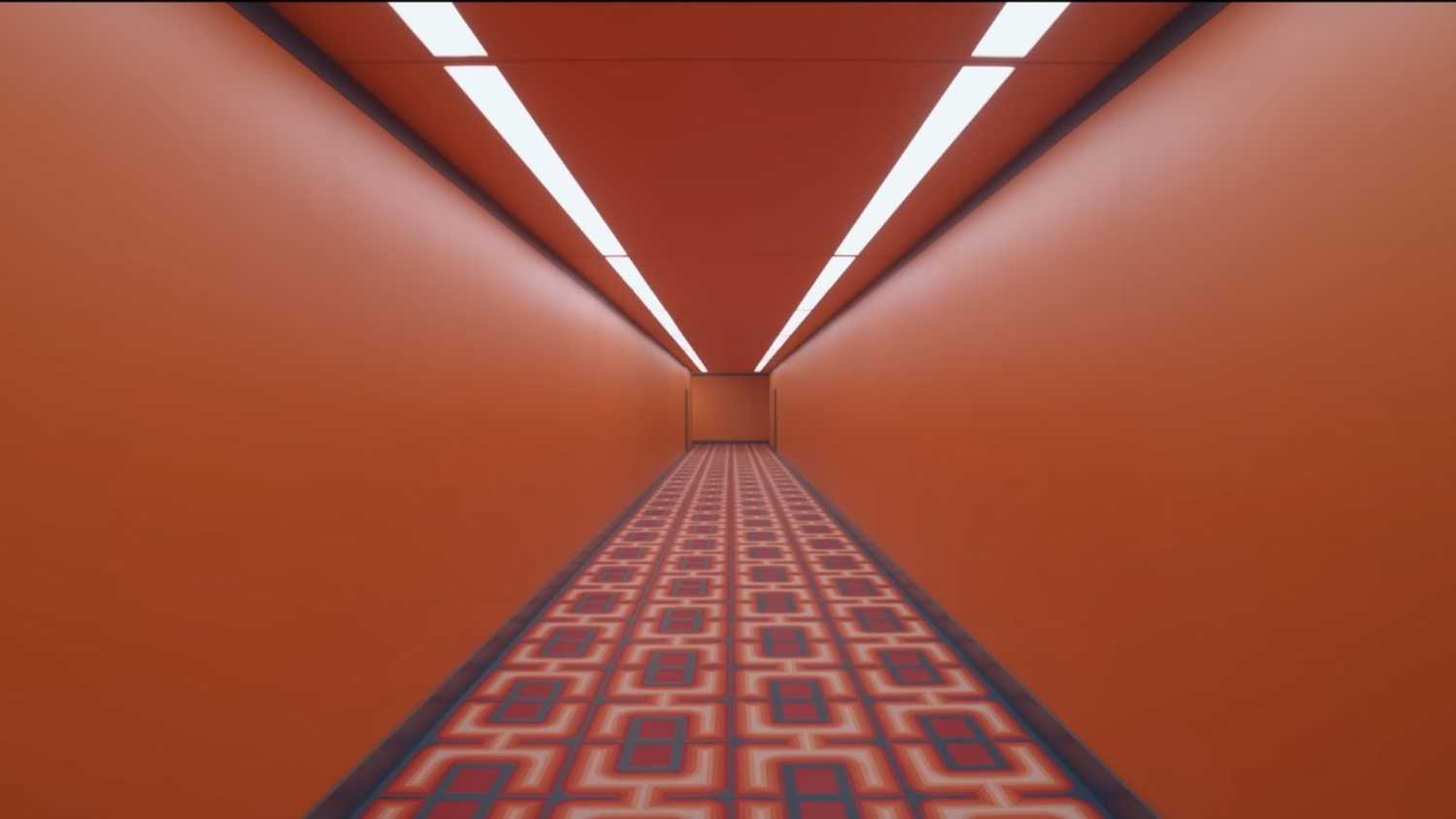
The Substance’s set design is influenced by a number of films, The Shining included, and all of it is gorgeous to look at, befitting of the story, and functional within the story.
As per usual with this category, my goal in this category is to go a bit beyond what the Academy generally does. Namely, they tend to veer away from films that have modern fashion aesthetics. Period is the way in. Not to disparage designers who do period work but I’ve noticed there are films who handle different eras or realities within the same narrative that are far too often overlooked.
My definition of realities in this sense is a bit broad. For example, there are disparate alien races in Dune who wear different sorts of attire. A similar stratification exists in Furiosa. Nosferatu needs to create classes nineteenth century society as well as a member of the undead. Wicked a fantasy world with various types of beings, dressed differently comes vibrantly to life. But the film that pulls from the most distinctive and disparate bits of inspiration from various eras and cultures and blends them all together with the greatest degree of success is Megalopolis.
The decision to use practical makeup for Elphaba alone reaps rewards throughout Wicked, add to that the fantastical and beauty makeups for other characters just rounds out the vision of Oz beautifully.
Aside from the work on the murder scenes in Longlegs there is of course Nicolas Cage’s botox-gone-wrong demon.
Nosferatu earns the on the tremendous work on the Count Orlok makeup alone.
The progression of makeups in A Different Man is excellent and an integral part of the film.
It’s not often that the hair and makeup team has to strive for both glamorous beauty makeups galore and special effects makeups that get more and more monstrous. The Substance does both these things extremely well.
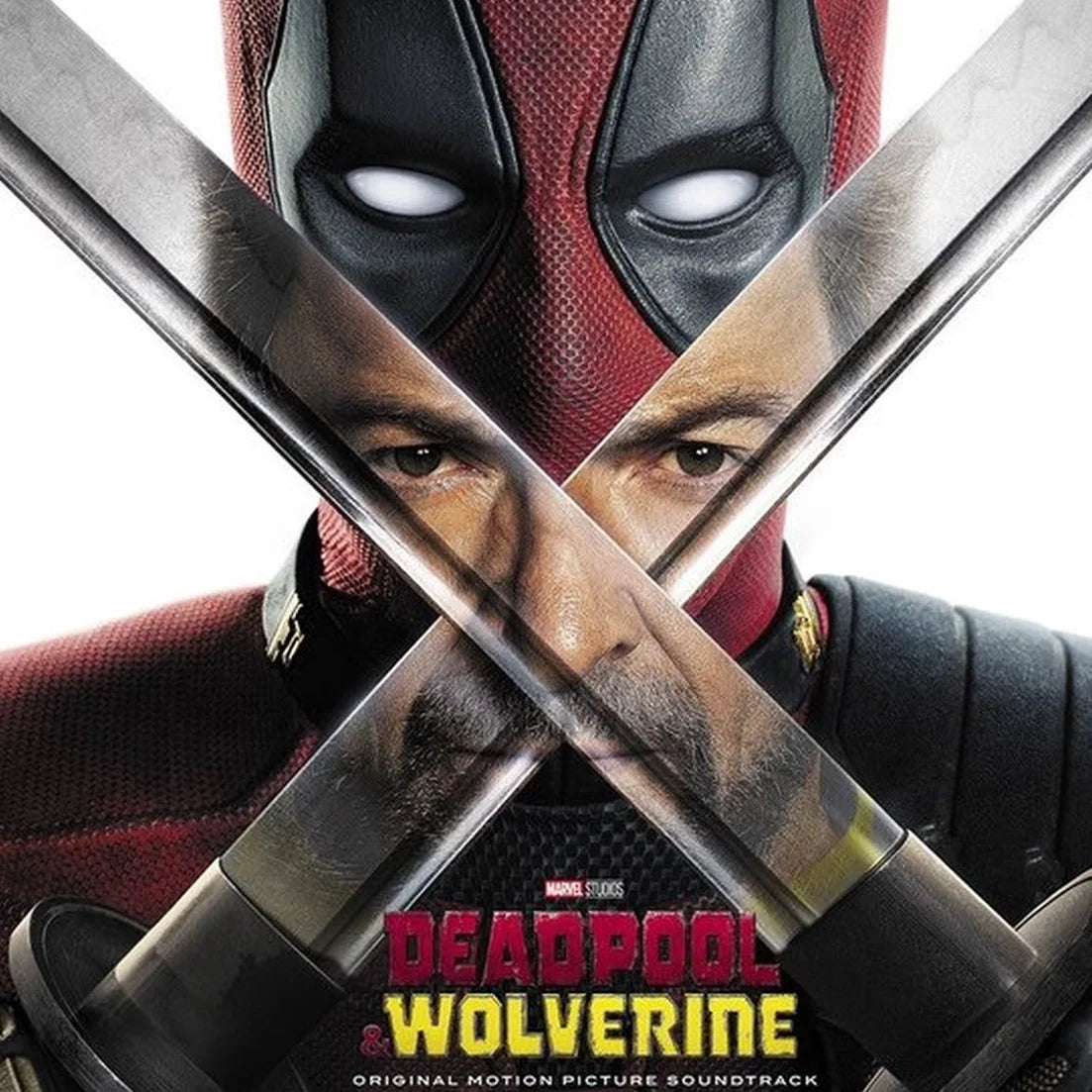
Marvel’s special effects woes of late have been well-documented. However, when their movies don’t try to do too much in a short span of time they do incorporate a lot of seamless work. It helps that Deadpool & Wolverine features a lot of practical sets.
Far too often films outside the standard VFX-nominated genres are ignored. The work done to create a familiar yet fabulist, futuristic yet classical world in Megalopolis is worthy of inclusion among the best of the year.
Poor Things garnered many Oscar nominations last awards’ season but this one was denied it. In my estimation the animal hybrids, the use of “The Volume” and other visual flairs to add a fantastical air are just as crucial to its success as the camera lenses employed in the cinematography.
It’s a somewhat grayer, darker world that George Miller depicts in this forebear to Fury Road. Despite the different color palette, the FX work is just a significant and well-crafted here.
The most impactful effects now are those that augment world-building, not merely create sights. No where else was that more apparent this past year than Dune: Part Two. It’s not just a matter of sandworms but of blending the computer imagery with the constructed sets and natural settings, or practical embellishments that help sell digital imagery.
All these albums are filled with great songs, but Deadpool & Wolverine begins and climaxes with iconic needle-drops and stands head and shoulders above the rest.
“Harper and Will Go West” Kristin Wiig Harper & Will
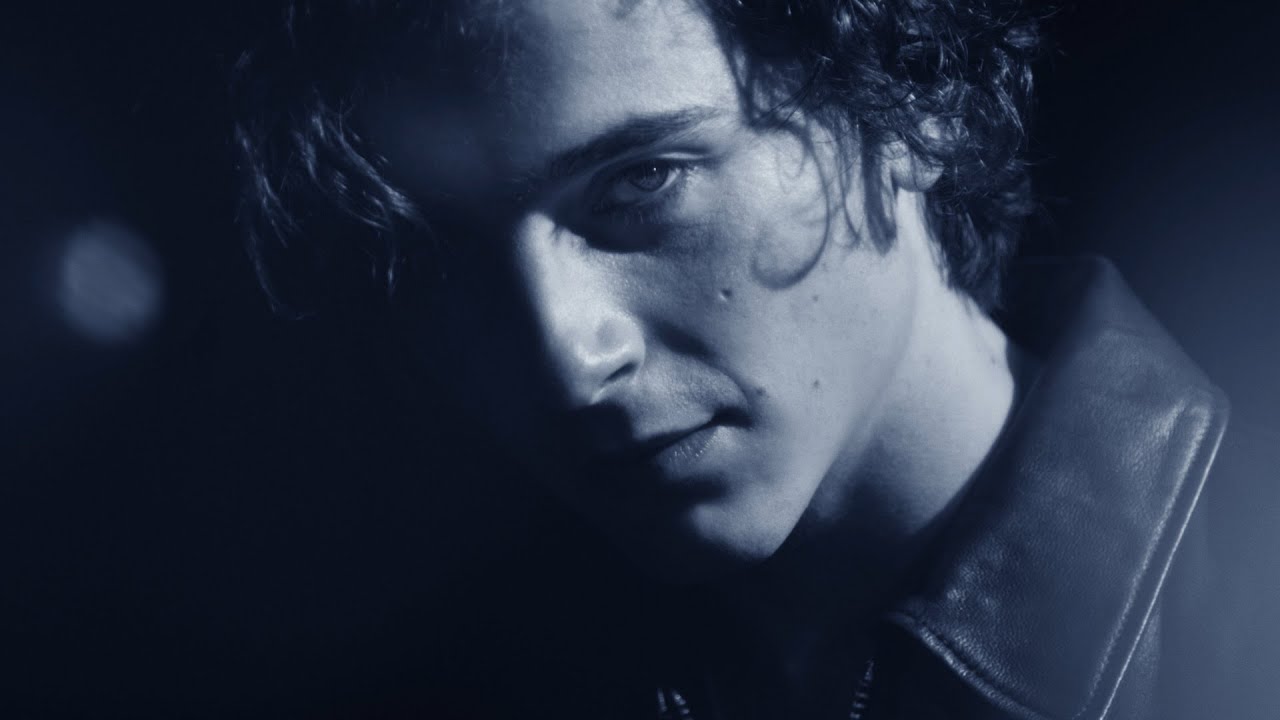
“Song to Woody” Timothée Chalamet A Complete Unknown
“Kaawaa Kaawaa” Sachway Sachdev, Sudir Yaduvanshi, Sanj V Kill
“I Was Made For Lovin’ You” YUNGBLUD The Fall Guy
This one reverted to being Best Song this year. I alternate between whether or not to make it for original songs only. This was due to two cover songs. One, that introduced me to a song (“Song to Woody”) as I never got that deep into Dylan’s catalogue; and another that reinvented a song for me “I Was Made for Lovin’ You.” Both interpretations are very different from each other, feature great vocal tracks, and encapsulate the emotion their film was seeking. As for “Harper and Will God West,” this was one that got some press before the release of Will and Harper and it lived up to the hype. I wish the film had managed to get it in before the end credits. While that song was surprising in its quality, I was surprised “Kaawaa Kaawaa” existed at all. Kill is a Bollywood action film with Hong Kong action choreography and manages to feature this banger as part of the soundtrack organically. However, the best underscoring of a film’s emotional tenor, with the highest level of musicality is “Huele a Fraude” OHYUNG & STEFA* from Problemista. There’s a throwback and modern quality to it simultaneously, it’s enchanting. Just give it a listen.
As continues to be the trend, spanning much of the year puts one in contention for Entertainer of the Year. First, an encore viewing of Wonka was one of my first trips to the movie theater last January. In March, Dune Part Two in all of its mesmerizing glory was release, and in his performance Chalamet deftly turned the corner into villainy in a way that contributed to the film’s effectiveness. You can see the dictatorial leanings, the god complex building but also the charismatic draw of his presence is still there. June saw the release of the short film for Chanel he made with Martin Scorsese at the helm. Then at the very end of the year I saw A Complete Unknown, a film that is immerses you in Dylan’s process, performance, and enigmatic personality. It’s the performance of not just bona fide star but a consummate actor.
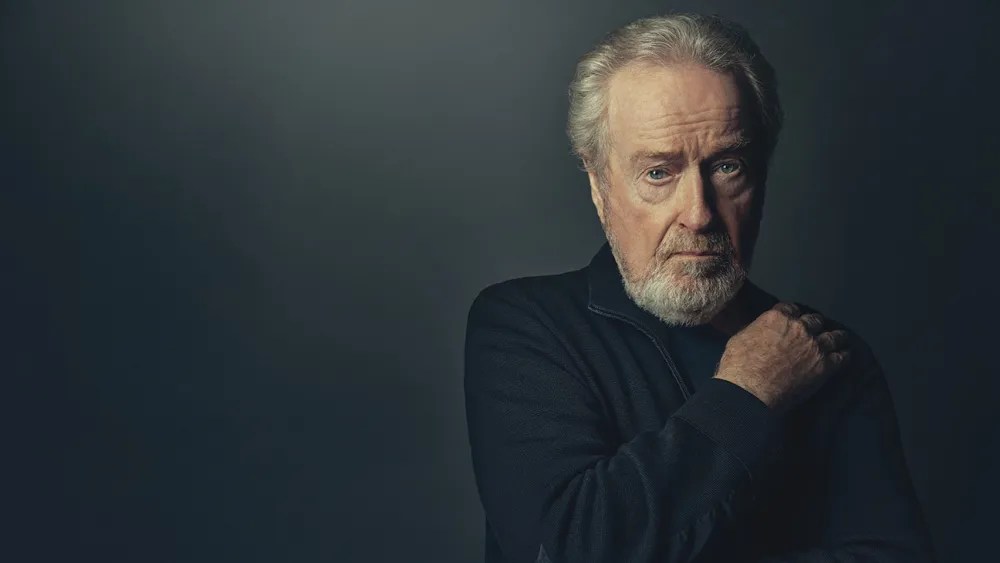
Ridley Scott is the kind of artist I had in mind when conceiving of the ideal way to go about a life achievement. He’s made plenty of memorable, great films and is still working. Quite frequently in his case. Some of his more overlooked titles stand among my favorites. In 2013, I selected The Counselor as #18 in my best of the year list. I also officially considered him for this award back in that year, so in a way he’s overdue. In 2000, he was the first director I ever nominated twice for Best Director in the same year (Hannibal and Gladiator). My awards aside, there is also his still-influential Apple “Big Brother” commercial, the oft-overlooked Legend, the groundwork he laid for so much that followed in Blade Runner and the masterwork that is Alien.
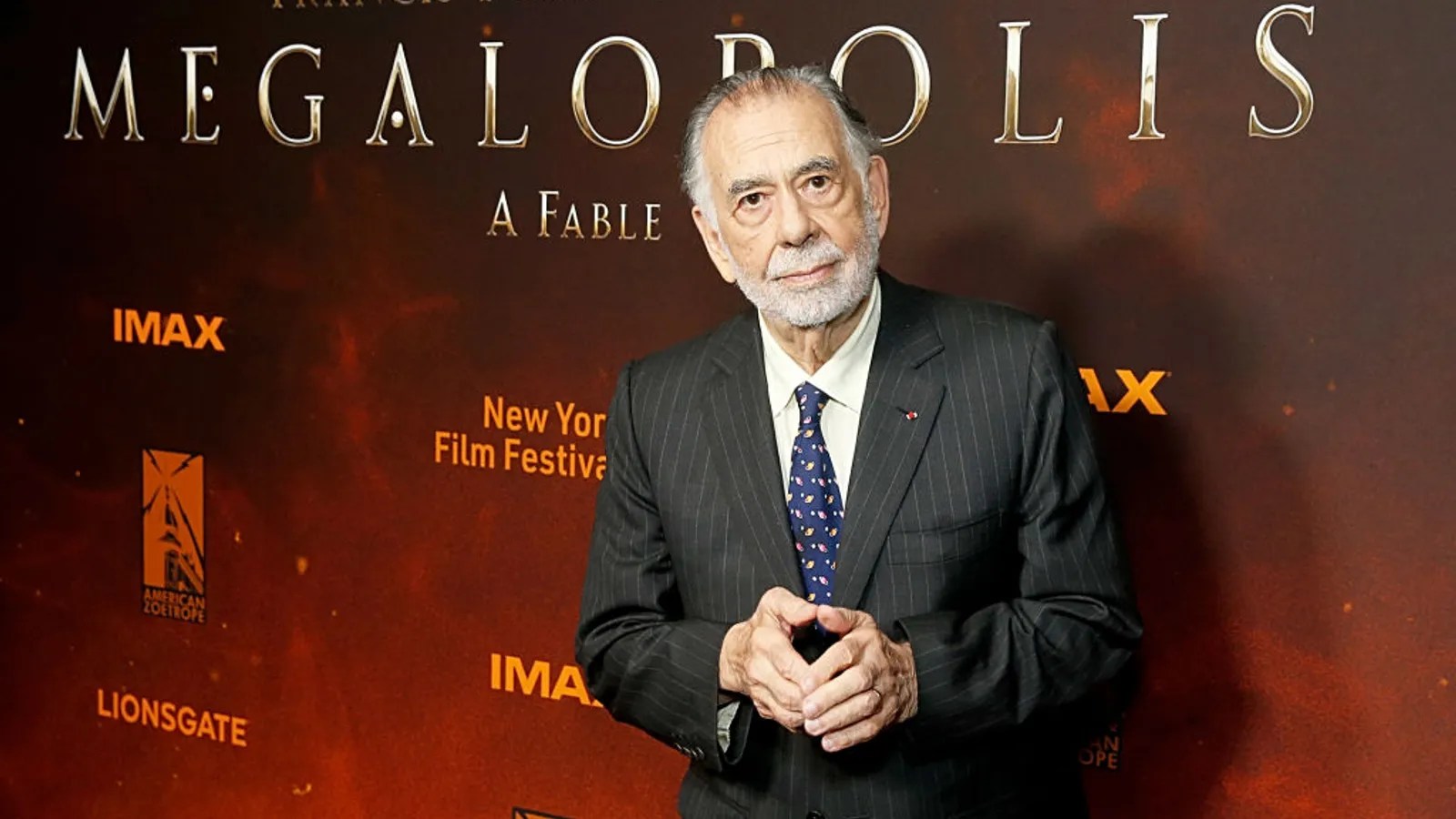
Francis Ford Coppola
In the very first edition of the BAM Awards I nominated Francis Ford Coppola in the Best Director category for a film that was fairly broadly shat-upon by the critical mass, Jack. In late December 1996/Early January 1997 when I inaugurated these awards I was fifteen. I knew of Coppola’s reputation, I believe I was very pleasantly surprised to see his name in the credits through my bleary-eyes. Admittedly, my blindspots in his filmography are a bit glaring, but I’ve enjoyed the off-the-wall Coppola I’ve seen greatly. Most directors would sell their soul to just have The Godfather under their belt, he one-upped himself in The Godfather Part II, and then you add Apocalypse Now (regardless of the version) and he’s already in rarified air. That run by Coppola reminds me of this exchange between Peter Bogdanovich and Orson Welles about Greta Garbo.
“I remember I was having a conversation with Orson Welles one time and we were talking about Greta Garbo. He loved her—I do too—but he was rhapsodizing about her. And I said, ‘I agree with you, but isn’t it too bad that she only made two really, really good pictures out of forty?’ And he looked at me for a long time and said, ‘Well, you only need one.’”
Welles, made other significant pictures, but he knew he’s always be known for Citizen Kane. Following The Godfather, Coppola would always have that masterwork. But he exceeded it a few times over, but like any true artist. Coppola was never satisfied. He stepped back every so often, enjoyed life, but he’s been always looking to advance the grammar of film to challenge it. He showed as much in Twixt and his decades-long dedication to bringing Megalopolis to fruition, regardless, of what the knee-jerk reaction was is further evidence of that.
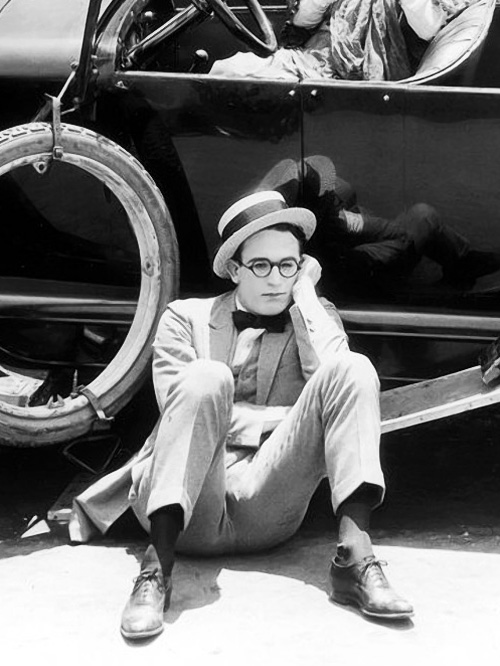
When looking over the screenings of older films I’d done last year. There weren’t many possibilities. I didn’t even see one of his features, but the shorts I saw were quite diverting. Lloyd employs silent-film slapstick that’ optically more clumsy than Chaplin’s but that is just as exacting and intentional.
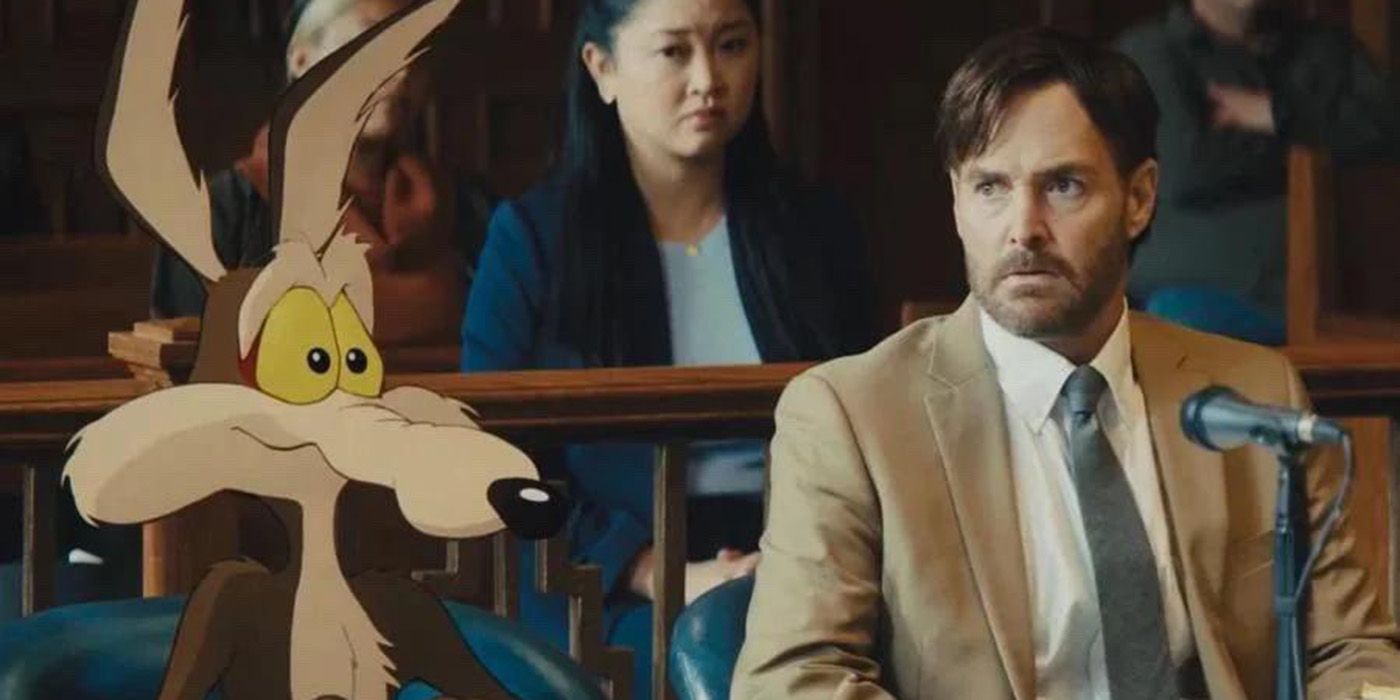
for continuing to call out WarnerDiscovery on their bullshit for canceling Coyote vs Acme.
Sometimes I think of whom I’m going to award a Special Jury Award to and what for during the course of the year. Sometimes nothing comes up, others something comes up at the last second. This one is sort of the an amalgam of the two. While I don’t believe I’ve written a specific post on this topic myself, ever since Discovery bought Warner Brothers, they’ve made a litany of decisions that are not only bad artistically, but also dubious from a business perspective at best. Whenever something else came up I would mention it on social media. I may’ve singled them out during the strikes but all the studios were being unreasonable at that juncture.
I never awarded one of these to a studio for a job well done on general principals. During the pandemic, I selected some who went above and beyond in keeping film alive (but that’s an extraordinary circumstance). Rather than creating a new You-Really-Screwed-the-Pooch Award, I saw Will Forte commented again about his dismay about the cancelation of the film. He first spoke about it just following the announcement of its cancellation.
Back then, WarnerDiscovery caved to pressure and made like they were going to shop it around. That never led to a deal, though. Forte’s mentioning it anew, makes sense since I’ve been recently taunted at my local regal with posters of the upcoming Looney Tunes film The Day the Earth Blew Up. While it’s nice the characters aren’t going to go away entirely, it’s bittersweet at best considering this other film is on the scrapheap. This isn’t the first time WarnerDiscovery has been absolute crap, but most of their bullshit decisions get swept aside in time. Forte should continue talking about this one, because Discovery was the acquisitor in the merger and since they’ve gotten Warner under their umbrella they’ve acted like they’re the desperate ones (maybe don’t buy them then?). Their poor decision-making hasn’t helped any, but it’s almost like they’ve never been a movie studio before…
And due to that Forte and many others should speak about how nonsensical and wrongheaded they’re being about so much.
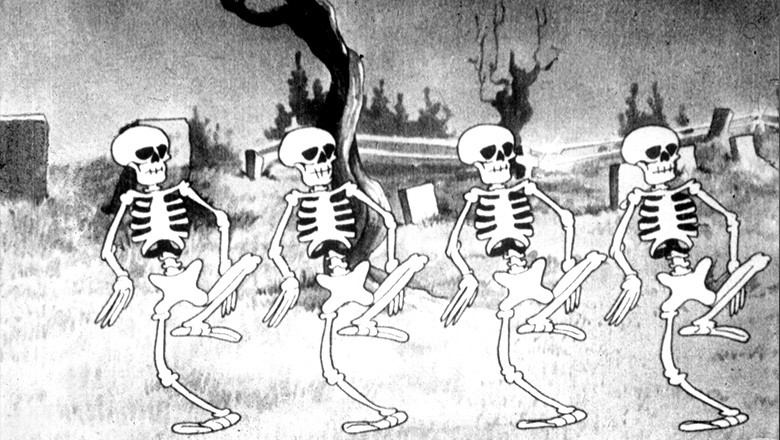
It’s been a while since I’ve done a Short Film Saturday, so I figured I may as well make the the first in 2025 a super-sized one. As you may know quite a few notable titles have been entering the public domain the past few years. So this weekend I decided to post all the Disney animated shorts that have entered. Yes, Steamboat Willieentering last year was big news and opportunists everywhere pounced on it. However, this year’s crop is larger. There are more Mickey and miscellaneous shorts as well as the beginning of the iconic Silly Symphonies series. Enjoy!
During TCM’s 31 Days of Oscar every year I like to keep a running log of what I see. It’s a great chance to check off a number of films I should’ve seen already. My goals are: At least 31 films, 100 nominations accounted for by the films seen. As of this writing I’ve not yet seen a TCM selection this year. When I see either those or something from my To Be Watched list I’ll try to guess what the nominations are as I watch the film.
In 2024, I made a huge dent in the Best Animated Short category seeing all the shorts I’d not yet seen through 1969. I will be logging these films both here and on my Letterboxd.
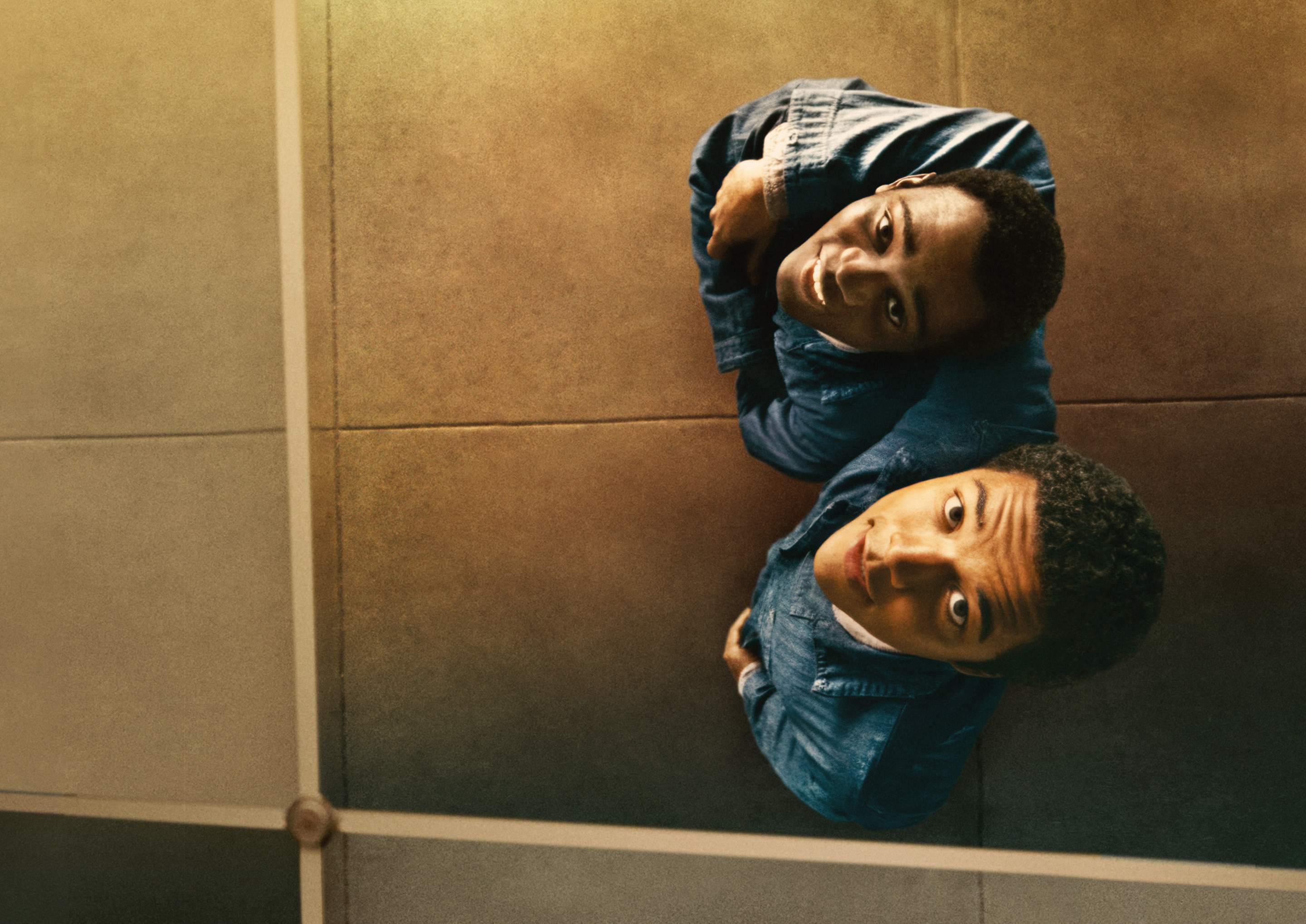
1 Nickel Boys (2024)
A film shot in the POV of Elwood and Turner two boys who meet in the late 1960s at a boys reformatory in Florida. The cinematography in this film is engaging, breathtaking and unique. It was seriously snubbed of a nomination in that category. However, the Best Picture and Best Adapted Screenplay nods are richly deserved as the film is engaging and flows brilliantly.
Nominations: 2
Wins: ?
2 Is it Always Right to be Right? (1970)
Aside from obvious stylistic choices of the era, this film could be about America now.
Nominations: 1
Wins: 1
3 The Shepherd (1969)
Nominations: 1
Wins: 0
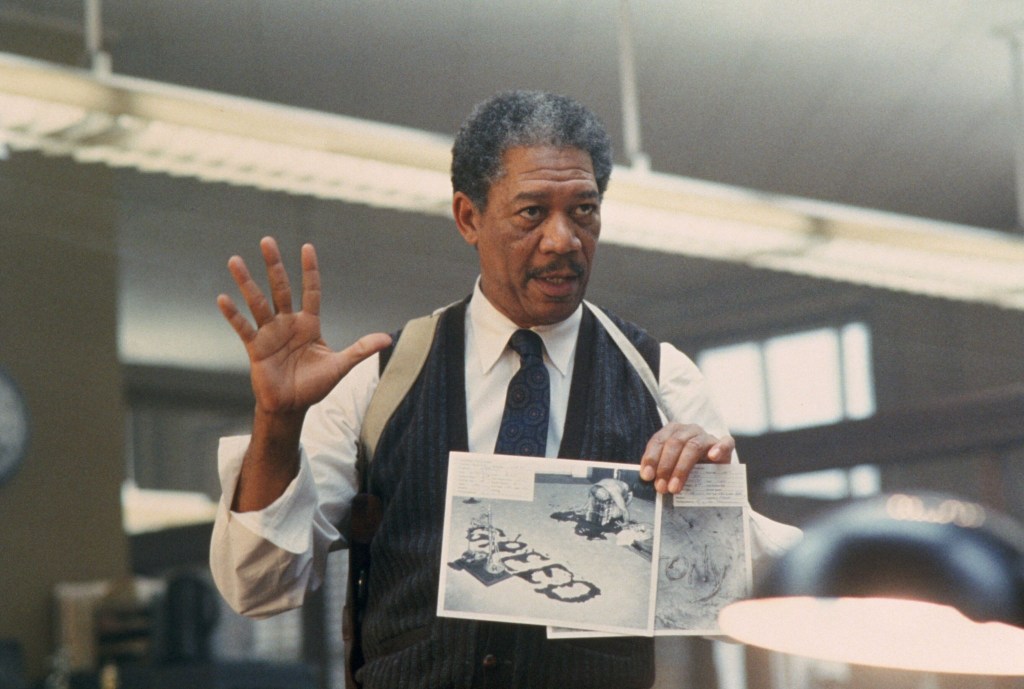
4 Seven (1995)
This addition is a bit of a cheat, but I went to see the 30th Anniversary re-release of Seven today. When I went to log it on Letterboxd and realized it wasn’t a movie I’ve marked as seen. I knew I had seen it if not beginning-to-end in pieces on cable long ago.
Coming out of it, I speculated on it’s nominations and I’m shocked it was only one. I know it’s become more beloved over the years, but still…and that one in Editing one of the most important categories and shutout elsewhere is stunning.
Nominations: 1
Wins: 0
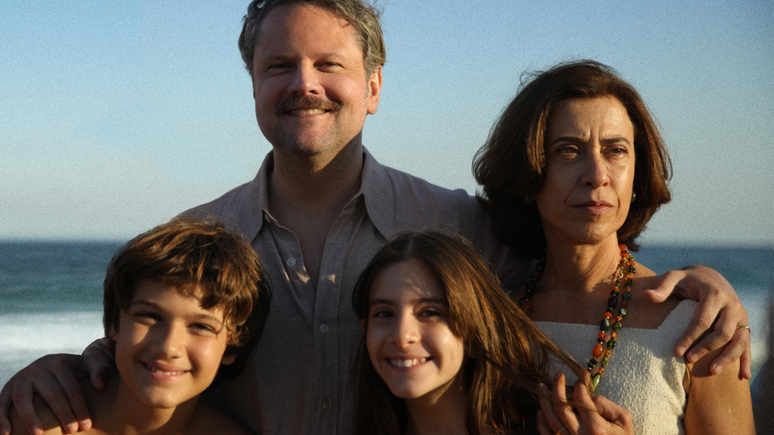
5 I’m Still Here (Ainda Estou Aqui)(2024)
Finally got to see Brazil’s most nominated film ever it and it was more than worth the wait.
I decided to do a deep dive on this film. If you’re leery of spoilers it might be better to just scan this post. Although, I won’t lay the whole plot out in order in one section.
Also, this post is lengthy. I would’ve posted it in three parts if I hadn’t started so late.
Titles
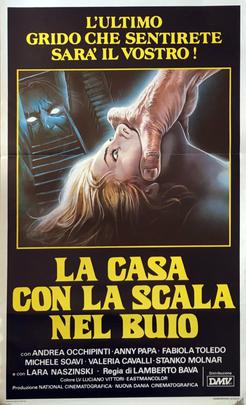
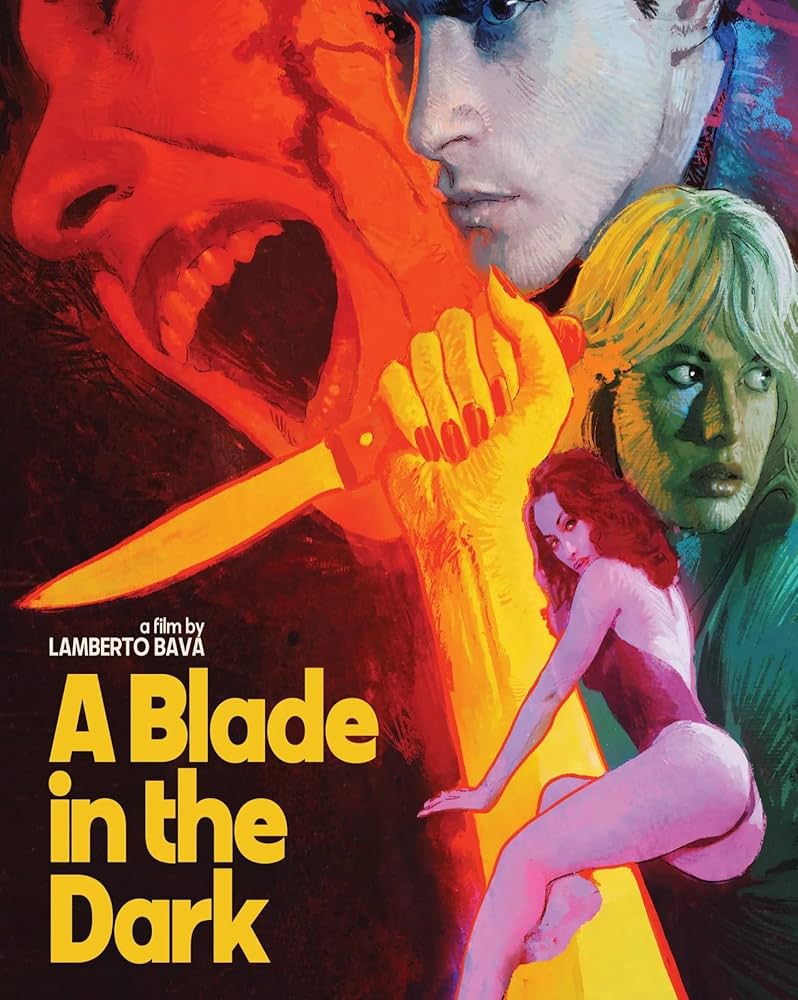
Titles of gialli, and Italian horror films, are usually your first clue of how to take them. They tend to revel in the poetry of death, they might even come off as overwrought and florid to some. I personally love them. Sometimes the alternate titles work better than the more commonly used ones. Just a few quick examples: Mario Bava’s Bay of Blood, is a good title. The alternate, on the other hand, is an all-time great: Twitch of the Death-Nerve. Mario Bava’s father shot a film called La farfalla della morte (The Butterfly of Death). Most of Argento’s titles are memorable, especially those in the animal trilogy. You also have things like Pupi Avati’s The House with Laughing Windows. With regard to this film, the original title La casa con a scala nel buio loosely translates to “The House with the Dark Staircase.” Lamberto later went on to say he preferred the English title. And I must say, as disparate translated titles go, it is quite an evocative one.
Origins
Prior to making A Blade in the Dark Lamberto Bava, son of titan Mario Bava, had directed one feature, Macabre, which is an outstanding film that deserves a proper North American Blu-ray release. Just before making this film he worked as an assistant director on Dario Argento’s Tenebrae. The influence of Argento and that film on this one are clear. However, each stands on its own due to the disparate handling of similar plot elements, but the dialogue they share is intriguing. Any two works of art that dialogue with one another will fascinate me to some extent.
This film was originally intended as a four-episode mini-series. A televised event may have fit the structure better, but that would’ve made the piece more specialized and something only die-hards would discover later. It turned out that Bava tackled his subject matter with such verve and violence it couldn’t air on television. His producers then told him to cut it into a feature-length film, the original structure can be felt in the methodical pace of the feature-length cut as compared to many giallo films which are a bit more frenetic and byzantine in their construction. In preparation to write this piece I re-watched both the English dubbed feature-length cut and the Italian audio original and the pacing is perfect in the latter as it was structured to have each of its four parts end in a murder that is built to throughout; one of the many things that is far superior there.
Yellow Fantasies (Fantasie Gialle)
One thing that is often emphasized in writing about giallo films is that they are fantastical, if not outright fantasies. In the essay booklet of Vinegar Syndrome’s box set I was reminded of that. It’s almost as if each giallo and Italian horror film felt impelled to re-remind audiences unaccustomed to these films that, yes, they’re fantastical. Watch enough of them and you know it to be true.
When discussing Argento’s work, Guillermo Del Toro is practically awestruck by the fact that so many of his films function on a staple of the fairy tale he refers to as “the power of declaration.” Why is there a dance school run by witches? Why is there a room filled with barb-wire? Because there just is, I declared it.
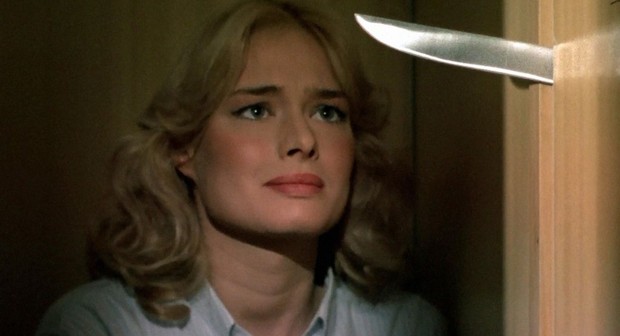
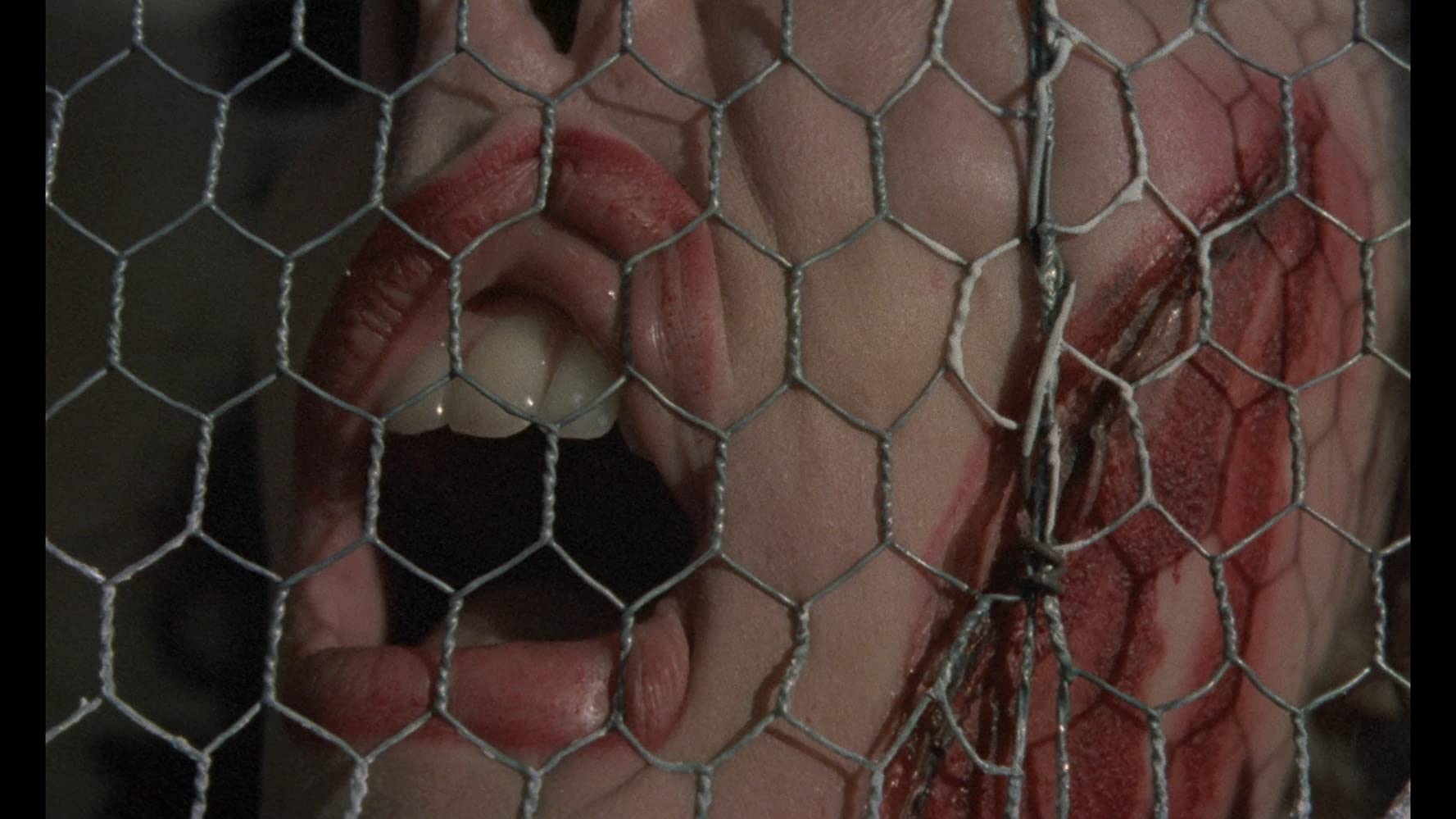
Even in giallo films, which are more earthbound, there are things you just need to go with. One example would be, the first victim in A Blade in the Dark. She’s not bound or otherwise impeded from fleeing from behind the chicken-wire extending past a half-demolished wall. It could be fear that traps her, but that needs to be inferred. Her not attempting to flee once “stuck” also plays into a giallo trope I refer to as “the teasing blade.” Wherein the murder weapon tests a latch, keyhole, door jamb, or other obstruction the target hides behind methodically, slowly at times; Torturing the would-be victim and the audience alike. In this film’s first kill we watch the killer undo blouse buttons, pierce skin, draw blood, and dig. Giallo kills are more protracted than slasher kills that followed. More about stalking than chasing, the film is less concerned about body-count and more concerned about labored, shocking, outlandish kills.
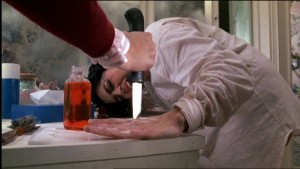
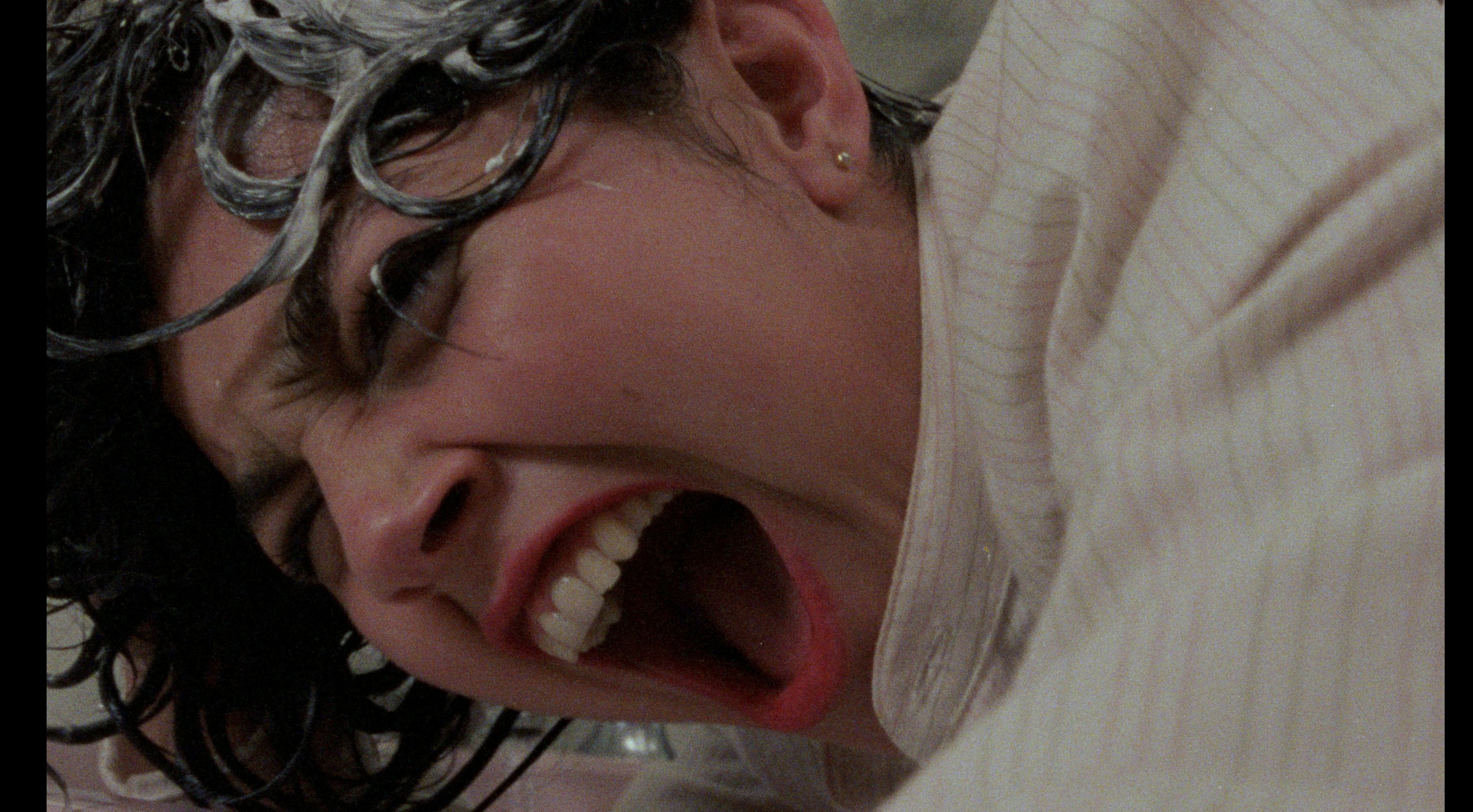
The exception to that rule in A Blade in the Dark is the bathroom kill. Typical gialli kills would have one flashy creative flare and that’d be it. This scene has multiple flourishes. It begins with the film’s most iconic bit of violence: the knife through the hand. It concludes with its most brutal coup de grace: a bag over the victims head while slamming it against the bathtub; then when the woman is practically dead, if not already there, the murderer slits her throat like she’s a slaughtered pig.
It’s safe to say this is the scene that kept it off television. A filmmaker wouldn’t want to compromise it for network censors. This scene, and the discovery of minor clues in clean-up later on, are just two of the elements in this film that remind people of Psycho. The other thing will be discussed later. While there are definitely problematic elements viewing it in the modern day, there are unquestionably many things that work about it and also many ways of parsing this film such that the aforementioned Vinegar Syndrome release’s booklet had three disparate short essays that didn’t even address my observations about it.
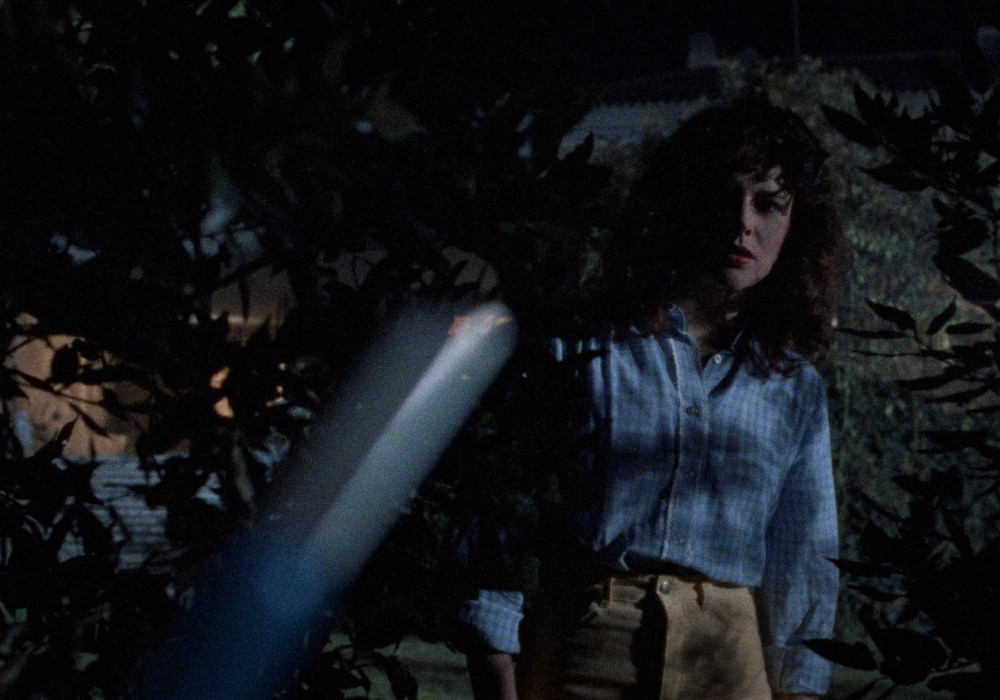
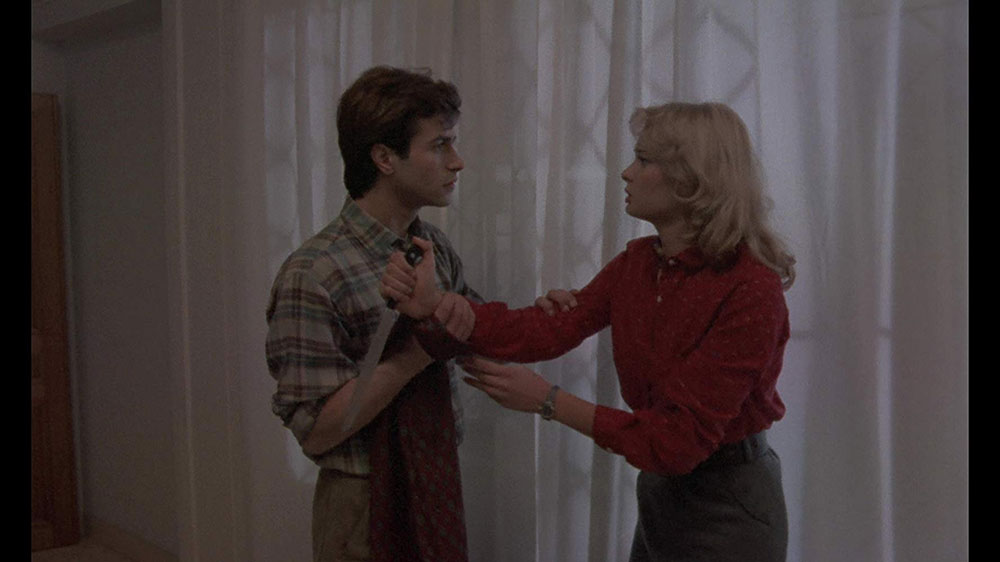
Another not-quite-realistic element is the women who pop-up uninvited at the house. Katia (Valeria Cavalli) is strange in general -a bit more subdued in the Italian audio- but is found in a closet by Bruno she’d come to retrieve her diary which was left there when Linda was staying at the house. Angela (Fabiana Toledo) likewise suddenly shows up wanting to use the pool, when Linda stayed she let her. Bruno agrees. She soon meets her end as well.
The Set-Up
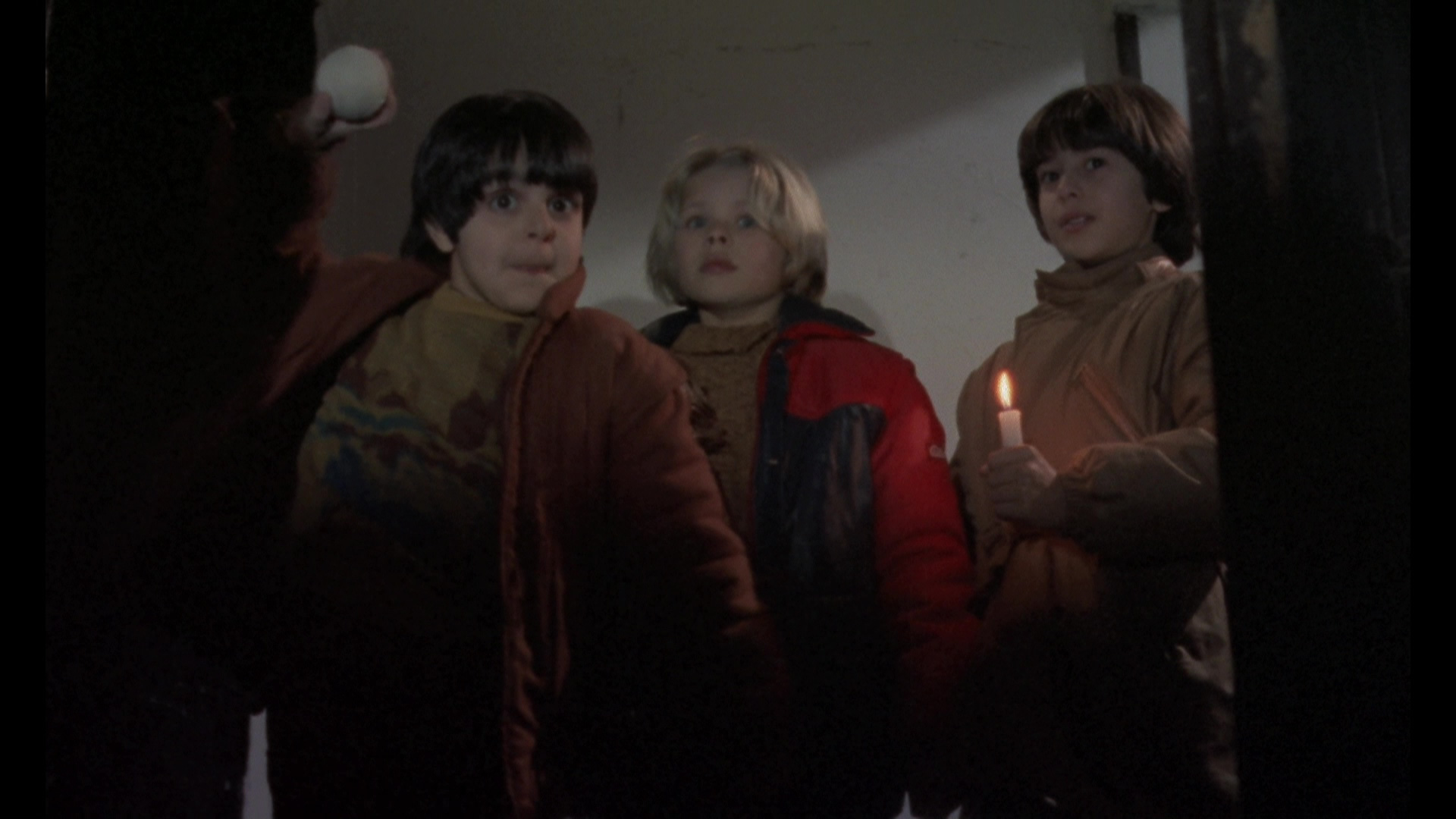
The film begins with three young boys walking into a creepy abandoned house. They gaze down through the open basement door, a stairway that vanishes into darkness tempting them. One of the boys throws a tennis ball down the stairs, daring the blond boy between them to go down and get it. They taunt him, call out his fear. Here we get one of the most significant differences between Italian and English, and TV and feature versions: in the English feature version the chant they hurl at their target is “You’re a female.” It comes across as overly formal and tin-eared considering these kids are ten at most, aside from that its on the nose considering the plot that unfurls afterward. What they say in Italian is “Femminuccia” which translates to “girl” or “baby girl.” I don’t know if there was some decision made to match the “fe” sound in both audio and subtitles, but boys calling each other a “girl” or “little girl,” as the case may be, is not only a far more universal experience, but also less predictive than how it’s generally been played in English and in the subtitles.
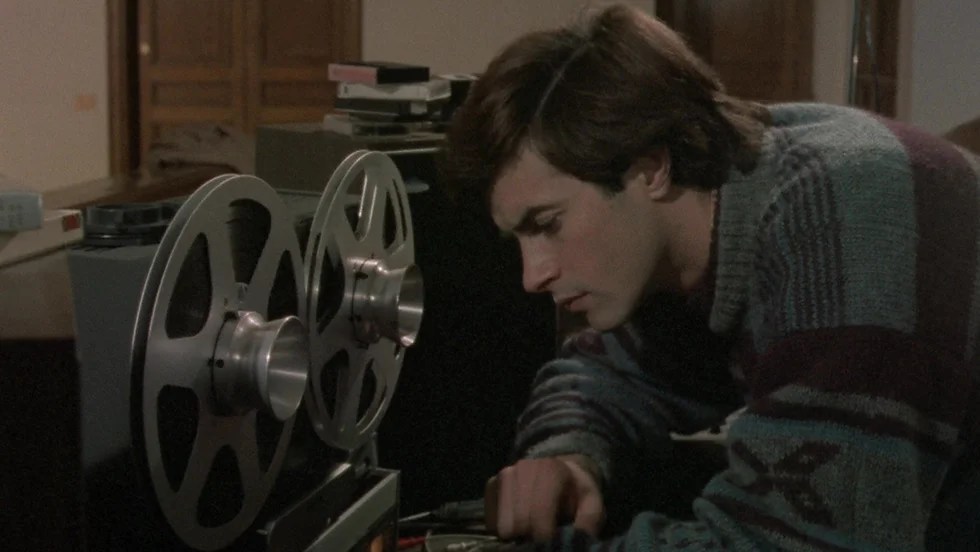
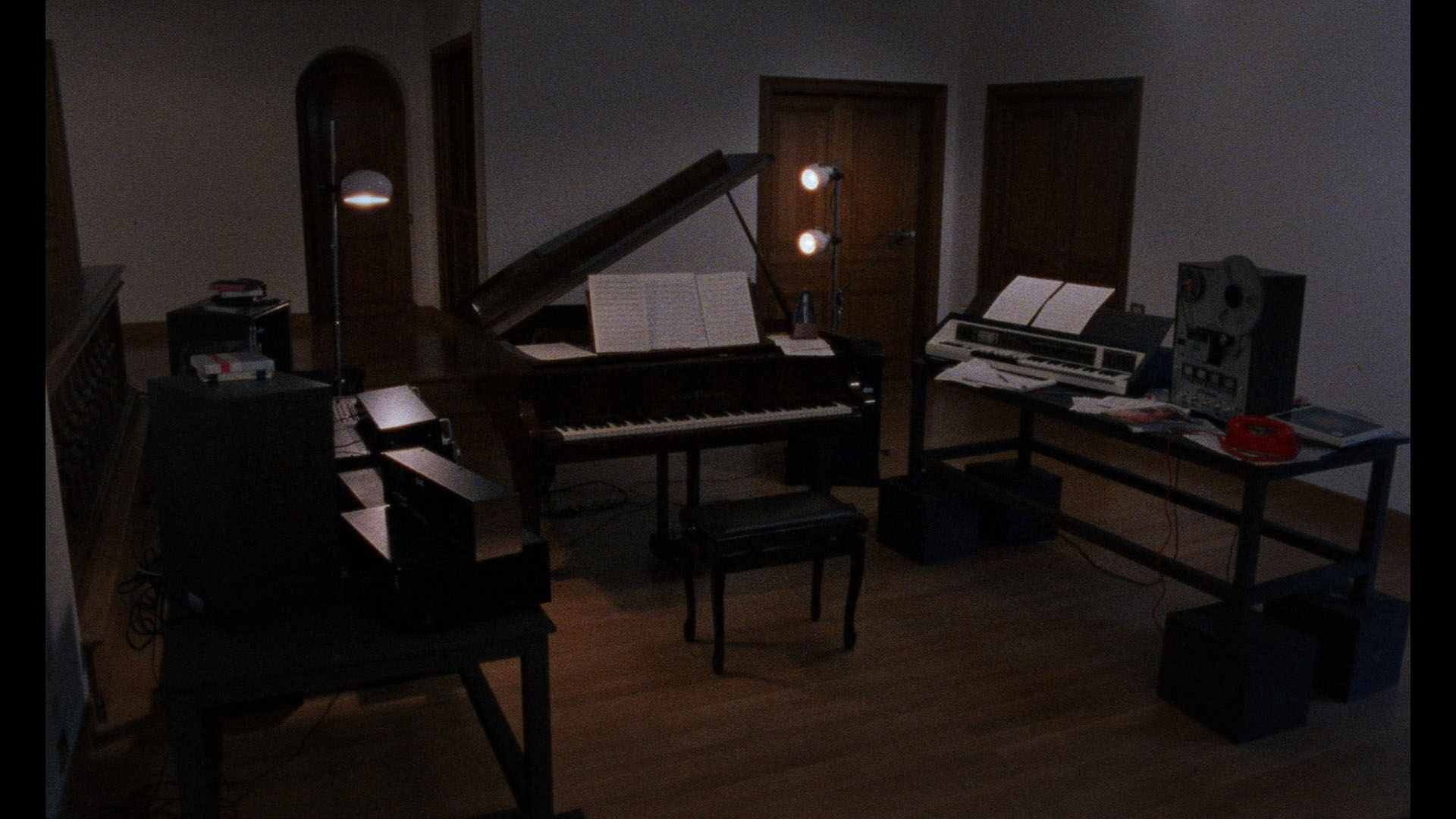
Regardless, after the tennis ball goes down the stairs, the frightened blond boy (Giovanni Frezza, best known as Bob in The House by Cemetery, and a staple in both Bava and Fulci’s films for half the ‘80s) disappears down the stairs. Then the tennis ball whizzes up the stairs, the other two boys avoid it. It leaves a bloody mark on the wall behind them. Shortly, after that we see a Moviola, Sandra (Anny Papa) and Bruno (Andrea Occhipinti, The New York Ripper) sit behind it. What we’ve been watching is a scene from a movie that Sandra directed that’s now being edited. The scene frightens Bruno. He’s tasked with scoring the movie. He’s nervous not only because the film frightens him but because horror music isn’t his usual metier. But that’s why she wants him. This is a great touch, not only does it put the protagonist out of his element artistically (he also is staying at what’s deemed to be a creepy house for inspiration), but Bava employs this very technique in scoring the film. He chose Guido and Maurizio De Angelis, who typically scored poliziotteschi films; a sub-genre of Italian action and crime films popular in the 1960s and 70s. Due to this choice A Blade in the Darkdoesn’t sound like most other giallo films. The theme is melodic but not quite as entrancing as The Psychic (7 notte in nero), it has an electronic signature and layering, but isn’t anywhere as thumping as something like Suspiria. What it does is underscore the narrative perfectly and fit.
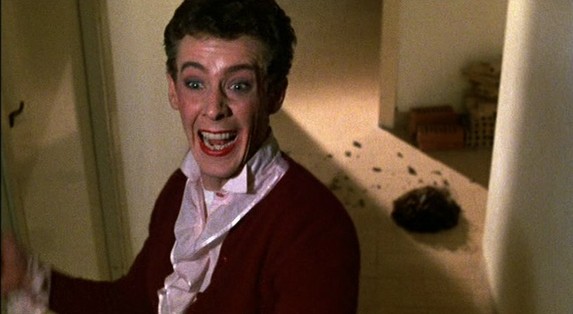
Bruno’s working in a house rented to him by Tony (Michele Soavi, who also worked with Argento and on to direct his own films) who seems a bit odd but otherwise harmless. Aside from creepiness, Sandra hopes the solitude will enable him to produce his best work.
Sexuality, Representation, and Art
One thing that’s well-noted in the booklet of essays is that the giallo wave was pretty much dead by the time this film was released. The usual purveyors of it went on to tackle other sub-genres of horror and thriller after this. By the end of the giallo wave the films needed to find varied and more creative justification for those being targeted.
While it’s possible to read this film according to a few theories of analysis, the main characters in this film operate from different places so I believe a layered reading of the film is necessary to truly appreciate all that’s going on.
The creators of this film were coming from many places here. As mentioned, Tenebrae influenced Bava here immensely. In Tenebrae, the killer raped/murdered a trans woman he was attracted to and then targeted other women. The first part of that equation is sadly all too relatable today and wasn’t unknown in the ’80s, but it wasn’t discussed as much in film. When it was handled it was done with the understanding of the time, and usually to some extent for shock value. Here, at least, as in Tenebrae, it’s intrinsic to the plot as the big reveal of the film is Tony is Linda, who is the murderer.
When the societal outcast is lashing out rather than an expendable victim (see the myriad movies referenced in The Celluloid Closet, many of which had LGBT characters who were tertiary and pointlessly introduced only to be immediately killed), it’s a lot easier to take despite any errors. Now, I am gay, not transgender. I read a post by a transgender writer about this film. Unsurprisingly, they find it transphobic, but they also said they wouldn’t tell people not to watch. I understand that ambivalence and realize that my thinking more highly of it has to do with my layered reading and personal background.
One thing that’s important to keep in mind watching older movies now is that they will have troubling content that might not age well, but they can still be viewed if you wish. I thought one of the best jokes on Brooklyn Nine-Nine was when Ace Ventura comes up Jake (Andy Samberg) says “Classic film. One of my childhood favorites. And it only gets overtly transphobic at the very end.” It’s a great line because it acknowledges a serious issue with the film while not discounting the work entirely. For gay and transgender characters to be the protagonist or survive horror films, they had to first be in them as more than tokens. This film at least does that.
Also, when a film is trying to do a lot, not everything will work for everyone. The fact that this film features a female horror film director is also significant. Sandra’s wardrobe is masculine. She wears ties and slacks reminiscent of Diane Keaton in that era, but that choice also speaks to gender expression being part of the plot. That her wardrobe not being commented upon also expresses an almost universal double-standard. If a woman wants to be more like a man, that’s fine to a degree. But a man or boy being more feminine, or being perceived to be more feminine, is a problem.
As I discussed some above, being an artist is also a central element to this story, most of the central characters are creatives. Bruno is a musician and composer; Sandra is a writer and director; and Julia, Bruno’s girlfriend, is an actress. Much of the film deals with the struggles of creation; Bruno trying to get the theme right, Sandra perfecting the film, and through Julia another LGBT reference is inserted in the film. She says her play has been suspended due to profanity. In the English audio she says the play is called “Sackville-West,” named after a correspondent and love interest of Virginia Woolf’s. In the Italian audio there’s an added line “Imagine a play by Mae West being obscene.” The reason for the obscenity charge is the play deals with “homosexuality in females.” Bruno’s response in both instances is “Oh, that explains it. No one wants to hear about that.” Whether Bruno agrees with the decision or he just means society in general won’t accept that almost doesn’t matter because they’re characters in a film that deals with something closely related.
The struggles of these three characters to create, the time they dedicate to it, their single-mindedness puts blinders on them. Bruno, is more interested in scoring this film and doing it well, while also solving the mysterious disappearances around him, than he is in self-preservation or working on his relationship. Similarly, Julia is too wrapped up in her play, and wanting Bruno to see it, to believe murders are even happening until she has not choice but to believe it.
That brings us to Sandra, who perhaps best represents the narcissism that all artists have to some extent. She betrays Linda’s trust, when she was told Linda’s secret it was made explicitly clear it was a secret. Not only did she turn that into the seed of an idea for a film but she repeatedly minimized Linda’s feelings and she was the offended party. Sandra also is hiding the final reel from everyone, no one is to see it presumably until the film comes out. There are stories of controlling directors doing things like this, but stopping the composer from watching it goes beyond the pale. Obviously, the composer needs to see the images his music is supposed to accompany. It also intimates that she’s on edge about Linda or that she realizes, perhaps subconsciously, that the story she wrote is more true-to-life than she intended. She even tells Bruno “The killer in this film is a woman” meaning her film but that’s also true of the one they’re in.
The Explication Scene and Linda’s Modus Operandi
The explication scene is perhaps the Achilles heel of many gialli, sometimes the denouement allows the audience to get the bad taste out of its mouth. In this film it’s literally the last thing you hear which is unfortunate. The explication is typically necessary due to the double-edged sword of a giallo film. The audience is kept from knowing the identity of the killer for a vast majority of it. The whodunit aspect is fundamental to its structure. With that set-up, and a killer who has an alternative sexuality, by default you have other people speak for them as in the case of this film both Linda and Sandra are dead in the end. Add to that writers who are attempting to make a statement and be original and you get the kind of inaccuracy you find in this film. A lot of gialli also leaned on a pop-psychology that treated trauma as a kind of “Rosebud,” if you discovered what happened to this person you’d understand everything about them. That works to varying degrees in the genre. Even in a fantasy its hard to accept that one’s gender identity or sexuality will change because of bullying, but those taunts can make one see one’s self more clearly. Similarly, being unable to accept one’s queerness, however, is accurate and a universal phenomenon.
Not seeing the killer, not being anywhere near their headspace, one must also speculate on the plan Linda had in mind. Getting past the filmmaking elements and the surprise of the narrative into the idea Linda had is not hard. She and Sandra had a falling out. Linda told Sandra about her deepest trauma in confidence. Sandra decided to spin that story into a film using Linda’s story in a scene. Linda got upset. Her confidence was betrayed, the friendship ruined. It seems Linda’s initial goal is to ruin the film. She, as Tony, rents out the house to man people, including now Sandra’s composer. She whispers so Bruno can hear it on playback telling him eerie secrets, she then destroys his takes of the score, halting his work to make him start over. None of that deters him. Then the unexpected houseguests dying doesn’t stop him either.
Linda then finds the film’s elusive final reel while no one is looking at the post production facility. She lops off half of it and slices the rest to ribbons. None of it stops Sandra from trying to tell the story she wasn’t supposed to tell.
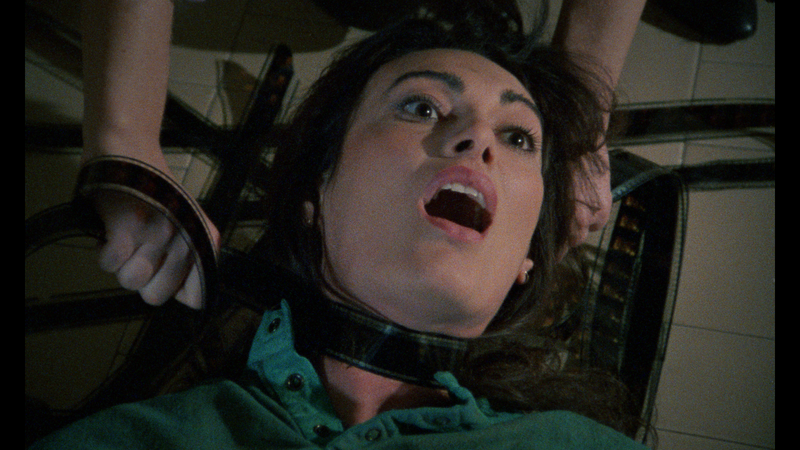
Aside from betraying Linda’s trust, Sandra was essentially outing Linda in her film, so why wouldn’t she want to get her revenge? She could stop at ruining the film, but then it wouldn’t be a giallo; the revenge fantasy aspect wouldn’t be as viscerally appealing. The fact that Sandra is strangled by a strip of 35mm film and then found in the remainder of the final reel is ham-fisted, perhaps, but it underscores the point that Linda wouldn’t have felt pushed to do this without the film. Giallo films are about excess and many times that’s just the kind of excess I want in a film. If it seems like you’re gonna go there, really go there!
At one point, Bruno and Sandra find in a room that was previously locked. It contains two collections of items traumatic to Linda in cardboard boxes: pornographic magazines (which could be a nod to her body dysmorphia without the film having the vocabulary for it. Early in the film she slashes at the centerfold in a nudie magazine when she first enters the recording studio), in the second box are tennis balls. While this is striking as an orgy of evidence, those are rarely found in reality, but this is a fantasy. Furthermore, I really love that Linda seeks to weaponize these traumatic totems. She also uses the taunt the bullies used on her (“Feminuccia“) on one of her victims.
The score at one point I feel comments on Linda also. I previously mentioned musical overlays. Toward the end of the film the emblematic theme is played, then another piece of score plays over it. This is disconcerting for the audience but also can be read to represent the clashing of Linda’s personalities.
Conclusion
Sex and sexuality are and were vital cogs in giallo films. As opposed to the slasher films they inspired in the US, there wasn’t as puritanical a bent, nor was the sexuality typically superfluous to the remainder of the story or themes. Neither is something like A Blade in the Dark totally out of left-field. In her essay “The Mother of All Horror: Witches, Gender, and Dario Argento” Jacqueline Reich wrote that giallo is “a genre dominated by sexually ambiguous villains and monsters offering cross-gender identification.” And I certainly agree with that take. Machismo or toxic masculinity has always made me bristle, so giallo characters (or those in any genre) offering a counterpoint to that intrigue me.
While Bruno’s simplistic interpretation is that Tony’s masculinity was stunted, Linda’s whole being was affected. One final comparison between English and Italian audio, there comes a point where Linda loses the box-cutter she began her spree with. When she enters the kitchen and finds the knife-block displaying the knives vertically on the wall, there’s an ecstasy in Linda’s vocalized reaction that’s half-shock (like she sounded after the bathroom kill) and half-arousal. This also plays into ambiguity, as does the fact that in order to enact this plan Linda has to inhabit the body and clothing of her former persona more often. That definitely explains how uncomfortable and nervous Tony is, and why he goes out of his way to say he’s not just leaving the house, not just leaving Tuscany, but heading to Kuwait on non-existent business.
The ingredients of many gialli, especially Tenebrae—sexuality, representation, and art—are in this film with a different recipe. Lamberto Bava wondered what if the trans person had been wronged and snapped. To answer that question and produce a film about in 1983, in Italy, it almost had to be in an exploitative genre as it was one of the few refuges to more fully examine outcasts. There is certainly more to A Blade in the Dark than meets the eye.




 The Movie Rat