Mini-Review: Spud

Introduction

This is a post that is a repurposing of an old-school Mini-Review Round-Up post. As stated here I am essentially done with running multi-film review posts. Each film deserves its own review. Therefore I will repost, and at times add to, old reviews periodically. Enjoy!

Spud

This is a South African film of some acclaim, which I sought a foreign region DVD of since its US distribution is more doubtful the further from its initial domestic release we get*. Spud was nominated for six South African Film and Television Awards (the foreign award is something I may touch upon in November+) and an adaptation of a famous novel series. The film stars Troye Sivan (most well known from YouTube or Wolverine) and John Cleese. The film sets as a backdrop the momentous events of 1990 and the release of Nelson Mandela, but what it focuses mainly on is a funny, occasionally touching, tale that’s a dawn of awareness, and coming out of one’s shell. It’s an appropriately episodic tale, that moves well for the most part and features great, surprising and fitting songs as well.

7/10

All the Spud films are now available to rent or own on US iTunes.

I did. Here.

Review: Leviathan

Introduction

This is a post that is a repurposing of an old-school Mini-Review Round-Up post. As stated here I am essentially done with running multi-film review posts. Each film deserves its own review. Therefore I will repost, and at times add to, old reviews periodically. Enjoy!

Leviathan

You’ll note that in my review of Bestiaire I stated that it was not the first doc of its kind I was anticipating seeing. The one I thought I’d see first was this film, Leviathan.

Why that came first boils down to chance, but I am glad I saw it first. Both these films have similar constructs in that they’re documentary features with no narration, and practically no dialogue of any significance. Both deal, in part, with the interaction of modern man with animal kingdom, but Leviathan offers a more focused, kinetic, at times dreamlike, other times haunting, look at the subject.

If one were to enter the film completely cold, and watched all the credits through to the end, virtually the only tidbit of information left out of the synopsis was that fisherman were given cameras and told to shoot with them.

The location comes though the end credits, and as nebulous and surreal as some of the early images of the film are, you soon start to see what’s happening.

The most impressive things about Leviathan are: first, the sound design, which more so than the images most of the time, drive home the uneasy balance between monotony and danger of the job. Second, how the Bible passage at the beginning sinks in after it’s done, as does information disseminated in the end credits.

Without knowing what to expect precisely, I found myself retracing certain visual passages and started coming to grips with what I had just seen through the lens.

Leviathan, much like the aforementioned film Bestiaire, is not for everyone, but it is certainly a unique experience and it’s a more immersive, less observational take of this particular documentary niche.

7/10

Welcome to Jurassic World, Part 2: Park Lost

Introduction: A Grain of Salt

It’s fun, when feeling particularly nihilistic, to think that things have never been this horribly commercial or trite in the world of cinema. In certain ways, it’s just more overt and honest than it ever was. The point of saying this is that, though the landscape is different and more cluttered with product-films, many of the same issues persist.
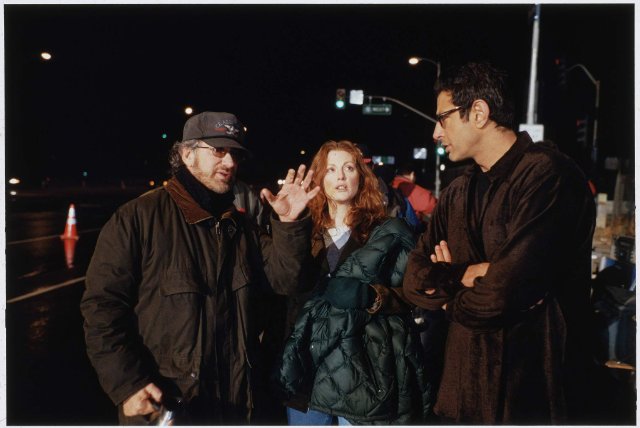
Steven Spielberg is no stranger to blockbuster hits. As a director who makes many a big film he has not been immune from certain struggles and realities. Sure, he’s long been one of the most powerful people in Hollywood, but only when Spielberg launched DreamWorks did he really reach a new level of clout.

For years Spielberg had been pestered for a sequel from Universal. It could have been E.T., which they were asking for. When Jurassic Park set the world on fire, and it too was a Universal project he agreed that there would be the sequel. In that light, it’s a good compromise for that reason if for no other.

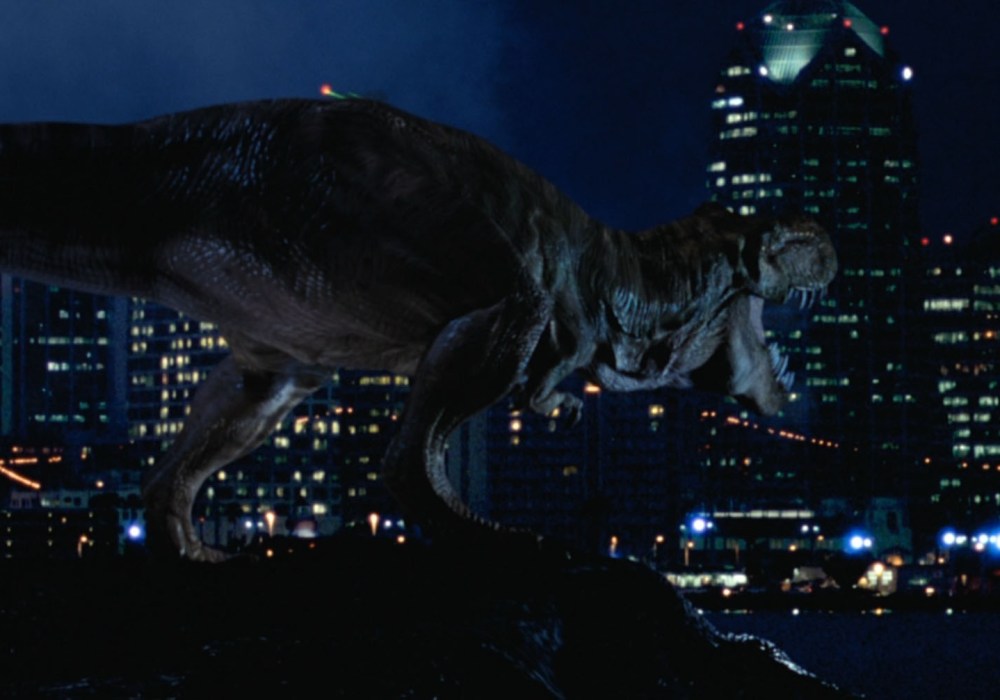
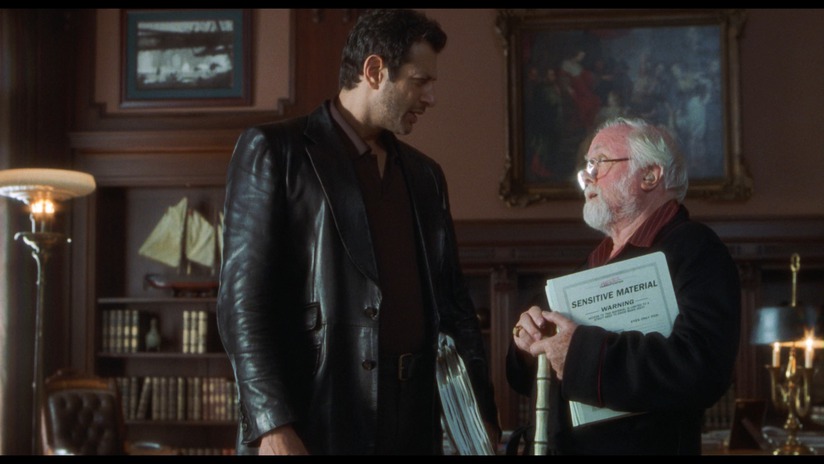
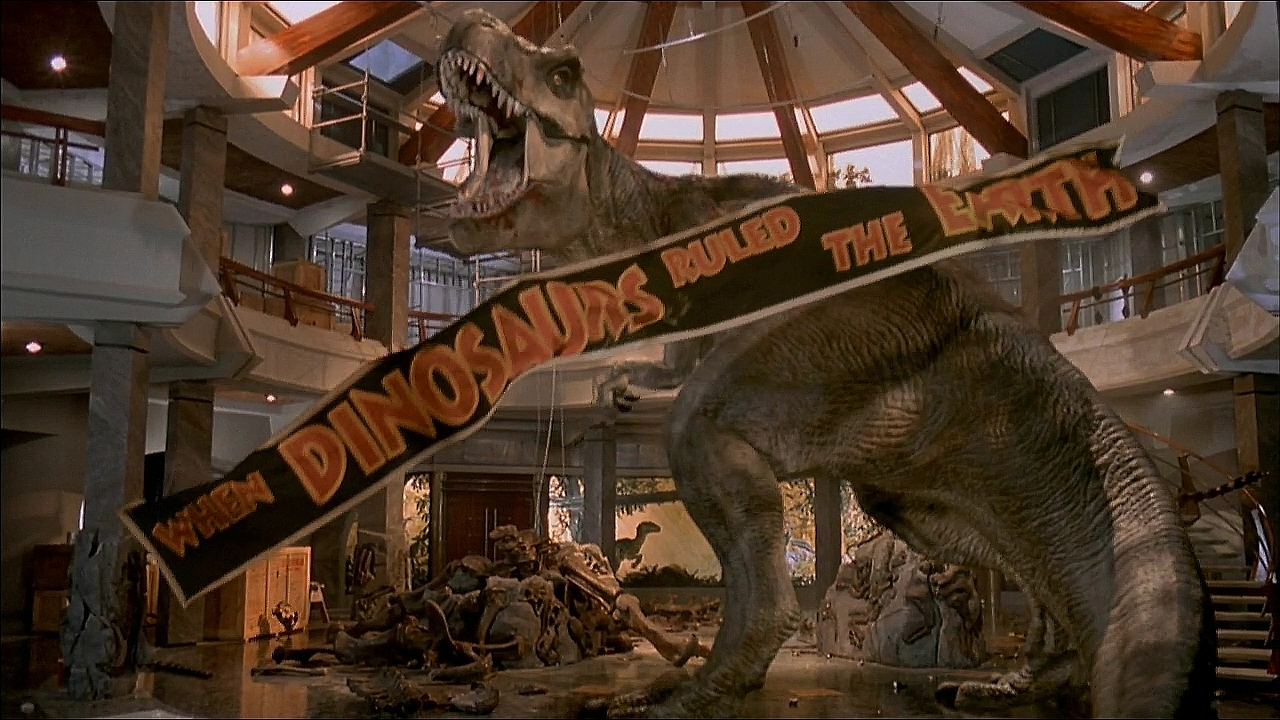
The Lost World: Jurassic Park (1997, Universal)

Even factoring some things about the film that’s the best thing that came out of it could be no sequel to E.T.

However, even with that, and the fact that when this film came out it had the unique distinction at the BAMs of being chosen as the worst film of the year, while still being the best in regards of scoring and effects; in terms of the science fiction and its place in a larger franchise there are interesting things that bear noting besides the fact that it was a memorably painful theater-going experience.

Science

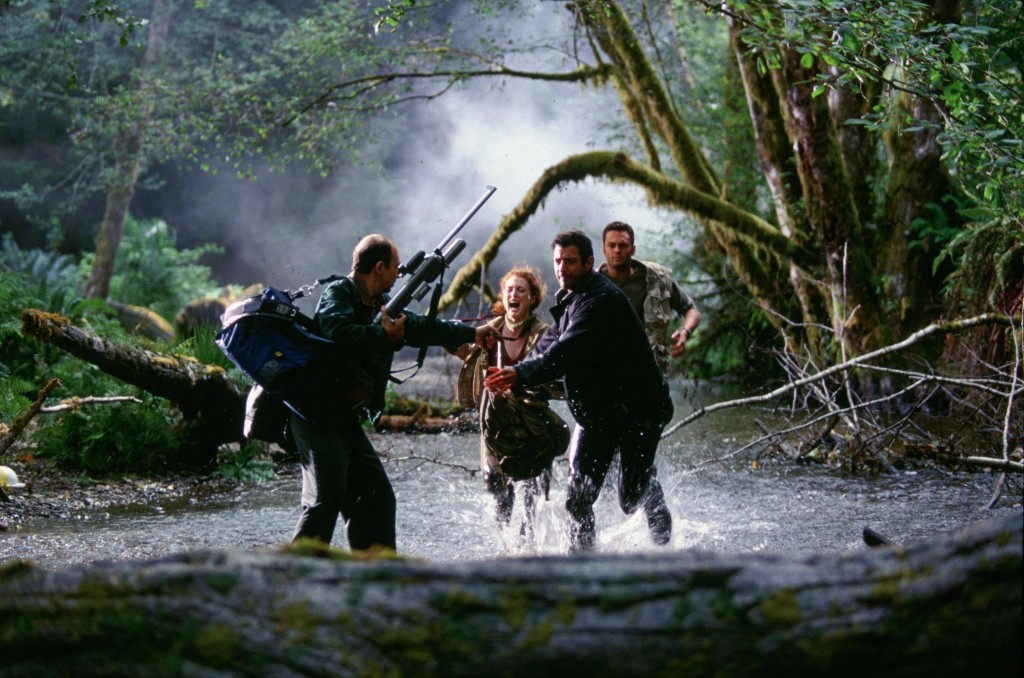
The Lost World: Jurassic Park (Universal, 1997)

When planning to continue a science fiction series you have to look for new mysteries to unravel and new theories to float; in short, new tricks. A few of the old favorites are back. We have the introduction of a second island, Site B (Isla Sorna). At this location dinosaurs were developed before being brought over to Isla Nublar, then Isla Sorna was hit with a hurricane that wiped out the facilities, the dinosaurs were then free and left to live & do their own thing. As per the Lysine Contingency, there should’ve been no way for the dinosaurs to live.

But “Life finds a way,” the mantra Dr. Malcolm uttered reverberates throughout the films no matter how far or close he is to the action. What happens here is that the herbivores survive on the lysine-rich foods and then the carnivores eat them, this theoretically provides them the lysine necessary to sustain life.

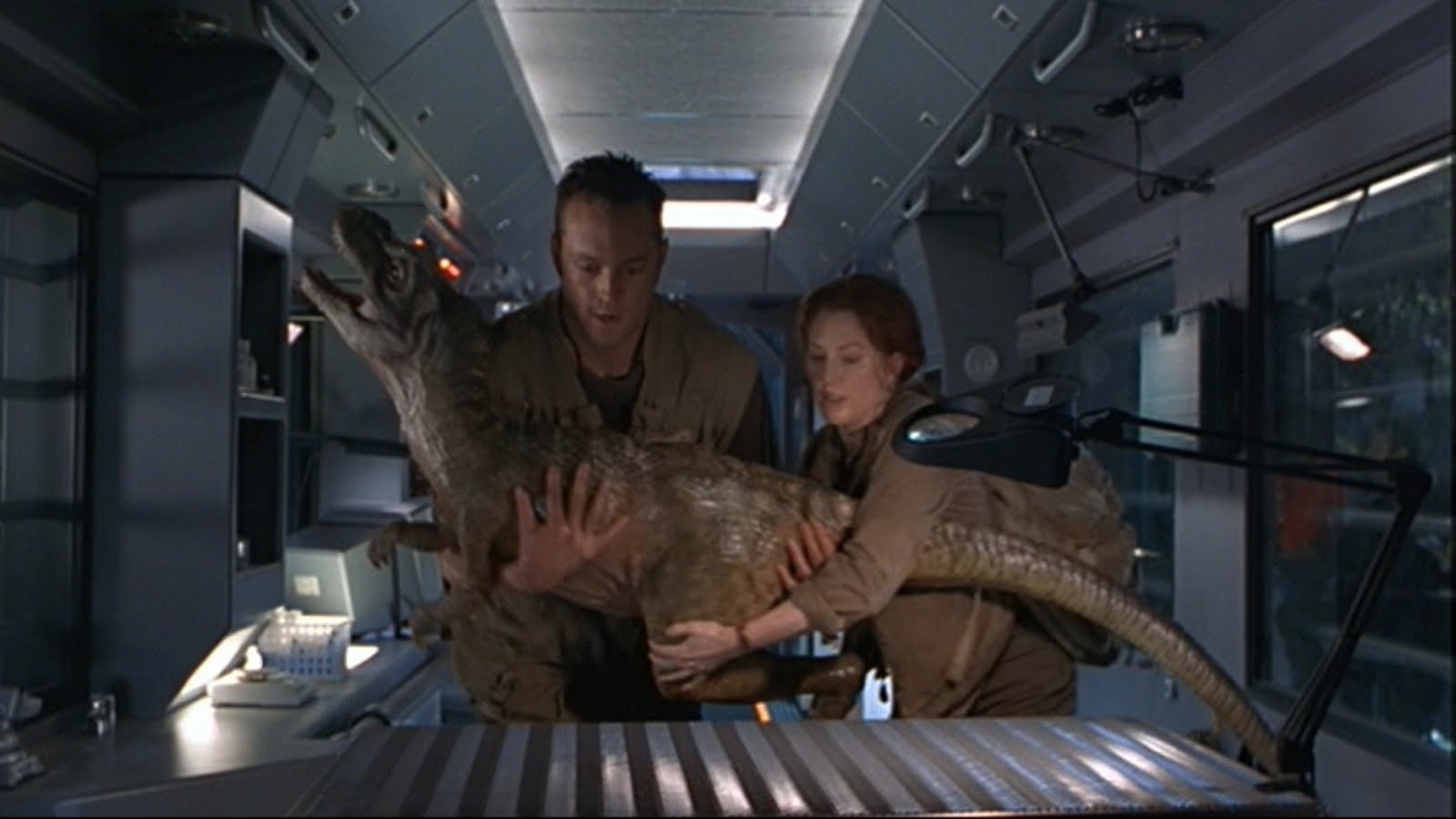
The Lost World: Jurassic Park (1997, Universal)

It’s unspoken but the amphibian DNA factors in here as well as there is breeding afoot. So these are the things necessary to create an environment wherein it truly is a Lost World, hearkening back to the Arthur Conan Doyle story. Here in the modern age, with the help of genetic engineers, are newly created dinosaurs on an island that was devoid of human life.

What’s also interesting is that this series never shies away from introducing new nuanced paleontological debates and talking-points. Of note and relevance in this film, are debates being settled on the parenting of dinosaurs (the two camps always arguing between a more nurturing, mammalian sensibility of a more laissez-faire or cruel, by human standards, fend-for-yourself approach), and also the territorialism that dinosaurs display here that factors in.

Introduced in this film are a few dinosaurs including the Pachycephalosaurus, called Pachies here as well, though not causing any hubbub back then – a bit more on that later where it’s more pertinent.

Themes and Motifs

The Lost World: Jurassic Park (1997, Universal)

In discussing things that pop-up in each of the films, it seems to make sense to address the kid topic first. Vanessa Lee Chester, was a young actress who I didn’t see in many parts, but I did like her a great deal in her prior film Harriet the Spy. One thing about her character that does work is that her existence though it seems fairly random is that it does follow suit with Malcom’s assessment that he’s married “Occasionally.”

Much of the issue here is not Chester’s actual performance. In the first film, Tim (Joseph Mazzello, who only makes a token appearance in this film) was supposed to grate on Grant with incessant questions, maybe the fact that he seemed and sounded quite a bit younger than his older sister made him come off to some as more bothersome. In my estimation, Richards (who also makes a token appearance) was the biggest casting concern in the original. Here it is sadly Chester but upon review it had less to do with her and more to do with the character the stowaway plot plants the seed in the audience’s mind that “You’re not wanted here.” It’s far too easy keep that momentum up especially for an audience that’s reeling with changes: Hammond isn’t running his own company as much as his son is, InGen ousted him from the Park in an official capacity, Malcolm’s flying solo, Grant and Sattler aren’t there, there’s a new island (a fact which never seemed to be as harshly scrutinized as the second SETI location in Contact), and now a random kid along for the ride that shouldn’t be there, and more. It just sets itself up for her to be a scapegoat in certain regards though there are far greater issues here.

Some of the debates brought up are interesting but they do not support a compelling, visceral drama you have the battle of hunters on safari versus the scientists, which is an extension of the preservation of wildlife versus the notion that indiscriminate mass killing is an extension of survival of the fittest. Those on the hunting side of the fight state that “An extinct animal that has been brought back to life has no rights,” these exact sentiments will be echoed in Jurassic World to great effect. Similarly the barb “Predators don’t hunt when they’re not hungry” is damning both a game hunter and a hybrid that acts more like a human would given those irrepressible predatory capacities.
“Really?”

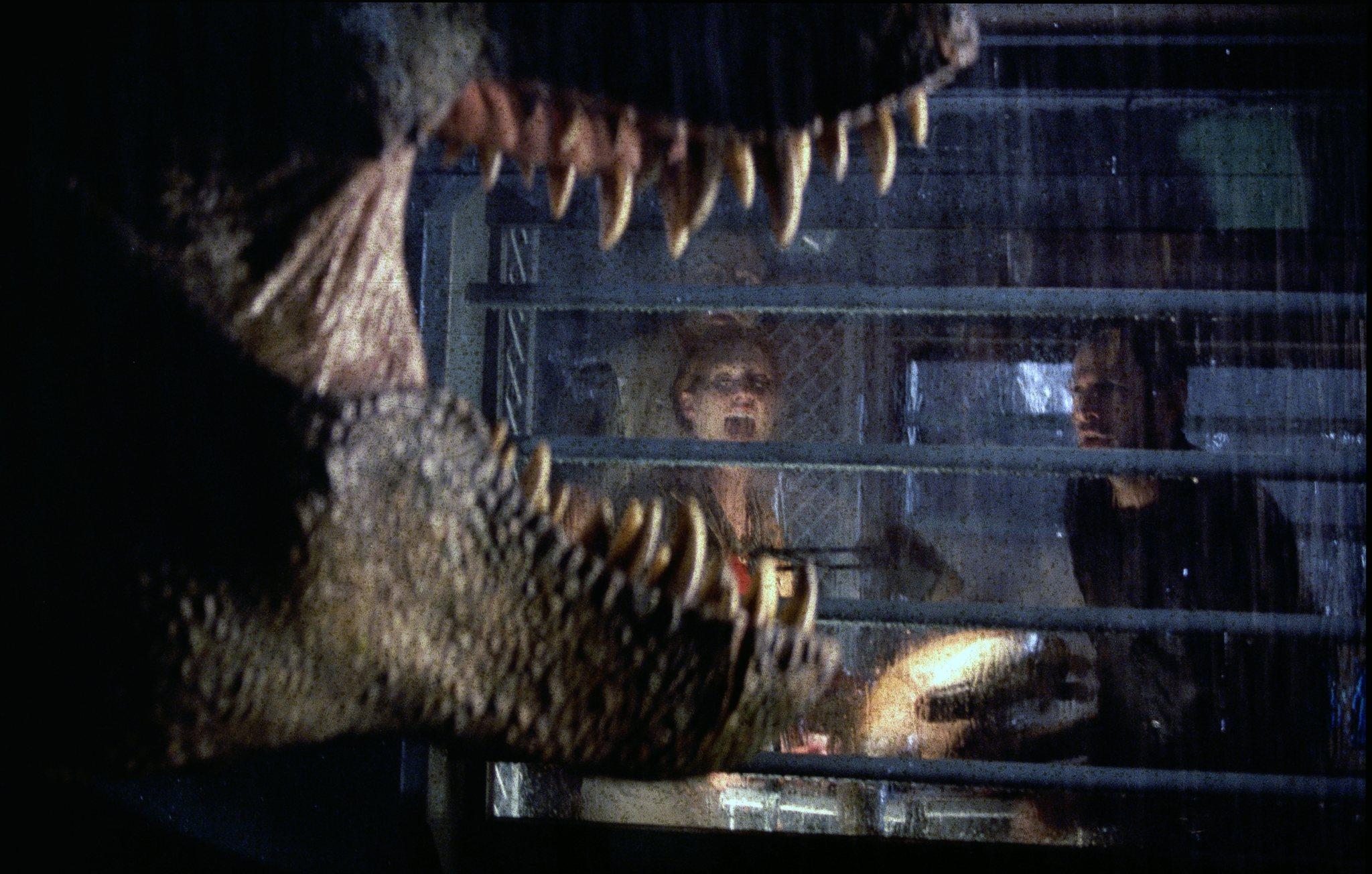
The Lost World: Jurassic Park (1997, Universal)

It’s quite nearly redundant to have a “Really?” section in a film where I’ll touch upon this sentiment probably under every heading but a few are noteworthy. The hubris and bad decision-making on the part of humans running this dinosaur enterprise is a given, however, even that has its limits. The notion of transporting the dinosaurs is just one in a laundry list of bad ideas in this film. Hammond acknowledges mistakes were made in the past but Malcolm correctly cites “You’re making brand new ones.” His agreeing to go to this new island is really just a rescue operation to save his girlfriend (Julianne Moore) from being in harm’s way. She’s there as Hammond’s liaison to study the animals an interfere with InGen’s designs ultimately.

One thing that is brought up but never really comes back into play, not in the films anyway, and I don’t know if Crichton expounds on this in his novel: This film introduces the notion that Sorna and Nublar are part of an accursed island chain of the coast of Costa Rica referred to colloquially as Las Cinco Muertes, the Five Deaths in English. Does Hammond or InGen have a claim on all of them? If all goes well could there eventually be five parks like at Disney World?

The Lost World: Jurassic Park (1997, Universal)

Another serious concern in hindsight is that fact that Hammond, after the latest deaths and catastrophes states on national television that he has had a change of heart. ”Preservation and isolation” is the new goal of the islands. Furthermore, “If we trust in nature life will find a way.” How is that philosophical gap bridged between Hammond the sudden naturalist to the dying man who asked a good friend to do right by the original intention of the park?

The other curious thing is that the explanation of Site B seemed odd. There were dinosaurs being hatched on Nublar, so why Sorna is an incubation site is only partially explained. Yes, isolating at first may be a benefit if things go wrong it never affects the main park, but transport is fraught with concerns as this film proves.

What Works

The Lost World: Jurassic Park (1997, Universal)

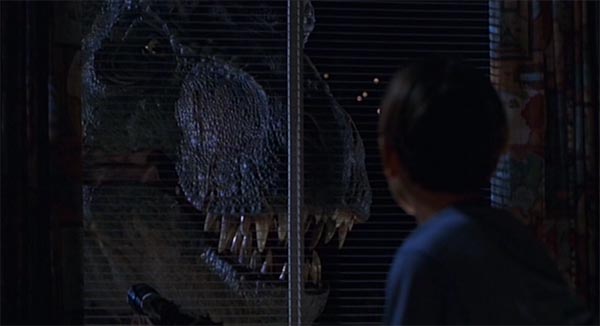
Before I continue to beat the dead horse that this film is I may as well take a respite and discuss the things that work, even if briefly: John Williams’ score is the best part by far, there are some Spielbergian touches that worked that I forgot about: visually the blood in the waterfall is very cool and the shipwreck is a well-staged action set-piece. Perhaps, the best combination of comedy and horror in the film is the T-Rex being visible from the little boy’s (Colton James) window.

While I always appreciate to tongue-in-cheek joke of a dinosaur running amok around a gas station it does slow things and it only otherwise noticeable because it’s a pretty big instance of product placement (76) that no one ever talks about, but more on that later.
At least Spielberg avoided excessive CG and cited an example from Lost World where he talked about more not always being more.

Monster Movies More Heavily Influenced This One

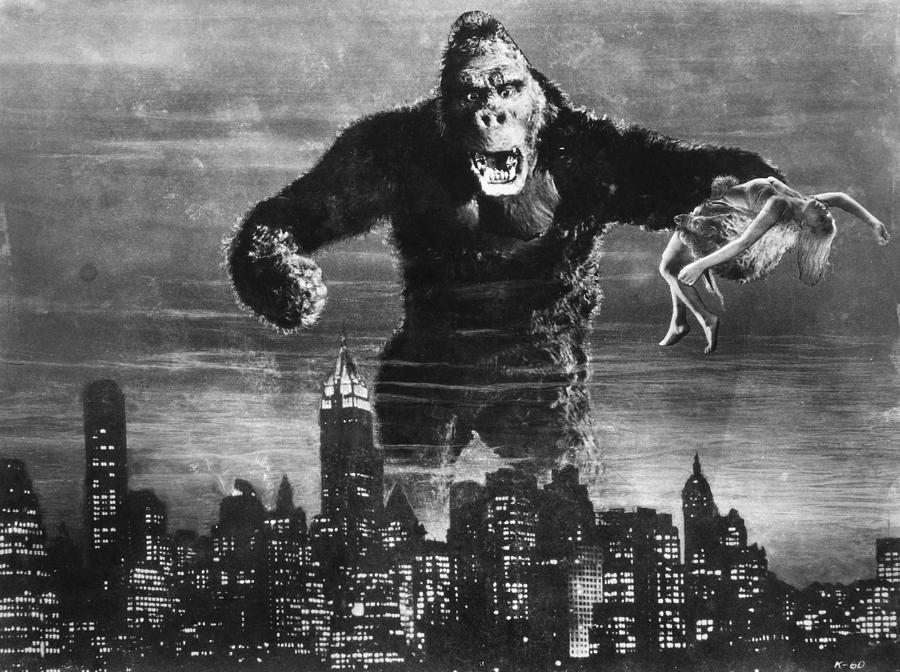
King Kong (1933, RKO)

There was sufficient King Kong reference in the first film without rampaging T-Rex thru a major metropolitan area. Then you add the shot where at the start only running, screaming, Asian businessmen recalling a Godzilla film and it just becomes too much. Aside from the fact that this illegal capture to take an animal to a zoo is like something right out of Tarzan in the first place.

When you add this over-reverence to the aforementioned issues it’s doomed to fail, but wait there’s more!

Why it Fails

Jurassic Park: The Lost World (1997, Universal)

There seems to me a more overt, forced attempt at comedy in this film that falls so flat. At the very least it didn’t present the ill-fated combination of not being terribly funny and being impossibly, incessantly loud like 1941.

The film also lacks equilibrium. It’s all chase or hide all the time in much closer confines and with nothing else really buoying the action, no further plotting or intellectual intrigue upping the interest beyond simple life or death for a handful of characters we just met and barely know, barring Malcolm.

Even if you were cool with Kelly’s handy use of gymnastics it was foreshadowed clumsily and rather tepidly followed up with an obligatory one-liner. The InGen teams arrival slows the progression of the film to a halt when it had barely gotten going. Getting going is made harder when you don’t really know these new people and those you do know aren’t there as much.

Ultimately, this film fails almost everywhere sadly.

The Intervening Years (1998-2000)

Michael Crichton (1998, LA Times)

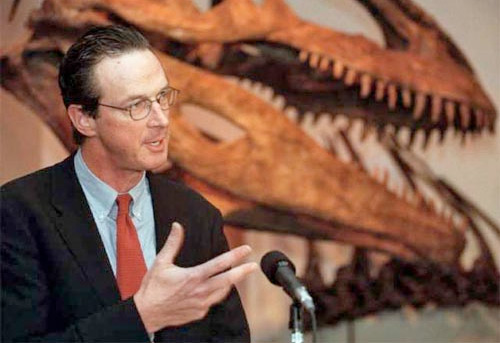
Between Lost World and Jurassic Park III two noticeable things happened. First, there was the death of Michael Crichton at too young an age. The film sequel happened because, in large part, he wrote a sequel to the book. Any further installments would all be breaking new ground and would not be part of Crichton’s canon.

Spielberg in this time would become more heavily involved in pushing DreamWorks forward; and following The Lost World he was taking on some of his most ambitious projects: first, Saving Private Ryan and then Artificial Intelligence: A.I. Clearly, he was past a point of feeling the need to direct a sequel. So much so that he’s even planning series with him stepping out after the first film. Spielberg broke ground personally directing animation and with the most convincing motion capture to date on the first Tintin film but the plan was always that Peter Jackson would do the second film. Now, if there are more does Spielberg return? Possibly but for now there’s no guarantee of that.

So with a few years off, the loss of an author, and a new director at the helm the slate was essentially wiped clean for the Jurassic Park franchise. There were givens in place but they could go almost anywhere.

Welcome to Jurassic World, Part 1: My Personal History with Jurassic Park (1993)

Statement of Intent

It bears stating that in this sprawling series that it is not my goal here to change anyone’s mind with regards to Jurassic World (or any other film in the franchise), and how it fits in the larger Jurassic empire. It is merely my intent to discuss them, especially the most recent, why I enjoy it quite a bit, and how it fits into the series to date. This is something I’ve been mulling over for a while. The reason is not that the movie is incredibly deep or dense, but it has a lot to do with how it plays against the series to date, which required re-viewing to underscore certain salient points.

So while I am on the pro side of the argument it is not my intent to do the flip-side of what’s discussed here.

I will discuss some of the flaws in the most recent one, as well as in the series as a whole; as well as why I really like it and why certain critiques don’t jibe that well with me.

Personal History
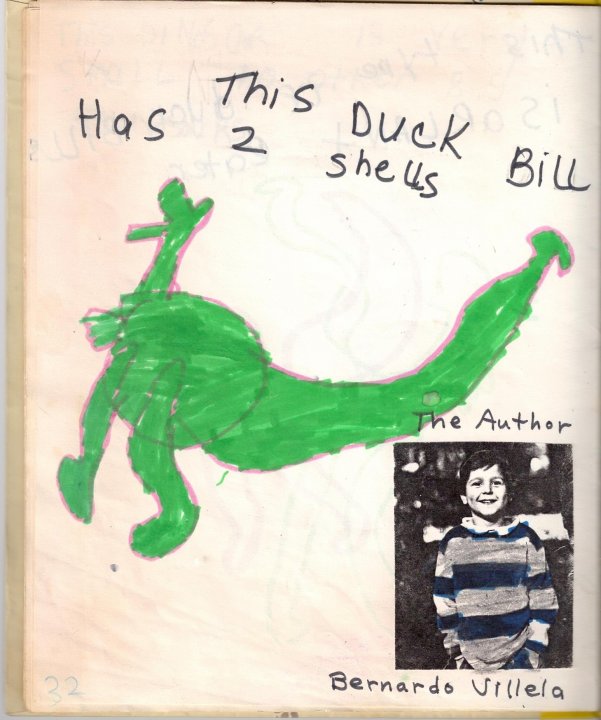
Bernardo Villela (1988, All Rights Reserved)

Yeah, I had the wrong nomenclature for “crest,” I was seven. Wanna fight about it?

First, since I haven’t had an opportunity to discuss Jurassic Park much here in the past a bit of history may be appropriate. Even in my Spielberg retrospective, after his lifetime achievement award, I didn’t cover it specifically.

Many children run the gamut of a select few jobs they dream of doing when they grow up. I did most of them as well, the only one that was probably a bit out of the ordinary when I was young, and that I came back to, was my desire to be a paleontologist. Yes, all kids seem to inherently love dinosaurs but not all of them take an interest in the applied study of learning about them and hypothesizing about them based on fossil record.

My reborn interest was sparked in my partial-reading of Chrichton’s novel, I  then acquiring more mature scientific texts than I had before. In grade school, my first book in a writer’s workshop class was on dinosaurs (pictured above).

As a child I’d seen Baby, the random Dennis the Menace film with dinosaur involvement, Denver the Last Dinosaur, and whatever else I could with dinosaurs in them. Clearly, Jurassic Park was going to be different, which is what had me anticipating it greatly.

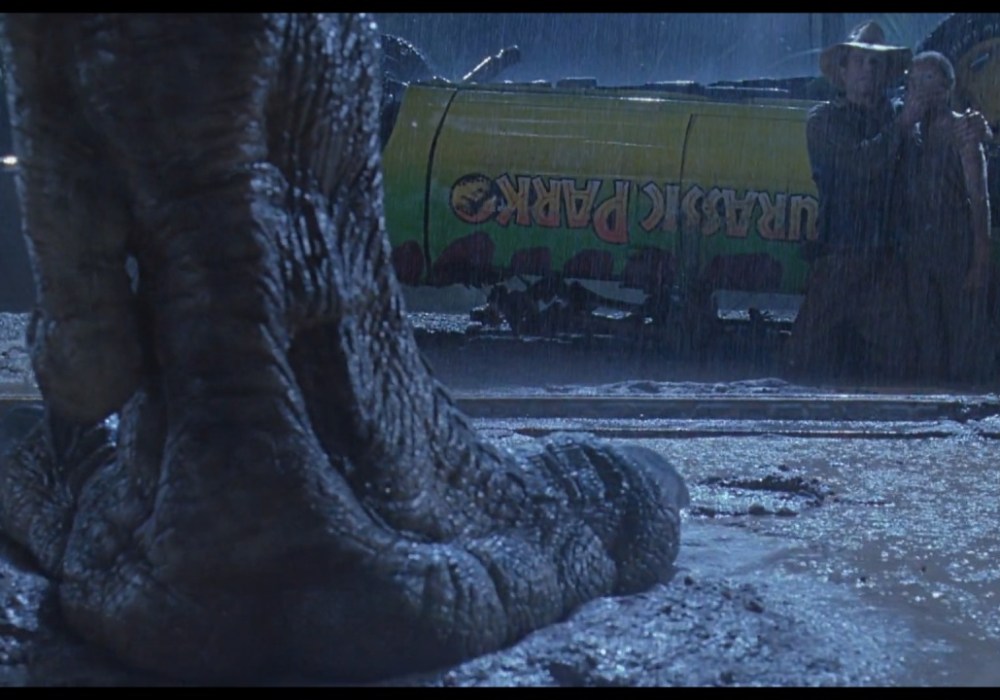
Jurassic Park (1993)
Jurassic Park (1993, Universal)

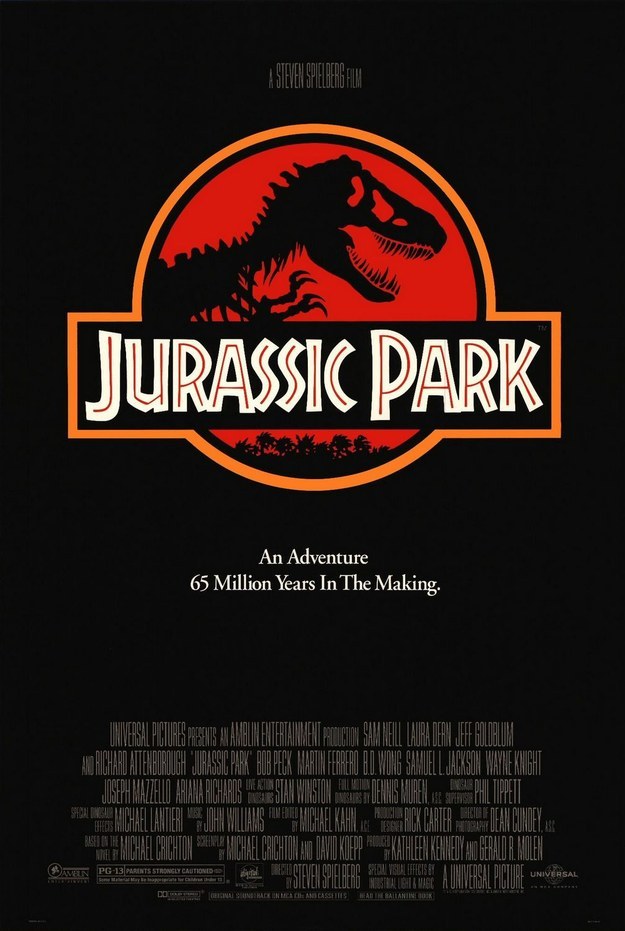
This film was huge for me and many others. When I first saw Jurassic Park it was clearly my favorite film of all-time to date. At a time when I was very into retroactive creation of BAM Awards from the year of my birth to 1995 (before the extemporaneous ones started) Jurassic Park owned a bit of hardware in 1993 as well.

The set-up for the film is a classic such that it was used as the go-to example of a “What if?” inspired scenario in my introductory screenwriting course in college. “What if dinosaurs were brought back to life and walked the earth with modern man?” really cuts to the heart of the awe of the first film.

Truly, it’s a sensation that will not be duplicated. The story hadn’t been tackled yet, effects had reached a new threshold, you add something that sparks a childish curiosity and excitement in adults; in a film told through the lens of a director who defined adventures for millions of kids and brought that youthful outlook and wonder the to oldest of soul; and you had a virtually can’t miss formula. And it didn’t.
Jurassic Park (1993, Universal)

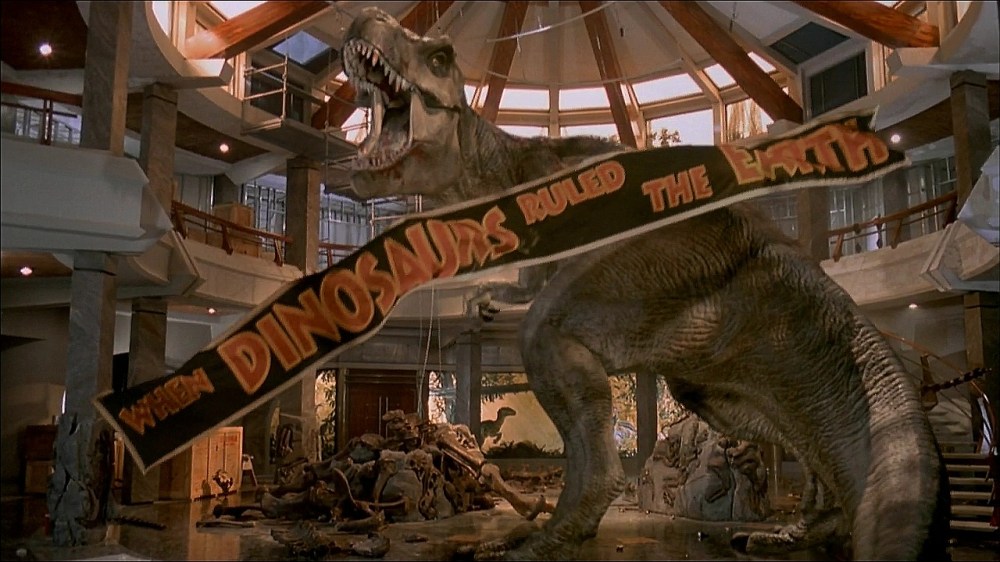
Furthermore, for me in my doe-eyed innocence it not only played into that wish-fulfillment but also brought before me a nightmare I had never truly contemplated: how wrong it could possibly go, and how two species who’d been the dominate forces on earth during different eras really couldn’t co-exist.

What will also invariably set the first film apart from all those that follow, this is true of any series but particularly this one, is that it’s so new that the audience and characters are eased into it. There are questions that need to be answered, rules that need to be established. One thing that is tremendously well done is that Dr. Grant and Dr. Sattler really don’t know what they’re signing up to go look at.

The world is isolated and small, the park has not opened and is seeking investors; it’s more focused in its narrative than any subsequent film. With everything being new, with great pains being taken to suspend disbelief, with brilliant scientific debate; the first film sets a rock-solid foundation upon which all other follow-ups can build with confidence regardless of how successful they are.

However, amidst the wonder and the blinding brilliance of the film as a thrilling adventure, with impeccably defined characters, contrasts, and spectacle; it seems at time we don’t take into account that there was hubris, miscalculation, and at times downright stupidity from some of the characters. And as great as it is there is even a pretty big “Oh, come on!” Now, most of what I have to say will be about what it sets up because those pave the way for decisions made further down the line.

Science
Jurassic Park (1993, Univesal)

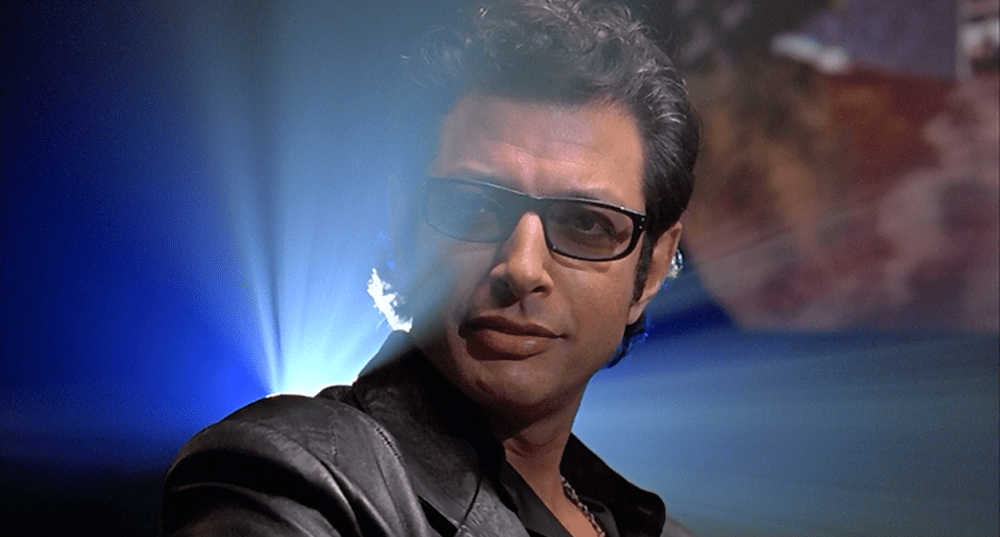
With so much of this being new, and also with Jurassic Park being a story that was interested in actually living up the name of science-fiction properly, there was more time and more need for the characters  to question how such things were done.
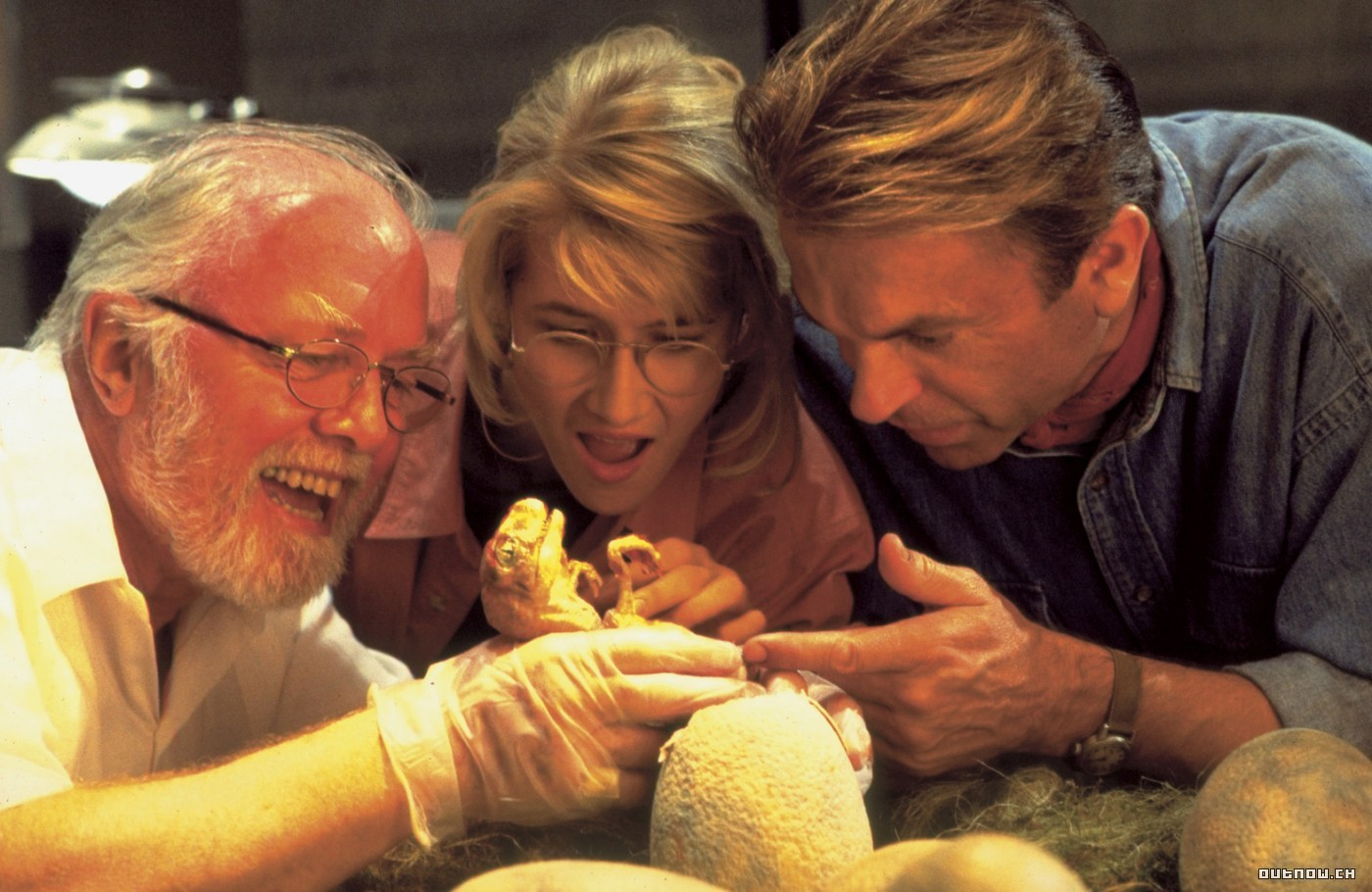
Among the scientific points of discussion that come up are: The Lysine Contingency, lysine being a necessary enzyme to sustain life is something the engineered dinosaurs do not produce but the park geneticists administer. It is a theoretical fail-safe should people die or the animals need to be euthanized.

The scientists rightly ask how gaps in the genetic sequence are filled. They learn that amphibian (Tree frog) DNA to fill in, this is what opens the door for spontaneous change of sex (they were all engineered to be female). Due to the single-sex environment the scientists believe they have instilled another control, and will be able to ensure a stable population.

Being a film that postulates on the return of dinosaurs long-held debates in the scientific community could be settled (theoretically) here. The behavior of herding in the first film is confirmed; the debate as to whether the creatures are endothermic (warm-blooded) or poikilothermic (cold-blooded) is settled. At least theoretically, and like in almost any work of science-fiction most of the facts are built-up and supported to make them plausible, such that the instances of artistic license are more earned. In this film license is taken with the Dilophosaurus, a species wherein there exists no evidence to support either the claims of a neck frill or venomous expectoration. Even more license is taken with the Velociraptor, which is made a bit taller than that specific raptor.

Crichton modeled his raptor after Deinonychus, which per Gregory S. Paul’s classification would be of the raptor family. Incredibly, as fate would have it, the discovery of the Utahraptor shortly after Winston Robotics created the first vindicated this visual impression and use of a more dramatic name (as opposed to Deinonychus), of the raptor by looking very similar to what they built, though strictly speaking the actual Velociraptor is a much smaller predator.

Motifs and Themes
Jurassic Park (1993, Universal)

Jurassic Park never would have been the hit it was around the world if all it was concerned with was dinosaurs. What it has to say about its characters and humanity in general is what takes it a place above and beyond many other films in its genre. Aside from a ground-breaking idea and technology there also is an exploration of important themes in a universal light against a preternatural backdrop.

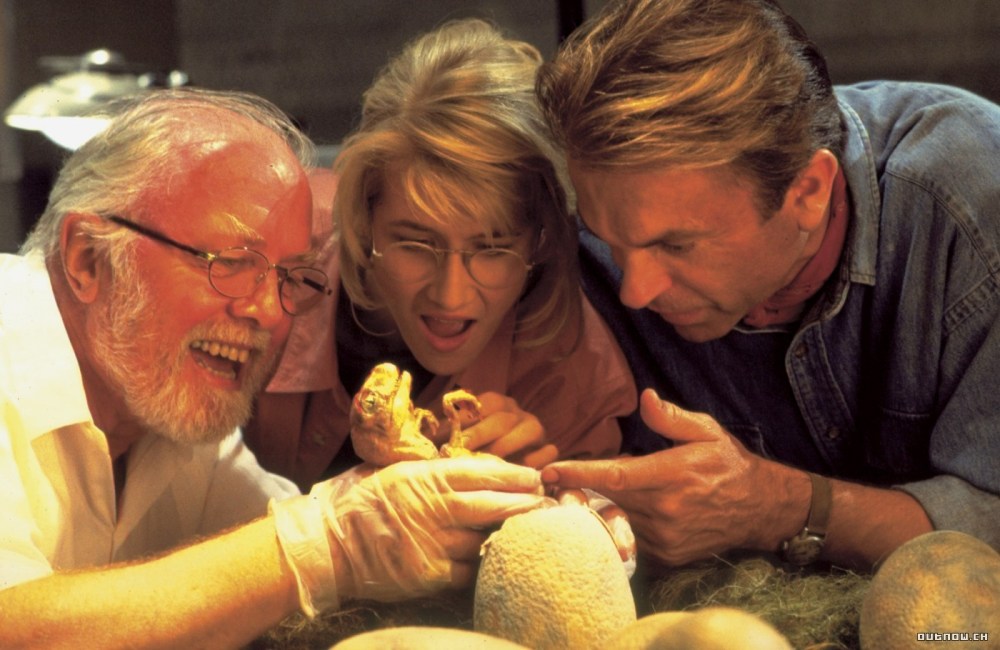
“We can talk about sexism in survival situations when I get back,” quips Ellie Sattler as she’s about to head off to try to power the park back up manually when Hammond (Sir Richard Attenborough) was concerned about her leaving. If there is one thing that has been a constant throughout it’s that the series has made attempts (this film was the most successful) to put smart, intelligent, skilled women in key roles.

Ellie is a very rounded character. Aside from her obvious professional acumen she is also not averse to marriage and children. This is one of the things that make her and Dr. Grant great foils. He doesn’t like kids. Therefore, there is tremendous comedic payoff when Hammond’s grandchildren (Ariana Richards and Joseph Mazzello) come and Grant gets saddled with them.

Furthermore, it introduces kids into the series as participants which is a constant. Much like I started writing about these films talking about my childhood fascination with dinosaurs, kids have to be brought into the action in a story like this so kids engage even closer. In 1950s sci-fi films there was almost always a kid involved so those kids going to the double-features had someone they could more closely relate to; the same goes here based on the tale as Hammond says they are “the target audience.” So if your tolerance for child actors happens to be low you better check that at the door because kids will be part of the proceedings in this series for better or worse.
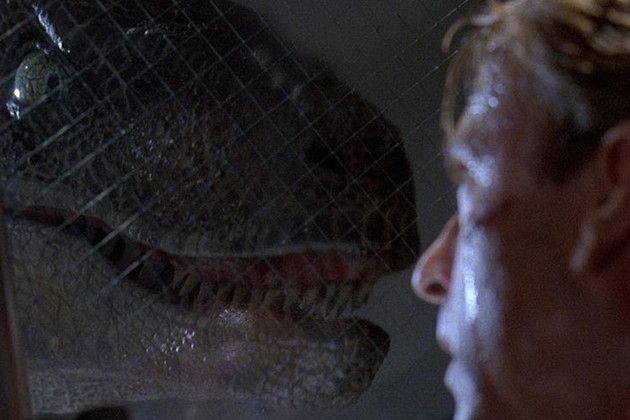
Jurassic Park (1993, Universal)

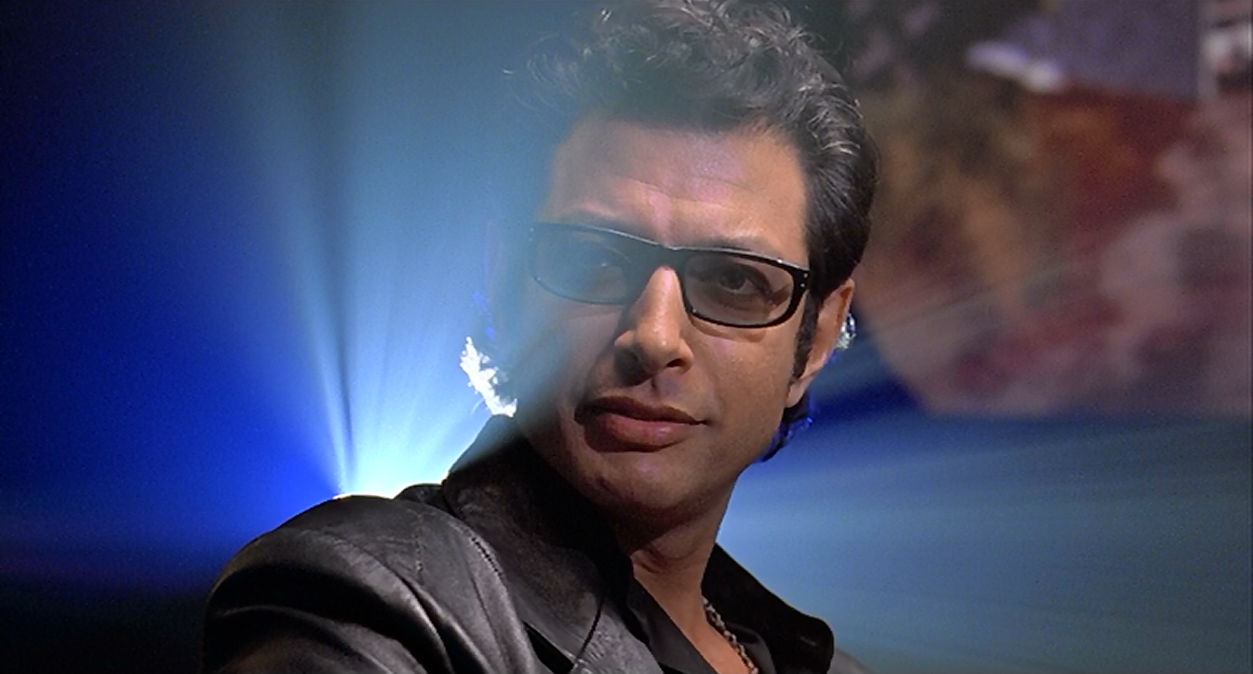
The kids are the target audience and the park clearly has to be made safe for them as Dr. Malcolm (Jeff Goldblum) humorously observes “When the Pirates of the Caribbean breaks down the pirates don’t eat the tourists.” Which links up with perfectly to the conversation Ellie has with Hammond in light of his flea circus story: “It’s still the flea circus, John. You never had control. That’s the illusion!”

And the lack of control, and the self-deception is apparent when you think back on the rebuttals the scientists had for Hammond when they were talking over dinner.

“I tell you the problem with the scientific power you’re using here, it didn’t take any discipline to attain it.”
“You stood on the shoulders of geniuses to accomplish something as fast as you could.”
“…your scientists were so preoccupied with whether or not they could that they didn’t stop to think if they should.”
“How can you know anything about an extinct ecosystem?”
“Dinosaurs and man, two species separate by 65 million years of evolution have just been suddenly thrown back into the mix together. How can we possibly have any idea of what to expect?”

I know many know those lines but bear them in mind for I feel they echo throughout the series to date.

Perhaps the most balanced character and the most centered in terms of accepting what the reality of the situation is, and having sufficient respect and admiration for these creatures is Muldoon (Bob Peck). He’s the game expert, and has been out on safari and seen most, if not all, the world’s large land predators, sure he is essentially a hunter but he has no delusions of control and knows better than to underestimate these creatures (consciously), and that is the cardinal sin of most characters in the series and how they meet their end.

“Really?”
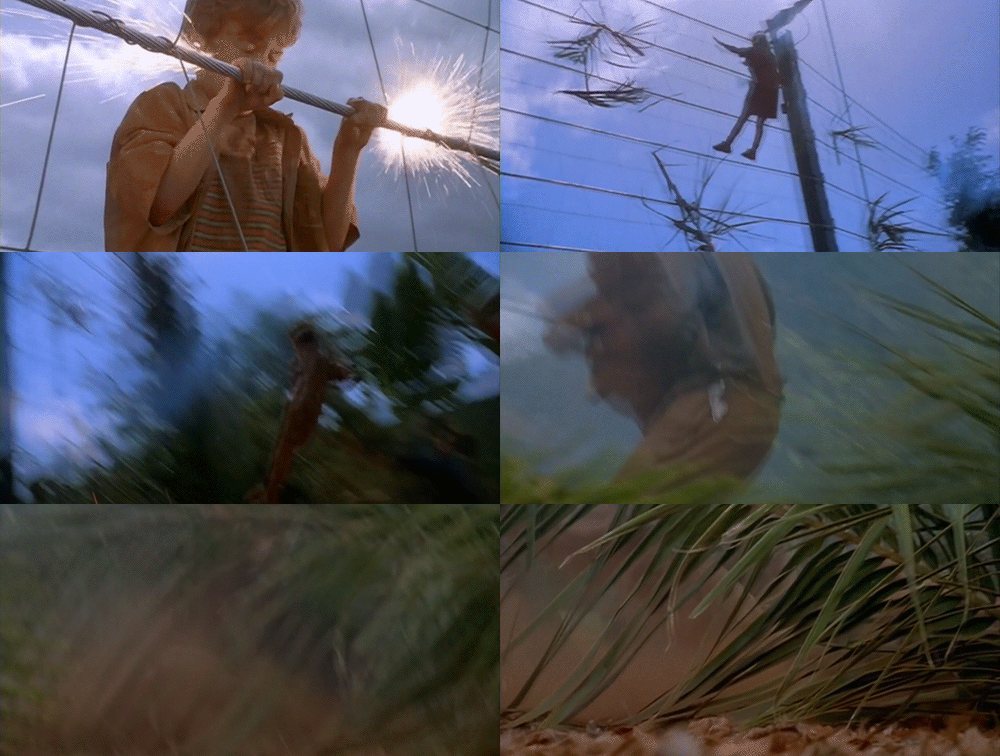
Jurassic Park (1993, Universal)

Speaking of their end. This brings me to the biggest “Really?” moment in Jurassic Park. Yes, I love it but even this movie has one,  the electrified fence. Now, this isn’t a bad horror film where I wanted a character to die, but based on the way it was staged I had trouble believing Tim would survive. It was tense, I was nervous, and relieved but from the beginning, since I first saw it was the biggest head-scratcher for me.

Even with that incident it’s still great, it’s just that one moment that sticks out like a sore thumb.

Conclusion: The Nostalgia Factor
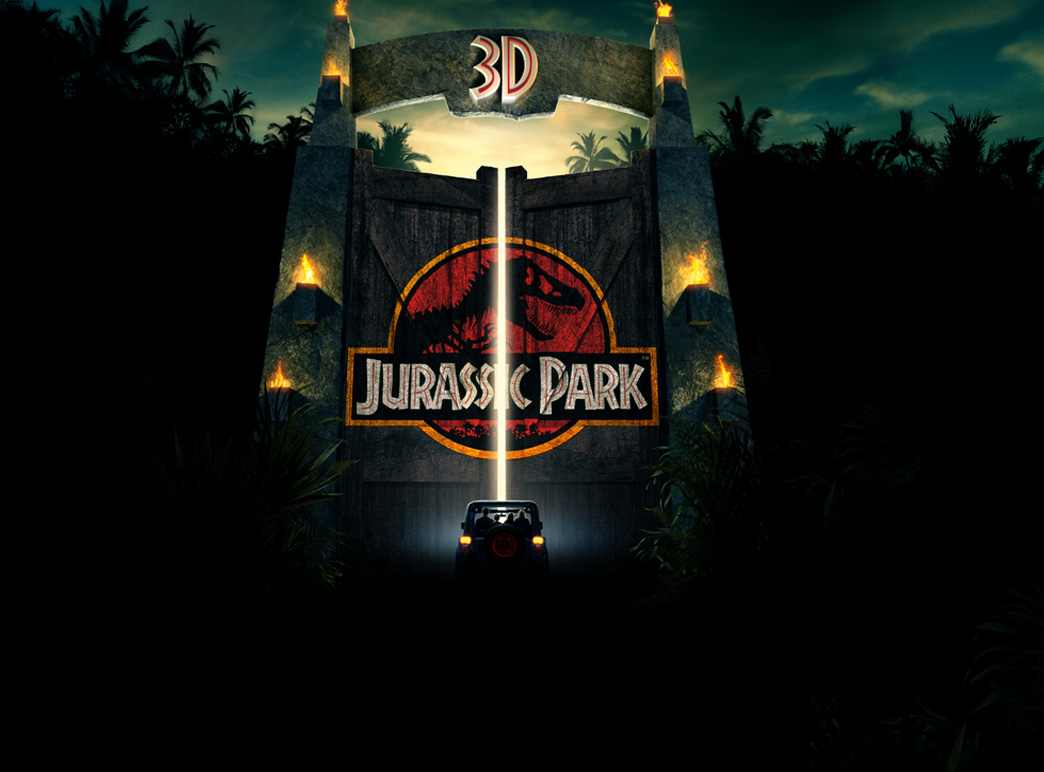
Jurassic Park 3D (2013, Universal)

I re-watched Jurassic Park before writing this piece. I could probably watch it again right now, and then tomorrow. My contention here is not that I think that Jurassic Park a bit more unfairly looked upon through the rose-colored glasses of nostalgia than most. My contention is merely that whether our view of the first film is nostalgia-tinged, realistic admiration or honest dislike each film deserves judgment on its own merits and to not be beholden to its source material, a previous installment, or prior version of the film. Sure, certain factors can make this difficult but it bears saying. “It’s not as good as the first” is not a valid complaint, and even though I despise the next installment, I won’t play that game rather discuss the issues there.

Sure, the next films are going to take some liberties and make some jumps but they’re building upon what occurred first and expanded from there. Some better than others.

Mini-Review: The Best Exotic Marigold Hotel

Introduction

This is a post that is a repurposing of an old-school Mini-Review Round-Up post. As stated here I am essentially done with running multi-film review posts. Each film deserves its own review. Therefore I will repost, and at times add to, old reviews periodically. Enjoy!

The Best Exotic Marigold Hotel

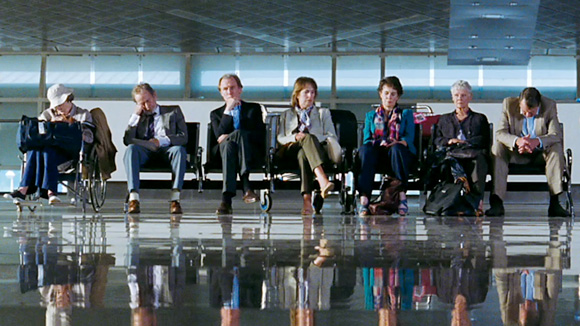
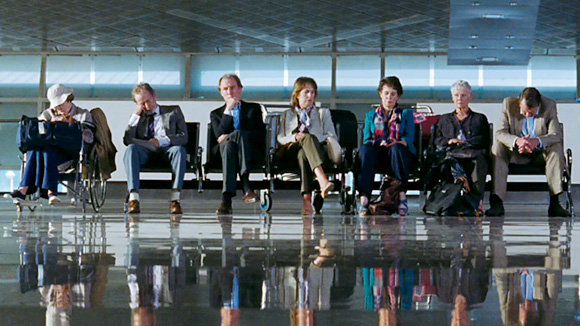
The Best Exotic Marigold Hotel is a cautionary tale, in the best way possible, and part of why I love the year-end sprint to catch up on releases of the year. Towards the end of the year, I get a little less finicky about selections and just watch things, not just to be adventurous but admittedly to bolster the BAM qualifiers. This may all sound quite underwhelming but the impetus to see this film was really a personal recommendation.
I knew of the film but frankly the trailer and all other marketing elements didn’t sell the film. What looked at the outset a rather myopically comedic tale turns out to be, in reality, a wide-ranging inclusive, heart-warming, bittersweet, charming and funny film; in short, one of the more well-rounded experiences.

The character’s narrative threads which start out very disparate reminded me in some ways of Love, Actually but with more interweaving and less contrivance to get things linked up. There is a general emotional over-current that makes this true also, not just some similar cast members.
Through the natural functioning of the narrative there is ample room, which is taken full advantage of, for commentary on myriad topics that is never extraneous, which adds to the enjoyment of the film.

One thing I can applaud the marketing of the film for is that it did leave many of the surprises of this tale in tact, and if you take this journey you will definitely be rewarded.

10/10

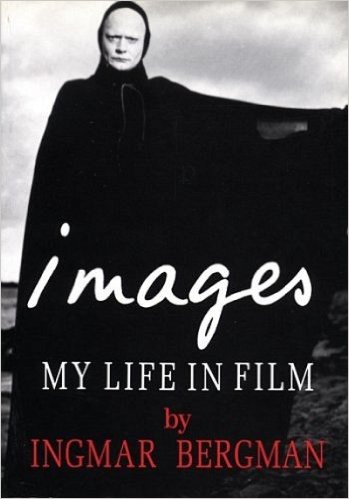
Summer Reading Classic Film Book Challenge: Images: My Life in Film by Ingmar Bergman

Introduction

This is my latest post (third overall) for the Summer Reading Classic Film Book Challenge hosted by Out of the Past. This book fits in as a biographical/filmographic account, as Bergman speaks of the films he made from 1946 to around 1986.

Bergman and Me

Bergman Island (2004, Sveriges Television)

In my second post in this series I chronicled my history with the films of Bergman. With that in mind I was very glad that this is the autobiographical Bergman account I chose to read first rather than The Magic Lantern. When making that decision it was based solely on the fact that Images was published at a later date and therefore would include a few more works.
As it turned out, that was a good thought on a few accounts. One of which was the fact that with further hindsight, and reviewing of his own work, Bergman was able to have more distance between the present day (of when this was written) and production. Therefore, his mind changed for the better, for worse, or he had more clarity on why certain things worked or didn’t work. Furthermore, there were citations from The Magic Lantern used as jumping off points. This may be tiresome for one who read that book but was helpful here.

Clearly the most illuminating to me were the excerpts of texts from his workbooks where he’s literally dissecting his own process from abstract notes you can either clearly see how the film developed, or are let marveling at the genius that he was able to to take something rather obfuscated and turn it into concrete emotion and a visual reality that exudes the intended visceral reactions and ideas.

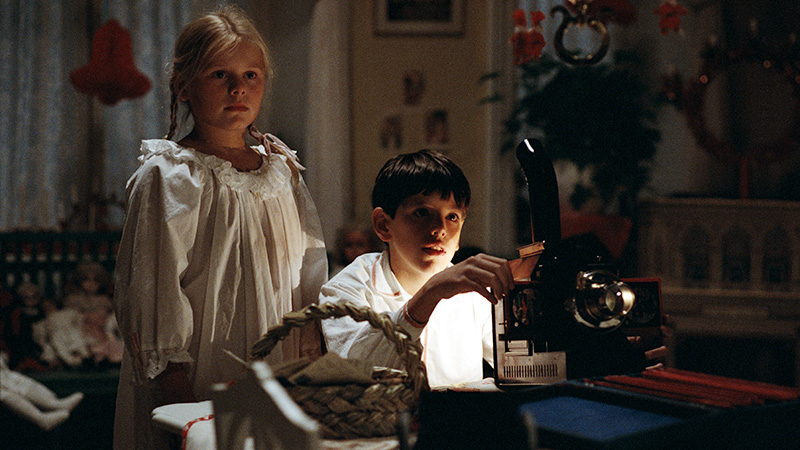
Fanny and Alexander (1982, Svensk Filmindustri)

The very formation of this account is one that’s fascinating. It started with what was going to be another interview book like Bergman on Bergman with interviews conducted by Lasse Bergström, Bergström then deleted his questions and Bergman edited the text. The filmography section, which was crucial in the days before the IMDb, and handy because of the plot synopses they at times contained, was compiled by Bertil Wredlund.

The film is also very interestingly organized as the films are grouped not chronologically so much as thematically. The sections within are:

Dreams and Dreamers

The Silence (1963)

(Wild Strawberries, Winter Light, Hour of the Wolf, Persona, Face to Face, The Touch, Cries and Whispers, and The Silence)

This section ends with Bergman talking about why he went into self-imposed exile amidst tax evasion allegations that were eventually deemed meritless, then it transitions back to the beginning with-

First Movies

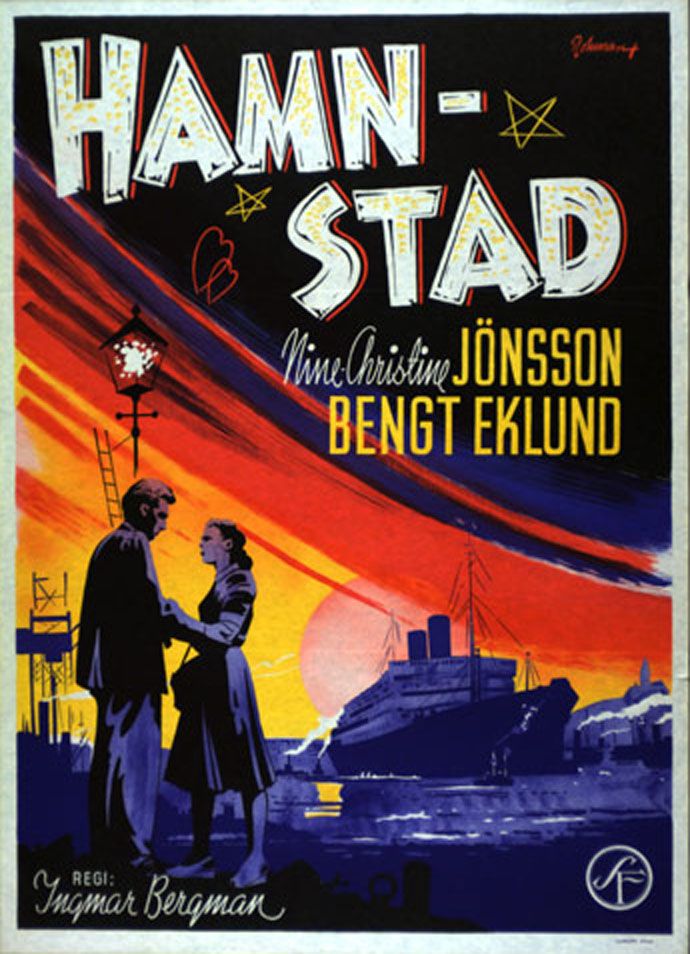
Port of Call (1948)

(Torment, Crisis, It Rains on Our Love, A Ship Bound for India, Music in Darkness a.k.a. Night is My Future, Port of Call, The Devil’s Wanton a.k.a Prison, and Thirst)

This section starts with him in the script department of Svensk Filmindustri then writing scripts and finally directing. It also interestingly discusses his stint as script supervisor (“script girl” as it was frequently called back then), for the first screenplay he wrote. He humorously admits to not being good at it, it’s an important job, and parenthetically, I wasn’t very good at it myself.

Jests Jesters

The Serpent's Egg (1977)

(The Magician, The Rite, Sawdust and Tinsel, The Serpent’s Egg, From the Life of Marionettes, Scenes From a Marriage, and After the Rehearsal)

In this section Bergman not only discusses his years out of Sweden but also ties that in with the themes of jesters and traveling entertainers, and puppets which were omnipresent in his work but prevalent in these films

Miscreance Credence

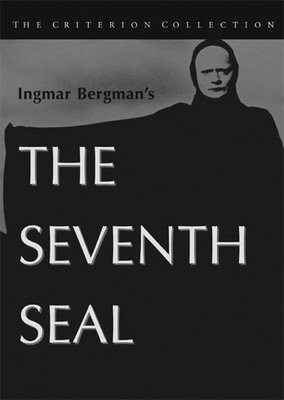
The Seventh Seal (1957)

(The Seventh Seal, Through a Glass Darkly, The Virgin Spring, and Winter Light)

In this section the discussion at times runs together because of the religious themes that connect them all.

Other Films

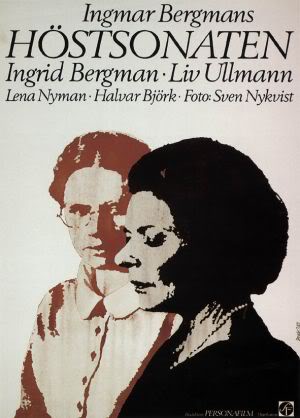
Autumn Sonata (1978)

(To Joy, This Can’t Happen Here, Summer Interlude, Waiting WomenSummer with Monika, Shame, The Passion of Anna, Brink of Life, and Autumn Sonata)

While the title of this section is a bit uninspired it does talk of actors in general segues to the discussion on Autumn Sonata, which I will dedicate excruciating detail to in an upcoming blogathon.

Farces Frolics

Fanny and Alexander (1983, Svensk Filmindustri)

(some commentary on Waiting Women, A Lesson in Love, Smiles of a Summer Night, The Devil’s Eye, The Magic Flute, and Fanny and Alexander)

Herein he discusses his struggles with comedy in general and his repeated ventures (yes, there were a few) into the genre. In addition to that there is discussion on how Fanny and Alexander in many ways was born of the influence of both E.T.A. Hoffman and Dickens.

Anecdotal Awe

The Passion of Anna (1969)

Note: If you want to go into the book knowing as little as possible bypass this section.

Sure there are wide-ranging insights into his process, life, development, and art in general, but for me (as I’m sure is the case with many of us) the greatest thing is the little insights. Things I never knew that aren’t earth-shattering but intriguing, or opinions he has on his work that you don’t share, and those you do.

Some examples of this are: Fanny and Alexander started with different names in his notes, and that he likes the TV version better (as do I). He detested The Devil’s Eye, and working on it; I didn’t like it either and that kind of thing has a tendency to show (like with John Carpenter and Christine). He claims he shouldn’t have included the interviews in the The Passion of Anna.

It is curious that the mention of the The Magic Flute being produced in the Swedish language, and not German, is non-existent. Though reading the whole book, and the section between the lines there are some inferences one can make about this choice.

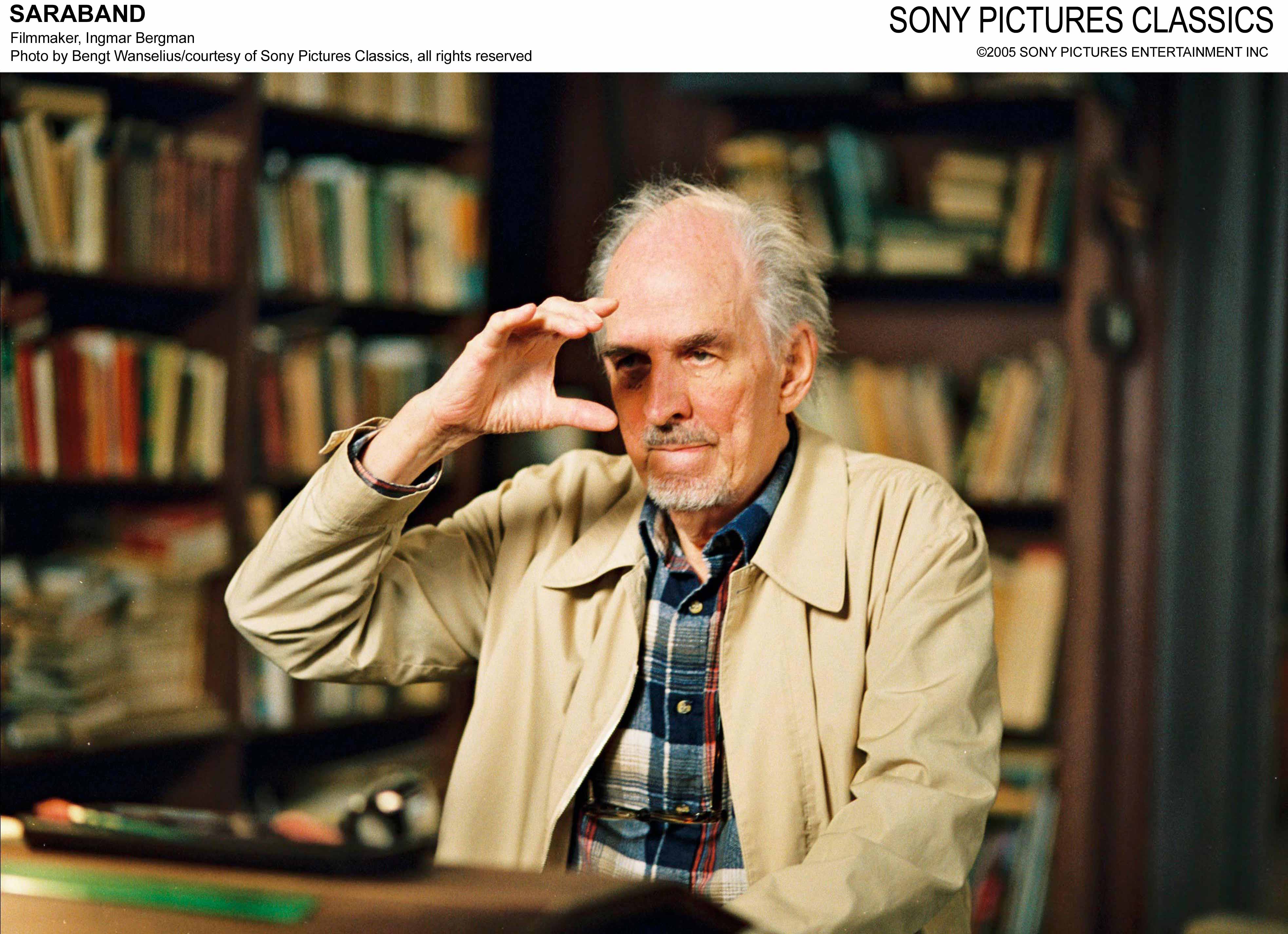
Ingmar Bergman

Also included are insights into his extensive theatre work, which is fascinating as it helps us understand his day-to-day schedule for many years and also see diferences era and country create. There’s also a mind-blowing explanation of a brief stint in TV commercials (news to me), discussion of his lifelong relationships with the opera, and his work therein; radio (also news to me), and influences including Swedish novelist Hjalmar Bergman (no relation). As with any good work on film it made me want to watch and see more.

A Word on Formatting

Images: My Life in Film (All Rights Reserved)

If interested in reading this book I would advise seeking out a copy in print, even if you’re not a purist. The copy I read on Kindle had some spacing issues, typos in inserting diacritical marks, and captions awkwardly separated from photos. Maybe some of the display issues would be less of a concern if I read it on an iPad or laptop but some of the mistakes would still be there. Having just made a number of these corrections myself in my own books (Plug!) I have a heightened sensitivity to such issues.

Conclusion

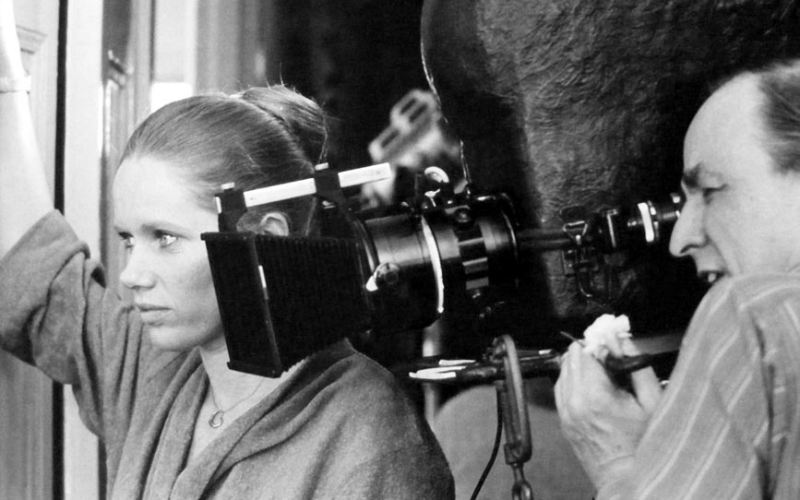
Liv Ullmann and Ingmar Bergman

If you are interested in Bergman, or the craft of filmmaking, I would definitely recommend this book. However, I recommend it with a grain of salt, if you’ve not seen any of these Bergman movies you will likely have them spoiled. However, keep in mind there are a few I have not seen due to a lack of availability and that made me more interested in it. So, check this out!

Mini-Review: Cupid’s Balls (Amors Baller)

Introduction

This is a post that is a repurposing of an old-school Mini-Review Round-Up post. As stated here I am essentially done with running multi-film review posts. Each film deserves its own review. Therefore I will repost, and at times add to, old reviews periodically. Enjoy!

Amors Baller

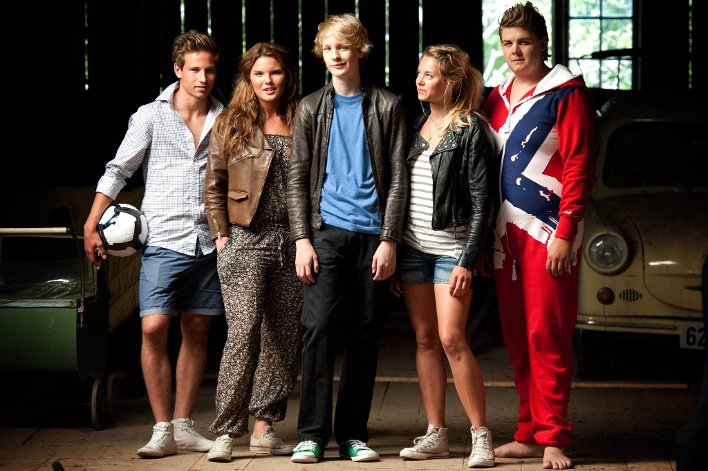
Perhaps the most interesting thing about Amors Baller, aside from the way that it handles the Swedish/Norwegian dynamic, is that it puts football (soccer) out front as the key to a boy (Kåre Hedebrant, Let the Right One In) winning over his new crush. While the junior tournament plays a major part, it’s a setting that doesn’t take up as much screentime and the results doesn’t factor in as much towards the end as you might expect. It ends up being more about relationships and friendship. It’s a funny, heartfelt and quick-moving film.

7/10

Mini-Review: Teddy Bear

Introduction

This is a post that is a repurposing of an old-school Mini-Review Round-Up post. As stated here I am essentially done with running multi-film review posts. Each film deserves its own review. Therefore I will repost, and at times add to, old reviews periodically. Enjoy!

Teddy Bear

Teddy Bear is a testament, not only to Film Movement’s Film of the Month Club and the bonuses they include on their DVDs, but cinematic acclimatizing. What I mean by that is not necessarily that the packaging of a film, or the presentation thereof, can condition a viewer, but when you’re visiting a slightly different avenue of film a bit of an introduction can be beneficial.

My best and favorite professor in film school was Max Simkovitch. Not only was he an uncanny “bill builder” in terms of double-bills and triple-bills, but he also put you in the right frame of mind to absorb the film you were about to see. Is that to say I liked everything I screened in his classes? Not at all. However, it kept me in place where I would and continue to fight against making the film what I thought it ought to be, take it for what it was and judge it on its own merits.

How this relates back to Film Movement is that for the DVD of Teddy Bear they include two prior shorts by Mads Matthiesen an up-and-coming Danish filmmaker. In seeing these two shorts, one of which was the basis for the feature Teddy Bear, you definitely get a taste for his style and in the short Kim Kold shows flashes that, yes, he will convey the effective gentle giant needed for the narrative.

The feature is an effective tussle between mother-and-son, portrait of loner trying to break out of his shell and an underdog love story. The pace is imperfect later on, but the tale is always engaging, endearing and watchable, if not completely realized.

7/10

Mini-Review: The Hidden Face

Introduction

This is a post that is a repurposing of an old-school Mini-Review Round-Up post. As stated here I am essentially done with running multi-film review posts. Each film deserves its own review. Therefore I will repost, and at times add to, old reviews periodically. Enjoy!

The Hidden Face

What is most interesting about The Hidden Face is what it does structurally. There’s an inventiveness to a surprising revelation made that allows for it to play with perspective and narrative point-of-view in very creative ways. There is a bit of steam it loses in trying to amplify every single odd moment that needs clarifying after the break, but it remains a very haunting, odd and twisted horror tale. It’s one that is definitely worth seeking out.

7/10

Mini-Review: Nimmermeer

Introduction

This is a post that is a repurposing of an old-school Mini-Review Round-Up post. As stated here I am essentially done with running multi-film review posts. Each film deserves its own review. Therefore I will repost, and at times add to, old reviews periodically. Enjoy!

Nimmermeer

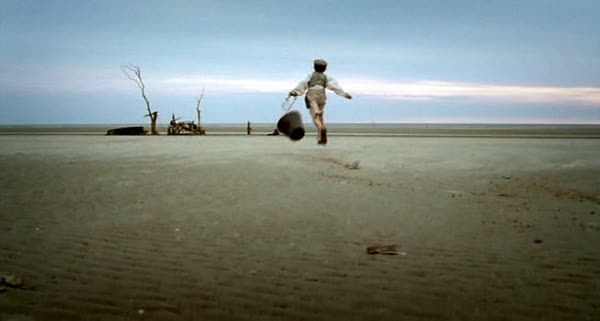
One of my first thoughts upon seeing Nimmermeer was how is Toke Constantin Hebbeln, the director of this film, a name I only now have just heard. Now, granted since this 2006 hour-long film he’s made other shorts and just last month released a feature called Shores of Hope in Germany. Regardless, it’s not only the narrative but the cinematography, the staging and the penetrating emotion of this film, which oozes magical realism, that really makes it standout. It’s told like a fairy tale replete with narration but in a context that is very real and immediate. Odd things happen and are not explained away. The story is what it is and it’s at the service of its protagonist and its audience in dramatically, beautifully rendering its message. Leonard Proxauf, who later starred in The White Ribbon, is great in this film.

10/10