March to Disney: Disney Comics News and Wishes

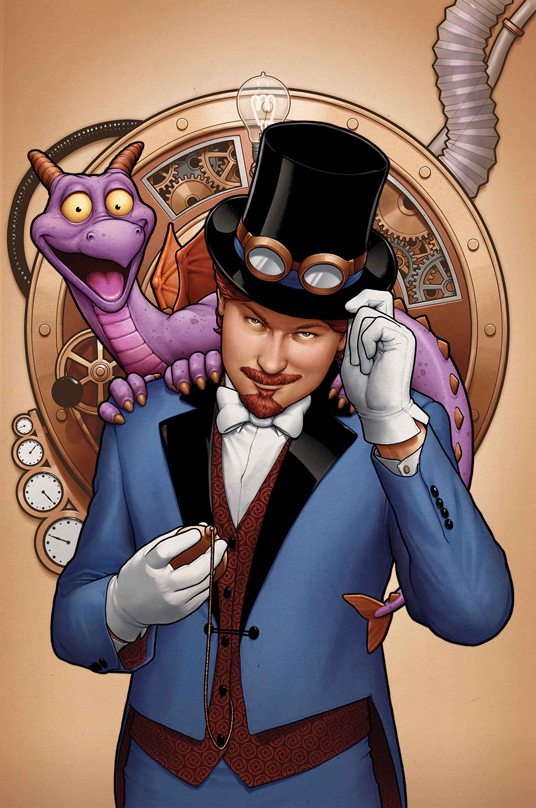
As I covered on this guest post the fears many had about Disney acquiring LucasFilm are likely unfounded based on Disney’s track record with Marvel. One interesting way in which there doesn’t appear to be quite so much synergy is in the comic book handling of traditionally Disney properties. Figment (2014, Disney/Marvel) Marvel has published some Disney titles like Figment, which was an enjoyable and creative series that added dimension to a created-for-a-ride character; and standalone graphic novels like Space Mountain; as well as the reintroduction of Star Wars comics to the Marvel line. However, the traditional Disney comic titles like Mickey Mouse, Donald Duck, Uncle Scrooge, and Walt Disney’s Comics and Stories are coming back this year and not under a proprietary banner or under the Marvel mast but rather with indy publisher IDW (They were last handled by Boom!). Disney Comics do have a subset of fans all their own, and don’t get me wrong: I love the focus here, which will surely please fans:
The new line will launch with April’s Uncle Scrooge No. 1, followed in May with a new Donald Duck series, with Mickey Mouse and Walt Disney Comics and Stories debuting in June and July, respectively. Each of the series will feature reprints of work originated overseas for foreign-language Disney comics, with new covers featuring monthly themes based on areas of Walt Disney resorts, including Adventureland (April), Tomorrowland (May) and Fantasyland (July).

One unique thing is that country-by-country indigenous creators have shaped the characters in their homeland, whether they be Disney mainstays or original. An original example would be the extended family that Zé Carioca has amassed in Brazil. However, the THR article touches upon the oddity of this scenario:

The announcement means that Disney’s comic book licenses are currently split between a number of different publishers; IDW has the classic Disney animated characters, while Marvel controls the rights to material based on Disney theme park properties (To date, the company has produced Seekers of the Weird, Figment and Big Thunder Mountain Railroad) and Canadian publisher Joe’s Books publishes titles based on recent animated movies including Frozen and Big Hero 6. As unusual as it may seem, this is actually the second time that IDW has gained comic book rights to a property owned by a corporation that also owns its own comic book publisher; in 2013, the publisher announced that it had gained the comic book license for a number of Cartoon Network properties, despite CN parent Warner Bros. also owning DC Entertainment.

I don’t have the entertainment law or business acumen to discern how or why this works. I know that Fantagraphics has dealt with several properties that are the purview of several other entities for their wonderful editions. I am glad to see these stories debut here, but I also hope this indicates Disney getting more active in proliferating its comics characters. There are several character whom are more prevalent in the comic universe of Disney that need updated treatments. Bucky Bug (Disney) Here are just a few:
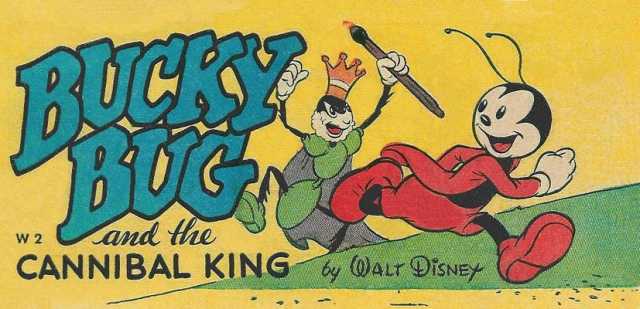
Gyro Gearloose Bucky Bug Flintheart Grimgold Gladstone Gander Magica De Spell

and more! Pete's Dragon (1977, Disney) Alternatively, there are also many smaller and/or “lesser” characters in the cinematic realm that could use new life in the comics realm:

Hamish, Hubert and Harris from Brave Roger Rabbit Panchito (Not very prevalent in Mexico) The Rescuers Elliot from Pete’s Dragon The Isle of Naboombu from Bedknobs and Broomsticks

And more! Ultimately, I won’t nitpick business dealings too much. I just hope it does lead to more diversity in the Disney comics universe. And it should almost go without saying that after the success of Big Hero 6 that Baymax and Hiro should be back, correct?

31 Days of Oscar Recap, or Viewing Patterns Redefined

I was going to beat myself far more in the title of this blog post. The reason for that is that my viewing of 31 Days of Oscar titles on TCM itself was virtually non-existent.

Those titles were:

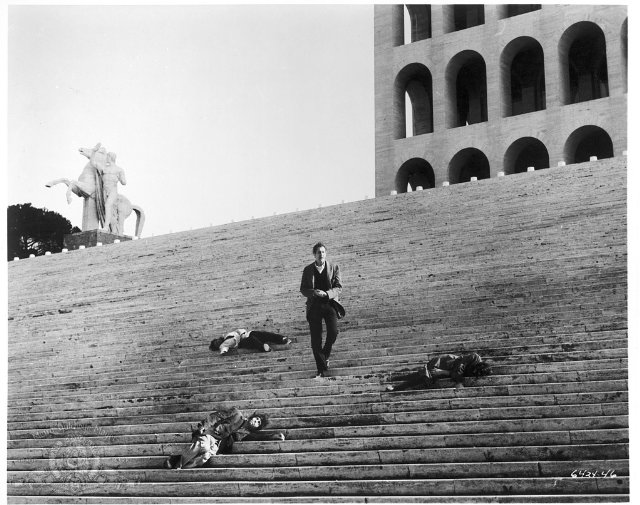
42nd Street

and

Good News

Good News (1947, MGM)

Others that were Oscar nominees were:

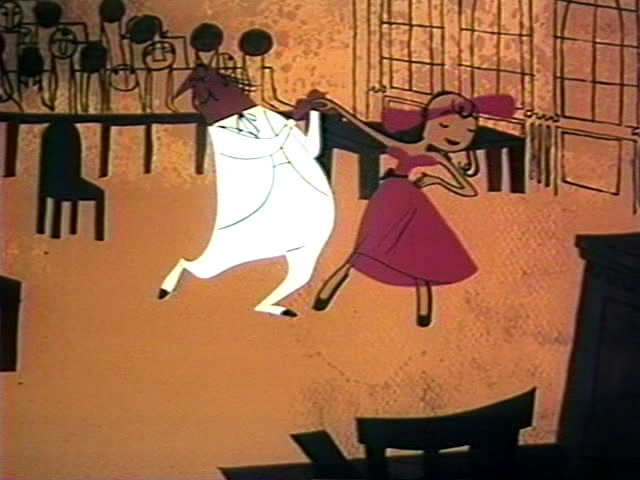
Rooty Toot Toot

Rooty Toot Toot (1951, UPa/Columbia)

Coming soon to a Short Film Saturday post!

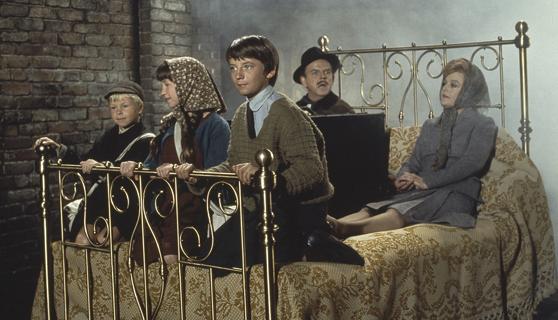
Bedknobs and Broomsticks

Bedknobs and Broomsticks (1971, Disney)

Which will be featured during March to Disney!

This year’s nominated Live Action and Animated shorts.

and…

Woody Woodypecker (Universal)

Assorted Woody Woodpecker shorts.

Essentially what I discovered, finally, is that my viewing habits are too prone to whimsy, too sporadic to be confined to one niche for very long. So preparations for things like 31 Days of Oscar, March to Disney, Poverty Row April, 61 Days of Halloween and Thankful for World Cinema have to be going on all the time.

Sorry to spend all this time on the machinations, but I debated whether or not to even write about it with such low volume. However, if you still can’t get enough Oscar content; I did participate in the 31 Days of Oscarmblogathon four times over: here, here, here and here.

I do have many selections saved on DVR that I hope to get to. Disney an other regularly scheduled programming kicks back in tomorrow!

2015 BAM Award Considerations – February

I know that awards season on this blog just ended, and it still continues in the outside world; however, assembling those nominees is a year-long process. So the cycle begins anew with posts at the end of the month and master lists offline in preparation for the big dates of the award’s calendar year. All titles viewed, new and old,  can be seen my Letterboxd.

Eligible Titles

Futuro Beach
All the Wilderness
Still Alice
The Alps From Above
Dead Snow 2: Red vs. Dead
Lilting
Splitting Adam
Kingsman: The Secret Service
Life According to Nino
Young Ones
The Boy Next Door
Jupiter Ascending

Best Picture

Futuro Beach
Kingsman: The Secret Service

Best Foreign Film

Futuro Beach
The Alps From Above
Lilting
Life According to Nino

Best Documentary

The Alps From Above

Most Overlooked Picture

As intimated in my Most Underrated announcement this year, I’ve decided to make a change here. Rather than get caught up in me vs. the world nonsense and what a film’s rating is on an aggregate site, the IMDb or anywhere else, I want to champion smaller, lesser-known films. In 2011 with the selection of Toast this move was really in the offing. The nominees from this past year echo that fact. So here, regardless of how well-received something is by those who’ve seen it, I’ll be championing indies and foreign films, and the occasional financial flop from a bigger entity.

Futuro Beach
All the Wilderness
Lilting
Life According to Nino

Best Director

Futuro Beach
All the Wilderness
Kingsman: The Secret Service

Best Actress

Julianne Moore Still Alice
Pei-pei Cheng Lilting

Best Actor

Wagner Moura Futuro Beach
Ben Whishaw Lilting
Taron Egerton Kingsman: The Secret Service
Vegar Hoel Dead Snow 2: Red vs. Dead

Best Supporting Actress

Virginia Madsen All the Wilderness
Kristen Stewart Still Alice
Amrita Acharia Dead Snow 2: Red vs. Dead
Naomi Christie Lilting
Rifka Lodeizen Life According to Nino

Best Supporting Actor

Clemens Schick Futuro Beach
Jesuíta Barbosa Futuro Beach
Danny DeVitoAll the Wilderness
Stig Frode Henriksen Dead Snow 2: Red vs. Dead
Peter Bowles Lilting
Samuel L. Jackson Kingsman: The Secret Service
Colin Firth Kingsman: The Secret Service
Koen De Graeve Life According to Nino
Nicholas Hoult Young Ones

Best Performance by a Young Actress in a Leading Role

Elle Fanning Young Ones

Best Performance by a Young Actor in a Leading Role

Kodi Smit-McPhee All the Wilderness
Jace Norman Splitting Adam
Rohan Timmermans Life According to Nino
Kodi Smit-McPhee Young Ones

Best Performance by a Young Actress in a Supporting Role

Isabelle Fuhrman All the Wilderness

Best Performance by a Young Actor in a Supporting Role

Sávio Ygor Ramos Futuro Beach
Carl-Magnus Adner Dead Snow 2: Red vs. Dead
Seth Isaac Johnson Splitting Adam
Alex Nikolov Kingsman: The Secret Service
Aren Bouwmeester Life According to Nino

Best Cast

Futuro Beach
All the Wilderness
Still Alice
Dead Snow 2: Red vs. Dead
Lilting
Kingsman: The Secret Service
Life According to Nino

Best Youth Ensemble

Splitting Adam
Life According to Nino
Young Ones

Best Original Screenplay

Futuro Beach
All the Wilderness
Dead Snow 2: Red vs. Dead
Lilting
Life According to Nino
Young Ones

Best Adapted Screenplay

Still Alice
Kingsman: The Secret Service

Best Score

Futuro Beach
Dead Snow 2: Red vs. Dead
Lilting
Kingsman: The Secret Service
Life According to Nino

Jupiter Ascending

Best Editing

Futuro Beach
All the Wilderness
Kingsman: The Secret Service

Young Ones

Best Sound Editing/Mixing

All the Wilderness
Dead Snow 2: Red vs. Dead
Kingsman: The Secret Service
Young Ones
Jupiter Ascending

Best Cinematography

Futuro Beach
All the Wilderness
Life According to Nino
Young Ones

Best Art Direction

All the Wilderness
Lilting
Kingsman: The Secret Service
Life According to Nino
Young Ones
Jupiter Ascending

Best Costume Design

Dead Snow 2: Red vs. Dead
Kingsman: The Secret Service
Jupiter Ascending

Best Makeup

Dead Snow 2: Red vs. Dead
Jupiter Ascending

Best Visual Effects

Dead Snow 2: Red vs. Dead
Kingsman: The Secret Service
Jupiter Ascending

Best (Original) Song

Futuro Beach

I commented last year that there was a film that had me reconsidering the soundtrack as a potential category. It’s happened again so I will be tracking it and seeing if it’s worth re-including this year.

Best Soundtrack

Futuro Beach
All the Wilderness

Music Video Monday: The Pop Group – Mad Truth

Introduction

I’ve debated starting this theme for a few weeks before starting last week, and I ultimately decided I would as it would encourage me to looks for options that actually fit what I’m aiming for. If one pays too much attention to Top 40 type music you tend to see a dearth of creativity in the music video form. The music video is spawned from short films and can be as creative if not more so than their predecessor. Far too often it does just become “singing heads” (meaning that it’s just the singer and/or band performing and not much else. I want to try and buck that trend and find videos both new and old that do something somewhat outside the box, at the very least have some sort of visual narrative. Here we go.

The Pop Group – The Mad Truth

Here’s a definitively unique visual treatment brought to this song by director Asia Argento. It’s captivating to watch as it manipulates its imagery and lighting in an intriguing way. Enjoy!

Please note: there is a viewer discretion warning before the video for those who are photosensitive or suffer from epilepsy.

Mini-Review: Teen Beach Movie

Introduction

This is a post that is a repurposing of an old-school Mini-Review Round-Up post. As stated here I am essentially done with running multi-film review posts. Each film deserves its own review. Therefore I will repost, and at times add to, old reviews periodically. It is also connects to March to Disney, an annual theme that starts today. Enjoy!

Teen Beach Movie

I’ve discussed previously when Disney Channel Original Movies (DCOMs) come up that all films are judged on their own and not in comparison to one other kinds of films. Having got that out of the way, save for a few issues, I was taken aback by Teen Beach Movie; inasmuch as there’s one hysterically funny song/commentary on the nature of the musical. Also enjoyable is the fact that it’s a tongue-in-cheek homage to teen subculture cinema of the ’60s spun forward to the present.

First and foremost among the issues is that you have to completely suspend disbelief and go with the concept that a surfboard with magic powers transports the leads into the film they’re stuck in. While it’s the need of the characters that gets it to act, but it’s not as mysterious or as clear as it could be. The second large one was the occasional temporal breaks in dialogue the film-within-film characters had saying things that didn’t feel true to their period.

However, it establishes early what the conflict that arises between the heroes is and there is a clarity throughout that they need to find a way out of the situation. Slowly, almost without they or us noticing, there are consequences of being stuck in the film. It’s less bombastically self-important than other DCOMs with even sillier premises and ultimately it comes back to the main characters and not the parody or the revisionist look at gender roles in the sixties. It’s far funnier and more enjoyable than it likely has any business being.

7/10

Short Film Saturday: Anatomy of a Snow Day

I have previously featured films by Zachary Maxwell. First, was an exposé of public school lunches Yuck; next, a child’s last letter to Santa Claus; most recently, a film about ADD and ADHD. Now comes an investigation into the factors and machinations of decisions about snow days for New York Public Schools.

Not to give too much away but the touched upon rarity of the days does create a circle that closes and is underscored humorously. Once again the film is funny an informative.

I believe that at this point it’s impossible to jinx things this winter. We’re not out of the woods yet with a little more than three weeks to the vernal equinox, so it still is topical.

Mini-Review: Brooklyn Castle

Introduction

This is a post that is a repurposing of an old-school Mini-Review Round-Up post. As stated here I am essentially done with running multi-film review posts. Each film deserves its own review. Therefore I will repost, and at times add to, old reviews periodically. Enjoy!

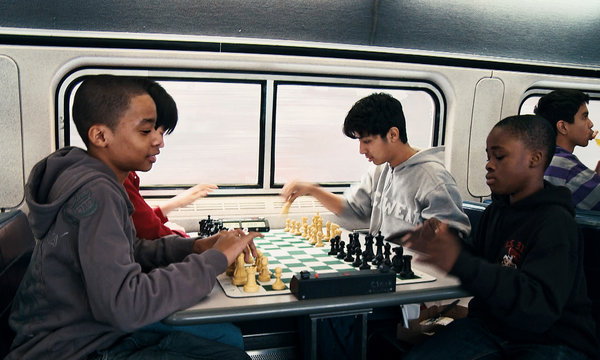
Brooklyn Castle

A few things with regards to documentaries that most of the good ones prove true is that: the quality of the documentary is determined by the filmmaking and not by the subject being examined, and, second, when making a documentary you have to go where the story is taking you and not the other way around.

Clearly if you enjoy chess this will be a film you are drawn to. However, this film works well enough, and focuses enough on its the people involved and their journey, such that it should connect with anyone and everyone.

While the story of a junior high school (I.S. 318 in Brooklyn, NY) where the chess team not only excels in unparalleled ways, but also where the players not the outcasts but some of the most popular kids in school, is certainly enough of a hook; it carries even further significance following the recent economic crash. While we engage readily in the personal struggles, victories and defeats big and small alike, there is a greater game at play as budgeting becomes a large concern of the film and the importance of extracurricular activities in the lives of students, both academically and otherwise, is made abundantly clear.

It is the people whom we get to know that drive and tell this story. What the filmmakers do is craft the tale for maximum efficacy that allows you to connect with the tale. Perhaps having seen a successful program personified it may convince others of the vitality they possess and why they should be preserved. It really is a great film that will put a smile on your face, get your rooting for these kids and make you wish all students had a program like it available to them.

10/10

Review: Lilting

Lilting offers a sensitive look at two people coping with the loss of a loved one and trying to reach some common understanding and hold on to their dearest memories. There are quite a few barriers they must overcome to try and reach that, just one of which is language. The title may refer to the tonal quality of a song that is a cornerstone of one memory and a particular sentiment, but also can be indicative of the certain uplift that exists in this bittersweet tale.

The synopsis is as follows:

In contemporary London, a Cambodian Chinese mother mourns the untimely death of her son. Her world is further disrupted by the presence of a stranger. We observe their difficulties in trying to connect with one another without a common language, as through a translator they begin to piece together memories of a man they both loved.

This is a film that, as is intimated in the above synopsis, does feature quite a few flashback sequences. That’s not really divulging a secret as it starts in one and the break back into the present is quite elegant and effective. It’s a film that certainly adheres to the rule of thumb about breaking chronology if it makes the film better. Here where you are dealing with two people coping with a lost the past is a pivotal player and constantly intrudes on the present.

What’s interesting is here you have another multicultural film, a story in part of immigration abroad and of globalized cinema, wherein translation plays a role. Vann (Naomi Christie) is brought in to proceedings to translate conversations between Alan (Peter Bowles) and Junn (Cheng Pei-Pei, as she was credited in this film) who have caught each other’s fancy at the retirement home they’re in. Eventually Vann allows Richard (Ben Whishaw) and Junn to talk to one another and try to get a better feel for each other as well.

As this is a film that is clearly driven by its characters, their interactions and what they must overcome the cast becomes a key component of the success of the film. Ben Whishaw and Andrew Leung have real connection and chemistry and with less screentime and playing a ghost Leung has to supercede his allotted screentime and create a far bigger presence and does just that. Whishaw also has to play the torn character carrying the burden of a secret and a sort of noblesse oblige to Junn, who in turn is wonderfully rendered by Pei-pei Cheng who gives her character a sense of real dimension hitting all the notes asked of her. Naomi Christie and Peter Bowles as intermediary figures round out the ensemble and add different perspectives than those of the sometimes-combatant parties, and also add some humor and additional emotional investment.

This film is one that will be coming to home video in the US through Strand Releasing and is one with a bit of an Award pedigree with nominations at the BAFTAs, BIFAs and Sundance that is worth looking out for. While one aspect of the ending leaves you needing to engage some suspension of disbelief and let it go there is a bit of closure, although its not as powerful as some other moments in the story.

It is a tidily wrapped up simple, short story that moves quite well and is evocative without being cloying and is definitely recommended.

7/10

31 Days of Oscar Blogathon: Pictures and Directors- Actors Awarded as Directors

Introduction

As it turned out this post also was a bit more involved than I initially realized before I embarked on it for the 31 Days of Oscar blogathon.

The idea of the post was to briefly talk about the handful of men who have won Best Director despite the fact they were better known as actors for most of their career. However, the desire to be a completist, and investigating gray areas makes the list a bit longer than initially realized. All of these directors deserve some mention. So I will discuss them all and delineate the tiers they appear in.

Essentially, the fact-checking for this post was done by checking filmographies of Best Director winners. Directors who had only walk-on, cameo or “Find Hitch” type appearances do not qualify. To be mentioned by name the directors needed to: A) Have won Best Director B) Have not been awarded as an actor C) Have had acting credits prior to directing credits.

Now there are levels of notoriety and role which is why many of the directors deserve mention but aren’t necessarily in the same echelon as one another.

Peripherally Acting

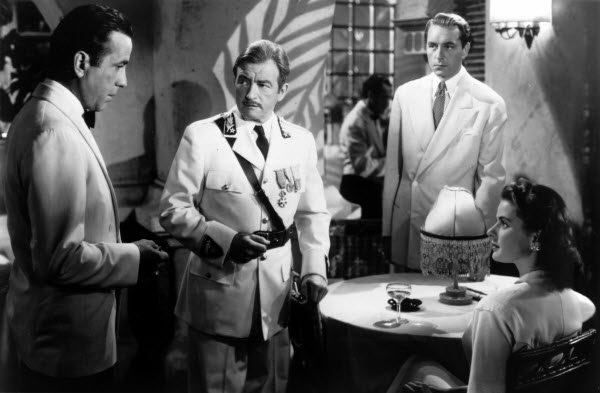
Casablanca (1942, Warner Bros.)

Michael Curtiz (won for Casablanca) acted in the first short he directed in Hungary (credited as Kertész Mihály) and other silent shorts. He never truly established himself as an actor though.

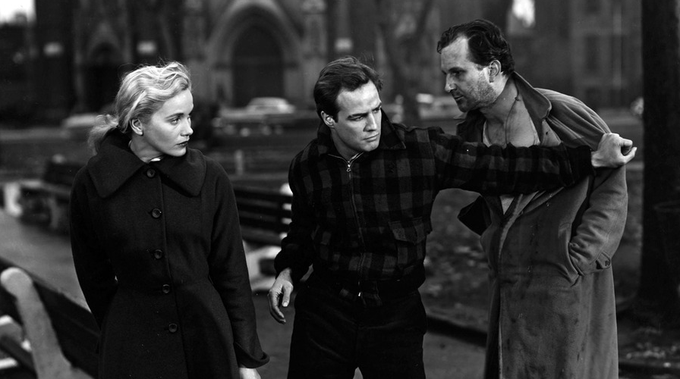
On the Waterfront (1954, Columbia Picture)

Elia Kazan (won for Gentleman’s Agreement and On the Waterfront) again bears mentioning since he has a screen credit before a directing one, but does not rate as highly as the next level.

Started as Actors, but Are More Well-Known as Directors

7th Heaven (1927, 20th Century Fox)

Frank Borzage (won for 7th Heaven and Bad Girl) is borderline only because his first acting credit and directorial credit were the same film The Mystery of Yellow Aster Mine in 1913. Borzage’s 113 credits from 1913-1957 certainly include him in the company of thespians even if not a leading-man type.

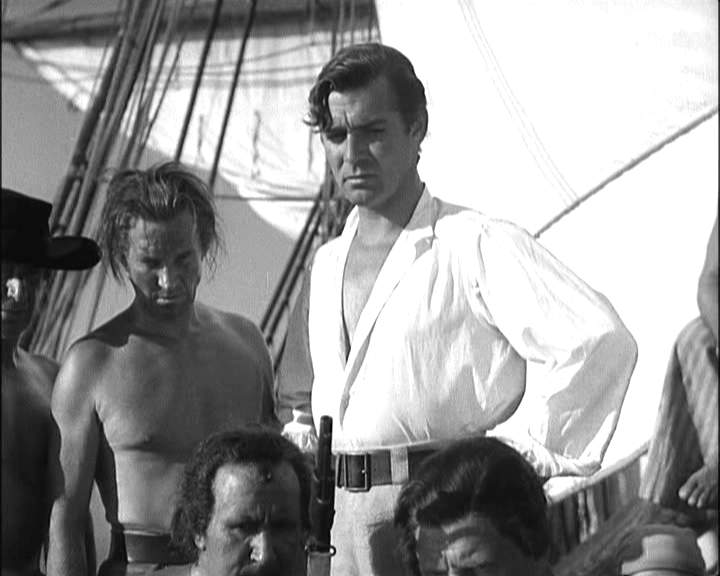
Mutiny on the Bounty (1935, MGM)

Frank Lloyd (won for The Divine Lady, Cavalcade and Mutiny on the Bounty) definitely has enough credits 63, but most of them were silent shorts. However, these is a bit of longevity (through 1955) that it does bear mentioning.

How Green Was My Valley (1941, 20th Century Fox)

John Ford (won for The Informer, The Grapes of Wrath, How Green Was My Valley and The Quiet Man) had 22 acting credits between 1913-1917 as Jack Ford. That was brief and before the Oscars, but he did clearly start as an actor first.

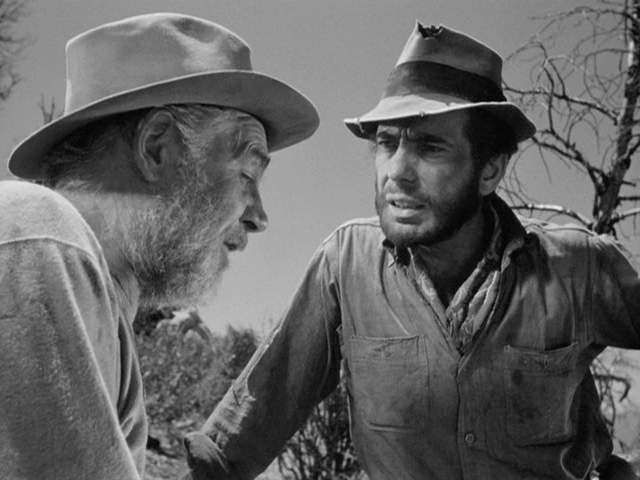
Treasure of the Sierra Madre (1948, Warner Bros.)

John Huston (won for Treasure of the Sierra Madre) -Many credits and many before directorial debut starting in a 1929 short, but his notoriety behind the camera was always higher despite some high-profile onscreen appearances like playing Noah in The Bible: In the Beginning…

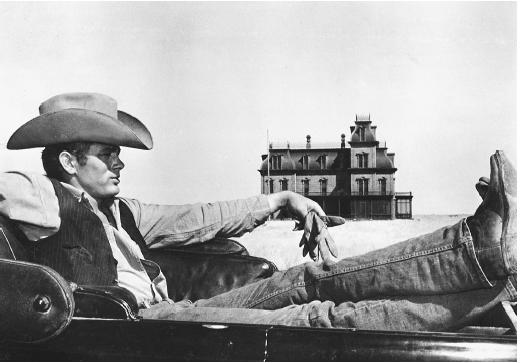
Giant (1956, Warner Bros.)

George Stevens (won for Giant and A Place in the Sun) bears mentioning simply because he has two silent credits The Tigress (1915) and Whispers (1920), but he was clearly a director more so than an actor.

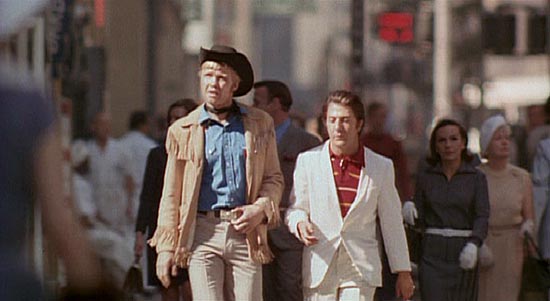
Midnight Cowboy (1969, UA)

John Schlesinger (Won for Midnight Cowboy) had credits as characters, mostly on TV before directing for the first time.

A Beautiful Mind (2001, Universal/DreamWorks)

Ron Howard (Won for A Beautiful Mind) this categorization is generationally sensitive. Yes, I’ve seen The Andy Griffith Show and Howard’s other work as a young actor. Aside from making the occasional appearance Ron Howard has not kept up consistent onscreen appearances enough for me to consider him someone who has always done both. He has been directing features since 1982 so I consider him officially transitioned, especially considering he has helmed one of my all-time favorites Parenthood.

Has Always Done Both

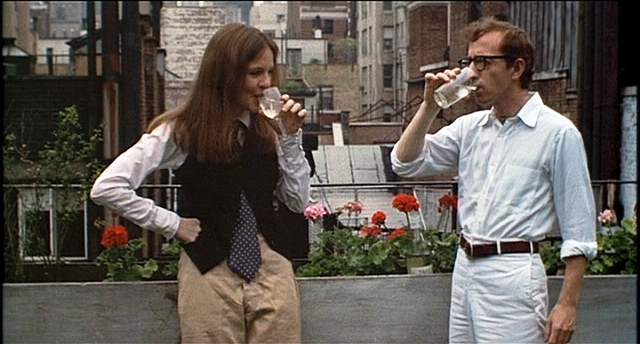
Annie Hall (1977, UA)

Woody Allen (won Best Director for Annie Hall) made his acting, writing and directorial debut in What’s New Pussycat. While he’s not quite Orson Welles in this regard (I’ve always felt that Woody Allen was a bit under-appreciated as an actor). Yes, he rarely works someone else’s material, and has a very specific type, and limited range, but so do other people.

Borderline

Ahh, here come those honorary awards again.

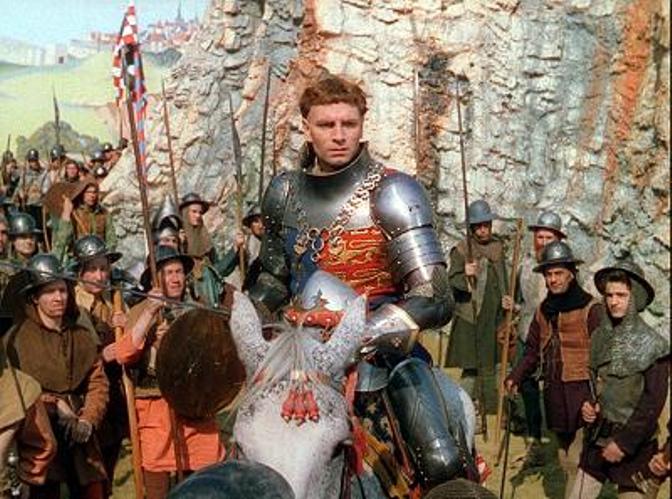
Henry V (1944, Eagle-Lion Distributors)

Laurence Olivier amazingly never won a competitive Oscar. In 1947 he won an honorary prize that cited all his work on Henry V:

For his outstanding achievement as actor, producer and director in bringing ‘Henry V’ to the screen.

More Well-Known as Actors but Won as Directors

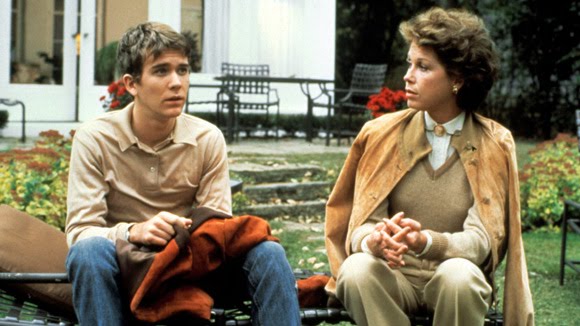
Ordinary People (1980, Paramount)

Robert Redford (Won for Ordinary People): his prowess as an actor is not debatable. However, Redford only ever has received one Best Actor nomination. His Oscar wins have been honorary and for directing.

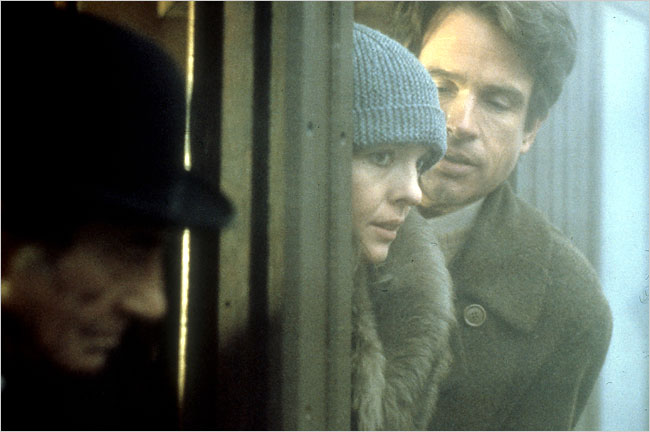
Reds (1981, Paramount)

Warren Beatty (Won for Reds) has been nominated three times as an actor. He’s directed and written a number of films but is likely best known as an actor. Beatty’s only hardware from the Academy came behind the camera.

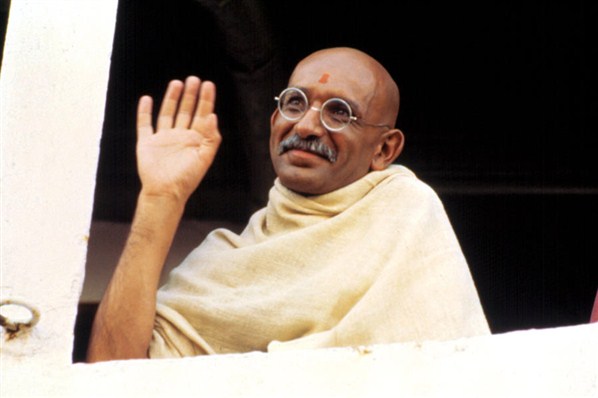
Gandhi (1982, Columbia)

Richard Attenborough (Won for Gandhi) had his first screen credit in 1943. His directorial debut came in 1969. There are other standouts in his resume as a director (A Bridge Too Far, A Chorus Line, Chaplin, Shadowlands) but I think most casual film fans likely know him best for his appearance in Jurassic Park, which is why I included him in this section.

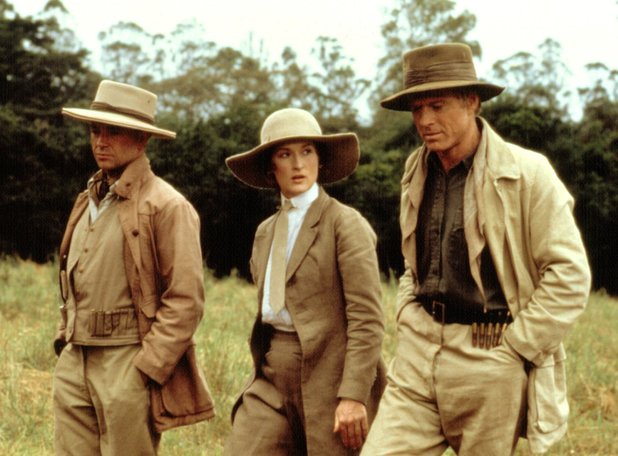
Out of Africa (1985, Universal)

Sydney Pollack (Won for Out of Africa) his first credit was on TV in 1956 and his first directing credit came in 1961. I do recall seeing him in many things, which is why I include him here even though he was never an award threat like some legends on this list.

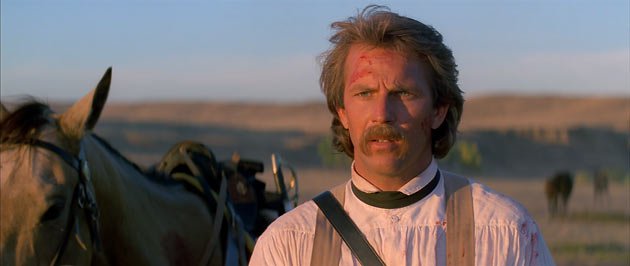
Dances with Wolves (1991, Orion)

Kevin Costner (Won for Dances with Wolves) Costner now on a comeback trail in recent years was always more synonymous with acting and movie-stardom. However, that’s not to say he’s never had award-caliber performances. JFK comes immediately to mind. However, it was for his fashioning of a film behind the scenes that he received an Oscar.

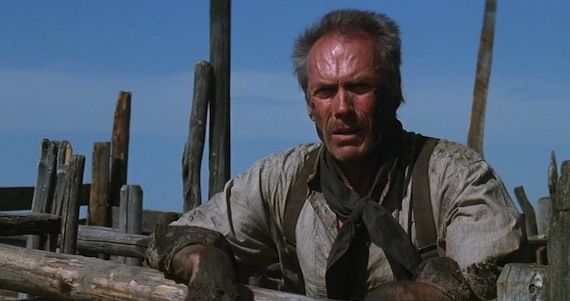
Unforgiven (1992, Warner Bros.)

Clint Eastwood (Won for Unforgiven and Million Dollar Baby) at this point in his long an illustrious career it’s hard to say if Eastwood is more known as a director or actor. It may be, like many, a generationally-dependent answer. Eastwood in essence helped redefine the Western genre and give it new life and that’s outside of Dirty Harry films and some departures like Honkytonk Man so it is mildly surprising his first statuette came behind the camera.

Braveheart (1995, Paramoutn/20th Century Fox)

Mel Gibson (Won for Bravehart) Gibson came on to the scene in an Oscar-nominated film (A Year of Living Dangerously) and was one of the biggest stars of the 1980s and into the 1990s. His directorial resume is more accomplished than Costner’s but like Costner he first won as a director. His acceptance speech where he joked “What I really want to do now is act,” is largely responsible for my writing this post.

Argo (2012, Warner Bros.)

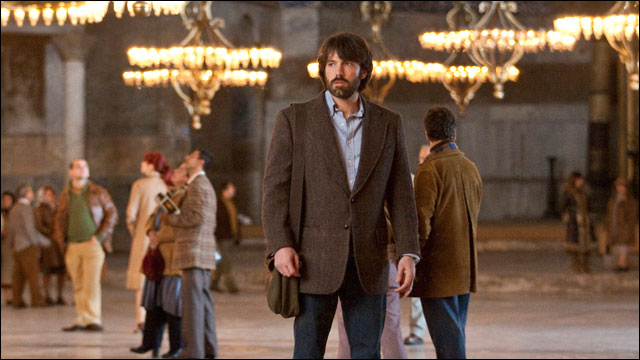
Ben Affleck (Won for Argo) here’s an interesting one. Affleck came on the scene as one of the co-writers and co-stars of Good Will Hunting. His acting career has been a bit more up-and-down than Matt Damon’s in terms of successes and perception. However, he has been the one who had a career behind the camera (writing and directing) take off. Affleck is now rebounding as an actor as well and has had enough notable onscreen appearance that I think of him as an actor first even though he is highly accomplished and capable on the other side.

Conclusion

Oscar’s at times curious desire to award well-liked actors in other capacities will likely not end soon and it is interesting to consider where they have already done so.