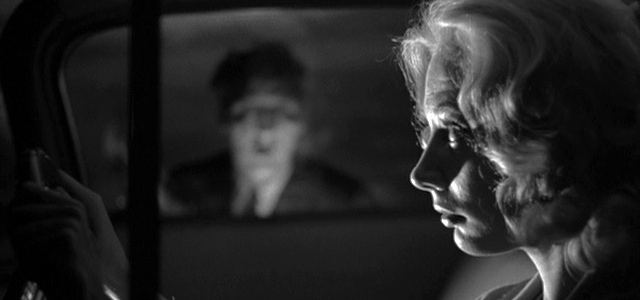
Free Movie Friday: Carnival of Souls (1962)
This week’s free horror movie is the 1962 film Carnival of Souls one of the rare public domain horror films that has been included in the Criterion collection.
This week’s free horror movie is the 1962 film Carnival of Souls one of the rare public domain horror films that has been included in the Criterion collection.
Introduction
This post is for the Pre-Code Blogathon. Part of why it is late in going live is that I struggled with my angle on writing about this film. At first, I was just going to write a straight-up review. However, an anatomical, element-by-element approach didn’t seem to be the most intriguing. When I settled on an approach it was late, but I cracked it…
Blonde Venus vs. The Code
Perhaps one of toughest things to wrap one’s head around with regards to the era commonly referred to as Pre-Code is that the Motion Picture Production Code was written, amended and had addenda added in 1930. Yet for four wild and woolly years in Old Hollywood it was rather ignored and altogether unenforceable as the an office to enforce it hadn’t been established. The films made in this period were made in the Pre-Code era. Therefore, it was really down to local censors to say “No, we don’t want to see that” since there was no one saying “You can’t say or show that you have to infer it, or strike it altogether.”
Invariably films from 1930 to 1934, both by big studios and independents, broke these rules with such scoffing glee it’s admirable to the rebellious teenager in all of us. What I always found interesting was to refer back to this Code whenever possible.
I did so on a recent post about the first version of The Children’s Hour on film (These Three) whereas it was made in era where homosexuality literally could not be broached. As I turn now to a film made it in the last wild era before the ’60s, when the classical infrastructure of Hollywood started to crumble. I find that while Blonde Venus it may seem tame by the standards of Forbidden Hollywood box sets, but it is still frequently in violation of the code because of its plot, and in part the redundancy of the document.

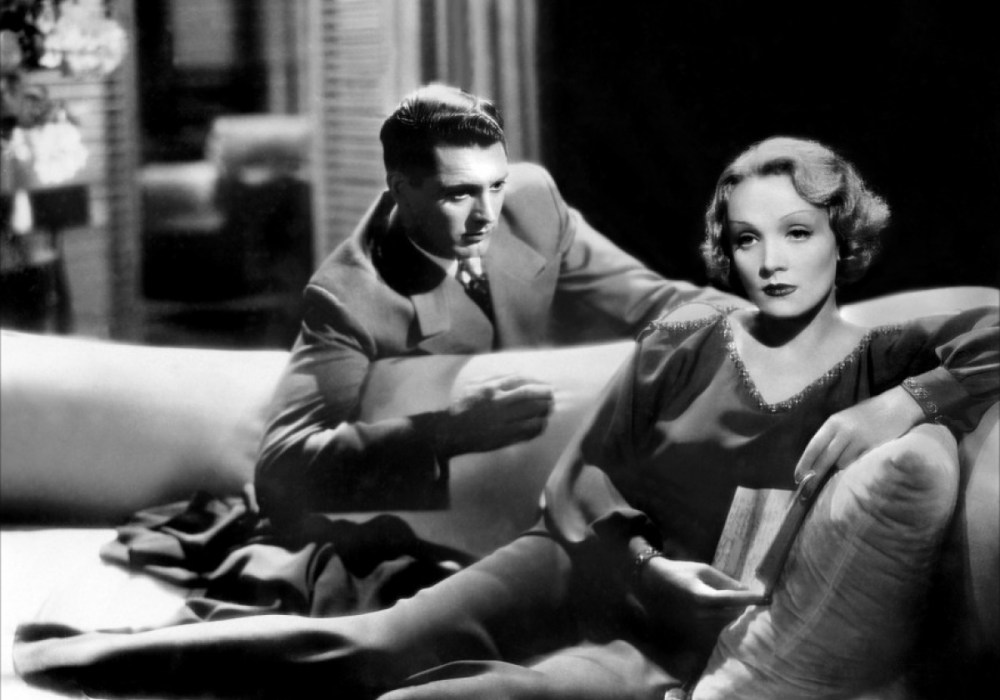
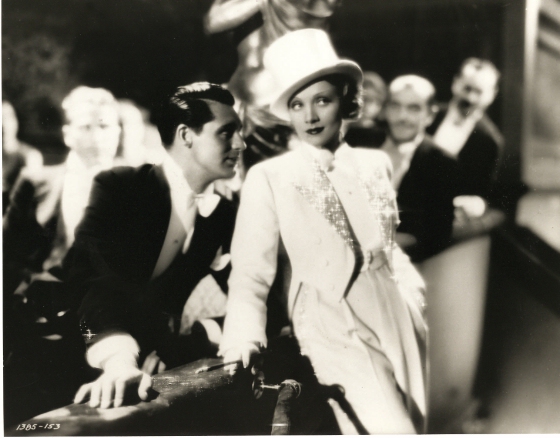
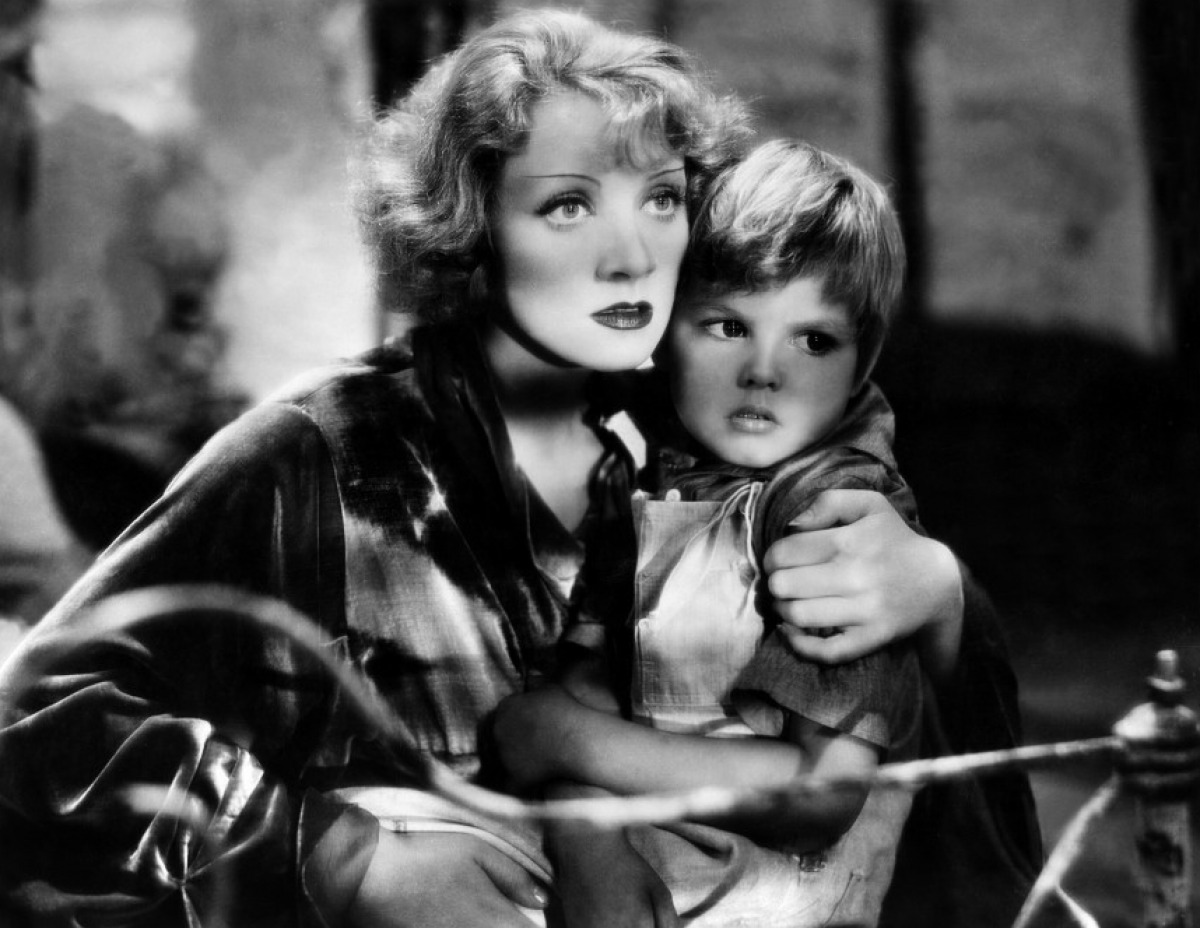
Blonde Venus is about Helen Faraday (Marlene Dietrich) sojourning back into the world of cabaret singing and moonlighting as a pseudo-prostitute solely in order to pay for an operation for her sick husband, Ned (Herbert Marshall). The illness is introduced first and it’s so advanced he can’t sell his body to science to pay for it, nor can he work to earn the money and time is short. An objective is introduced as well as a ticking clock that sends events precipitously into motion. Nick Townsend’s (Cary Grant) infatuation with her paves the way for her to do this and allows not only for the funds to be raised for the operation but for her and her son, Johnny (Dickie Moore) to remain clothed and fed. Their relationship reaches a tenuous agreement where they like one another and spend much time together, but she has no intentions of leaving her husband. It becomes a triangle wherein the other man is trying to win the woman away permanently but is unsuccessful. There are further ups and downs when Ned is cured. Confessing earns her no remorse from her husband. They split and he seeks custody. Helen runs off with Johnny. Adding kidnapping to her rap sheet in this film.
The film uses a few montages to illustrate rises and falls of her fortune, tracking her escape and evasion of authorities and when she’s on her own it tracks her movements, decadence and unhappiness. Ellipses aside we now, knowing the basics, can examine the plot versus the code with just one minor qualifying statement: this is going to be a somewhat litigious, semantic look at the Code. I, personally, as an artist and a film enthusiast bristle a bit at any form of censorship. Informing parents of content so their decision about what their kids are allowed to see is educated one thing; the preemptive approval on scripts and cuts in film so they adhere to a code of ethics is another. More simply stated I do not agree with statements like the following:
“Art can be morally evil in its effects. This is the case clearly enough with unclean art, indecent books, suggestive drama. The effect on the lives of men and women is obvious.”
“They [motion pictures] affect the moral standards of those who thru the screen take these ideas and ideals.”
However, the Code did exist, eventually get applied, forced creative solutions to story problems, and helped advance cinematic language, but I feel that was more a secondary intention and byproduct, with all due credit for the assist there to Breen for engaging in dialogues and making that happen.
Taking all that into consideration and looking directly at the Code versus the facts in Blonde Venus a number of issues can be cited.
Here are sections that comment indirectly and directly on marital infidelities alone, under the WORKING PRINCIPLES section:
No picture should lower the moral standards of those who see it. This is done:
(a) When evil is made to appear attractive, and good is made to appear unattractive.
(b) When the sympathy of the audience is thrown on the side of crime, wrong-doing, evil, sin. The same thing is true of a film that would throw sympathy against goodness, honor, innocence, purity, honesty.Note: Sympathy with a person who sins, is not the same as sympathy with the sin or crime of which he is guilty. We may feel sorry for the plight of a murderer or even understand the circumstances which led him to his crime; we may not feel sympathy for the wrong he has done.
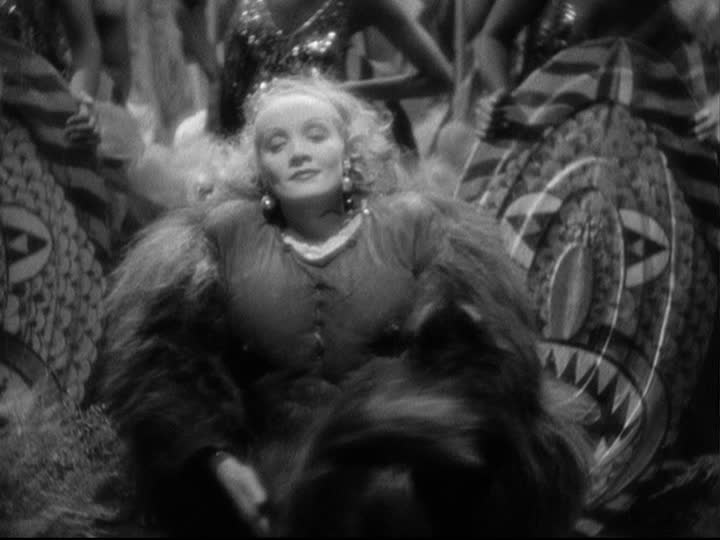
As you will soon see the way these are written are typically in guideline form. Specific exemptions are more black and white and very closely following a “thou shalt not” format like the 10 commandments. When dealing with questions about social mores as represented in drama things get nebulous, so as restrictive as some of these reads there is some leeway. With leeway it’s hard to say with 100% certainty always what the reaction would be.
Even clause (b) is a close-run thing. In a vacuum it’s easy to say that prostitution is evil, and you only sympathize with the person’s plight. However, to a more modern audience, knowing what we know of society at the time, it’s hard to fault Helen. How else, as a woman, can she get that kind of money that quickly? The amount is such that an legal means to amass that sum would not be quick. In this light, it kind of becomes a loaded statement about both feminism and morality. Would it be better for her to not do wrong or sin by the book and let her husband die, and her and her child end up destitute?
Even acknowledging that the Code would view these acts are evil it gets complicated:
The presentation of evil is often essential for art, fiction, or drama. This in itself is not wrong provided:
(a) That evil is not presented alluringly. Even if the later on the evil is condemned or punished, it must not be allowed to appear so attractive that emotions are drawn to desire or approve so strongly that later they forget that later they forget the condemnation and remember only the apparent joy of the sin.
(b) That thruout the presentation, evil and good are never confused and evil is always recognized clearly as evil.
(c) That in the end the audience feels that evil is wrong and good is right.
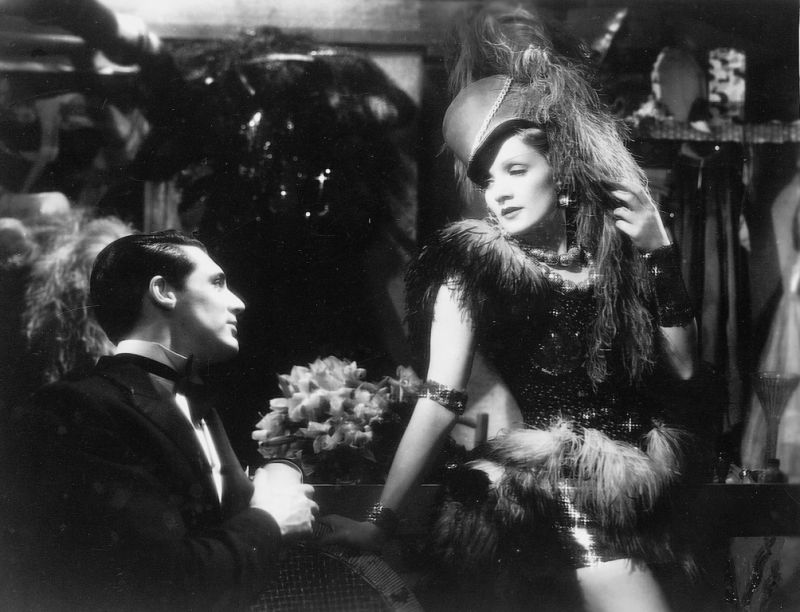
Helen definitely goes through the wringer, and she does eventually give up being on the lam recognizing the error she made. However, clause (b) says confused inferring in doubt. I think you’d grant the film at least created the doubt. The vagueness of words like “evil is wrong” and “good is right” is also troublesome. Isn’t Ned’s refusal to listen to his wife’s explanations, insisting on divorce, also wrong? Aren’t they then both sinners by a conservative interpretation of the Judeo-Christian ethos’ that are the basis for much of the Code.
Next section is also troublesome with regards to this film:
(A) The presentation of crimes against the law, human or divine, is often necessary for the carrying out of the plot. But the presentation must not throw sympathy with the criminal as against the law, nor with the crime against those who must punish it.
Under the PRINCIPLES OF PLOT heading, the aforementioned statements are re-iterated, almost regurgitated:
(3) No plot should be so constructed as to leave the question of right and wrong in doubt or fogged.
(4) No plot by its treatment should throw the sympathy of the audience on sin, crime, wrong-doing or evil.
Under the following heading, there is further, similarly worded citations:
General Principles – regarding plots dealing with sex, passion and incidents relating to them:
(2) Impure Love, the love of a man and woman forbidden by divine human law, must be presented in such a way that:
(a) It is clearly known by the audience to be wrong;
Only under the PLOT MATERIAL heading we get specifically into adultery:
(b) Sometimes adultery must be counted on as material occurring in serious drama.
In this case:
(1) It should never appear to be justified;
(2) It should not be used to weaken respect for marriage;
(3) It should not be presented as attractive or alluring.
It can definitely be argued that it does not do (2) or (3), (1) would be the issue against a strong Code. She likes Nick but she’s definitely in the relationship for the benefit of her husband. He eventually does know that and takes care of them more because of it.
Conclusion
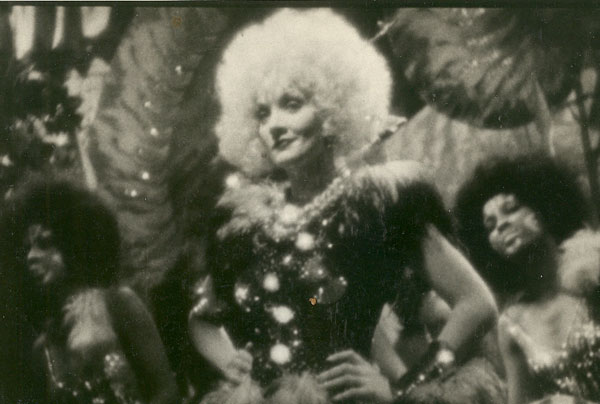
While the transcription may have proved tedious seeing the Code ultimately got me into the right head-space to consider this film more within the context of its time. Viewing films through the prism of the zeitgeist will always be a disservice to that film, it allows for revisionist censorship and other issues.
It’s clear that a musical number like “Hot Voodoo” would never be acceptable today by societal mores even if the MPAA didn’t suggest an edit. However, the shocking aspects of the film, what makes it a compelling drama is not likely to move the needle of outrage or intrigue today.
What is undoubtedly timeless is the fine construction and execution of this film, it’s intriguing and quite a roller coaster ride. It is a film certifiably Pre-Code based not only on when it was produced but also the treatment of its subject matter.

Introduction
This is a post that is a repurposing of an old-school Mini-Review Round-Up post. As stated here I am essentially done with running multi-film review posts. Each film deserves its own review. Therefore I will repost, and at times add to, old reviews periodically. Enjoy!
Hanson Re Made In America
As I tweeted when I recently acquired tickets to one of their upcoming tour dates (Upcoming in 2013), I’m no longer in high school so I really don’t care who knows about this fandom of mine at this point – like what you like and haters be damned. However, a large part of the reason I include this review in this round-up is not just the fact that this self-produced documentary does qualify, but it’s a further chronicle of the band’s trajectory as indie musicians that may surprise those who still wrongly perceive the group as a “one hit wonder.”
Granted there isn’t the turmoil in this narrative that there was in Strong Enough to Break, a doc that was put together over the course of many years that chronicled the group’s failed attempt to release their third studio album with a major label and the ultimate formation of their indie label 3CG; but anyone interested in a glimpse of the creative process, regardless of the form it takes, will be interested in this film. While many of the discussions occur in a vernacular all their own that doesn’t always necessarily incorporate musical jargon you do eventually see the follow-through and progression as the tracks are laid down.
Aside from just not following as tumultuous a time in their career the film’s climax has its literal, if not figurative, fireworks and not too much else. The only other slightly disappointing thing is that certain processes of creating an album like additional recordings and overdubs are explained in a cursory manner, but they can seem redundant to the layman. This is a doc recommended for fans and music enthusiasts. Fans of music, Hanson specifically, and film in general, are urged to watch Strong Enough to Break.
Maniac (1934)
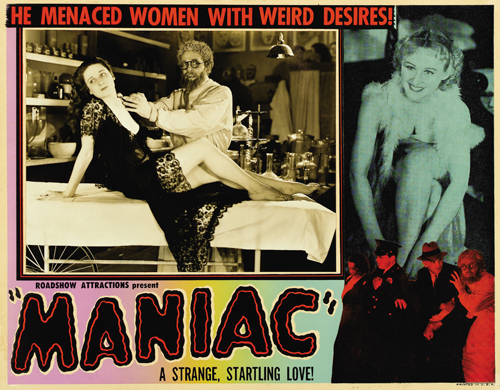
What a nutty, perambulating, mutating story this one is. Refracted through time some of the quotes do seem legitimately like what psychiatric textbooks would describe the conditions, and the title cards where these quotes appear help rein in the otherwise wild story. Again this is another one that is great fun, has many unexpected turns, that make up for the technical failings (some may have to do with degradation, real or through video), but then the conclusion is terribly run-of-the-mill and unsatisfying.
I know that awards season on this blog just ended, however, assembling those nominees is a year-long process. So the cycle begins anew with posts at the end of the month and master lists offline in preparation for the big dates of the award’s calendar year. All titles viewed, new and old, can be seen on my Letterboxd.
Eligible Titles
Metalhead
Traitors
Love Me
The Lazarus Effect
Unfinished Business
Cinderella
McFarland USA
Salvation Army
If You Don’t, I Will
Metalhead
Cinderella
Metalhead
Traitors
Love Me
As intimated in my Most Underrated announcement this year, I’ve decided to make a change here. Rather than get caught up in me vs. the world nonsense and what a film’s rating is on an aggregate site, the IMDb or anywhere else, I want to champion smaller, lesser-known films. In 2011 with the selection of Toast this move was really in the offing. The nominees from this past year echo that fact. So here, regardless of how well-received something is by those who’ve seen it, I’ll be championing indies and foreign films, and the occasional financial flop from a bigger entity.
Metalhead
Traitors
Metalhead
Traitors
Love Me
Cinderella
Thora Bjorg Helga Metalhead
Chaimae Ben Acha Traitors
Viktoria Spesvitseva Love Me
Lily James Cinderella
Emmanuelle Devos If You Don’t, I Will
Ushan Çakir Love Me
Richard Madden Cinderella
Kevin Costner McFarland USA
Mathieu Almaric If You Don’t, I Will
Soufia Issami Traitors
Cate Blanchett Cinderella
Hillmar Wollan III Metalhead
Dave Franco Unfinished Business
Nonso Anozie Cinderella
Best Performance by a Young Actress in a Leading Role
Best Performance by a Young Actor in a Leading Role
Best Performance by a Young Actress in a Supporting Role
Diljá Valsdóttir Metalhead
Ella Anderson Unfinished Business
Eloise Webb Cinderella
Best Performance by a Young Actor in a Supporting Role
Britton Sear Unfinished Business
Metalhead
Traitors
Unfinished Business
Cinderella
McFarland USA
McFarland USA
Salvation Army
Metalhead
Traitors
Unfinished Business
Cinderella
Metalhead
Cinderella
Metalhead
Cinderella
Metalhead
Traitors
Cinderella
Metalhead
Cinderella
Metalhead
Traitors
Cinderella
McFarland USA
Metalhead
Cinderella
McFarland USA
Metalhead
Traitors
Love Me
Cinderella
Cinderella
Metalhead
Traitors
Cinderella
McFarland USA
I commented last year that there was a film that had me reconsidering the soundtrack as a potential category. It’s happened again so I will be tracking it and seeing if it’s worth re-including this year.
Metalhead
Introduction
I’ve debated starting this theme for a few weeks, and I ultimately decided I would as it would encourage me to looks for options that actually fit what I’m aiming for. If one pays too much attention to Top 40 type music you tend to see a dearth of creativity in the music video form. The music video is spawned from short films and can be as creative if not more so than their predecessor. Far too often it does just become singing heads. I want to try and buck that trend and find ones both new and old that do something somewhat outside the box, at the very least have some sort of visual narrative. Here we go.
Sigur Rós – Hoppipolla
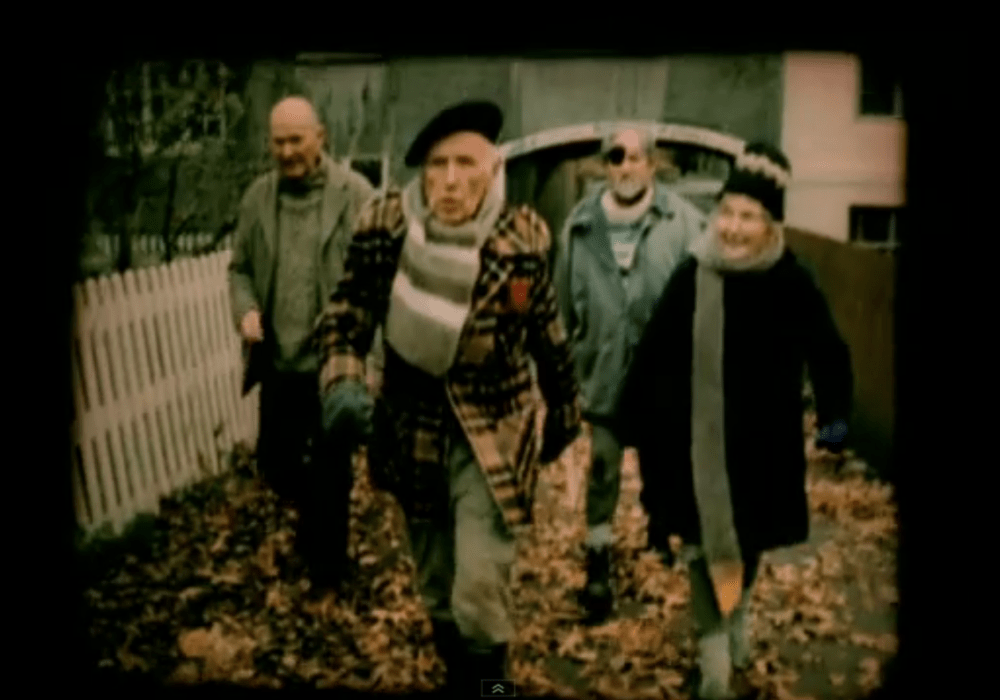
Really easy to intro this music video if you get the reference I am to make: this video is like Speilberg’s segment in The Twilight Zone Movie without the literal transformation. If you don’t get it just push play and you’ll soon see what it means.
Alfred Hitchcock Presents “Incident in a Small Jail” S6E23
Introduction
In the late 1980s and into the early 1990s, when I was quite young and did most of my Nick at Nite watching, it seemed they stretched a bit further back for shows than nostalgia, re-run based stations do now. Maybe being able to pick over selections from the initial Golden Age of television had something to do with it, or maybe memories were longer then. Rather than allow excessive amounts of nostalgia to get mixed into this post I will leave that an open-ended question.
There will be some reminiscing involved because my history with this episode is much of why I like it, but by no means all. That is because this particular episode more than any other on any show lodged itself in my (sub)consciousness and was intermittently lost through the years as I’d forget about it then recall it again.
Also, I’m grateful for this opportunity to discuss this episode in part because a while ago I introduced the concept of Cinematic Episodes, and except for two entries I’ve not revisited it. So, finally I have returned to discussing television. I even have a partially drafted take on Hitchcock’s turns directing the show he produced and hosted, so it really is something I’ve anticipated. Amazingly Hitch didn’t handle this particular episode, but like almost all the stories they definitely bore his stamp.
As Alfred Hitchcock Presents became one of the select TV shows I started collecting seasons of on DVD, I began to search for this episode, amongst others. It was actually only seeing this blogathon announced that I discovered what its name was and in what season it aired (as it turns out its the most-recently distributed in the US, Season six).
Due to this fact, I had the unusual pleasure of seeing it for the first time in eons, and one tremendous development was that it still affected me greatly; however, I had entirely forgotten the ending – but I’ll get to that.
For now, my impressions on the episode both then and now.
Incident in a Small Jail
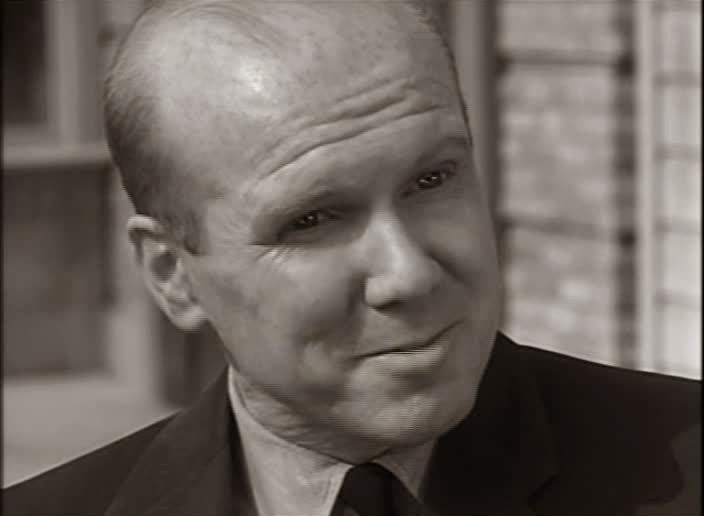
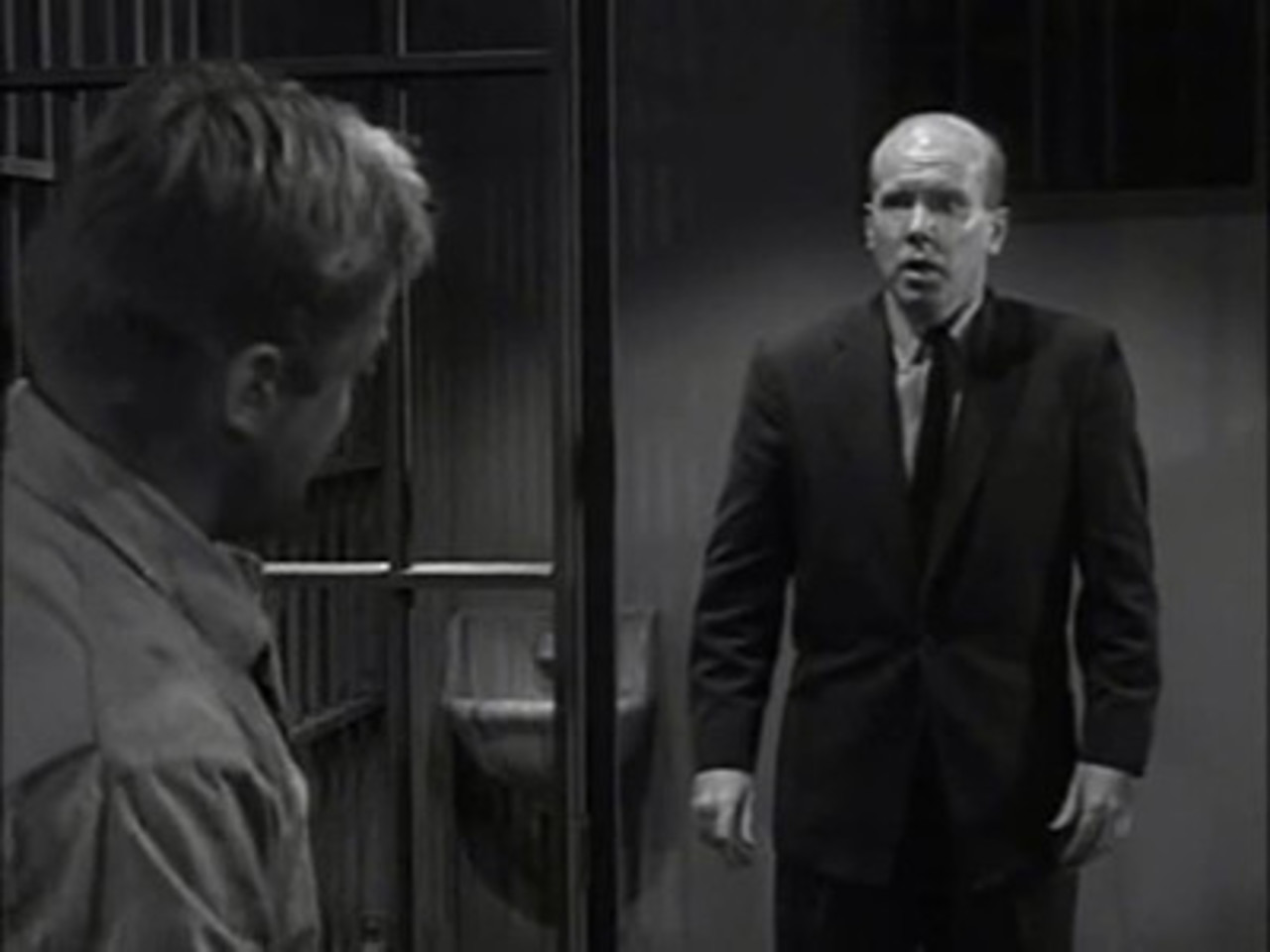
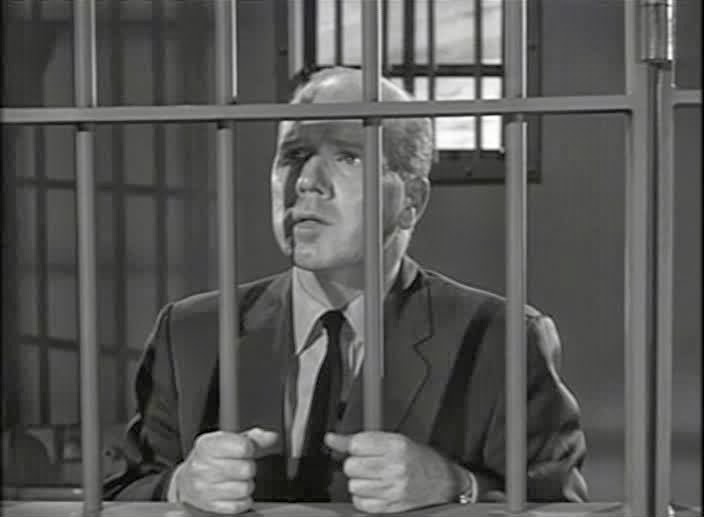
The premise of the story is fairly simple. A salesman, Leon Gorwald (John Fiedler), is cited for jaywalking. In a clumsy attempt to bribe the stickler cop (Ron Nicholas) he is hauled off to jail. After a bit a suspected murderer (Richard Jaeckel) is brought in. Eventually there are fears that a lynch mob is forming to raid the jail the police try and make arrangements to transport the prisoners. The suspect has no designs on waiting to be lynched though, he overpowers the sheriff tricking him and getting out of his cell then forces Gorwald to trade clothes with him.
What I had recalled most vividly was the beginning. The thought of being stuck in a cell for jaywalking (bribe attempt or no bribe attempt) was terrifying enough in and of itself. However, that part omitting the bribe attempt is what I recalled. All I remembered beside that was the dread suspense, which was still there many years later with a lot of added nuance.
It’s very clear to see that this and all the other episodes of this show were basically in three-act structure. What’s impressive here is that the unity of time and space is sustained through a large portion of the story in the jail. There’s only one true temporal ellipse, not including the omission of small fractions of time that don’t need to be seen by more modern audiences.
In regards to modern audiences the episode, like all of Alfred Hitchock’s Presents’ episodes, featured stand-ups by Hitch himself teasing the story, adding gravitas or humor where needed, adding finishing touches or throwing it to commercial, while mocking the sponsors. In this particular episode it’s more adding levity due to the nature of the ending of “the play,” as he was wont to call it.
Setting aside the traumatic mark this episode left on me there was room to notice more of what made this episode work for me: John Fiedler is key amongst them. He’s a face you may recognize, a name harder to recall, but you likely know the voice. Fiedler was the voice of Piglet from the time Walt Disney started handling the character until his (Fiedler’s) death. Another aspect that really makes it work is the direction of Norman Lloyd. Lloyd was one of the most prolific director’s during the show’s run, and consistently delivered results. His episodes, for being so numerous, were not always the best but he did helm many great ones.
Much like the films Hitch directed the episodes of the show frequently found their inspiration from works of fiction. This particular tale was originally written by Henry Slesar and appeared in Ellery Queen’s Mystery Magazine. It truly is an ideal candidate for a short form treatment because the conflict and set-up are so simple and unencumbered by secondary concerns.
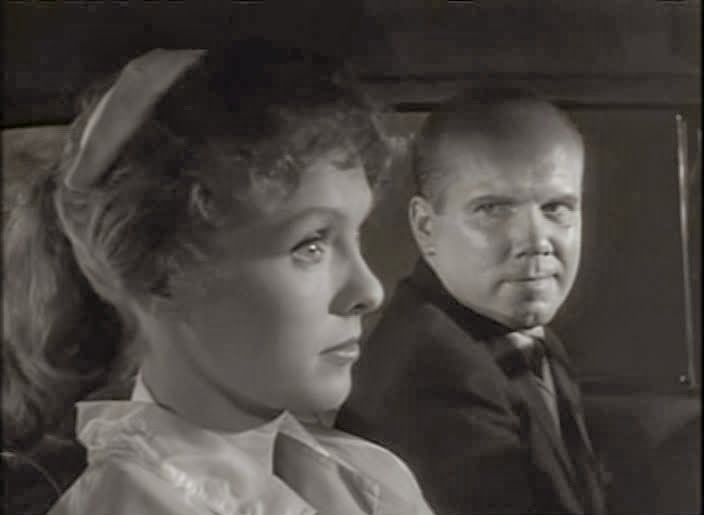
Since this was a show of mystery and suspense I will avoid discussing plot detail much further than I already have, lest I ruin the surprise. However, even knowing all the facts anew (as I watched it twice in preparation for the piece, it still worked with nearly equal efficacy the second time around. The reason this is so, is that like many forms of entertainment, this episode plays with your perceptions. Types of characters and actors are shortcuts for those working on a project and for the audience alike. They allow immediate identification and classification before characterization has begun. Without much time to develop character, and more time focused on situation and plot, perceptions are more easily exploited. This episode plays this game expertly.
Another nuance that has always struck me is that: dead silence can be very dramatic. No silence is deader than a monophonic track. Even when there is dialogue the ambient sound can be very low. Hitchcock and his show knew how to use silence and volume well. Two of my notes in preparing for this blog dealt with volume. One commented on the whispered conversations the officers had about how to deal with the potential lynchmob, another about the bombastic, loud laughter of the suspect. This unsettled tone of voice throughout, the repetition of dialogue; it all gets to you.
Alfred Hitchcock Presents reached heights in suspense, writing and performance that few shows have reached – especially considering the anthology nature of its structure – and “Incident in a Small Jail” is perhaps the finest example of that.
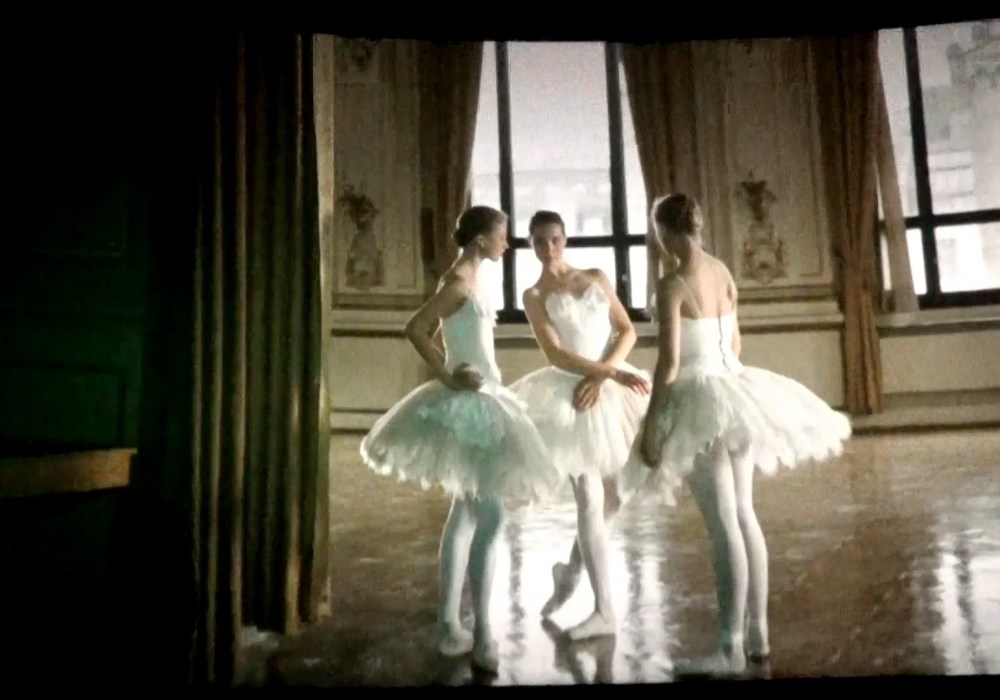
OK, so this one is a little different. I have discussed in posts past how amusement parks can and are pushing audiovisual boundaries. This film isn’t exactly a boundary-pusher, however, owing to the fact that the Norway pavilion in Epcot is being revamped and conquered by Frozen; this is a relic. Norway’s film was without question the shortest and oldest country-dedicated short in Epcot. Add to that the fact that it was played after Maelstrom, the former main attraction in the Norway section, and many people talked and/or walked right through it and on to the next ride, and you can see why it needs attention drawn to it. It was always my favorite, and even if going on the ride multiple times I still watched it. Now that it’s closed it’s good to find there are some captures online. This one is particularly quiet and fairly good. Enjoy, because you can’t see it in person anymore!
Yes we are in the midst of March to Disney but as is the theme this year things like this weekly post will not necessarily jibe with the current theme to give you variety.
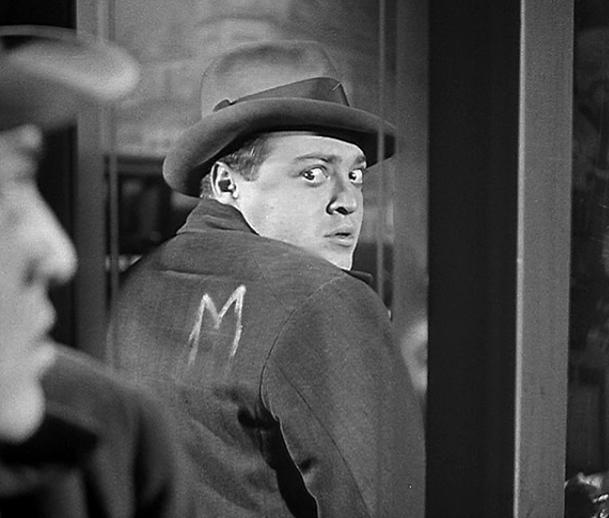
Today’s film is a collaboration by Thea von Harbou and Fritz Lang after Metropolis. It also features a simply stunning leading performance by Peter Lorre, and is quite chilling. Enjoy.

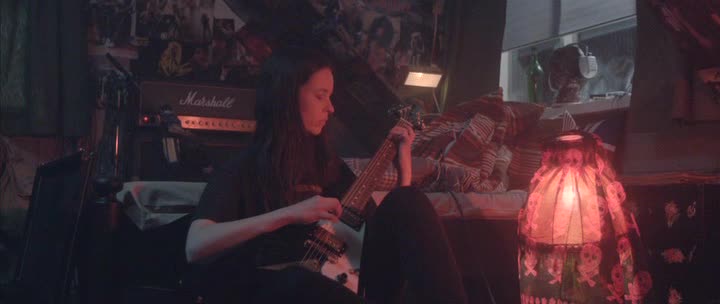
Traitors is a film that in a way uses an underground music scene to hook us into its story. However, the synopsis succinctly makes the connection between the disparate scene that draws you in and the dilemma that forms the crux of the conflict:
Malika is the leader of the all-female punk rock band Traitors, with a strong vision of the world, her hometown of Tangier, and her place in it. When she needs money to save her family from eviction, and to realize her dreams for the band, Malika agrees to a fast cash proposition: a smuggling run over the mountains for a dangerous drug dealer. But her companion on the road is Amal, a burnt-out young drug mule, who Malika decides to free from her enslavement to the dangerous drug dealers. The challenge will put Malika’s rebel ethos to the test, and to survive she will have to call on all her instincts and nerve.
Clearly, Malika (Chaimae Ben Acha) has ample motivation for her gamble. However, what’s refreshing even though she’s willingly getting into a dangerous situation she doesn’t do so naively, nor does she make silly mistakes once she gets into it. In fact, her intelligence and ability to read people is persistently on display throughout.
The simplicity of the through-line the story has allows us to become immersed in this world and invest in the characters’ quest. It’s also highly refreshing the way the film absolutely refuses to over-elaborate the situation. Even though a story is about drug-smuggling, which one would assume hinges on a good amount of discretion too many films, even dramas would over-escalate and raise the stakes to ridiculous extents. They are up, there is tension and suspense but priorities for protagonists and antagonists alike are kept in check.
There is a big scene in this film where Traitors transforms from a film one can like to a film one can love and that is where Amal (Soufia Issami) is telling Malika her story. They are both riveting to watch in the scene. The information make Amal a major player, changes the dynamic between the two characters, and informs decisions made from that point forward.
Traitors is a quickly-paced, engaging watch that establishes a character’s philosophy and puts her in a situation to have the courage of her convictions . It’s highly recommended.
 The Movie Rat