Review: 1,000 Times Good Night

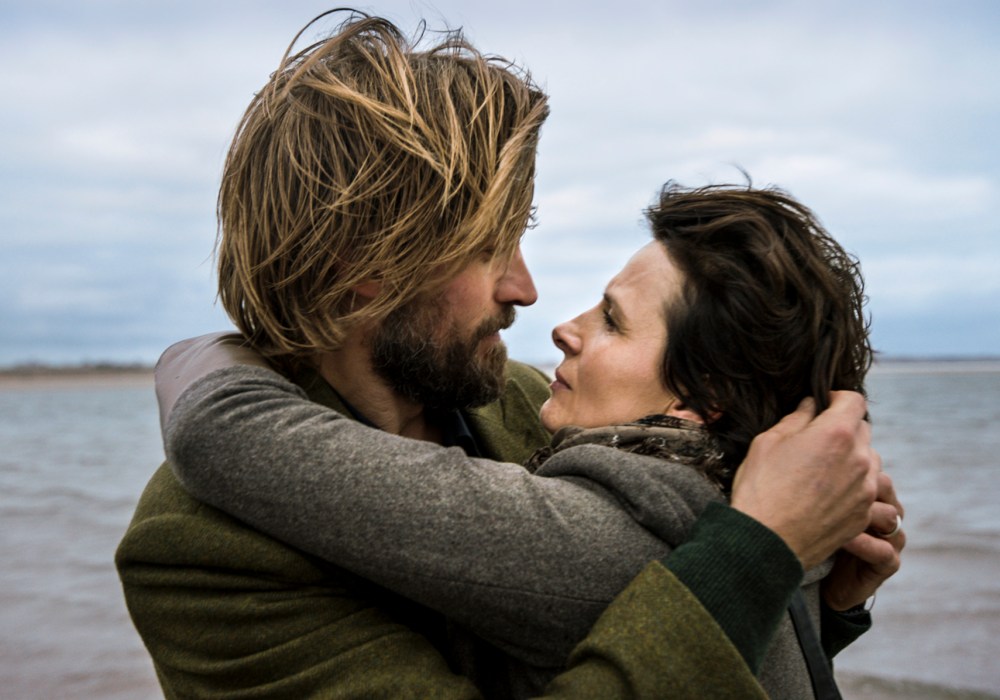
Rebecca (Juliet Binoche) is one of the world’s foremost photojournalists. She specializes in going into war zones and getting the shots few would dare to. After a life-changing event she, her husband (Nikolaj Coster-Waldau) and her daughters (Lauren Canny and Adrianna Cramer Curtis) struggle to hold their family together as they wrestle mixed emotions about her employment.

1,000 Times Good Night drops you into the deep end from the start. It places you alongside an embedded journalist. With scarcely any dialogue of significance we follow Rebecca as a suicide bomber is prayed over and prepares to do what she sees as her duty. It is an affecting and hypnotic start to the film. Much like Rebecca herself we merely see her in the field, are just focused on her in the moment. That assignment having ended we see her making her way home. A family we didn’t know was there, that feared for her safety, emerges. As the film goes on to be about the family’s struggles with each other and the demands of the matriarch’s employment, we see what a sage beginning to the story this was. Instantly we are shown the dilemma facing them all: what Rebecca does matters, she’s excellent at it, and it separates her from her family and consistently threatens to tear them apart.

Having persistently been in war zones she faces battles at home. However, when dealing with a narrative such as this the tendency can be to treat this with too facile a touch, make conflicts too petulant and infantile (especially the adult ones). Similarly, there are also cycles of acceptance and rejection ongoing. The characters each struggle within themselves and then with one another.

Not only is there a fairly complicated relationship each character shares with the fact that Rebecca is a professional photographer but there are some reversals as well. The film also deals with two very different types of mise-en-scène to create: both area of conflict set-ups and more homey scenarios. The film excels in both and then really puts the cherry on top when it combines them both in a necessary narrative turning point.

The films direction from that crucial midpoint, how it deals with the secrets kept and lies told are the only significant slips in an otherwise sure-handed film. However, the sequence in question is not long and the ill-effects are overcome and backed up by a very strong and decisive third act.

The framing mechanism in the narrative works perfectly, and again almost entirely without any need of dialogue, encapsulates the central struggle of the story. The success of the final act of the film surpasses merely mechanical distinction. The visceral connection that conclusion makes is due in large part to Juliette Binoche’s interpretation of her character. Binoche is strong throughout, a women always seemingly entirely present in her current environs, a convincingly passionate crusader for justice and loving mother racked by guilt. Her performance alone is enough to carry the film, but she does have help.

Nikolaj Coster-Waldau does have to breakout from a personage that seemingly has less dimension than the other but he shows compassion, vulnerability and hurt anger and effectively creates the image of a father who not only raises his girls alone, but feels estranged from a wife he’s still married to. Lauryn Canny, as Rebecca’s eldest daughter, has the unenviable task of being a typically rebellious, dramatic teenager throughout much of the film. However, she does eventually shows other levels and to her character, even if she’s still a bit immature. Not to be undersold Adrianna Cramer Curtis’ quiet loyalty to begin with is a necessary counterpoint that adds much emotion.

1,000 Times Good Night
in dealing with a woman caught between two sets of responsibility and two worlds, the second where she wields a camera like a weapon, has the responsibility to be a highly visual film. It is so, but is also a fairly taut and moving account that offers a lot to think of as families the world over balance homebound and global responsibility in different ways all the time.

8/10

Short Film Saturday: Katasumi (1998)

With this being the last Short Film Saturday entry before Halloween I figured it was time to kick up the selected horror film. Katasumi one of the short films that acted as a precursor to The Grudge films in the US, and Juon in Japan, does that in three short minutes: it features a simple set-up, unsettling soundtrack and a rate on incidents. Enjoy and Happy Happy Halloween (Silver Shamrock)!

Review: Finn

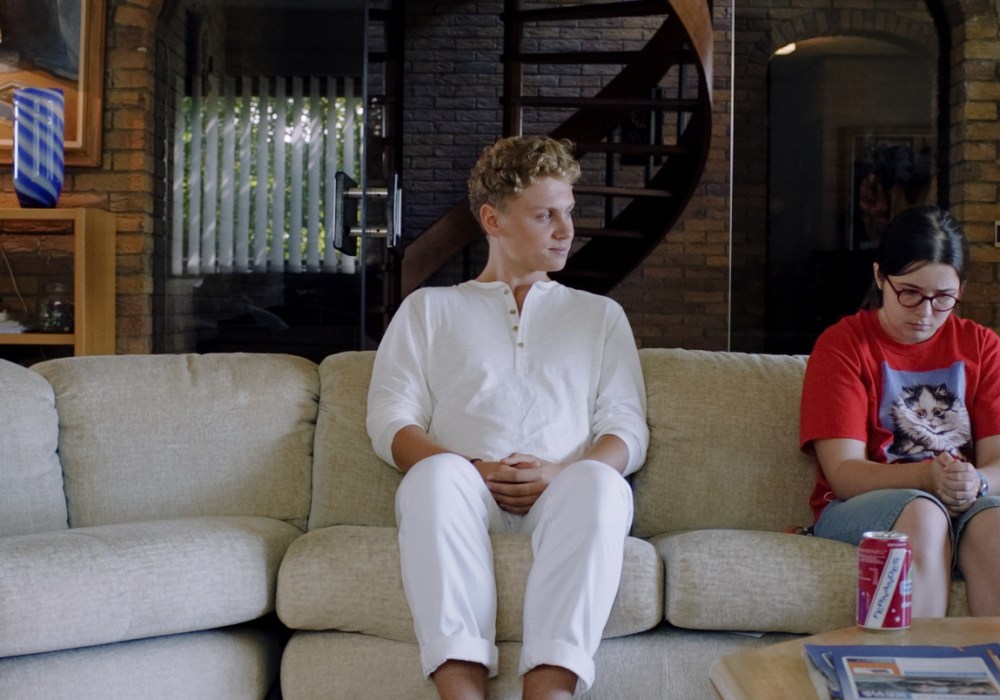
Finn is about a nine-year-old boy, played by Mels van der Hoeven, who lives in a small town with his father (Dan Schuurmans). One day Finn notices someone has moved into the abandoned farmhouse that he passes as he goes to and from school. He is drawn there by a wonderful sound he’s never heard before: a violin playing. He starts to take lessons with the old player (Jan Decleir), and skipping soccer practice. His father discovers this and forbids him. As the story moves on it becomes clear that his father’s concern is not just about Finn fitting in. All this time Finn wants: to know more about his mother, to fix their relationship, his father to open up, and to know what’s so bad about the violin anyway.

It would be easy to watch the trailer, or read other online synopses and dismiss Finn as being just another run-of-the-mill family dramedy. You may be lead to believe that it’ll be cutesy and geared mostly for children, however, one of the best things about it is that it respects all its potential audience members, and would likely entertain them in equal measure. For while Finn definitely seeks to speak to both children and parents it portrays a world that can draw both in.

The world of the story is seen mostly through Finn’s eyes, and though he’s known his pains (like never knowing his mother) it is a still a world that most children have experienced at one time or another: a world of magical realism. Finn openly wonders about the connections between music and magic, the ability to induce visions; in short believes in the unseen world and is not shy to talk about it. Resistance is met when he does share it though. He estranges his best friend and confounds his father, to say the least. So there is a balance struck.
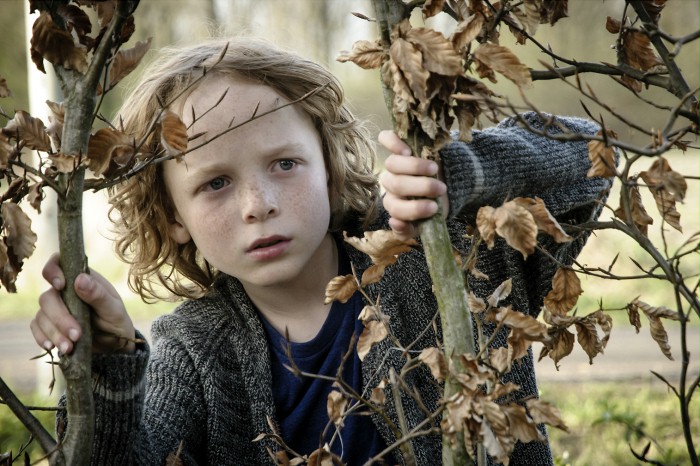
Finn (2013, Attraction Distribution)

This balance allows for the creation of a bittersweet, sensitive narrative and as events unfold and revelations are made joys and sorrows walk hand-in-hand. The gorgeous nature of this film is precisely that the journey it takes you upon ebbs and flows. With each narrative progression truths are being revealed and though the truth invariably introduces new pains (pains both Finn and his father seek to avoid) it is ultimately freeing and allows them to move on with their life.

The journey taken here is most definitely a heart-rending one. It’s a film that could easily rest on the laurels of its mellifluous orchestrations, and captivating pastoral scenes of the low country but combines that with a universal, unpretentious and moving story. Due to the fact these things play off of one another the film is allowed to true resonance and cannot be dismissed as nice, cute or quaint, but rather a wholly realized intimate family portrait that should be shared not only at the holidays, but by families the world over.

This is a film populated by deceptively hard characters to play: Finn, has to be simultaneously precocious in that he seeks greater meanings in life and his activities, but naive enough to believe in the improbable and even impossible. The deft scripting assists in that regard but van der Hoeven is often the one, as the film’s namesake, carrying the scenes, who needs to connect with the audience and does. Shuurmans has to be simultaneously quiet definitively hurt and guarded. He has to be brusque with his son without ever alienating the audience and he succeeds in spades because as bad as the arguments get it’s always clear he is torn, has his reasons, but believes he’s doing right by his son.

The film flows with such ease that it washes over you like a dream, which is fitting. This is a factor that should also make this film one that’s conducive to revisiting. Considering that this film is repped by Attraction Distribution, who have had a good track record lately of getting European produced family fare seen in both Canada and the US, prospects of the audience for this film widening are quite good. This is most definitely a film worth finding. This kind of beauteous, lyrical family drama has nearly been the exclusive purview of Benelux in recent years. It is a moving, sincere film ought to be discovered, and one of the best of the year to date.

10/10
Review: For a Woman

This is a family drama told in hindsight. Anne (Sylvie Testud) tells the story of her parents Léna (Mélanie Thierry) and Michel (Benoît Magimel) as Russian emigres in post-war Paris especially after Michel’s estranged brother, Jean (Nicholas Duvauchelle) returns.

What’s most intriguing about this film is not just the fact that a daughter is wondering about the origins of her family, specifically what her parents’ life was like before she was born, but the facts that it commingles familial dramas and postwar political intrigue. All too often films that deal with Wold War II in some way see the liberation of Europe as the endgame. Some of the most fascinating European films are postwar, set either during reconstruction or in involved in the politics of a new Europe. This one goes there and furthermore examines some of what happens when you’ve moved past survival and are living with compromises made to move on.

Jean arrives enshrouded in mystery. His return to Michel’s life is sudden and almost unceremonious. There’s always some doubt about his nature or identity, but the conflict ends up being one in family rather than the fact that he’s still a Soviet and comrade, and his brother is a communist expat.

These narrative elements may seem like they’re too different to connect but when family is involved everything connects. With everything connecting there could be a tendency to lose the characters behind the ideas they represent and to muddle through to a conclusion. What this film does is end its commentaries on family and politics in separate scenes. One in a discussion and one in a voice over to close a tale. Each is astutely stated and a perfectly presented synthesis of hypotheses.

The most interesting thing again is that it wanders into gray areas, and fights to explain that gray against characters and a world that insist on black-and-white both in political and familial arenas. When not wanting to lose your characters to your ideas the performances by the actors are crucial.

Thierry compassionately portrays a woman torn between her emotions and duties; Magimel plays a cockeyed-optimistic struggling to hold on to ideals in the face of staggering new realities, and Devauchelle a passionate yet embittered cynic seeking unattainable levels of revenge. Each conveys characters as they are and makes you wonder both about where they came from and where they end up. While this film is an origin story of sorts for its narrator, it resists the flashier sacrificial, survivalist beginnings of the characters maturely realizing that life does goes on, and the future is constantly striven for.

The film keeps apace on both its fronts working with a smooth ease that allows you to settle in and ruminate on this situation without losing your interest or pushing it too quickly. The balance that For a Woman strikes may be imperfect but it’s not an easy one to strike and it holds on well enough to entertain and provoke thought in equal measure.

7/10

Review: Cannibal

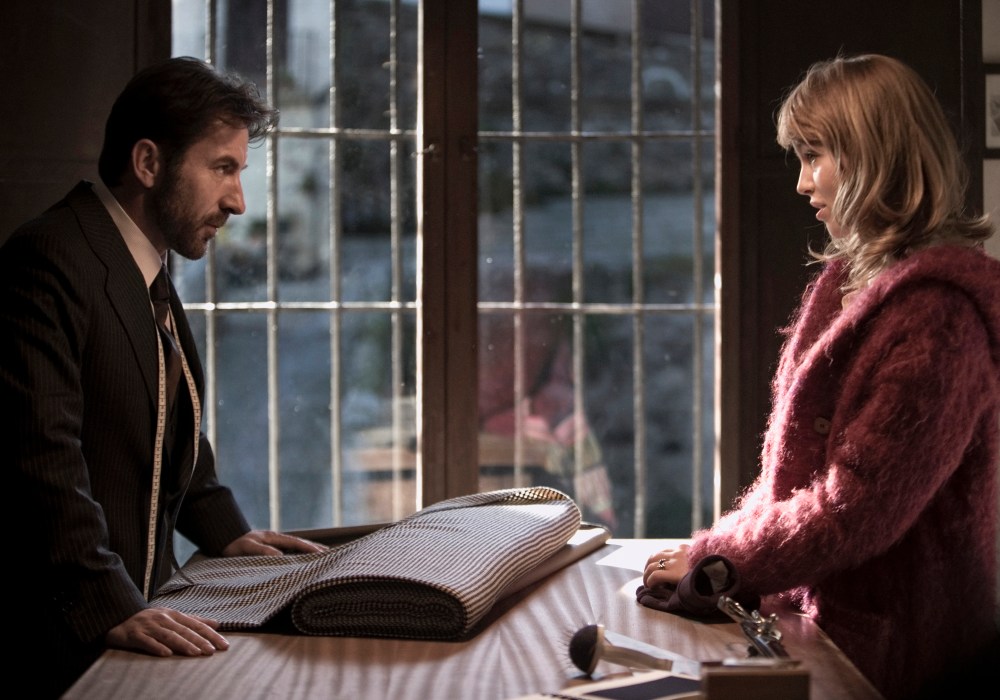
Set in Granada Cannibal follows a renowned tailor living a double-life. In the his second life he preys and feeds on women, literally. What disrupts his depraved routine is when Nina comes into his life. She introduces feelings of guilt and genuine affection into his life, and from thereon conflicts ensue.

With a set-up such as that it can be difficult to see how a film of this kind can be easily watchable. While the facts and some of the events of film are undoubtedly disturbing, it’s the way they are introduced and addressed that makes it clear from the outset the approach here will be different than most. There have been famous cinematic cannibals, of course, perhaps the most notable being Hannibal Lecter. Yet as good as The Silence of the Lambs is there is intended shock elements there, and even more so in some of the sequels.

The film opens softly, relatively speaking. After having the facts established as non-grotesquely as possible, we watch much of his routine and how this psychotic is part of his commonplace. The editing of said sequence as well as the framing builds the world effectively. The effect redoubles because of how it works around the viscera. As such it’s not daring you to look away, but daring you instead to continue to look. As intimated, the ritual is not the focus of the film.

The film seems like it’ll play out like a revved up version of Jeanne Dielman, but rather than a slow slip from a solitary, maniacal existence it’s a spiral to real consequences as Nina arrives not knowing him, and seeking answers. As such, starting in the second act it patterns itself like a more traditional suspense film. Due to the mitigating factors of this story, and how it starts, you know it cannot end in a very conventional way, and it doesn’t.

Another thing that lowers the tenor is the fact that there are narrative ellipses. This means that the film will not dwell on the facts, instead we know what happens, and much as it does in real life, we don’t know where it’s happening or how, or maybe not even that it is happening just that it does.

Where the simulacrum attempted in this film really hits home is in the performance of Antonio de la Torre as Carlos, who convincingly portrays the type who many would describe as charming and affable if they met him in a business setting, whom apartment-dwellers would say “nice, but kept mostly to himself” if news reporters came asking about him; and Olimpia Melinte, who is perhaps more compelling because as both Nina and her sister Alexandra she adds to the commentary of the film. Melinte, like her characters is Romanian but working in Spain. She not only performs with equal comfort in either language, but also renders these two sisters as separate, yet clearly related despite having little time to work with one of them.

Cannibal works because it departs from an expected course, revels in ambivalence and discomfort; and eschews histrionics. The close of the film is jaw-dropping due to one revelation, if not the overall outcome. Fans of suspense or horror and art house films may find something to like here. Those who appreciate both are likely the ideal target for this film. For any of the above it is worth seeking out. It is available on DVD now from Film Movement.

7/10

Review: Stop the Pounding Heart

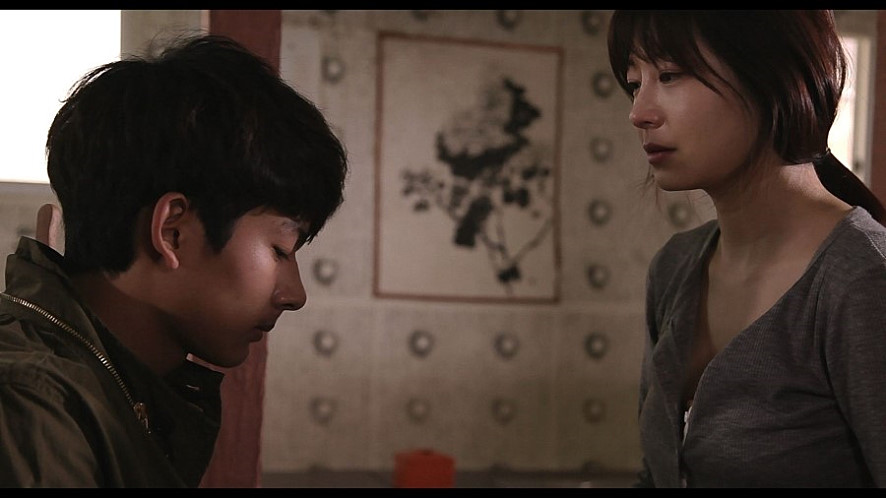
Stop the Pounding Heart is a low-key modern neorealist look at cloistered religious upbringing clashing with the pitfalls of adolescence. It carefully treads the line between narrative and documentary perhaps more so than any other film I’ve seen recently – as such evaluating it becomes tricky. However, my interpretation of the film having seen it (through the end credits) was that I would treat it as a narrative feature. This notion is reinforced by something the director says in response to that vagary in the press kit:

I work exclusively with real life people and their true environments, so there are no actors involved in the traditional sense. At the same time, the underlying arc of the story is my own so you could say that the hand of the director is present. My involvement with these communities is a deeply intimate experience, and it required a lot of mutual trust. They were willing to open up their lives up to me, and me for properly portraying their lives to the public. In addition to the relationships that are cultivated over time, I also credit my shooting style with allowing people to feel comfortable in front of the camera. My production consists of a five person crew, no artificial lighting, and one take for each shot. One could say that this film follows in the traditions of Rossellini and Bresson, the latter of whom once said that more than realism, he was interested in truth. That comment has always stayed with me.

The brief synopsis up-top is the most succinct encapsulation of what passes for a narrative in this film, and that is not a slight; it does pass. For a while most, if not all, the turmoil is internalized and when it does overflow near the end it does so in a tearful confession by the lead, Sara (Sara Carlson), in which she cuts to what’s bothering her, but does not enumerate the events/symptoms bringing on such feelings.

Much of the running time of the film is spent watching Sara’s life unfold. All the characters in the film are eponymous. The film in large part engages in watching the characters behave and the most basic voyeurism known to man; the psychological root of our interest in cinema. There are established routines that come around full circle and at times have different iterations: homeschooling, bible study, selling at the farmers market, talking to Colby, watching bullriding, going on the firing range, etc.

While this film enjoying a different shade of behavioral observation that Chantal Akerman, Bela Tarr and others occupy what separates this tale is the documentarian removal. There is, due to the fact that there is a loose scripting, no talking heads, natural light; a distance and lack of judgement. Because the lives of these people is being explored as uninterrupted as possible it does achieve a sort of real slice-of-life effect.

This film is an affectation though, much as a more conventional documentary would be. What the guise of narrative allows it to do is widen its exploration of this family and place. A traditional documentary has to be about one thing only, even off-beat docs like Leviathan and Bestiary are about one unifying notion. As an affectation it is an affective one as it finds a humanity in these people regardless of what differences we may have. In a traditional documentary there’d likely be a point of view, in a narrative there is a slant to any tale, a commentary or moral. In this film the characters just are and we just watch them and have a small notion of what it’s like to be in their home, their town, their work, and their life. Because of the way these ideas, emotions and images weave together it just washes over you with minimal focus on where those differences lie, but more focus on where commonality exists.

6/10

Mini-Review: Under the Bed

Introduction

This is a post that is a repurposing of an old-school Mini-Review Round-Up post. As stated here I am essentially done with running multi-film review posts. Each film deserves its own review. Therefore I will repost, and at times add to, old reviews periodically. Enjoy!

Under the Bed

This is a film that’s a classic non-starter. The work that’s done to build the characters, the brothers, at least, is appreciated; as is the late reveal of several key pieces of information. However, the issues that come into play are that the film ends up not having enough jolts or enough incidents. The battle against the evil entity these brothers fight is forestalled too long, is resolved to quickly and far too anti-climacticly. So you have a film where engagement is barely kept for as long as it takes and then there’s no real pay-off. With a horror film, especially one of this type, you know certain characters are going to be safe so it really ends up being more about how things occur rather than who makes it. The film has really good performances by Jonny Weston and Gattlin Griffith, especially the latter, but not much else to show for itself.

3/10

Review: Mercy

Mercy was a film that I had on my radar for quite some time. It was a film announced a while ago. It was one of a rash of projects that Joel Courtney got involved with on the heels of his outstanding performance in J.J. Abrams’ Spielbergian Super 8. Combine that with the fact that it is a Stephen King adaptation, the signing of Chandler Riggs (The Walking Dead), the involvement of Blumhouse and Universal and there were plenty of reasons to look forward to this film. Eventually though, without and fanfare (as there usually isn’t), this film kind of vanished from consciousness as all involved moved on to the next job.

Then with just as little fanfare the film plopped up available as a digital first download on Amazon ahead of its DVD release.

Mercy mainly concerns a young boy, George (Chandler Riggs), who with his grandmother (Shirley Knight) bedridden starts to wonder about and discover her true nature and family secrets buried in their past.

The difficulty of divorcing one’s fanboy self from an objective film-viewer is epitomized by the fact that this film could have harvested an intriguing internalized tale from the prose, but instead it perhaps over-externalized it. One of the pitfalls it faces is also expanding a short and building out characters because it only does so part of the way. More dimensions are added to characters but it only goes part of the way. Mark Duplass, plays an uncle, he comes to George (Riggs) to disavow him of his notions because he idealizes her. However, this has to be assumed. He’s barely introduced when he makes this leap, and knowing how jaded he is, why not try and talk to Buddy instead (Courtney)?

The aforementioned facets of the film nits; smaller quibbles. There are things that occur that in some ways make you wonder about the production, and in general questionable decisions. The very first scene in the film cuts awkwardly. Riggs and Courtney overall do fine jobs, but in the early scenes they seem a bit ill at ease in their roles, Courtney especially; as they get caught up then the stakes go up. Unfortunately, CG plays a hug role in the latter third and it doesn’t really work that well at all.

I think to convey it best to King fans I can frame it this way: the CG-heavy climactic portions of this film remind me of a 21st Century Langoliers, only this film isn’t anywhere near as compelling as The Langoliers is before being heinously under-served by the effects work.

Up until then the film is passable, and there are things worth watching it for, Shirley Knight is another. In a film whose running time is less than 80 minutes it tries to spread the tale between too many inconsequential supporting characters, and doesn’t move as quick as it should.


When Mercy is available on rental platforms it’s worth it if you’re curious enough, but in this case sadly the whole is far less than the sum of the parts.

5/10

Review: Annabelle

When The Conjuring came out, I, like many enjoyed it a great deal. Not necessarily like many, and moreover, a bit uncharacteristically; I was really psyched about the prospect of Annabelle. It was one of the rare cases where I thought a prequel, or more appropriately, a spin-off had the potential to expand a bit of backstory into a feature-length tale on equal footing with its progenitor.

After having seen it, however, it did bring to mind Dario Argento’s response to when I asked if he ever considered further examining the backstory of Deep Red. Basically, what this ended up feeling like was a vacuous money-grab even though it, and the Deep Red concept, still could theoretically work.

What Anabelle lacks is not only atmosphere, which it is sadly in wont of throughout, but also a compelling narrative. In The Conjuring James Wan and the Hayes brothers wrung out so much effect from this doll affectation to give the protagonists a background you were left wanting more, in getting it you are left dissatisfied.

One issue the film contends with is that it’s not really an origin. The accursed doll comes to the couple at the center of this story and they deal with it. However, that’s not really a fault of the film. One true fault is that its zest for innovation peters out on the first act when introducing the notion that the world is changing in light of the Charles Manson killings. Much of the rest of the film following the inciting sequence is methodical and rote, and rarely introduces a wrinkle that is unique to this tale.

BANG!

There. Are you scared yet? No, well then don’t see this movie, because as it is unable to generate palpable atmosphere, real concern, or interest, in its characters the film then resorts mostly to jump- and false-scares. This is really a shame because the score does have some nice moments but it has to be an accomplice to the lacking script and direction and try and pry scares out of its prospective audience.

One would think that it would be hard to bungle a film wherein one protagonist is either pregnant or raising an infant, but this film manages to quite easily. Some milquetoast performances along with all else that’s plain to lacking really doesn’t help.

To add insult to injury the obligatory, somewhat open ending is as anticlimactic as the rest of the film is. It’s rare I use the phrase “forgettable” as it usually employed crassly, but when one has recently experienced a film so empty, so devoid of soul and verve, that you could easily forget that you just saw it. “Forgettable” one of the most fitting words there are.

3/10