Bela Tarr Retrospective: Introduction

In my recent Short Film Saturday post I talked of a perfect introduction to Bela Tarr. As I will discuss in these and other pieces that form the retrospective on his works, in light of my bestowing upon him the 2012 Lifetime Achievement Award, such assimilation can prove to be rather difficult. My baptism in his works was one by fire. Therefore, it’s always hard to try and think outside of your frame of reference to try and ease someone else in.

I at first toyed with the notion of going through his works, which are not as numerous as last year’s winner (Spielberg), chronologically. However, if I were to start at the very beginning, and I likely will head there at some point, we would discuss films that pre-date the metamorphosis of his aesthetic.

Bela Tarr is fascinating for myriad reasons, but one of the most apparent is that rarely has a filmography featured so strong a departure in style. Tarr’s early works in the 1970s were in the zeitgeist, which was stark documentarianism. Cinéma vérité was the vogue amidst a wave of talented Hungarian filmmakers. Starting in 1982 he became increasingly more stylized.

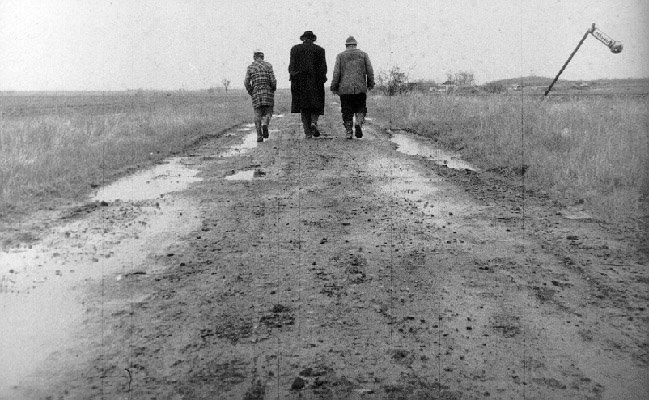
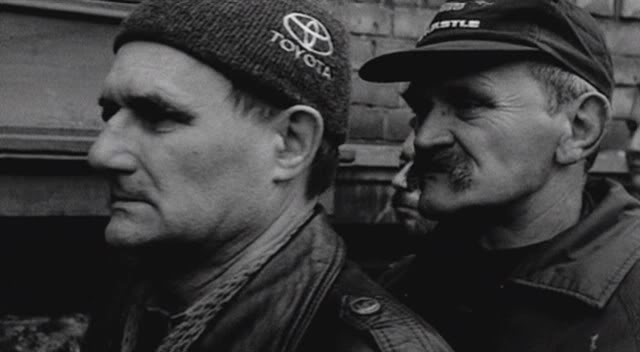
Satantango (1994, Facets)

Tarr was my doorway into the world of Hungarian cinema. It’s a culture I do like to explore periodically and have learned more about since being introduced to it through his eyes. What the chronological approach would seemingly negate is the veritable reason he won this award. It’s not that his earlier works aren’t good, there is in the scripting his essence. In fact, a title like Family Nest translated his insistence that all his films are comedy better than any others. However, his early films featured his voice speaking a seemingly foreign tongue. His real cinematic voice was not truly heard, did not differentiate itself, or make itself unique until his style broke off from its initial sensibility.

Some have referred to his hour-and-change rendition of MacBeth for Hungarian television, that was shot in two takes, and Almanac of the Fall as more transitional titles than ones that show the true power of his later style. However, if one watches The Prefab People and then MacBeth back-to-back it’s fairly staggering. You may not even realize it’s the same director. Whereas if you sample the Prologue from Visions of Europe you very soon know Tarr and if you see a famous tracking shot from Satantango, The Turin Horse or Werckmeister Harmonies you know it’s the same person.

So next week when I do return and write about a specific film, I will begin after the break and then if I feel so compelled I will backtrack to the beginning and deal with his earlier works before he revolutionized his own style.

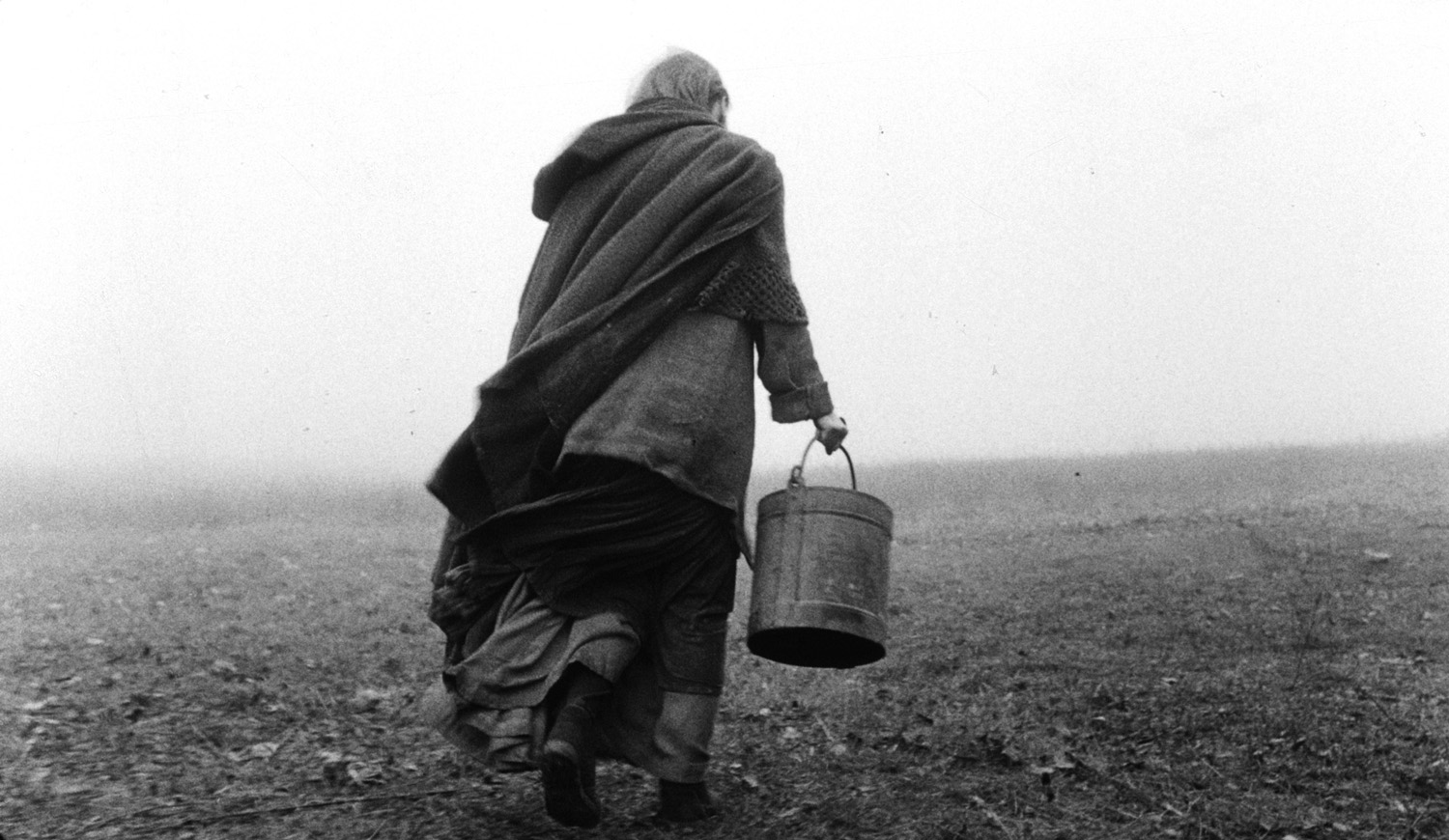
The Turin Horse (2011, Cinema Guild))

While in each post I will focus on the specific film at hand when you have a writer/director who insists on challenging an audience, on letting us “use our eyes,” a man who also is disinterested in stories in the traditional sense, you will have running themes. Throughout his career, especially after he broke the mold, his films were creating thematic dialogues. The culmination of which was his masterful dissertation in The Turin Horse. When you have running themes there will be parallels between films to be drawn. I will try to keep those to a minimum and focus on the title at hand.

While Tarr got me into chasing down Hungarian cinema, I knew pretty quickly he had a unique voice. However, I soon also found out that his voice could have only been developed in the Hungary’s film culture, on the arthouse end of the spectrum, of course.

Like any filmmaker, Tarr’s work as auteurist as it is, is a collaboration. As he worked towards his reportedly last film the pieces started to come into place to solidify his style. The editing of Agnes Hranitzky since The Outsider in 1981; Fred Kelemen as DP for some of his later projects starting with Journey on the Plain; novelist Laszlo Krasznahorkai had writing or co-writing credit on all of Tarr’s features starting with Damnation in 1988; composer Mihaly Vig has been on board since Almanac of the Fall in 1984. Together these people shared a commonality that helped to accentuate Tarr’s vision and bring it to the world such that it could not only be admired, but challenge the way it was intended to.

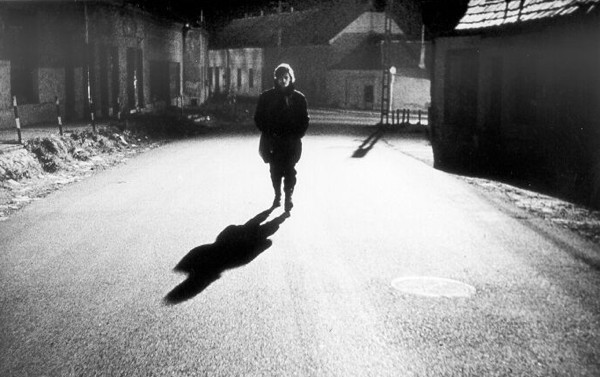
Werckmeister Harmonies (2000, Facets)

In the end, I got in my first revisit just in time to start this series on time. However, so as not to under-serve the challenge I’ve set for myself I decided on a true introduction piece to be followed by film-specific pieces. Tarr’s cinema is not one that is suited for “hit-me entertainment,” it insists you prod back and in deference to that fact, and out of respect, I will ruminate on Werckmeister Harmonies‘ mesmerizing and brilliant brutality a bit more.

To get a bit more of a glimpse into this creative mind, to see where he’s coming from. Here’s an excerpt from a piece he wrote called Why I Make Films, which he wrote during preproduction of Damnation:

Because I despise stories, as they mislead people into believing that something has happened. In fact, nothing really happens as we flee from one condition to another. Because today there are only states of being – all stories have become obsolete and clichéd, and have resolved themselves. All that remains is time. This is probably the only thing that is still genuine – time itself: the years, days, hours, minutes and seconds. And film time has also ceased to exist, since the film itself has ceased to exist. Luckily there is no authentic form or current fashion. Some kind of massive introversion, a searching of our own souls can help ease the situation.

Or kill us.

We could die of not being able to make films, or we could die from making films.

But there’s no escape.

Because films are our only means of authenticating our lives. Eventually nothing remains of us except our films – strips of celluloid on which our shadows wander in search of truth and humanity until the end of time.
I really don’t know why I make films.

Perhaps to survive, because I’d still like to live, at least just a little longer…

Tarzan Thursday – Tarzan Escapes

Being a modern film viewer it’s at times difficult to realize that everything that’s old is new again, and that’s understandable. Especially in an Internet age we are now as film fans not only diving into the minutiae of new releases but also future releases such that patterns that developed in the past may be lost through the vast landscape of film history.

What prompts me to bring this up is that going through these Tarzan releases now in some semblance of order, as going through any series will, has brought to the forefront certain patterns. Of course, as you traverse a series you will invariably find the specific formula therein, but here there also seems to be a design that’s fairly modern. The first three films of the MGM Tarzan series for a sort of trilogy wherein the union of Tarzan and Jane is formed, then tested and finally solidified.

Now, this is going purely on narrative and not based on the studio’s intent. I’m sure that MGM always wanted to propagate the series so long as it was profitable. It’s just the master plan was not necessarily there before the release of the first. However, that hardly matters since this is the way the first three films did play out. They did end up forming a trilogy where Tarzan and Jane constantly have to battle external forces to be and stay together.

However, as the films remained popular and MGM still wanted to make them after three films they recognized the need to move on storywise, which is why in part four is where you find the introduction of Boy. As the MGM legacy progressed to amass twelve films the series would invariably become increasingly about outside forces threatening the escarpment, Tarzan’s domain and him by extension, to the extent that they nearly become proto-environmentalist tales in many cases. The series would also eventually, naturally have Tarzan leave, if only for a time, and even engage in propaganda battling Nazis, which I believe is the last of the four in this run I’ve not seen.

This installment is also perfect proof of why I didn’t want to write this series up in typical review format, because sure enough here Iatched on to a thread that illustrated the design of the franchise as opposed to how well this particular installment functioned within and without it. Having said that, it is an enjoyable albeit somewhat more predictable rendition of prior versions. There are some small wrinkles and twists that keep it fresh enough to be entertaining. However, it does become far more interesting when you see how it works in the grand design of the character’s trajectory with MGM.

Five Most Outstanding Fake Movies

One a recent episode of Jessie a faux Danish arthouse film was mentioned in passing. It was called Cries of Ice and Pain and elicited from me one of the few genuine laughs that show can ever get. However, it did bring to mind that there are quite a few fake movie titles mentioned or chronicled either in a film or on TV shows that are funny and in some cases that I’d want to see.

What I will list below are just the five most outstanding examples that come directly to mind. I’m sure I like many others, and as I’ve said before no list is ever complete, and I’d welcome additions to this list and other suggestions.

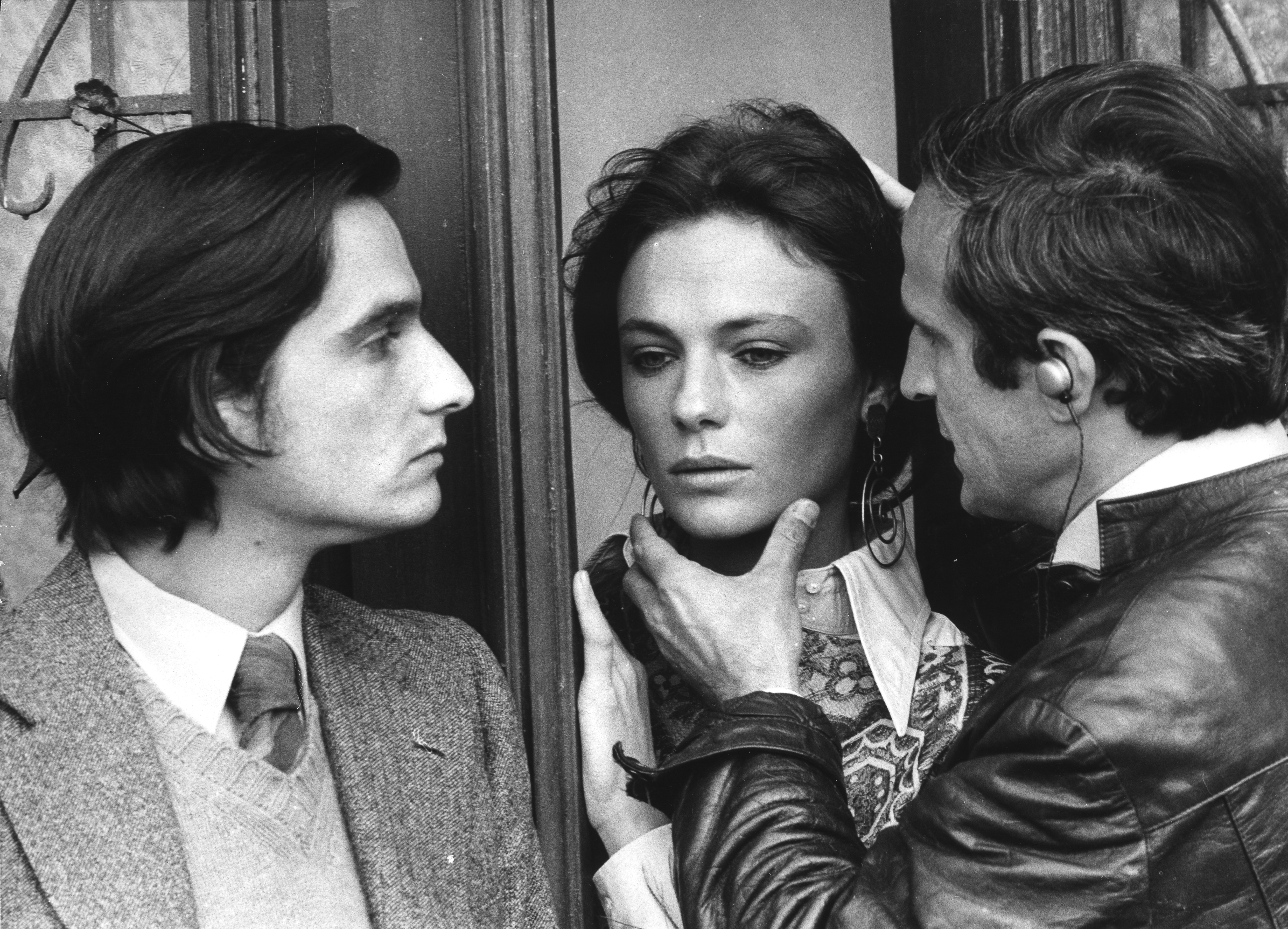
Je Vous Présente Paméla (Meet Pamela) in François Truffaut’s Day for Night

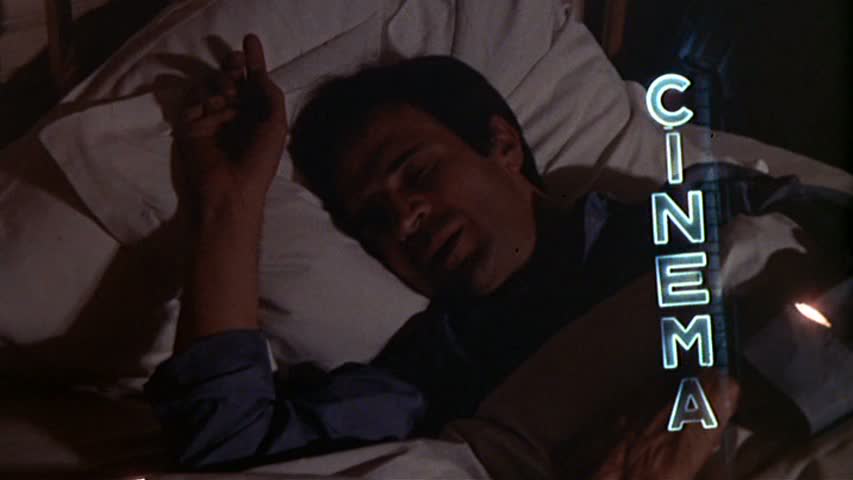
Day for Night (1973, Les Filmes du Carrosse)

I have a long history with Day for Night. Since I first saw the film I have watched it anew on the eve of every new production I’ve directed. While Day for Night is about the production of the aforementioned film there are but fragmentary glimpses of what the film actually is. However, there is enough information that would make it an enticing view. It may seem, in terms of the synopsis we get, to be a plain film, but the scenes viewed suggest otherwise.

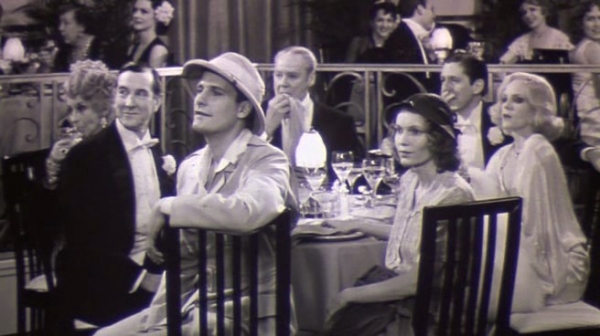
The Purple Rose of Cairo in The Purple Rose of Cairo

The Purple Rose of Cairo (1985, MGM/UA)

Woody Allen’s faux film may be eponymous with the one he actually created. However, Allen beautifully and lovingly created Golden Age touchstones that made Farrow’s character’s obsession strike very true. While I personally, based on what is shown, may not have become obsessed with the tale, I could if a whole existed and I admire it for inducing such passion.

Don’t in Grindhouse

When dealing with faux films that are conveyed through faux trailers there are quite a few options one could consider. The bumps at the beginning of Tropic Thunder being quite memorable. However, if my wanting to see the film is a criteria, and is that an accurate rendition of a trailer style is also, then I must include Edgar Wright’s Don’t from Grindhouse. It not only emulates trailers of a certain era, but is also a hilarious send-up of the horror genre. For what else do people yell out at characters more than “Don’t…”?

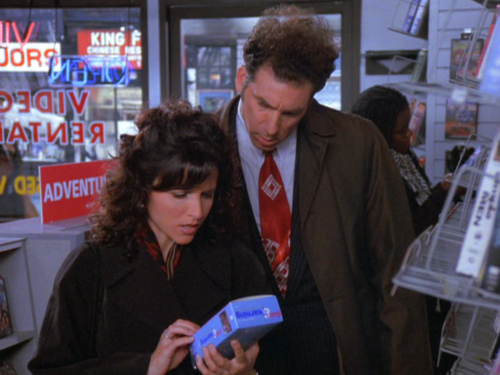
The Pain and the Yearning on Seinfeld

Seinfeld (Castle Rock Entertainment)

The faux title that was the genesis for this post in all likelihood owes a debt to this Seinfeld faux film. I highly doubt there was a sitcom ever that created a vaster array of fake films than did Seinfeld. As with all things Seinfeld, the films are quite memorable, such as the tagline from Death Blow, or the climactic moment in Cry, Cry Again that is taped over with Elaine’s awkward, spastic dance. The amazing thing is we never see these films at all. In this episode we see video tape boxes, on occasion one sheets, and this is as close to seeing the film we ever get. It’s mostly about voice acting, scoring and the dialogue the main characters have about the film. What made me choose this one is that the one-line synopsis Elaine reads is “An old woman experiences pain and yearning,” which is a hilarious send up of the vague synopses some film have, particularly art films that are harder to summarize.

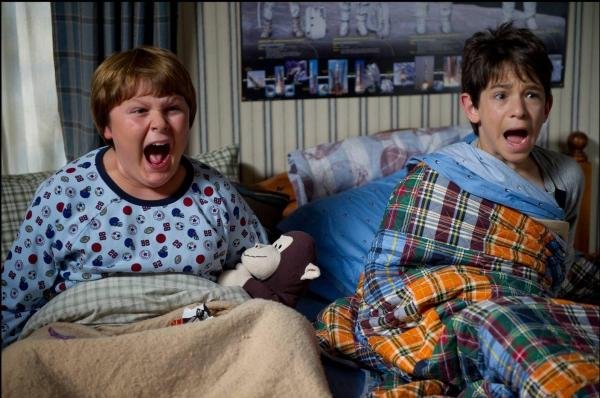
The Foot from Diary of a Wimpy Kid: Rodrick Rules

Diary of a Wimpy Kid: Rodrick Rules (2011, 20th Century Fox)

One very old trope by now is: kids, without their parent or guardian knowing, watch a horror film and are terrified for the rest of the night. They subsequently cannot sleep and/or get paranoid about everything. Perhaps the best twist on this I’ve seen is The Foot in Diary of a Wimpy Kid 2 because the film they watch is highly ridiculous, but then they’re scared by it making an old hat routine much funnier than it normally is.

As mentioned before there are likely many other ideas that could’ve been on here. I’d be gladly reminded of some.

Short Film Saturday: Prologue from Visions of Europe

One recent tradition I have unintentionally started is that I will kick-off a new theme or series through Short Film Saturday. It makes sense since Short Film Saturday is my most frequent and longest running post. The theme that this short will correlate with is the beginning of a Bela Tarr retrospective. Another decision I have come to organically is that the winner of my Lifetime Achievement Award will be the focus of a series of posts the following year. It began with my Spielberg Sunday posts and this year I will look back on many of Bela Tarr‘s works. This short is actually one I had not seen yet.

Visions of Europe is a 2004 anthology film wherein various acclaimed European directors made short films about Europe, specifically their own corner. Bela Tarr‘s short acts as the prologue. As those who know him will attest the attributes of this short are not surprising: it is comprised of one long take and the haunting, soul-encompassing, cyclical score by Mihaly Vig. This short makes me want to watch the rest of the film and and is a perfect introduction to Tarr I feel.

2013 BAM Award Considerations – May

Last year I had one massive running list and it became very cumbersome to add to, and to read I’m sure. By creating a new post monthly, and creating massive combo files offline, it should make the process easier for me and more user-friendly for you, the esteemed reader. Enjoy.

Eligible Titles

Deep Dark Canyon
Happy People: A Year in the Taiga
Iron Man 3
Mud
Jacob
In Their Skin
Star Trek Into Darkness
2 + 2
Yossi
The Great Gatsby
ABCs of Death
This Girl is Badass
After Earth
Dracula
Epic
Space Warriors

Best Picture

Iron Man 3
Mud
2 + 2

Best Foreign Film

Happy People: A Year in the Taiga
2 + 2
Yossi

Best Documentary

Last year this was an omitted category, due mostly to the fact that too few total candidates existed to make the slate feel legitimate. I will hope to be able to rectify that this year.

Happy People: A Year in the Taiga

Most Overlooked Film

As intimated in my Most Underrated announcement this year, I’ve decided to make a change here. Rather than get caught up in me vs. the world nonsense and what a film’s rating is on an aggregate site, the IMDb or anywhere else, I want to champion smaller, lesser-known films. In 2011 with the selection of Toast this move was really in the offing. The nominees from this past year echo that fact. So here, regardless of how well-received something is by those who’ve seen it, I’ll be championing indies and foreign films, and the occasional financial flop from a bigger entity.

Deep Dark Canyon
In Their Skin
2 + 2
Yossi

Best Director

Iron Man 3
Mud
2 + 2

Best Actress

Gwyneth Paltrow Iron Man 3
Selma Blair In Their Skin
Julieta Diaz 2 + 2
Carey Mulligan The Great Gatsby
Marta Gastini Dracula

Best Actor

Spencer Treat Clark Deep Dark Canyon
Nick Eversman Deep Dark Canyon
Robert Downey, Jr. Iron Man 3
Tye Sheridan Mud
Chris Pine Star Trek Into Darkness
Joshua Close In Their Skin
Leonardo DiCaprio The Great Gatsby
Adrian Saur 2 + 2
Ohad Knoller Yossi
Will Smith After Earth
Thomas Kretschmann Dracula

Best Supporting Actress

Rebecca Hall Iron Man 3
Reese Witherspoon Mud
Sarah Paulson Mud
Rachel Miner In Their Skin
Carla Peterson 2 + 2
Orly Silbersatz Yossi
Asia Argento Dracula

Best Supporting Actor

Ted Levine Deep Dark Canyon
Guy Pearce Iron Man 3
Ben Kingsley Iron Man 3
Matthew McConaughey Mud
Benedict Cumberbatch Star Trek Into Darkness
James D’Arcy In Their Skin
Joel Edgerton The Great Gatsby
Tobey Maguire The Great Gatsby
Juan Minujin 2 + 2
Oz Zehavi Yossi
Jaden Smith After Earth
Rutger Hauer Dracula

Best Performance by a Young Actress in a Leading Role

Grace Powell Jacob
Ryan Simpkins Space Warriors

Best Performance by a Young Actor in a Leading Role

Tye Sheridan Mud
Jaden Smith After Earth
Thomas Horn Space Warriors

Best Performance by a Young Actress in a Supporting Role

Bonnie Sturdivant Mud
Savannah Jayde Space Warriors

Best Performance by a Young Actor in a Supporting Role

Ty Simpkins Iron Man 3
Jacob Lofland Mud
Travis Hester Jacob
Quinn Lord In Their Skin
Alex Ferris In Their Skin
Tomas Wicz 2 + 2
Callan McAuliffe The Great Gatsby
Tasman Palazzi The Great Gatsby
Greyson Russell Space Warriors

Best Cast

Deep Dark Canyon
Iron Man 3
Mud
Star Trek Into Darkness
In Their Skin
The Great Gatsby
2 + 2

Best Youth Ensemble

Iron Man 3
Mud
Jacob
In Their Skin
2 + 2
The Great Gatsby
Space Warriors

Best Original Screenplay

Deep Dark Canyon
Mud
2 + 2

Best Adapted Screenplay

Iron Man 3
Star Trek Into Darkness
The Great Gatsby

Best Score

Mud
Star Trek Into Darkness
In Their Skin
2 + 2
After Earth
Dracula

Best Editing

Iron Man 3
Happy People: A Year in the Taiga
Mud
Star Trek Into Darkness
2 + 2
The Great Gatsby
After Earth

Best Sound Editing/Mixing

Deep Dark Canyon
Iron Man 3
Mud
Star Trek Into Darkness
The Great Gatsby
After Earth
Dracula

Best Cinematography

Deep Dark Canyon
Iron Man 3
Happy People: A Year in the Taiga
Mud
Star Trek Into Darkness
In Their Skin
The Great Gatsby
Dracula

Best Art Direction

Iron Man 3
Mud
Star Trek Into Darkness
2 + 2
The Great Gatsby
After Earth
Dracula

Best Costume Design

Iron Man 3
The Great Gatsby
After Earth
Dracula

Best Makeup

Deep Dark Canyon
Iron Man 3
Star Trek Into Darkness
The Great Gatsby
After Earth
Dracula

Best Visual Effects

Iron Man 3
Star Trek Into Darkness
The Great Gatsby
After Earth

Best (Original) Song

Jacob Bercovici Deep Dark Canyon
Ben Nichols Mud
The Great Gatsby
Yossi
Epic

Django Unchained: The Politics of Language

Introduction

The first full-length post on Django Unchained, my choice as Best Picture of 2012 was my first guest post and first translated post. However, owing to the accolades I gave it, and the wait, it was time to post my own thoughts on the film. This is the second of four posts. The first can be found here.

The Politics of Language

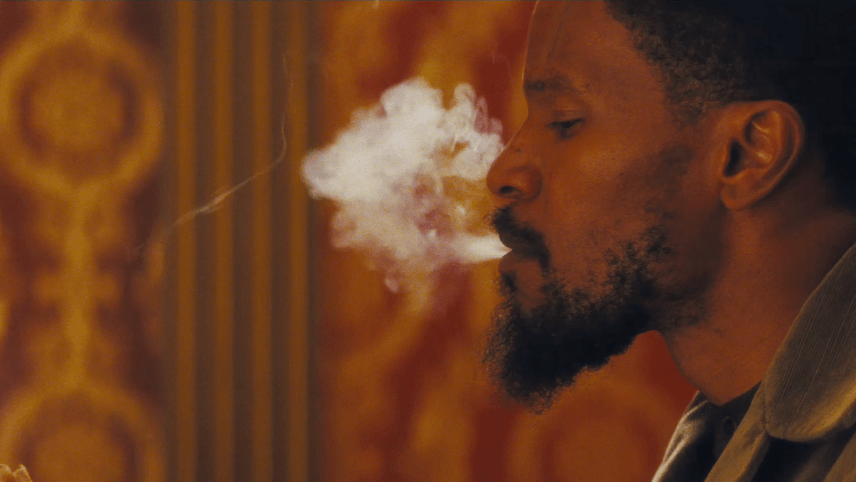
This brings us to the racial component of the film. Here’s where the mistaken impression about genre can come in for many people. There is comedy in this film, but it’s not a comedy. This is no more a comedy than For a Fistful of Dollars is. Yes, it’s funny the way Django turns around his former owners line and says to him “I like the way you die, boy.” It’s also funny when Clint Eastwood in For a Fistful of Dollars changes his intial coffin order to four. It doesn’t make either film a comedy.

However, the facade of a western is where the similarity between the film ends. The moments of overt comedy are there for you to laugh at in Django Unchained. The Klan eyehole scene may have been the funniest scene in any film I saw last year simply because it was such an ingenious cutting down of a hateful organization that seeks to taunt, terrify and kill. Yes, even some of the laughs can be tinged with uneasiness, but that’s the goal.

The death of slave owners is designed to be laughed at, but I wouldn’t be surprised if there were some deadened reactions to that. Upon introducing another, even more risqué skit than he had done previously (this one about a white family with a coincidentally racist name) Dave Chappelle said something to the effect of “Apparently, people didn’t think killing a slave owner was funny. I could watch that all day.” Which brings us to another source of controversy in this film the usage of the N-word.

Django Unchained (2012, The Weinstein Company)

Is it difficult to listen to it that many times, and spouted so hatefully? Of course. Especially when either Django or Stephen uses it. That’s the point and intent for a modern audience. Then there’s also the fact that that’s not far off the frequency you would’ve heard back then.

Yes, some words invariably cause issues as I noted in The Gay Dilemma, but when a script is well-crafted you can go a step beyond what is a generally accepted politically-correct norm and make a point as in The Sitter. I’m not one for censorship, and am in favor of artistic license, and the word belongs in this film as much as it does in Huckleberry Finn. In others it may be gratuitous and unnecessary, but that’s why I tend to take things like this on a case-by-case basis.

Furthermore, one shouldn’t allow the presence of a word, even one as disparaging and denigrating as that one, obscure the totality of the film. While he does get assistance, Django gets necessary training to be able to be the hero of the story, which he is. Will Smith’s assessment about Django’s secondary nature is only accurate if you’re into counting words of dialogue. King’s departure from the narrative gives Django plenty of time when the tale is his alone. He’s the one who has flashbacks and whose goals drive the story. Most importantly, in terms of race, Django’s nobility and heroism is not shown solely through his fortitude, his ability to withstand punishment like Kunta Kinte; his strength is his ability to fight back. And as much training as he gets, his intelligence is something he’s born with not given.

Mini-Review Round-Up May 2013

Here’s my standard intro to this post:

I had quite a review drought to end 2011 so I think the remedy for this kind of post would be to have the post be cumulative monthly. Therefore, after each qualifying film a short write-up will be added to the monthly post. The mini-reviews will be used to discuss Netflix and other home video screenings. Theatrical releases, regardless of how they are seen whether in an auditorium or on VOD, will get full reviews [That is when deemed necessary. As I wrote here I do want to focus more on non-review writing wherever possible].

For a guide to what scores mean go here.

Deep Dark Canyon

Deep Dark Cayon (2013, Screen Media Films)

Two things I often write about with regard to film-watching came into blissful convergence when I saw this film: first, there’s the Blank Slate Theory. Granted I read a line or two of synopsis, but up until that email from Redbox I hadn’t heard of this film. Secondly, and closely related to the first part, whatever expectations I created, over-inflated, and then guarded against in my head; were exceeded.

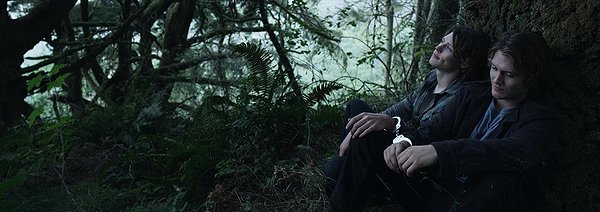
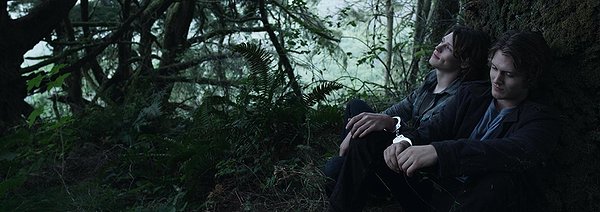
So why’s that? What Deep Dark Canyon does is take something that may sound like a higher concept or gimmicky set-up: two fugitives on the run while handcuffed to one another, and grounds it. What it gets grounded in is a wicked microcosm wherein one family, the Cavanaughs, calls all the shots and stacks the deck, whether inside or outside the law. When the Towne family won’t stand for it anymore things start to get complicated.

There are quite a few great turns of the plot in this tale, which coaxed audible reactions from me. This is a film that doesn’t fear going down the rabbit hole of further and greater consequences, but it never gets unreal in the given parameters.

While crimes, secrets and conspiracies bring you into the tale, it’s the human story that keeps you engaged in it. The revelations among Towne family members (uncle, father and brothers) swing the pendulum of power back and forth and the struggle is intriguing.

Of course, in a story that’s contained and stripped down, plot points can only take you so far. The performances have to keep you engaged. Spencer Treat Clark, in his first role as an adult performer that allows him to follow-through on the promise he showed as a young actor (there will likely be more to come soon like Much Ado About Nothing), and Nick Eversman, has quite a breakthrough performance (All I had seen him in prior was Hellraiser: Revelations); are captivating co-leads, who deliver incredibly raw, earnest performances.

Deep Dark Canyon delivers quite a bit of drama in the guise of a fugitive film, but delivers in both respects. It’s a fairly enthralling film that’s worthwhile viewing for sure.

8/10

Jacob
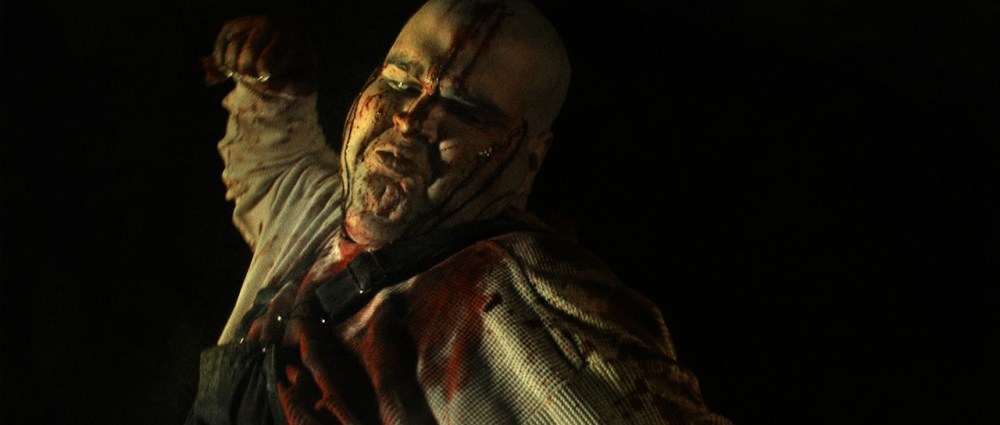
Jacob (2011, Odyssee Pictures)

There are a few things that are bit odd that are going on in Jacob. They are all easily explicable, however, that doesn’t stop them from being odd. The main thing I noticed is that the film, while never on easy footing, is far more comfortable and closer to offering escapism in its hyper-reality flashback sequence, which dominates the film. In the few present sections the film is far more stilted an awkward in its cinematography, performances and make-up.

The structure of the film is curious because it’s not as involved as the armature of the film would have you believe. It’s your standard flashback to the birth of a legend. However, what’s incumbent on a film when it flashes back not once but twice is some upping of the stakes. The conclusion of the film is fairly predictable and anticlimactic because we get a glimpse of the future beforehand.

The pace is never right and much of what holds the piece back is that it feels like it gets its tongue stuck in its cheek rather than just planted firmly. The inspiration appears to be the works of Rob Zombie based on some of the aesthetic, tonal, character and story choices, but no one involved can even bring the film up to that level. On occasion there is a wrinkle, a look, shot or set piece that stands out but overall the center is never found, so one can’t expect it to hold.

3/10

In Their Skin
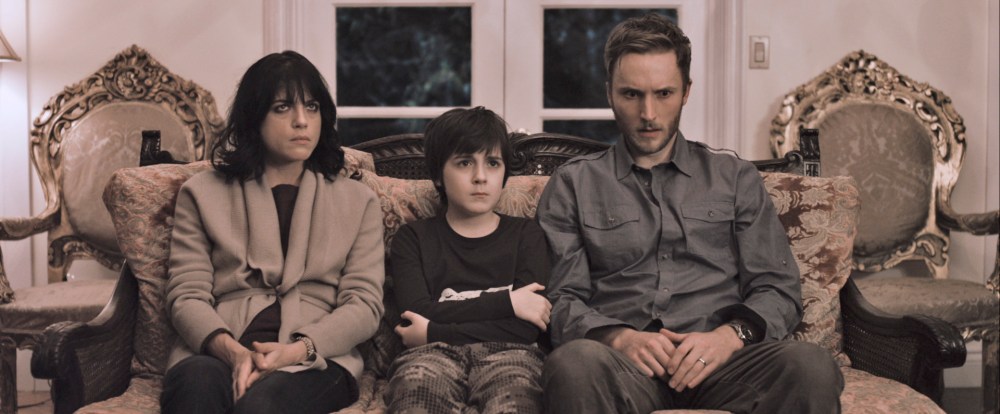
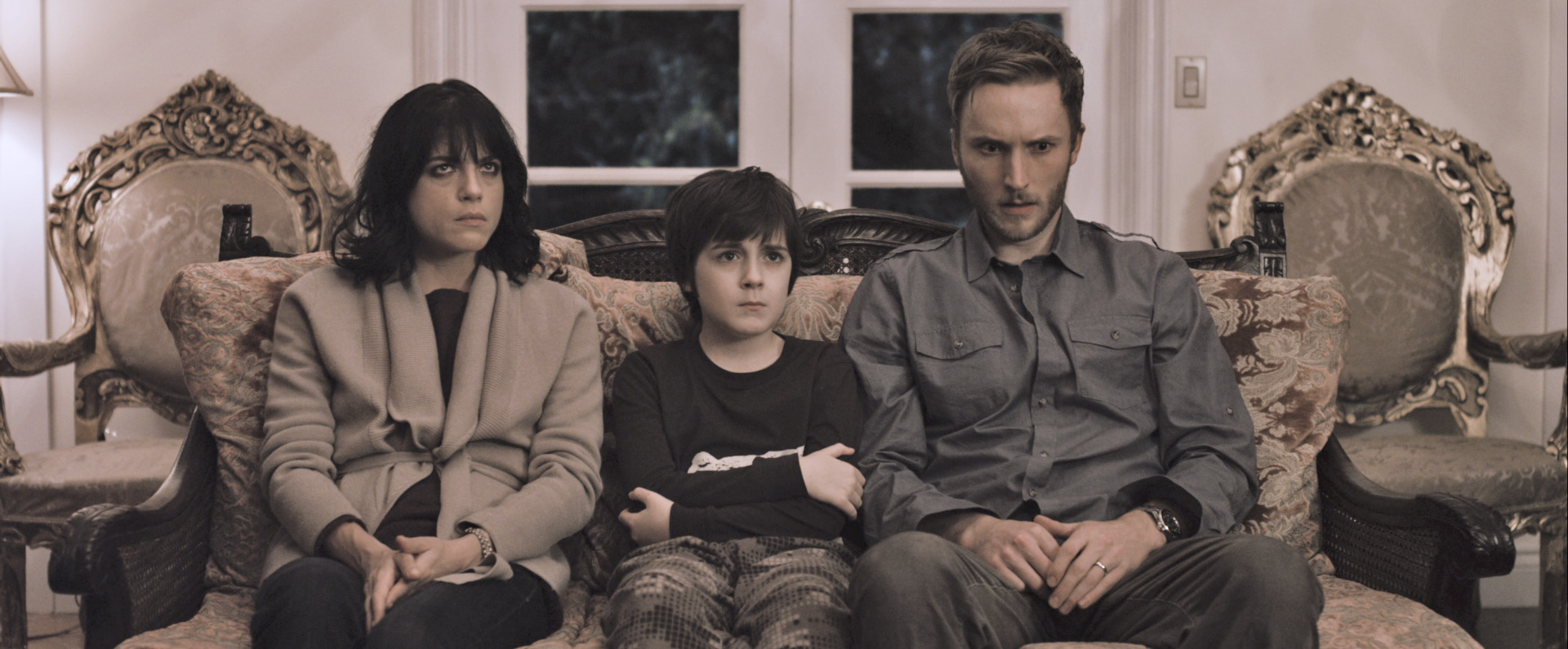
In Their Skin (2012, IFC Films)

If there’s one thing that’s plainly easy to appreciate about In Their Skin is that its a very well regimented film, that through its structuring not only easily raises the stakes, but also slowly and surely disturbs and unnerves. It’s the kind of film that remembers that the most frightening concepts are those that hit closest to home and seem most plausible. It gives you some answers, the ones you need, but not all or more than necessary.

Through its traversing and escalating in tone it also allows each of the actors involved to give fairly layered performances. Much of the first act the family at the core of the drama is disconnected and distant. Then upon meeting their offbeat neighbors there is an extended period of awkwardness before things escalate.

There is a fearless approach to some of the sound design and scoring choices later on in the film, which is great. In fact, the only major quibble I really have with it, aside from some stock horror film brain-farting by the protagonists, is that the denouement feels more like a flopping thud than the breath of fresh air it should feel like. There’s a bit of a disconnect between that and what passed before that robs the film of a bit of the potency it had built up.

7/10

Yossi
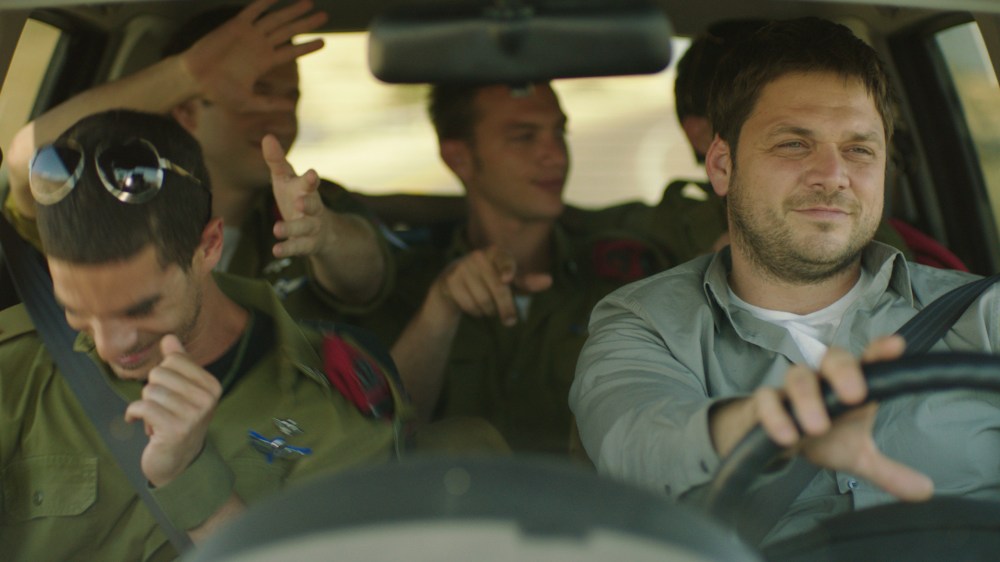
Yossi (2012, Strand Releasing)

If there’s one thing I didn’t want inferred in my writing about North Sea Texas, is that all gay cinema should send out that ray of hope. There are as many stories as there are people. What I feel is important about that film cinematically and socially is that now that story exists in the face of many overwhelmingly dour and/or tragic tales. That’s not to say that it’s a mandate. Granted there’s drama in a tragic set of circumstances, at times unparalleled in pathos, but the seeming disproportion also needs to be held in check. However, this by no means there should be a Hollywood formula implemented.

I say this by way of introduction to Yossi because a few things need to be taken into consideration when viewing it. Firstly, even if targeting a niche, a film needn’t have far-reaching ramifications, but can be merely a character study. Secondly, there is the matter of another culture at play so we’d be wise not to judge the film by our standards mores. However, those concerns are mostly about lesser details.

What does bear considering cinematically is that this is a sequel and it would behoove you to see the first part before this one as I did. It finishes up a story neatly and rather well after much internal conflict. The only issue that’s created is that the end is kind of abrupt. However, there is a slow progress, slower than preferable, but it’s true to the character. What’s most intriguing is that it is a two-part process of being inwardly comfortable and outwardly comfortable with oneself. It happens in babysteps without fireworks or a parade, but there is an arc and there are moving scenes specifically one played among Orly Silbersatz, Raffi Tevor and Ohad Knoller that each echoes the last film. This is a film worth viewing in tandem with its predecessor Yossi & Jagger.

7/10

2 + 2 (Dos más Dos)
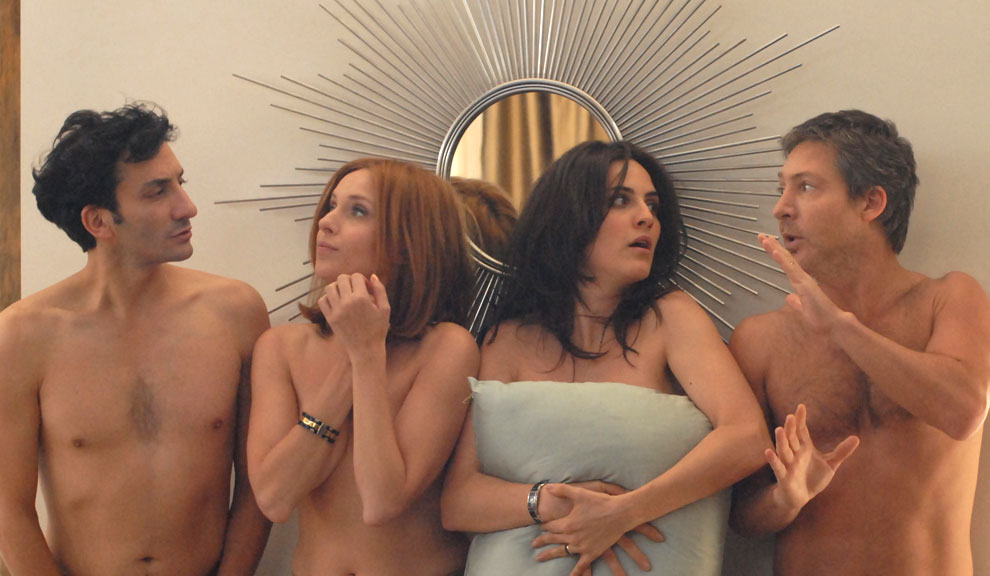
2 + 2 (Strand Releasing, 2012)

It’s funny that 2 + 2 should come to me now in short succession after having seen 4some and Bob & Carol & Ted & Alice. The difference here is not just another cultural one this film being from Argentina as opposed to the Czech Republic and US respectively. There is a slight twist because two couples who have been longtime friends have had a secret. Betina (Carla Peterson) and Richard (Adrián Suar) tell their friends they’re swingers.

What works best here is that it not only creates conflicts as many ways as it can (tell the secret/don’t tell the secret, do it/don’t do it, Test it out/don’t test it out) but it also fully explores them without seeming to be methodical, but rather natural.

One function of a tale like this is that it really gets to the core of a relationship and puts a divide in couples and forces them to examine themselves and each other. This is usually great fodder for actors to work with, and the performances here are stellar. The tone can also go either of two ways it can be very dramatic or very comedic. This one, like 4some, is mostly comedic but it balances the dramatic intentions of the stories well, and it handles long passages of time with unusual deftness.

Comedy is one of the genres where you usually look for a standout in a given year. There have been a dearth of offerings and only on pretty good result until now. This is the first film this year I laughed pretty persistently with through lengthy sequences, and it stands up on the dramatic end in equally well. There are great touches a long the way, really funny dialogue and committed performances. It’s one to look out for.

10/10

The ABCs of Death

The ABCs of Death (2012, Magnet Releasing)

Most of the things that are interesting to consider about this film, sadly, have little to do with the film itself. For one, due to the fact that it is an extreme example, it forever defeated to notion of averaging out scores in an anthology. Math is no way to quantify such an experience, and I may highlight that in a separate post at some point.

Another thing that is interesting to consider, though it does not make it better or worse, is that filmmakers were assigned their letter and given a $5,000 budget. The only way either of these traits makes itself apparent is with the two shorts that decided to go the “we don’t have a decent idea for this letter” route, which is fairly lazy and uninspired. Many of them do well at least in terms of production value.

However, what it more often than not reaffirms is that telling a story in approximately five minutes is very hard. Sadly, in most of the cases neither a style or a decent narrative was firmly established. Overall it becomes a very unnerving viewing experience because of the wide array of voices and variegated quality of the shorts.

If I had to put a number on it I’d say about five work very well. Two of those on a style over substance basis. It ends nearly as badly as possible and the convention established of revealing title, letter indicated and director after the short is over rendered many predictable, a few insipid and most frustrating.

It’s not for the feint of heart or weak of stomach, that in and of itself does not make the film an excruciating experience, but the envelope being torn apart to tell mostly inane and inept tales does.

1/10

This Girl is Badass!

This Girl is Badass! (2012, Magnet Releasing)

This is a film that does promise action and comedy and delivers small, portioned doses of both. Sadly, there is never really a good balance struck between the two. It usually seems to be one or the other, with comedy far outweighing the action.

The action is never overly dynamic, and the plot, which is not terribly involved, never develops at a sufficient rate to raise this above being a mere diversion into being genuinely entertaining. It’d be a passable film if it didn’t drag through certain sections, but unfrotunately it does.

4/10

Space Warriors
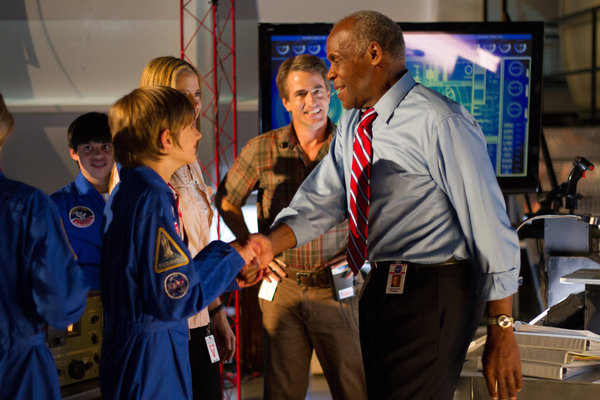
Space Warriors (2013, Walden Media/Hallmark Channel)

Director Sean McNamara, despite having mostly TV credits, has successfully brought for cinematic tales before; most recently Soul Surfer. It appears that Space Warriors with a proper theatrical premiere in Alabama and a brief limited run would be closer to film caliber than a made-for-TV project, which Walden Media and the Hallmark Channel recently repackaged it as. Especially when you include cast members such as Thomas Horn of Extremely Loud and Incredibly Close, Ryan Simpkins, Grayson Russell, Dermot Mulrooney, Mira Sorvino and Danny Glover.

Sadly the film goes from the run-of-the-mill half-developed kid-with-a-dream narrative with a standard lie to get what he wants and several conventional plot twists along the way to an absolutely outlandish finale that surely and slowly creeps up on you. That intent, however, is not always apparent and the staging, set-up and writing of that conclusion is lackluster to say the least.

It really is a shame because through all the cheese the premise had promise with more sure-handed writing and directing but the foundation that this story built itself upon was weak so it was sure to implode at some point.

3/10

Poverty Row April: Wrap-Up

I planned this theme by downloading many of the films I wanted to see ahead of time. All downloads are free and legal through The Internet Archive, as all titles selected are in the Public Domain. My grandiose plans called for over 50 films. That didn’t happen, and I did improvise through the month, and will likely continue to watch them through the year for personal viewings. However, the theme has come to an end so the reviews will cease and a wrap-up is required since the only other post in the theme I wrote was about the book that acts as my bible for this theme.

First, a statistical overview may be in order:

By the Numbers

Films: 23
Cumulative Score: 125
Average Score: 5.435

Titles scoring 6 and above: 10
Titles scoring 5 and below: 13

Best Films:
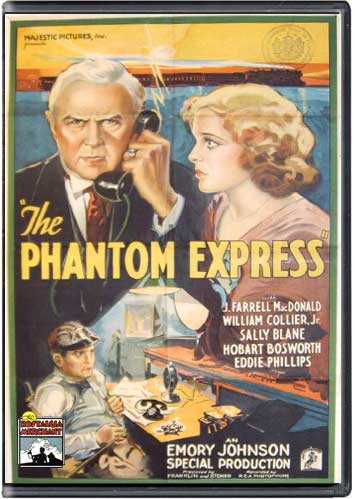
The Phantom Express
In Love with Life
The Ghost Walks
Hearts of Humanity
The World Accuses
Tangled Destinies

General Observations

In Love with Life (1934, Invincible)

Usually the case with such a focused theme is that eventually I do seek to get out from under it. However, and perhaps this has to do with only seeing nearly half the number of films I expected, I leave this series wanting more. I attribute this to three main factors: first, there is the personal writing fiction writing project that this acts as research for (For my prior project(s) you can go here). Second, there is the fact that I’ve always had an affinity, not necessarily matched by viewing patterns, with this era of film history. Lastly, I think I chose well. Based on my reading Poverty Row titles that were good seemed like they’d be diamonds in the rough. However, by narrowing down my options to ones that sounded interesting to me I upped my odds and liked nearly half of the selections I made.

Conclusions

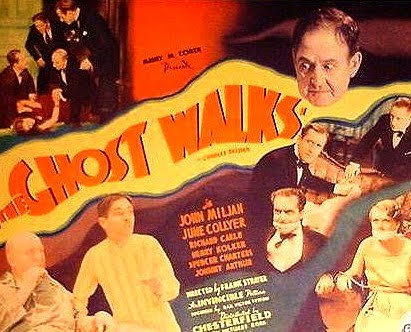
The Ghost Walks (1934)

In my Favorite Older Films lists, as in my film viewing in general, I do like to celebrate diversity in era, country of production, director, genre and however else I can. However, I feel that Poverty Row titles, whether featured on this blog or not, will factor into my viewing choices, and the theme may be back next year.